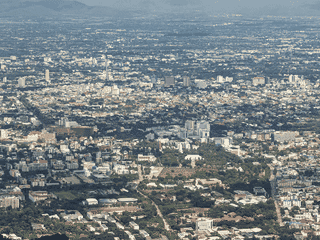

Chiang Mai
Thailand18.80°N 99.00°E · 310 m
150 places in the index.
18.80°N 99.00°E · 310 m
Amphawa is a canal-side district in Samut Songkhram province where Bangkokians flock every weekend for the famous Amphawa Floating Market. Unlike tourist-heavy Damnoen Saduak, this afternoon market (starting around noon, best around 15:00) offers a more authentic experience with farmers in traditional clothing selling produce from boats.
Atlas entry
Ang Thong is a small, rural province in Thailand's Chao Phraya Basin that draws visitors primarily for its extraordinary Buddhist monuments. The province holds two of Thailand's largest reclining Buddha statues, including the second-largest in the country at Wat Khun Inthapramun.
Atlas entry
Ang Thong National Marine Park is a breathtaking archipelago of 42 limestone islands rising from the Gulf of Thailand. The park offers world-class snorkeling, hidden beaches, dramatic viewpoints like the Emerald Lagoon on Ko Mae Ko, and the iconic 430m climb on Wua Talap Island with panoramic views of the entire park.
Atlas entry
Ao Nang is a busy coastal base for limestone scenery and island boat trips. Nearby coves and hill trails add quieter outings beyond the main beach.
Ao Phang Nga National Park showcases some of Thailand's most dramatic limestone karst formations rising from emerald waters, with over 40 islands featuring sheer cliffs, hidden caves, and the largest remaining mangrove forests in the country. The park's most iconic sight is James Bond Island (Ko Khao Phing Kan), immortalized in the 1974 film "The Man with the Golden Gun" and still appearing on countless tourist brochures.
Atlas entry
Aranyaprathet is a border town in Eastern Thailand, adjacent to Poipet, Cambodia. It is the most popular tourist route between Bangkok and Siem Reap (Angkor Wat).
Atlas entry
Ayutthaya preserves the temple and palace ruins of a former Siamese capital. Cycle or walk between the ruins and look for local sweets and small bowls of boat noodles.
Ban Phe (บ้านเพ) is the primary ferry port for Ko Samet island, making it an essential stop for travelers heading to this popular Thai Gulf destination. Beyond serving as a transit hub, the town has grown from a seafood processing center (notably fish sauce production) into a modest beach destination with uncrowded stretches just minutes from the town center.
Atlas entry
Bang Pa-In draws visitors to the Bang Pa-In Royal Palace, a lakeside summer retreat built by King Chulalongkorn (Rama V) in the 1870s. The palace complex is compact enough to explore on foot yet rich with architectural variety—Thai pavilions, European mansions, and a Chinese palace—making it a satisfying half-day excursion.
Atlas entry
Bang Saen is Thailand's most accessible beach destination, located closest to Bangkok on the Eastern Gulf Coast. It offers a quieter, cheaper alternative to Hua Hin or Pattaya, with the article noting it is "much closer, cheaper and more free of hassle." The town hosts Burapha University, giving it a youthful atmosphere on weekdays when most visitors are students.
Atlas entry
Bang Thao (also called Bang Tao and Laguna Beach) offers Phuket's second-longest beach at 7 km, providing a quieter alternative to Patong's crowds. The area centers on the Laguna Complex, a five-hotel luxury development with golf course, spa facilities, and free shuttle transport between properties.
Atlas entry
Bangkok combines temples, street food and nightlife in a busy tropical city. Explore Wat Pho and Wat Arun, then make time for markets, museums or a trip along the Chao Phraya River.
Betong (เบตง) is a small city in deep southern Thailand, dubbed 'the city in the fog with beautiful flowers' for its mountain-surrounded location, cool climate, and high rainfall. The city draws Malaysian tourists and Thai visitors with outstanding Hakka-Chinese food, hot springs, and a handful of unique sights like the Largest Mail Box in Thailand.
Atlas entry
Bophut centres on a former fishing village with Chinese shophouses and a palm-lined beach. Restored buildings now accommodate cafés, restaurants and relaxed evening venues.
Buriram translates as 'city of happiness'. It is a fairly nondescript town in Thailand's less well-visited northeast.
Atlas entry
Cha-am is a small, quiet beach town on the Gulf of Thailand that serves as a peaceful alternative to nearby Hua Hin. If Hua Hin feels too crowded and noisy, Cha-am offers a slower pace with fishing village charm, beach access, and ethical wildlife experiences at a fraction of the cost.
Atlas entry
Chachoengsao (also called Paet Rio) is a low-key Thai town 80km east of Bangkok that draws thousands of pilgrims weekly to Wat Sothon, reputedly the largest wat in the world. The town sits along the Bang Pakong River and its canals, offering a glimpse of provincial Thai life far from tourist crowds.
Atlas entry
Chaiya is a small, quiet town on Southern Thailand's Central Gulf Coast that was once the capital of the Srivijaya Empire (8th-13th centuries). Today it draws travelers with well-preserved Srivijaya-era temples, a respected meditation monastery, and local handwoven silk production.
Atlas entry
Chalong Bay is Phuket's principal boat anchorage and the island's largest bay, situated 11 km south of Phuket Town. While not suitable for swimming, it serves as the main departure point for day trips to Coral Island, Phi Phi Island, and Ko Racha.
Atlas entry
Chanthaburi is known for tropical fruits like durian, rambutan, and mangosteens, and for its gem trade. The surrounding hills have verdant forests and scenic waterfalls, while nearby are quiet fishing villages and peaceful beaches.
Atlas entry
Chaweng combines a long white-sand beach with Samui's busy nightlife. Different sections of the beach offer varying levels of activity.
Chiang Dao is a quiet valley base surrounded by limestone mountains. Caves, birdwatching and hot springs offer a varied outdoor stay.
Chiang Khong is a small Mekong border town opposite Huay Xai. River traditions, weaving villages and an unusual bicycle collection reward time beyond the crossing.
Chiang Mai is a northern Thai base for temples, night markets and mountain excursions. Explore the walled city, try khao soi and follow the Monk’s Trail toward forest temples.
Chiang Rai offers an approachable base for northern temples and borderland excursions. Its striking colour-themed landmarks contrast with hill-country trips beyond town.
Chiang Saen is a sleepy riverside town with a storied past as a former Lanna kingdom capital. Unlike the tourist bustle of Chiang Mai, this quiet outpost offers ancient temple ruins, a riverside promenade along the Mekong, and access to the Golden Triangle region.
Atlas entry
Choeng Mon is a small beach resort on the north coast of Ko Samui, about 15 minutes north of Chaweng and 5 minutes from Big Buddha. The area consists of a series of quiet bays with white sandy beaches and clean waters, separated from the busier south by intervening coastline.
Atlas entry
Chonburi sits 83 km southeast of Bangkok as the closest beachside city to the capital, roughly a two-hour journey. Unlike polished resort destinations, it presents authentic working Thailand—fishing harbors, seafood markets, and industrial port activity define the landscape.
Atlas entry
Chong Mek is a minimal-stop border crossing between eastern Thailand and southern Laos. Most travelers pass through here en route to or from Pakse, the gateway to the Bolaven Plateau.
Atlas entry
Chumphon is a province in upper Southern Thailand, serving as a gateway to the Gulf islands of Ko Samui, Ko Phangan, Ko Tao. It has its own attractions including beaches, temples, and national parks.
Atlas entry
Erawan National Park is famous for its seven-tiered Erawan Falls, one of the most visited waterfalls in Thailand. The turquoise-blue pools at each tier are ideal for swimming and cooling off, particularly attractive during hot season.
Atlas entry
Fang is a quiet, remote city in northern Chiang Mai Province that sees few tourists, making it a genuine off-the-beaten-path experience. The area is known for natural hot springs, peaceful temple caves, and hill tribe treks with Lahu guides through rainforest and waterfalls.
Atlas entry
Haad Rin is a beach settlement shaped by the Full Moon Party. The days around the event bring a much busier nightlife scene than the intervening weeks.
Hat Yai is a commercial and transport hub with a strong food and market scene. Cable-car viewpoints and nearby waterfalls offer breaks from the busy streets.
Hua Hin combines a long beach with royal-resort history. Explore palace architecture and monuments before a longer outing into Sam Roi Yot's limestone landscape.
Jomtien is a quieter beach district immediately south of Pattaya. Marine displays and waterfront attractions add options beyond the sand.
Kamala is one of the quieter areas on Phuket's famed west coast, situated between Patong to the south and Surin Beach to the north. While the southern end of the beach can get busy during high season, the northern end remains peaceful year-round.
Atlas entry
Kamphaeng Phet combines fortified ruins with forest-monastery remains. The quieter historical landscape and local banana specialities give it a distinct character.
Kanchanaburi combines wartime railway history with a riverside setting. Excursions reach tiered waterfalls, memorial walks and limestone national parks.
Karon Beach is Phuket's second-largest tourist beach at 3 km, offering a quieter alternative to the louder Patong scene 8 km north. The sand is strikingly white and squeaks audibly underfoot, with a wide pedestrian and bicycle path running its length on the beach side of the road.
Atlas entry
Kata offers adjoining west-coast beaches framed by hills. Surfing and snorkelling vary with the season, while nearby paths lead to unusual local attractions.
Khanom is a small, quiet fishing town with lovely beaches practically deserted of tourists, making it a refreshing alternative to busier Gulf Coast destinations. Located along the Central Gulf Coast in Nakhon Si Thammarat Province, it offers a little bit off the beaten path while still being fairly easy to get to.
Atlas entry
Khao Lampi-Hat Thai Mueang National Park sits one hour north of Phuket on the Northern Andaman Coast, offering a dramatic contrast to the island's tourist chaos. The park encompasses two distinct ecosystems: a lush inland rainforest with two impressive waterfalls (Lampi at 40m and Ton Phri at 40m) and a 10km stretch of protected beach with Thailand's widest coral reef just 700m offshore.
Atlas entry
Khao Sok National Park combines rainforest with the limestone scenery of Cheow Lan Lake. Canoeing, cave trips and raft-house stays give several ways to experience the landscape.
Khao Yai National Park is Thailand's first national park, established in 1962, and the third largest in the country. In 2005, the park along with the surrounding Dong Phaya Yen mountains was listed as a UNESCO World Heritage Site.
Atlas entry
Khok Kloi is a nondescript Thai town that straddles a major highway, but it draws tourists for its lovely beach located 4 km from the town centre. The town serves as a practical base for travelers heading to nearby Khao Lak beaches or those with early flights out of Phuket Airport.
Atlas entry
Khon Kaen is a major university city and historic centre of silk production in Thailand's Isaan region. The city offers a slower pace than Bangkok with ancient Khmer ruins, hand-woven Mudmee silk in Chonnabot, and access to mountain plateau day trips at Phu Kradung.
Atlas entry
Ko Bulon Leh is a small, undeveloped island in Satun Province near Tarutao National Marine Park. It offers pristine beaches, jungle trekking, and snorkeling without the crowds of more popular Thai islands.
Atlas entry
Ko Chang combines rainforest-covered hills with beaches along its western side. Waterfalls and trips into the surrounding marine park offer alternatives to resort days.
Ko Chang (Andaman Sea) is a small, relatively undeveloped island close to Ranong in southwest Thailand. Compared with Thailand's better-known islands, it is very quiet and special due to its beautiful dark sandy beaches, interesting nature, and particularly its birdlife.
Atlas entry
Ko Jum (also called Ko Pu) is a small island between Ko Lanta and Krabi Town that has stayed largely off the mass tourism radar. With about 1,500 permanent residents and only around 20 simple resorts on the west side, the island offers a genuine Thai island experience without the crowds of nearby destinations.
Atlas entry
Ko Kut combines forested hills with a scattered west-coast beach scene. Waterfalls and fishing-village excursions offer alternatives to a resort stay.
Ko Lan (also written Ko Laan or Coral Island) lies 7.5 km west of Pattaya and covers 5.6 sq. km of beaches, hills, and viewpoints.
Atlas entry
Ko Lanta combines long beaches with an old trading settlement and forest excursions. Its food and cultural traditions reflect several communities along the Andaman coast.
Ko Lipe is a small island base for diving and snorkelling in the Butang/Adang group. Its beaches and nearby Ko Adang offer coastal walks and island excursions.
Ko Mak is one of Thailand's rare islands still largely in the hands of a single extended family descended from a royal tax collector, with 80% of the island owned by Luang Prompakdee's descendants. The island is piloting Thailand's first environmentally friendly, low-carbon destination with hydroponic farms, a biogas plant, solar-powered tour boats, and an electric hop-on hop-off bus service.
Atlas entry
Ko Muk (Pearl Island) offers a rare balance: enough infrastructure for comfort but quiet enough to feel like a genuine escape. The island sits in the Southern Andaman Coast, drawing travelers who want island life without party island chaos.
Atlas entry
Ko Nang Yuan is a tiny island famous for its exceptional snorkeling due to abundant marine life and crystal-clear water. The island offers the world's only zip line between islands, making it unique among Gulf of Thailand destinations.
Atlas entry
Ko Ngai (also spelled Ko Hai) is a tiny island just 4 km long and 2 km wide, offering a quieter alternative to Thailand's more crowded island destinations. The island is mountainous and covered in tropical forest, with beautiful white sand beaches on the eastern side and coral reefs accessible directly from the shore.
Atlas entry
Ko Pha-ngan pairs its party scene with forest walks and diving trips. Beyond the main beaches, routes lead to Bottle Beach and a temple herbal sauna.
Ko Phayam is a lightly-developed island in Ranong Province, Thailand's second-largest island in the Andaman Sea. With about 160 families and no roads suitable for automobiles, it offers a quiet, rustic escape from busier destinations.
Atlas entry
Ko Phi Phi's limestone islands combine busy nightlife with sheltered bays and caves. Longtail trips reach cliff-ringed pools and beaches beyond the main village.
Ko Phra Thong offers a rare glimpse of Thailand's undeveloped coast: over 9 km of deserted Andaman Sea beach, savannah landscapes like Africa's plains, and a 60% mangrove forest teeming with wildlife including dugongs, leopard cats, and king cobras. The island is home to fewer than 300 Moken (sea gypsy) inhabitants, a rare indigenous tribe, making it one of the few places in Thailand where this culture remains intact.
Atlas entry
Ko Racha Yai and Ko Racha Noi are twin islands 8 km south of Phuket, known for their crystal-clear blue waters and white sand beaches. Racha Yai offers a slower, more relaxed alternative to crowded Phuket beaches, with expanding accommodation options and a small village atmosphere.
Atlas entry
Ko Samet is a small beach island within easy reach of the eastern mainland. Boats connect its coves with surrounding coral islands.
Ko Samui combines developed beaches with unusual rock formations and inland waterfalls. Temple stops and coastal walks offer alternatives to resort activities.
Ko Siboya is a small island 20 km south of Krabi Town that remains firmly off the regular tourist trail. With only two resorts and a handful of local stalls, this 3 x 10 km island offers authentic rural Thai life with about 3,000 residents working in rubber plantations or fishing.
Atlas entry
Ko Sichang is the closest island to Bangkok, making it a convenient weekend escape for travelers seeking Thai island atmosphere without the long journey. With a population of just 4,500, the island offers a quieter alternative to more developed destinations.
Atlas entry
Ko Tao is strongly geared to diving, with schools and boat trips around the island. Snorkelling at Shark Bay and the named hill viewpoints give non-divers options too.
Ko Tarutao is the fourth largest island in Thailand and the crown jewel of Tarutao National Marine Park, established in 1975 as the country's first marine national park. The island remains largely undeveloped, covered in tropical forest with over 100 bird species, macaques, langurs, and monitor lizards.
Atlas entry
Ko Yao is a rare find: a group of twin islands (Ko Yao Noi and Ko Yao Yai) between Phuket and Krabi that remains beautifully undeveloped. Often described as one of the last unspoiled islands in the region, it offers mountain interiors, mangrove-fringed coasts, beaches on the east side for swimming and snorkelling, and at least four species of hornbills visible in the trees.
Atlas entry
Krabi Town is a practical riverside base between coastal excursions. Its early market and distinctive temples offer reasons to linger beyond a transfer stop.
Lampang combines Lanna and Burmese temple traditions with a river-basin setting. Horse carriages and ceramic workshops give the city a distinctive everyday character.
Lamphun is a 1,400-year-old city once known as Hariphunchai, the capital of an ancient Mon kingdom before its incorporation into the Lanna Kingdom by King Mengrai in the late 12th century. Located just 26 km south of Chiang Mai on the banks of the Kuang River, it offers gilded temple complexes like Wat Phra That Hariphunchai and atmospheric ruins without the tourist crowds.
Atlas entry
Loei is Thailand's coolest city, one of the few places where temperatures drop to 0°C in the cool season. The province is a mountainous boundary with Laos along the Mekong River, featuring sandstone plateaus, evergreen forests, and unique cultures including the Thai Dam people.
Atlas entry
Lom Sak is a small provincial town that serves as a convenient base for exploring the natural attractions of Phetchabun Province. Its strategic location at the junction of Route 12 (the Green Route) makes it an ideal stop for travelers heading between Phitsanulok and Khon Kaen.
Atlas entry
Lopburi combines royal history with Khmer-style temples and macaque-filled streets. Its compact old town is well suited to exploring the surviving monuments.
Mae Hong Son is a small provincial capital (pop. 7,000) nestled in Northern Thailand's misty mountains near the Myanmar border.
Atlas entry
Mae Nam is a quieter counterpoint to Ko Samui's busy resort areas, offering 7 km of white sand beach lined with coconut palms on the island's north shore. The beach is typically calm for swimming, though water clarity varies.
Atlas entry
Mae Rim sits north of Chiang Mai along Road 107, serving as the gateway to the Samoeng Loop and the longer Mae Hong Son Loop. The area draws visitors to Queen Sirikit Botanic Garden (Thailand's oldest), the sticky Bua Tong Waterfall where you can climb the non-slippery limestone cascades, and multiple ethical elephant sanctuaries.
Atlas entry
Mae Sai is Thailand's northernmost city, sitting directly across the border from Myanmar's Tachileik. The town is primarily a transit point for travelers crossing into Myanmar, but has enough character to warrant a stop: a hilltop temple complex with a giant scorpion statue facing Myanmar, a covered bazaar selling jade and gems, and easy access to the famous Tham Luang cave where the Wild Boars football team was rescued in 2018.
Atlas entry
Mae Salong blends Yunnanese culture with a northern hill-country setting. Tea, village walks and traces of Kuomintang history distinguish it from nearby towns.
Mae Sariang is a quiet border town in Mae Hong Son Province that offers a slower, more authentic alternative to tourist-heavy Pai and Chiang Mai. Near the Myanmar border, the town provides access to traditional hilltribe villages, natural hot springs, and the Salween River without the crowds.
Atlas entry
Mae Sot is Thailand's main land gateway to Myanmar, a bustling trade hub where Burmese migrants, refugees, and traders mix with Thai and international visitors. The town offers a genuinely multicultural experience impossible to find elsewhere in Thailand, from its vibrant Burmese market selling ethnic textiles, teak, and live food to gemstone shops and border commerce.
Atlas entry
Maha Sarakham means "city of great education" and hosts seven institutions of higher learning, earning it the nickname "Takasila of Isaan" after an ancient Indian centre of learning. The city is the Buddhist centre of Isaan, with archaeological artefacts including a relic of Lord Buddha in Na Dun district dating back 1,500 years.
Atlas entry
Mukdahan serves as a key border crossing point between Thailand and Laos, making it essential for travelers transiting between the two countries. The city offers Vietnamese-influenced cuisine reflecting its multicultural population, and the Mekong River setting provides scenic views from the Haw Kaew Observation Deck.
Atlas entry
Nakhon Phanom is a reserved, traditional Lao Isaan city on the Thai-Lao border where the Mekong marks the frontier. It's famous for ancient temples, silk weaving, and a Ho Chi Minh museum marking his 1920s-30s residence.
Atlas entry
Nakhon Ratchasima is a major Isaan centre with local shrines and museums. Excursions reach Khmer remains at Phimai and the forests of Khao Yai.
Nakhon Sawan (นครสวรรค์), meaning 'Heavenly City,' sits at the critical confluence where the Ping and Nan rivers meet to form the Chao Phraya—the lifeline of central Thailand. Historically a Sukhothai Kingdom outpost and frontier gateway to the north, the city remains off the main tourist trail, meaning budget travelers find cheap accommodation, 70-100 THB street food, and genuine local interactions.
Atlas entry
Nakhon Si Thammarat combines an old trading history with a major Buddhist temple complex. Explore the surviving city gate and the unusual caves and archaeological sites beyond town.
Nan is a lesser-known Thai town offering an authentic alternative to tourist-heavy destinations. Steeped in Lanna Thai culture and the Sukhothai kingdom heritage, it features centuries-old temples, traditional teak houses, and access to Si Nan National Park.
Atlas entry
Nang Rong is not itself a tourist destination but serves as the nearest town to the Phanom Rung Historical Park, a spectacular Hindu temple complex built in the 10th to 13th centuries and dedicated to Shiva. The town offers a rare glimpse into "real" Thailand with virtually no foreign tourists, little English spoken, and signs only in Thai script.
Atlas entry
Narathiwat offers a rare glimpse into Thailand's Muslim-majority south, where Malay-influenced culture permeates the food, architecture, and daily life. The city serves as a peaceful gateway to the East Coast of Malaysia via the nearby Sungai Kolok border crossing, with none of the tourist crowds found in Thailand's more popular destinations.
Atlas entry
Nathon is Ko Samui's main ferry port on the western shore, making it the primary arrival and departure point for travelers connecting to the mainland and neighboring islands like Ko Tao. The town has evolved from a simple transit stop into a charming destination in its own right, with a picturesque oceanfront lined with colorful shops and restaurants.
Atlas entry
Nong Bua Lamphu offers a genuine Isaan experience without the crowds found in more tourist-oriented Thai destinations. The province showcases the distinctive Lao-influenced culture of northeastern Thailand, with ancient Khmer archaeological sites, forested limestone hills, and a prominent sacred lake at its heart.
Atlas entry
Nong Khai looks across the Mekong toward Laos and offers a quieter riverside base. Wat Po Chai's sacred image and excursions to unusual rock and cliff temples add cultural depth.
Padang Besar serves as the only direct rail crossing between Malaysia and Thailand, making it essential for overland travelers between the two countries. The Thai side is noticeably bigger and more chaotic than its Malaysian counterpart, drawing Malaysian visitors for duty-free shopping and the freewheeling entertainment scene typical of Thai border towns.
Atlas entry
Pai mixes a busy backpacker centre with red-ridge walks and waterfalls. Explore the surrounding countryside for Yunnanese village culture and distinctive viewpoints.
Pak Bara is the primary transport hub for the southern Andaman islands, serving Ko Lipe, Ko Bulon Le, Ko Adang, and Ko Tarutao with ferries running year-round. It is a no-frills functional town with basic amenities for overnight stops between the mainland and islands.
Atlas entry
Pak Chong is the nearest town serving Khao Yai National Park, Thailand's oldest and most popular national park. Less than 200 km from Bangkok, it draws Thai weekend trippers and international backpackers seeking wildlife, waterfalls, and jungle trekking.
Atlas entry
Patong is a dense beach resort centred on Bangla Road's nightlife. The shoreline and nearby beaches offer a different pace from the evening entertainment streets.
Pattani brings together Malay, Chinese and Buddhist cultural traditions in the southern peninsula. Historic mosques and elaborate festivals distinguish its urban heritage.
Pattaya is an Eastern Gulf resort city with beaches, hotels and a busy bar scene. Food courts and street stalls offer lower-cost meals between seaside activities.
Phang Nga is a quieter coastal alternative to bustling Phuket, serving as the provincial capital with decent infrastructure while offering access to stunning limestone karsts rising from the sea. The area is famous for Phang Nga Bay's gravity-defying formations, elephant temples built into mountain caves, and Muslim fishing villages on stilts.
Atlas entry
Phatthalung is a historic southern Thai city perched on the western shore of Songkhla Lake, 860 km from Bangkok. The city is renowned as the birthplace of Nang Talung, the intricate shadow puppet theatre, and Nora dance, traditional performing arts that remain central to local identity.
Atlas entry
Phayao is a serene lakeside city in Northern Thailand, sitting on the eastern shore of Phayao Lake about 100 km northeast of Chiang Mai. The town offers a peaceful alternative to more developed northern destinations, with historical temples, natural attractions, and affordable prices for budget travelers.
Atlas entry
Phetchabun (เพชรบูรณ์) is a quiet provincial capital 346 km from Bangkok that serves as the gateway to Khao Kho mountain ranges in the northwest. The province derives its name from the Thai words for crops and foods, reflecting its fertile Pa Sak river basin origins.
Atlas entry
Phetchaburi is one of Thailand's oldest settlements, mentioned in records dating to the 8th century, with significant artifacts from the 12th century. The city offers a working Thai experience without tourist infrastructure—hundreds of temples, the hilltop Khao Wang Palace dominating the skyline, and a buzzing traditional market operating from pre-dawn until mid-day.
Atlas entry
Phitsanulok is a regional centre with an important Buddhist image and several older temples. It also provides a practical base for excursions to Sukhothai.
Phrae is a quiet, unspoiled city in Northern Thailand's Yom River valley, founded after Chiang Mai as part of the Lanna Thai kingdom. It holds one of the country's largest teak reserves, and its old streets are lined with centuries-old teak buildings and Burmese-influenced temples that most tourists skip in favor of Chiang Rai or Pai.
Atlas entry
Phu Chi Fa (ภูชี้ฟ้า) Forest Park is a word-of-mouth secret in Chiang Rai Province with minimal crowds and no touristic tackiness. While not the tallest peak in Northern Thailand, its remote location, winding approach roads, and spectacular summit view make it a trek worth making.
Atlas entry
Phu Kradueng National Park in Loei Province is one of Thailand's best-known national parks, featuring a highland plateau at 1,316 m elevation at Khok Moei. The park offers dramatic sandstone cliffs, lush forests, and spectacular sunrise views that attract hikers and nature lovers seeking an escape from Thailand's tropical lowlands.
Atlas entry
Phuket combines Andaman beaches with a town of Sino-Portuguese buildings. Boat trips into Phang Nga Bay add cave and grotto exploration to time on the coast.
Phuket Town preserves streets shaped by a tin-mining boom. Sino-Portuguese buildings, Chinese temples and restored shophouses give the centre a distinct architectural character.
Prachuap Khiri Khan was Thailand's original beach resort, established by the royal family. The long white sandy beaches are clean and spotless, far more so than Pattaya's, and the sea is relatively clean.
Atlas entry
Rai Leh is a limestone peninsula reached through a network of beach paths and boats. Climbing, caves and a steep lagoon trail make it more than a beach stop.
Ranong is a small border town on Thailand's Andaman coast, 568 km from Bangkok, that remains refreshingly authentic and unspoiled by mass tourism. The town serves as a crossing point to Kawthoung (Victoria Point) in Myanmar and is famed for its natural hot springs, where visitors can soak in sulphurous pools at around 65°C.
Atlas entry
Ratchaburi serves as a quieter counterpoint to Bangkok's chaos while offering rich historical and natural attractions. The town sits in the fertile Mae Klong Basin with the Tanao Si Mountains stretching west toward the Myanmar border, creating diverse landscapes from lowland fields to forested hills.
Atlas entry
Rayong offers a slower-paced coastal escape 179 km from Bangkok, with modest beaches, tropical fruit orchards (especially durian, rambutan, mangosteen in May-June), and access to islands like Ko Samet. It's part of Thailand's Eastern Economic Corridor but retains a provincial, working-city feel with an oil refinery presence.
Atlas entry
Roi Et offers an authentic escape from Thailand's tourist crowds, presenting traditional Isaan culture at its most genuine. The city is renowned for its impressive Buddha images, including Thailand's tallest blessing Buddha at Wat Buraphaphiram at 59.2 m, and a dramatic 68-m walking Buddha on an island in Bueng Planchai lake.
Atlas entry
Sa Kaeo is a Thai frontier city 245 km east of Bangkok, serving as the gateway to Cambodia at Aranyaprathet-Poipet. The province preserves traces of the Suvarnabhumi and Dvaravati Kingdoms through scattered ancient monuments and artefacts.
Atlas entry
Sadao serves as a convenient Thailand-Malaysia border crossing, with Dannok 10 km south being the busiest checkpoint between the two countries. The crossing connects major trans-national highways to both capitals, making it a key transit point for long-distance buses between Singapore, Malaysia, and Thailand.
Atlas entry
Sakon Nakhon combines Khmer-era remains and Buddhist retreats with life beside Nong Han lake. Local festivals and markets offer a distinctive introduction to Isaan culture.
Samoeng is a small farming community in a mountain valley. Strawberries and hot-spring stops give travellers reasons to pause on the surrounding road circuit.
Sangkhla Buri is an idyllic, off-the-beaten-path town in northwest Kanchanaburi Province where Thailand meets Myanmar. The main attraction is Saphan Mon, the longest wooden bridge in Thailand, leading to the Mon village of Wangka founded in 1949 by refugee monks.
Atlas entry
Saraburi offers a slower, more authentic alternative to Bangkok for travelers heading northeast. The province is home to one of Thailand's most beautiful religious sites (Wat Phra Phutthabat), the first Royal Forest Department Botanical Garden, and access to several national parks including Khao Sam Lan, the nearest national park to Bangkok.
Atlas entry
Sattahip is a small fishing town on Thailand's Eastern Gulf Coast, twice as large as Banglamung district (where Pattaya sits) but with a much smaller population. Domestic tourists come to pay homage at Wat Luang Pho I, while the availability of land has led to construction of many large-scale tourist attractions—often marketed as 'Pattaya attractions' to visitors from the nearby resort city.
Atlas entry
Satun is a quiet southern border town with a mix of cultural influences. Island departures dominate many visits, but local festivals add reasons to pause.
Si Racha is a functional Thai port town that serves as the gateway to Ko Si Chang island and a convenient stop between Bangkok and Pattaya. The town is famous globally for Sriracha hot sauce, named after it, and locally for fresh seafood served with nam prik si racha chili sauce.
Atlas entry
Si Satchanalai (ศรีสัชนาลัย), meaning "City of Good People," was founded in 1250 as the second center of the Sukhothai Kingdom and served as the crown prince's residence during the 13th and 14th centuries. The UNESCO World Heritage Site preserves ancient temples and monuments that are less crowded than nearby Sukhothai, offering a more intimate exploration of Thailand's golden age architecture.
Atlas entry
The Similan Islands are Thailand's top diving destination, renowned for massive underwater granite boulders, vibrant coral reefs, and exceptional visibility reaching 30+ meters. The park covers 140 km² of pristine Andaman Sea, offering world-famous dive sites like Elephant Head Rock and East of Eden.
Atlas entry
Sing Buri (สิงห์บุรี) is a historic provincial capital 142 km north of Bangkok along the Chao Phraya River, known for the legendary heroism of Bang Rachan villagers who defended against Burmese forces during Ayutthaya's fall. The city preserves ancient temples, including one housing Thailand's largest reclining Chakkrasi Buddha image, and features streets named after the village heroes like Nai Thaen, Nai Dok, and Khun San.
Atlas entry
Sisaket is a quiet provincial capital in Isaan that serves as the gateway to Preah Vihear Temple, the cliff-top Khmer sanctuary straddling the Thai-Cambodian border. The province holds some of Thailand's most significant Khmer Empire ruins, including Sra Kampaeng Yai, the largest and most complete complex in the area.
Atlas entry
Songkhla pairs an old trading-city atmosphere with beaches and lake views. Hilltop viewpoints and museums connect the coast with southern cultural history.
Sukhothai's old capital survives in a landscape of stupas, statues and moated temples. Cycling between the scattered monuments offers an approachable way to explore.
Sungai Kolok is a transit-focused border town where Thai and Malaysian currencies flow freely and duty-free shopping draws Malaysian visitors seeking cheaper goods. The "entertainment" district near the Marina Hotel offers karaoke bars and nightclubs, though the town has limited conventional tourist attractions beyond its cross-border position.
Atlas entry
Suphanburi is a historically rich Thai province 100km north of Bangkok that receives far fewer foreign visitors than nearby Ayutthaya. The town dates back 3,500-3,800 years based on archaeological evidence from the New Stone Age, Bronze Age, and Iron Age.
Atlas entry
Surat Thani is a gateway to the Gulf islands with markets and hilltop views of its own. Canal outings and a riverside food scene reward a stop between journeys.
Surin's regional identity centres on elephants, silk and jasmine rice. Khmer ruins and weaving communities add depth beyond the annual festivities.
Tak is a modest provincial town on the Ping River, 426 km north of Bangkok, serving as a key transit point on the overland route to the Myanmar border at Mae Sot. Historically significant as a western gateway of the Sukhothai Kingdom and birthplace of King Taksin the Great, the town holds more appeal as a base for exploring the surrounding national parks and waterfalls than for urban attractions.
Atlas entry
Thong Nai Pan (TNP among backpackers) sits on Ko Pha Ngan's northeastern tip as the island's most secluded yet developed beach area. The two beaches—Ao Thong Nai Pan Yai (large) and Ao Thong Nai Pan Noi (small)—offer a quieter contrast to Haad Rin's famous Full Moon Parties, with unique wildlife, waterfall hikes, and traditional Thai bamboo tattoos as drawcards.
Atlas entry
Thong Sala is the main port and largest settlement on Ko Pha Ngan, serving as the island's primary transportation hub. The town offers affordable Thai street food at the night market, all-you-can-eat BBQ restaurants for under 100 baht, and serves as the jump-off point for the famous Full Moon Party at Haad Rin.
Atlas entry
Trang is a food-focused town and a base for offshore islands and caves. Its shophouses and breakfast culture offer reasons to stay before heading to the coast.
Trat is a compact gateway to eastern islands with an older trading-town core. Wooden buildings, murals and historic temples reward a walk before onward travel.
Ubon Ratchathani has a history shaped by Lao settlement and forest Buddhism. Its temples include a pond-side scripture hall and a chedi inspired by Bodh Gaya.
Udon Thani is an Isaan transport and commercial centre with a wartime airbase legacy. Archaeological sites and seasonal lake excursions add reasons to explore the region.
Uthai Thani offers an authentic Thai provincial experience without the tourist infrastructure of larger destinations. The city sits on the Sakae Krang River where raft-dwelling communities have maintained traditional lifestyles for generations.
Atlas entry
Uttaradit is a quieter alternative to more touristed northern Thai destinations, offering access to Phu Soi Dao National Park, the world's largest teak tree, and unique local festivals. The province produces around 20,000 tonnes of durian annually and is famous for its odorless Longlaplae and Linlaplae varieties.
Atlas entry
Yala sits in Thailand's southernmost province, a borderland with a distinctive three-way cultural heritage: Thai, Chinese, and Muslim communities living side by side. The city served as an educational center for the south and retains systematic town planning from its colonial-era layout.
Atlas entry
Yasothon is a provincial capital in Thailand's Isaan region, best known for its spectacular Rocket Festival (Bun Bang Fai) held every second weekend in May. The town offers authentic northeastern Thai culture away from tourist crowds, with centuries-old Buddhist temples, traditional handicraft villages producing Khit cloth and bamboo basketry, and access to cave temples and archaeological sites.
Atlas entry
In development: the whole atlas offline, a trip planner and a private journal. We'll post here when it ships. No newsletter to join.