Overview
Kanchanaburi combines wartime railway history with a riverside setting. Excursions reach tiered waterfalls, memorial walks and limestone national parks.
History · Nature · Wildlife
Did you know?
- Nearby Sai Yok National Park shelters the world's smallest bat species.
- Erawan Falls descends in seven tiers, with pools used for swimming.
- The Bridge over the River Kwai belongs to the wartime Death Railway story.
Where it is
Kanchanaburi is 108 km west of Bangkok.
Why Go?
Kanchanaburi draws travelers for the infamous Bridge over the River Kwai and the Death Railway from WWII, but the town has evolved into a chilled riverside escape from Bangkok. The main tourist strip along Mae Nam Kwai Rd is lined with guesthouses, bars, and budget restaurants, creating a relaxed backpacker atmosphere. Beyond the history, the province offers easily accessible waterfalls at Erawan and Srinakarind, cave systems, elephant sanctuaries, and some of Thailand's most scenic national parks—all within day-trip distance.
Getting In
From Bangkok, buses leave from the Southern Bus Terminal (Sai Tai) regularly, taking about 2-3 hours to reach Kanchanaburi's bus station on Saeng Chuto Rd. Alternatively, the Death Railway runs from Bangkok's Thonburi station to Nam Tok (Sai Yok), passing through Kanchanaburi—a scenic 3-4 hour journey. Local songthaews connect the bus station, train station, and bridge for 10 baht per ride.
Getting Around
Kanchanaburi is spread out, so walking only covers the central river area. Orange and yellow songthaews cruise Saeng Chuto Rd for a flat 10 baht, connecting the bus and train stations with the bridge. Motorbike taxis and tuk-tuks are available with negotiable fares. Budget travelers can rent bicycles for 50 baht/day or motorcycles for 150-200 baht/day from guesthouses and shops along Maenam Kwai Rd.
When to Go
The cool season from November to February offers the most comfortable weather for sightseeing and trekking. March to May can be extremely hot. The rainy season (June-October) brings fewer tourists and lush waterfalls, though some roads to remote parks may be difficult. ANZAC Day (April 25) sees a solemn dawn service at Hellfire Pass Memorial.
Where to Stay
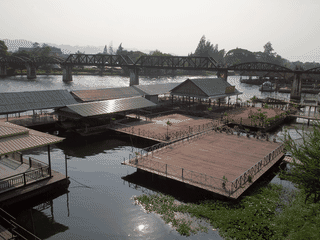
The bulk of budget accommodation clusters near the bridge along Mae Nam Kwai Rd, ranging from basic fan rooms to air-conditioned bungalows. Fan double rooms start around 150-350 baht, while air-con options typically run 450-750 baht. For a unique experience, try a raft room floating on the river—expect to pay 200-600 baht for simple floating accommodations. Advance booking often includes free pickup from bus or train stations.
Food and Drink
The Mae Nam Kwai Rd strip offers the widest selection of restaurants, from Thai classics to Western comfort food. Local eateries like the unnamed Jok Isaan serve excellent Isaan dishes (som tam, larb, gai yang) for 40-60 baht. Jolly Frog Restaurant on Maenamkwai Rd provides huge menus with fried rice from 40 baht and beer from 45 baht. The night market in front of the train station serves cheap local food, while floating restaurants near the bridge offer scenic views at higher prices.
Things to Do
The Bridge over the River Kwai and associated war museums form the core attractions: the Thailand-Burma Railway Centre (160 baht) is the best, followed by the JEATH War Museum (40 baht) and the Kanchanaburi War Cemetery (free). Hellfire Pass, 80 km northwest, offers an emotional memorial walk. Nature lovers head to Erawan Falls (300 baht foreign adult) with seven tiers perfect for swimming, or Srinakarind National Park with caves and waterfalls. Elephant camps like Taweechai offer rides, bathing experiences, and mahout courses.
Day Trips
Erawan National Park with its seven-tiered waterfalls makes an excellent day trip, accessible by bus 8170 from Kanchanaburi. The Hellfire Pass Memorial can be reached by taking the morning train to Nam Tok (2.5 hours), then a songthaew to the site. Sai Yok National Park offers limestone mountains and the world's smallest bat species. For cultural sites, Mueang Sing Historical Park showcases Khmer ruins from the 11th-13th centuries.
Safety
Kanchanaburi is generally safe for travelers, though petty theft from guesthouse rooms can occur. Avoid leaving valuables unattended on the riverbanks. The Tiger Temple has documented animal welfare concerns and unverified reports of tourist injuries—many travelers and conservation groups advise against visiting. Use reliable songthaew operators for transport and confirm prices before agreeing to motorbike rentals to avoid disputes.
Connectivity
Most guesthouses along Mae Nam Kwai Rd advertise Wi-Fi, though speeds vary. Several bars on the same road also provide Wi-Fi for patrons. Big C Super Center and Tesco Lotus have free Wi-Fi for customers. For mobile data, AIS, TrueMove, and DTAC offer prepaid SIMs with data packages widely available in town. ATMs are plentiful but foreign cards incur 150-200 baht surcharge per withdrawal.
Budget Planning
A backpacker can survive on 500-800 baht/day including a basic guesthouse room (150-350 baht), street food meals (60-150 baht), local transport (50-100 baht), and entrance fees to one or two attractions. Museums like Thailand-Burma Railway Centre (160 baht) and Erawan Falls (300 baht) are the main ticket costs. Budget an extra 300-500 baht for a day trip to Erawan or Hellfire Pass including transport and meals.
Go Next
Most travelers return to Bangkok by bus (2-3 hours) or train (3-4 hours). En route to Bangkok, Nakhon Pathom makes a convenient pitstop for the world's largest stupa at Phra Pathom Chedi. For overland travel to Myanmar, buses head to Sangkhlaburi (5-6 hours), the last Thai town before the Three Pagodas Pass border crossing. The southern train line continues to Nam Tok (Sai Yok), the terminus of the Death Railway.
Guide text adapted from Wikivoyage contributors under CC BY-SA 4.0.
Where to start
Sleep
Apple's Guesthouse
This guesthouse features a bunch of rooms adjacent to a nice big garden outside. The rooms are fairly spacious and luxurious, and contain a hot shower. Rooms have either fan or air-con rooms, with the fan-rooms being cheaper. Rooms do not feature TVs, due to the owner's environmental concerns. There is a good restaurant attached as well, but breakfast is lacking. Portions are small, it is served late (not before 07:30) and it is not included in the room price.
Price when recorded: 490-690 baht
Eat
Bell's Pizzeria
Italian and Thai food. Bar during the afternoon.
Price when recorded: 170-220 baht for a pizza
Eat
Floating restaurants
These seem to uphold the fine traditions of their brethren worldwide by serving mediocre food at inflated prices although some travellers find the food good and the price reasonable. Nice views and great atmosphere though. However, the main problem is transport back into town if you are staying there. The river and bridge are a little distant unless you are really into walking (there are songthaews though).
Eat
Jok Isaan Thai Food
This small entirely Thai-run place doesn't actually have a name but all the locals know Jok makes some of the best food. Her location changed in early 2011 to a small, clean, building right next to the large reggae bar, Land Pole. She specialises in Isaan dishes such as lab, som tom, gai yang, and khao niew.
Eat
Jolly Frog Restaurant
Huge menu. Lots of Thai and Western food at low prices.
Price when recorded: Fried rice with beef or pork 40 baht, egg salad 40 baht, pizza, vegetarian selection, beer from 45 baht
Eat
Mangosteen Cafe and Books
Thai and Western food with good service. Great coffees, apple pie, cocktails and fresh fruit drinks. One of the cleanest and best run places on the strip. Also 1,000 English language books for sale and small reference library for cafe guests.
Eat
Schluck
Western and Thai food. Pizza and steak are home-made. Euro-oriental décor and jazz music.
Price when recorded: from 40 baht for Thai food, 90 baht for European-style food
See
Bridge over the River Kwai
This iron bridge across the Kwai Yai River is the main attraction for many visitors. Immortalized in the famous movie and novel, it was a part of the infamous Death Railway to Myanmar
Before you go
Connectivity
Wi-Fi is available at most guesthouses and some bars on Mae Nam Kwai Rd. SIM cards from AIS, TrueMove, and DTAC are easily purchased in town with data packages. Free Wi-Fi available at Big C and Tesco Lotus.
Culture
Kanchanaburi holds solemn significance for WWII history—observe respectful behavior at war cemeteries and memorials. April 25 marks ANZAC Day with dawn service at Hellfire Pass. Buddhist temples require modest dress covering shoulders and knees.
Money
ATMs are plentiful on Saeng Chuto Rd and Mae Nam Kwai Rd, but expect a 150-200 baht surcharge per withdrawal with foreign cards. Bring sufficient cash for national parks and remote areas where cards are not accepted.
Safety
Tiger Temple has serious animal welfare concerns and documented tourist injuries—conservation groups campaign against it. Standard precautions apply: secure valuables, avoid walking alone late at night on empty streets, confirm rental prices before accepting.
Transport
Songthaews charge a flat 10 baht along Saeng Chuto Rd. Motorcycle rentals cost 150-200 baht/day for automatics. Bus 8170 runs to Erawan Falls and can stop at Taweechai Elephant Camp. The train from Kanchanaburi to Nam Tok takes 2.5 hours and passes Hellfire Pass.
Weather
November-February offers cool, comfortable weather ideal for sightseeing. March-May can be very hot (35-40°C). The rainy season (June-October) brings lush scenery and fewer crowds, but some rural roads may flood.