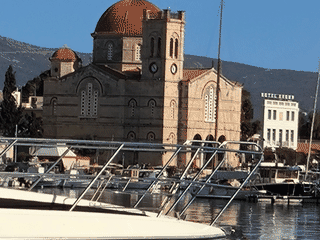

Aegina
Greece37.74°N 23.44°E · 531 m
151 places in the index.
37.74°N 23.44°E · 531 m
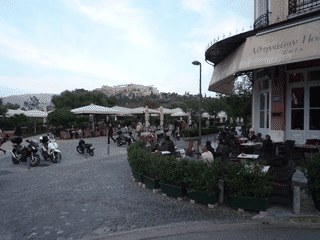
37.97°N 23.72°E · 74 m
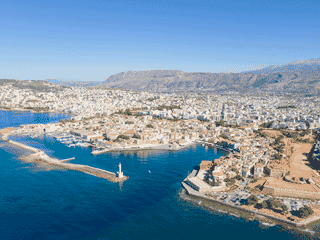
35.52°N 24.02°E · 13 m
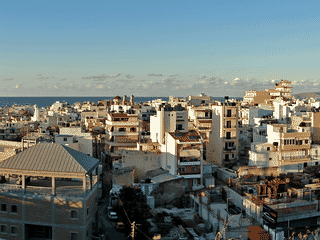
35.33°N 25.13°E · 33 m
39.70°N 21.63°E · 237 m
40.93°N 24.40°E · 15 m
41.10°N 25.42°E · 45 m
36.85°N 27.23°E · 846 m
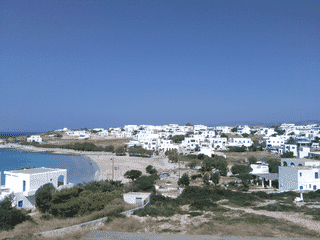
36.94°N 25.61°E · 32 m
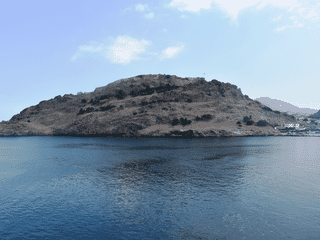
39.92°N 25.25°E · 0 m
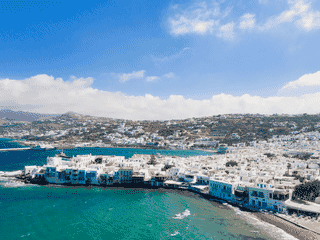
37.44°N 25.33°E
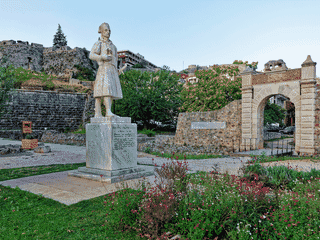
37.57°N 22.80°E · 6 m
37.08°N 25.47°E · 1,003 m
40.98°N 24.70°E
36.47°N 25.37°E
41.01°N 24.29°E
37.53°N 23.45°E · 358 m
36.41°N 25.43°E · 567 m
36.98°N 24.67°E · 680 m
39.17°N 23.48°E · 433 m
37.45°N 24.90°E · 442 m
40.68°N 24.65°E · 1,205 m
39.37°N 22.93°E · 7 m
41.13°N 24.88°E · 83 m
37.80°N 20.75°E · 758 m
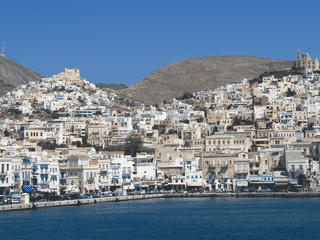
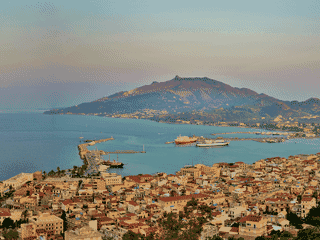
Aegina combines an old port and waterfront cafes with the Temple of Aphaea. The temple stands on a pine-covered ridge, adding an ancient landmark to an island break.
Agia Anna is a coastal commune on Evvia's western shore with one of Europe's longest beaches at roughly 7 km. During summer, the population swells from about 1000 winter residents to around 7000, creating a lively but still relaxed beach atmosphere.
Atlas entry
Agios Efstratios is a tiny Aegean island with only about 300 inhabitants, completely untouched by mass tourism. The 43 km² island sits 30 km (1.5 hours by ferry) from Lemnos and offers pristine beaches on the west and south sides, traditional Greek village charm, and silence so profound that locals joke only donkeys and tourists walk in the bright sun.
Atlas entry
Agios Nikolaos is a laid-back harbor city on Crete's northeastern coast, centered around the striking Lake Voulismeni—a deep, cliff-ringed lake connected to the sea by a narrow channel. The city blends tourist conveniences with authentic Greek island life: busy harbor-side cafes, local markets, and access to ancient sites.
Atlas entry
Akrotiri offers a quieter alternative to the crowded Fira and Oia, with stunning caldera views and the famous Minoan archaeological site of Ancient Akrotiri. The town is built on a hill with ruins of a 13th-century Venetian castle.
Atlas entry
Alexandroupolis is a small town with a harbour and an airport. It is the last major Greek town before the Turkish border on the highway to Istanbul.
Atlas entry
Alonissos is the least touristed island in the Sporades, offering pristine waters declared the cleanest in the Aegean within a protected marine park. The island draws nature lovers and divers keen to spot the rare Monachus Monachus monk seal, while its traditional villages like Chora (Upper Old Town) preserve authentic Greek island life without mass tourism development.
Atlas entry
Amaliapolis is a small seaside village on the Pagasetic Gulf, about 60 km south of Volos, with its own bay and a small offshore island. It has a gently sloping sandy beach suitable for families, several tavernas and bars (some open year-round), and very few foreign tourists outside August.
Atlas entry
Ammouliani is a small Greek island in the Halkidiki peninsula with over 500 inhabitants and a thriving summer tourism scene. The island offers multiple sandy beaches with crystal-clear waters, beach bars, and a relaxed atmosphere.
Atlas entry
Amorgos is a small, less-visited Cycladic island offering dramatic landscapes, the cliffhanging Hozoviotissa monastery, and secluded beaches like Aghia Anna. The island appeals to hikers on marble-glazed donkey paths, seekers of traditional Greek island life, and those escaping crowded tourist hotspots.
Atlas entry
Anafi is a quiet, unspoiled island in the Cyclades group east of Santorini with just 271 residents as of 2011. Mass tourism hasn't arrived here yet, offering a stark contrast to its volcanic sister island — no vibrant nightlife, no crowds, just authentic Greek island life.
Atlas entry
Andros is the northernmost and second-largest Cyclades island, yet far less visited than Mykonos or Santorini. Its mountains shelter fertile valleys with citrus groves, waterfalls, and natural springs — earning it ancient names like Hydroussa.
Atlas entry
Antiparos is a small Greek island in the Cyclades, separated from Paros by a narrow strait, with just over 1,000 inhabitants and a 57-kilometer coastline. It offers a relaxed, authentic atmosphere as a counterweight to more crowded islands, with many beaches on all sides.
Atlas entry
Archangelos is a peaceful town on the island of Rhodes, midway between Lindos and Faliraki. It is serviced by the east coast highway.
Atlas entry
Aridea serves as the gateway to the Almopia plateau region, best known for the therapeutic Pozar thermal springs 10 km away and the Voras Mountains ski resort. The city offers authentic Greek provincial life with ethnic diversity including Macedonians, Vlachs, and Pontic Greeks, plus agricultural heritage producing stone fruits, asparagus, and the local Karatzovitiko pepper variety.
Atlas entry
Asprovalta is a small seaside town of about 3,000 inhabitants in Macedonia, Greece, between Thessaloniki and Kavala. It is popular as a summer retreat for Thessaloniki families and Bulgarian visitors, offering beautiful long sandy beaches without the party atmosphere of larger resorts.
Atlas entry
Astypalaia is a butterfly-shaped Dodecanese island with high crags, fertile valleys, and dozens of secluded bays. The capital Chora sits on a hillside overlooking Petra Gialos port and combines Venetian castle ruins, 18th-century churches, and eight preserved windmills.
Atlas entry
Athens pairs the Acropolis and Parthenon with the Ancient Agora. The National Archaeological Museum adds artifacts from Mycenae to Santorini.
Chalcis (Chalkida) is the largest city on Evvia island with a population of 102,223 and serves as the island's capital. The city was a Venetian fortress known as Negroponte through the Middle Ages, giving it layered history from Byzantine to Ottoman periods.
Atlas entry
Chania's harbor-side old town reflects both Venetian and Turkish influences. Its alleys and historic houses give way to nearby beaches, including Nea Hora to the west.
Chersonissos (Hersonissos) is Crete's most energetic resort town, drawing young backpackers and families to its golden-sand Star Beach, massive water parks, and nightlife strip that peaks in summer. History buffs can visit old hilltop villages and the Lychnostatis Open Air Museum showcasing Cretan culture, while party-goers find Havana Beach Bar, New York, and Palm Beach clubs along the harbour at night.
Atlas entry
Chios is the fifth largest Greek island with 213 km of coastline, located just 8 km off Turkey's Aegean coast. The island is famous for mastic production, a unique resin only harvested here, and features well-preserved medieval villages with distinctive black-and-white decorated facades.
Atlas entry
Zagora, Chorefto and surrounding Northeast Pelion villages offer a counterweight to package-tour Greece: unspoiled Aegean beaches, historic archontika mansions from the 18th-century Greek Enlightenment era, and the Zagorin agricultural cooperative producing EU Protected Designation of Origin apples and kiwis. The area attracts those seeking authentic Greek villages that retain their agricultural identity rather than tourist-dependency, with summer festivals that last until early morning and winter tavernas with genuine coziness.
Atlas entry
Corfu is the northernmost of the Ionian Islands, located off the northwest coast of Greece in the Adriatic Sea. With a history shaped by Venetian and British rule, the island offers a blend of cultures, stunning beaches, and family-friendly holidays.
Atlas entry
Corfu Town (Kerkira or Kerkyra in Greek) is the capital of Corfu island and a UNESCO World Heritage Site. The old town showcases layers of Venetian, French, and British rule through its architecture and layout, creating a distinctly European feel unlike typical Greek island capitals.
Atlas entry
Corinth sits at a strategic crossroads on the Isthmus of Corinth, connecting the Peloponnese to mainland Greece. The modern city of 37,000 serves as a convenient stop between Athens and Patras, but its real draw is ancient history—the area has been inhabited since 6000 BC.
Atlas entry
Delos is one of the most significant archaeological sites in Greece, recognized by UNESCO as a World Heritage Site and considered among mankind's most important cultural and historical places. According to mythology, it is the birthplace of Apollo and Artemis, and it was a major Panhellenic sanctuary from the 7th century BC.
Atlas entry
Didymoteicho is a small city of about 8,500 inhabitants in western Thrace near the Turkish and Bulgarian borders. It holds one of Europe's oldest mosques and Byzantine-era castles, though many Ottoman monuments are in poor condition.
Atlas entry
Drama is a central city in Northern Greece covering an area in a valley between mountainous regions. Its name means "rich in water" in Greek, and the city offers outstanding natural beauty in surrounding areas that remain virtually unspoiled by tourism.
Atlas entry
Elounda is a cosmopolitan seaside resort town on Crete's northeastern coast, built along the Gulf of Mirabello. It is best known for its luxury resorts and upscale atmosphere, but also serves as a gateway to the historic island of Spinalonga with its Venetian fortress ruins.
Atlas entry
Epidaurus is a UNESCO World Heritage archaeological site centered on the ancient asclepeion—one of the most celebrated healing centers of the classical world. The star attraction is the stunningly well-preserved Ancient Theatre, famous for its perfect acoustics where a match struck at center-stage can be heard from any of the 14,000 seats.
Atlas entry
Eretria is a small beachside resort town on the island of Evvia, Greece. It was once an important Greek polis in the 6th/5th century BC, mentioned by famous writers and involved in significant historical events.
Atlas entry
Ermioni is a small coastal city on a peninsula facing Hydra island, giving it an island-like atmosphere without island prices. With a population of 4,554, it remains noticeably quieter and cheaper than nearby Spetses and Hydra, making it popular with Athenians seeking weekend escapes.
Atlas entry
Evvia (Euboea) is Greece's second-largest island, spanning 3,684 km² with a 2011 population of 191,000. Connected to the mainland by bridge, it has a distinctly mainland atmosphere rather than typical island feel—particularly around Chalkis, the capital.
Atlas entry
Faliraki is Rhodes' most popular beach resort, offering 3 km of sandy beach with a lively party atmosphere. The town transforms at night with Bar Street pubs, Club Street venues, and late-night discos drawing crowds from across the island.
Atlas entry
Fira is the main town and cultural centre of Thira, the largest island in the Santorini archipelago. It boasts museums, art galleries, cathedrals, and picturesque churches, as well as the island's widest selection of shopping and dining.
Atlas entry
Fiskardo is one of the few villages in Kefalonia that survived the 1953 earthquake largely intact, preserving its Venetian-era stone buildings painted in bright blues and yellows. The small fishing harbor fills with yachts in summer, and the village makes a convenient base for accessing nearby beaches like Myrtos and Antiamoos, as well as the ferry to Lefkada.
Atlas entry
Florina is a small market town of fewer than 20,000 people in West Macedonia, northern Greece, serving as the gateway to the Prespa Lakes region. During summer it buzzes with market activity, while winter brings heavy snowfalls and skiers to nearby Vigla resort.
Atlas entry
Fournoi Korseon is a remote Greek archipelago of over 20 barren islands in the eastern Aegean, between Samos and Ikaria. The main island offers dramatic indented coastlines with hidden fjords, pebble beaches, and caves — historically ideal for pirates, now beloved by sailors.
Atlas entry
Galatas is a quiet coastal town on the eastern Peloponnese, best known as the departure point for the short ferry ride to the island of Poros. The area is famous for the Lemonodasos ("Lemon forest"), a vast orchard of 30,000 lemon and orange trees that has been celebrated in Greek literature since Kosmas Politis's 1930 novel of the same name.
Atlas entry
Halki is a tiny Dodecanese island that has largely escaped mass tourism, offering a peaceful counterpoint to nearby Rhodes. With only 478 permanent residents (330 in the main village Emporio), the island retains an authentic Greek island character with traditional architecture and unhurried rhythms.
Atlas entry
Heraklion's historic core combines pedestrian streets, Venetian walls and the Koules harbor fortress. A coastal promenade gives sightseeing days a seaside finish.
Hydra is one of the most popular day-trip destinations from Athens, offering a stark contrast to the capital's urban chaos. An enlightened development policy has kept the island completely free of cars, motorbikes, and high-rise buildings, preserving its traditional character.
Atlas entry
Ialysos is Rhodes' second-largest town, a purpose-built resort destination on the island's northwestern coast 8 km from Rhodes City. The area draws visitors for its organized Blue Flag beach with sand-and-pebble shores, consistent winds ideal for windsurfing (hosting international competitions), and lively strip of shops, restaurants, and nightclubs lining the seafront at Ixia.
Atlas entry
Ierapetra is the southernmost city in Europe, facing the African coast across the Mediterranean. It boasts the smoothest, almost rainless weather on the continent with temperatures rarely dropping below 12°C year-round.
Atlas entry
Igoumenitsa serves as the primary Greek gateway for ferry travelers arriving from Italy, with multiple daily crossings from Ancona, Bari, Brindisi, and Venice. The city of around 25,000 people offers practical amenities for transit travelers along with pleasant nearby beaches.
Atlas entry
Ikaria is one of the world's five Blue Zones, where people live remarkably long lives—it's home to the highest concentration of people aged 90 and older on Earth. The island offers pristine beaches, thermal hot springs in the sea near Therma, and traditional villages like Christos Raches that come alive in the evenings.
Atlas entry
Ioannina is the capital of Epirus, perched atop a 100-metre cliff overlooking Lake Pamvotida. The city flourished in the late 18th and early 19th centuries as the seat of Ali Pasha of Tepeleni's almost independent state, who rebelled against the Ottoman Empire until his death in 1822.
Atlas entry
Ios is a small Cycladic island offering 75 km of white sandy beaches and turquoise waters, regularly voted among Europe's top 10 beaches. The island blends lively nightlife in Chora with tranquil daytime moments—locals chat in cafes and play backgammon by day, while the main square becomes the party hub at night.
Atlas entry
Kala Nera and its neighboring villages (Koropi, Ano Gatzea, Kato Gatzea) form a relaxed coastal cluster in Northwest Pelion, 18 km from Volos via the coastal road. The name translates to "good waters" because local underground springs fed from Mt Pelio reach the sea here, making the water cleaner and cooler than adjacent beaches.
Atlas entry
Kalamata combines a walkable historic centre with cafes and shops around Aristomenous Street. Navarinou Street follows the waterfront and draws locals out for seaside walks.
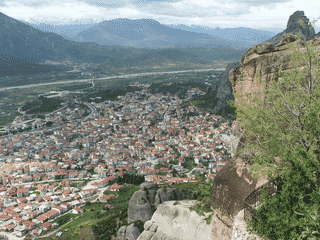
Kalambaka is a practical base for the Meteora monasteries above the town. Restaurants, bakeries and budget accommodation along Trikalon Street support days of monastery visits and hiking.
KaloChorio Istron is a traditional Cretan village in Lasithi Prefecture offering a quieter alternative to larger resorts. The village provides access to golden sandy beaches, boat trips to the historic Spinalonga fortress, and locally produced thyme honey.
Atlas entry
Kalymnos has transformed into one of the world's premier rock-climbing destinations, with nearly 1,000 sport routes on superb limestone crags year-round. The island offers a quieter alternative to package-tour hotspots—traditional Greek villages like Emborios, affordable gyros for €4, and pristine beaches without crowds.
Atlas entry
Karpathos is a windswept Dodecanese island nestled between Rhodes and Crete, offering a rare blend of uncrowded beaches and preserved mountain villages where locals still wear traditional dress. The island draws windsurfers from around the world to spots like Chicken Bay, while travelers seeking authentic Greece find traditional tavernas serving makarounes and handcrafted boots in villages like Olymbos and Menetes.
Atlas entry
Kastellorizo (Megisti) is the easternmost Greek island, sitting just 2 km from the Turkish coast near Kaş. The sole village clusters around two natural bays with traditional stately residences, offering a tranquil alternative to more touristed Greek islands.
Atlas entry
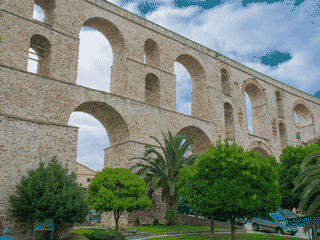
Kavala is a northern Aegean port with an old town of Ottoman-era houses and a historic aqueduct. Its harbour brings together fishing, commerce and island ferry traffic.
Kefalonia brings together steep mountains, forests and blue coastal waters. Cave lakes such as Melissani add a distinctive inland attraction to a scenery-focused island visit.
Keramoti is a quiet beach holiday town in Greek Macedonia, often overlooked as just a ferry stop to Thasos. It offers 5 km of continuous sandy beach that never feels crowded even in peak season, plus access to the Nestos Delta wetlands and mountain hiking areas.
Atlas entry
Kimolos is a small, quiet island in the Cyclades offering traditional Greek island life away from mass tourism. The island features traditional whitewashed villages, secluded beaches, and the famous Skiadi rock formation.
Atlas entry
Kissamos (Kastelli-Kissamos) is a laid-back coastal city in western Crete, often overlooked by tourists rushing to Heraklion or Chania. The city serves as the jumping-off point for the spectacular Balos lagoon and Gramvousa island, both ranked among Crete's most beautiful beaches.
Atlas entry
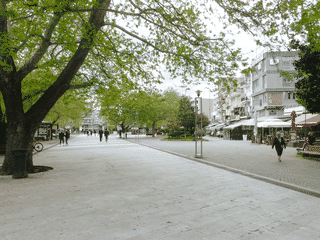
Komotini brings Muslim and Orthodox traditions into the same provincial city. Democritus University of Thrace adds a student presence to local life.
Koroni is a small Venetian village on the Messinian gulf with a partly ruined castle, sheltered harbor, and excellent waterfront tavernas. The area is known for olive oil, fresh fish, and sandy beaches—one beach is a turtle nesting site.
Atlas entry
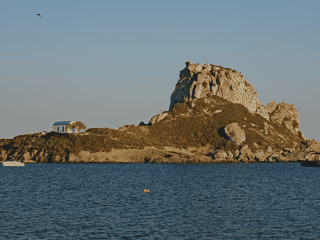
Kos is associated with Hippocrates and the origins of Western medicine. The Asclepieion healing center and the Plane Tree tradition bring that legacy into a visit.
Traditional Cycladic buildings make the main village of Koufonisi an inviting base for wandering. Around the island, small coves make beaches a focus of the day.
Kozani serves as a regional capital in West Macedonia with a population of just over 70,000. The city is positioned along the E90 route between Thessaloniki (120 km east) and Ioannina (160 km west), making it a practical transit stop.
Atlas entry
Kythira is a quiet Greek island southeast of the Peloponnese, roughly the size of Malta but with only 3,500-4,000 permanent residents. The island offers dramatic natural beauty—lush valleys with waterfalls, stone bridges, and traditional watermills at Mylopotamos—alongside Venetian castles, Byzantine churches, and traditional villages.
Atlas entry
Kythnos is one of the quieter Cyclades islands, offering over 60 beaches, historic churches and monasteries, traditional villages like Chora and Dryopida, and archaeological sites including Maroulas, the oldest settlement in the Cyclades at approximately 10,000 years old. The island is volcanic in origin, very dry, and thinly populated, providing a more authentic Greek island experience than its busier neighbors.
Atlas entry
Lamia serves as a practical midway stop on the Athens-Thessaloniki corridor, located 211 km from Athens and 295 km from Thessaloniki. The city functions as the agricultural center of a fertile rural and livestock area in Phthiotis.
Atlas entry
Larissa is Greece's 4th largest city with 162,591 residents, sitting in the agricultural heartland of Thessaly between Athens (355 km south) and Thessaloniki (150 km north). Despite its size and historical significance, it sees few tourists, offering an authentic Greek urban experience without crowds.
Atlas entry
Lavrio has transformed from a somewhat neglected industrial town into a lively port destination, driven by the expansion of its ferry terminal serving the Cyclades islands. The town now offers restaurants, cafes, and shops centered around Plateia Heroon, the main square.
Atlas entry
Lefkada is one of the most beautiful islands in the Ionian Sea, home to world-famous beaches like Porto Katsiki, repeatedly voted in the top 10 of European beaches. The island offers crystal-clear waters, excellent windsurfing conditions in Vasiliki, and over 70% mountainous terrain making it one of Europe's best mountain biking destinations.
Atlas entry
Lemnos combines long sandy beaches with a hilly, open landscape. Archaeological sites, volcanic rock formations and salt lakes add variety to an island stay.
Leros is a quiet Greek island in the Dodecanese that offers Byzantine castles, Rationalist architecture from Italian occupation, and WWII tunnels — all without the crowds of nearby Rhodes or Kos. It's ideal for travelers who want island authenticity with historical depth.
Atlas entry
Lindos gathers whitewashed captains' houses and cobbled pedestrian streets beneath a hilltop acropolis. Ancient temple ruins and later fortifications give the village a layered historic setting.
Lipsi is a small, unspoiled Dodecanese island offering peaceful Greek island life away from mass tourism. The island combines Byzantine churches, natural springs, and a modest harbor with tavernas.
Atlas entry
Litochoro is the primary gateway to Mt. Olympus, Greece's highest mountain and a UNESCO World Heritage Site.
Atlas entry
Loutraki is a historic spa town and seaside resort on the north side of the Corinthian Gulf, at the foot of the Gerania mountain range. The ancient town was called Thermae, and its thermal springs still attract visitors seeking spa treatments at the Loutraki Thermal Spa.
Atlas entry
Malia is one of Crete's most popular beach resorts and one of Europe's top party destinations, rivaling Ibiza and Magaluf. The town attracts young travelers primarily from the UK and Northern Europe, drawn by the legendary nightlife featuring big-name DJs and events on the Main Strip.
Atlas entry
Maroneia is a historic village in Western Thrace with ancient roots dating to when it was one of the wealthiest towns of the ancient world, alongside nearby Abdera and Mesimvria. The settlement spreads at the foot of Mount Ismaros, surrounded by olive groves and mountainous landscapes.
Atlas entry
Megalochori is a quiet traditional village perched on a hill facing east in the heart of Santorini, sitting at the epicenter of the island's wine industry. The village features cream and white Cycladic houses with contrasting colorful wooden doors, plus a few white churches with bright blue domes and tiered bell towers.
Atlas entry
Milies, Vizitza, and Pinakates are three traditional mountain villages on Mount Pelion at 400m elevation, 28 km from Volos. The villages feature traditional stone houses, cobbled roads, and family-owned restaurants with abundant accommodation.
Atlas entry
Milos is the southwesternmost island in the Cyclades, famous for the Venus de Milo statue discovered here in 1820. The volcanic island offers otherworldly landscapes with white lunar-like rock formations at Sarakiniko Beach, hidden sea caves at Kleftiko (once used by pirates), and traditional fishing villages where basements are carved directly into volcanic rock as winter moorings.
Atlas entry
Mount Athos (Agio Oros, Holy Mountain) is a 390-km² peninsula in northern Greece containing 20 Eastern Orthodox monasteries housing approximately 2,000 monks. This UNESCO World Heritage Site is a self-governed monastic state dedicated to the Holy Mother of God, where visitors come for meditation, prayer, and study.
Atlas entry
Mycenae is one of Greece's most significant Bronze Age archaeological sites, dating to the 2nd millennium BC. This ancient citadel was the center of Mycenaean civilization and is home to the famous Lion Gate, massive Cyclopean walls, and royal tomb circles excavated by Heinrich Schliemann.
Atlas entry
Mykonos is a cosmopolitan Aegean island known for beaches and nightlife. It suits travelers looking for a lively coastal holiday with a refined resort atmosphere.
Nafplio is a small Peloponnese town with a neoclassical historic centre. Its houses, squares and churches lend themselves to a leisurely town stay.
Naoussa is a compact city of 21,000 people renowned for its award-winning xinomavro red wine, which holds OPAP designation of origin status. The city amphitheatre-style at the eastern foot of Mount Vermio offers mountain scenery, ski resorts (Seli and Pigadia Snow Center), and fruit orchards producing the famous Naoussa jam brand.
Atlas entry
Naxos is a fertile Cycladic island with a strong farming tradition. Potatoes, citrus, olives and livestock are part of its local identity.
Nea Anchialos is a small seashore town 18 km southeast of Volos in Thessaly, positioned halfway between Athens (305 km) and Thessaloniki (230 km). The town stretches along 20 km of coastline with beaches ranging from unique reddish sand—recommended for sand-baths to relieve rheumatism symptoms—to golden sand, cliffs, and pebbles.
Atlas entry
Nea Moudania is a modest coastal town in the Kassandra region of Chalkidiki, serving primarily as the commercial center for the regional unit. The town was established in 1922 by Greek refugees from Mudanya (now Turkey), whose settlement name carried over with the Greek prefix "nea" meaning "new".
Atlas entry
Neochori is one of the least visited villages in Pelion, offering a rare glimpse of traditional Greek rural life away from tourist crowds. The village is built around a square adorned by centuries-old plane trees and a roofed fountain dating from 1807.
Atlas entry
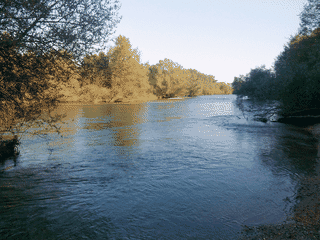
Nestos spans a river gorge at Toxotes and a delta near Chrysoupolis. Alluvial forests, freshwater lakes and coastal lagoons give the area a varied wetland landscape.
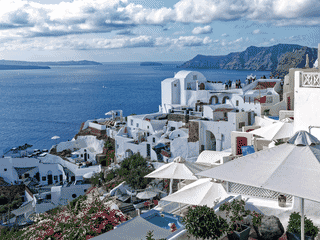
Oia's white houses and blue-domed churches drape steep volcanic cliffs. Windmills add to the village's familiar Santorini skyline.
Olympos National Park protects Mount Olympus, Greece's highest mountain at 2,918 m, drawing trekkers and nature lovers to its alpine trails, refuges, and ancient religious sites. The park straddles the Pieria-Macedonian and Thessalian border, with Litochoro as the main gateway town packed with hotels and tavernas.
Atlas entry
Palaio Faliro is a coastal municipality in Attica on the Saronic Gulf, 6 km southwest of Athens city centre. The seaside area was redeveloped for the 2004 Summer Olympics and now features a seaside promenade, sports venues, a marina, and the Naval Tradition Park with museum ships.
Atlas entry
Paleochora is a small Cretan town of about 2000 inhabitants nestled 75 km southwest of Chania under the White Mountains. It enjoys a small peninsula at the southernmost tip of Europe, offering very hot summers with pleasant sea breezes.
Atlas entry
Parga is a small coastal town on Greece's Ionian coast with a population of 11,866 (2011), nestled between Igoumenitsa and Preveza in the Epirus region. The main draws are the Venetian castle perched on a headland overlooking the town and three accessible beaches: Krioneri in the town centre, Valtos to the west beyond the castle, and Lichnos 4km to the west.
Atlas entry
Parikia is the capital and main port of Paros island in the Cyclades, serving as the primary gateway for visitors arriving by ferry. The old town features traditional Cycladic architecture with narrow alleys largely untouched by mass tourism, preserving the authentic character of these settlements.
Atlas entry
Paros is the second largest island of the Cyclades and the third most popular after Santorini and Mykonos. It offers 120 km of coastline with diverse beaches, traditional villages like Lefkes with its Byzantine walking route, and the cosmopolitan fishing village of Naoussa with its Venetian port.
Atlas entry
Patmos is one of the most religious Greek islands, where Saint John the Divine received his visions and wrote the Apocalypse. Coachloads of pilgrims visit the Cave of the Apocalypse, but the island also offers quiet villages, scenic walking paths, and beautiful beaches like Psilli Ammos.
Atlas entry
Patras is the third-largest city in Greece and the commercial hub of the Peloponnese, serving as the western gateway into the country with regular ferry connections to Italy. The city combines a working Greek port atmosphere with historic architecture, including arcaded neoclassical streets and 19th-century buildings.
Atlas entry
Pella is a small village built atop Ancient Pella, the birthplace of Alexander the Great and capital of the Macedonian kingdom. The archaeological site features remarkable pebble-mosaic floors reproducing Greek paintings, including a lion-griffin attacking a stag and Dionysus riding a leopard.
Atlas entry
Perissa is a seaside village on Santorini's eastern shore, famous for its long black sand beach stretching 7 km through Perivolos to Agios Georgios. Together with nearby Kamari, Perissa forms the island's beach tourism hub, offering budget accommodation, beach bars, tavernas, and water sports without Santorini's caldera-town prices.
Atlas entry
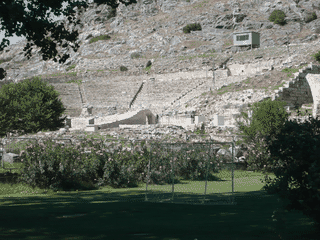
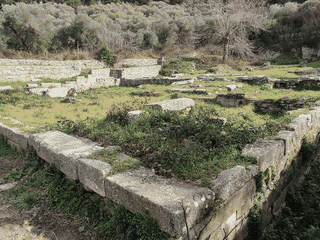
At Philippi, the old Via Egnatia divides the excavated ruins into upper and lower areas. The theatre, temples and basilicas sit above it, with the Roman forum and residential remains below.
Piraeus is the ancient port of Athens and still functions as the chief exit point from the city by sea, for destinations among the Aegean Islands and elsewhere in the east Mediterranean. The passenger facilities have improved greatly since privatisation, with air-conditioned tents and free Wi-Fi.
Atlas entry
Plakias is a small Cretan village that grew from a fishing jetty with just six permanent residents in 1961 into a modest tourist resort. The main draw is a 1300-metre gently shelving sandy beach, with several other coves and beaches within easy walking distance.
Atlas entry
Platamonas is a small coastal resort town on Greece's Olympus Riviera with about 2,000 permanent inhabitants. It offers a more relaxed, less crowded alternative to larger Greek beach destinations, featuring the 10th-century Castle of Platamon as its landmark.
Atlas entry
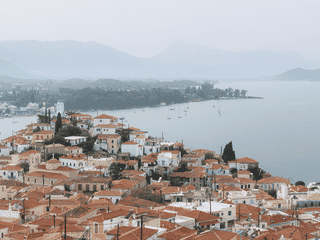
Poros is a green Saronic Gulf island with a quiet, cosmopolitan atmosphere. Its proximity to Piraeus makes it a convenient island escape from Athens.
Prespa National Park is a rare transboundary wilderness where Greece, Albania, and North Macedonia share two mountain lakes at 850m altitude. The park harbors over 1,500 plant species, European brown bears, wolves, and breeding colonies of Dalmatian and White Pelicans—making it one of Europe's most biodiverse protected areas.
Atlas entry
Ptolemaida is a highly industrialized town in West Macedonia, primarily known for its lignite mining and four power plants that produce 70% of Greece's electrical power. It sits on the Eordaia plain at 600m altitude, surrounded by Mount Askio-Siniatsiko to the southwest and Mount Vermios to the northeast.
Atlas entry
Pylos is a small historic harbor town at the northern end of the Bay of Navarino in Messenia, Peloponnese. The town sits on a limestone ridge with a picturesque main square, while the surrounding area offers spectacular beaches including the famous Voidokilia, ancient Mycenaean ruins at the Palace of Nestor, and the uninhabited island of Sphacteria.
Atlas entry
Pyrgos is the highest village in Santorini and home to one of five Venetian castles built to defend the island. Unlike the tourist crowds in Fira and Oia, Pyrgos offers a quieter Greek experience with whitewashed Cycladic architecture and narrow medieval lanes.
Atlas entry
Rafina is a port town on Attica's eastern coast, serving as Athens' second largest port after Piraeus. Its main appeal is as a convenient ferry hub connecting to the northern Cyclades (Andros, Tinos, Mykonos) and southern Evvia, plus its proximity to Athens International Airport makes it ideal for travelers with early morning or late evening ferry departures.
Atlas entry
Rethymno is a Venetian-era city on Crete's north coast that balances historic architecture with beach access. The old town features narrow pedestrian lanes, a preserved fortress (Fortezza), and Ottoman-era mosques, while a long sandy beach stretches east from town.
Atlas entry
Rhodes pairs a medieval old town with ancient sites and beaches. The north has lively resort areas, while the southern coast offers a quieter pace.
Rhodes is the largest settlement and capital city of the island bearing the same name, famous as the former site of the Colossus, one of the seven wonders of the ancient world. It holds the distinction of being the oldest inhabited medieval town in Europe, with approximately 200 unnamed streets and lanes where getting lost is a distinct possibility.
Atlas entry
Roda is a small resort town on Corfu's northern coast that has retained much of its old fishing village character. The boats still go out daily to catch fish from the clear, warm waters around the island.
Atlas entry
Samos is a green, mountainous Greek island in the North Aegean Sea lying just 2 km from the Turkish mainland across the Mycale Strait. It's a popular stop for travelers moving between Athens and Izmir, with ferry connections to both.
Atlas entry
Samothrace is a small Aegean island with an unusual profile: despite being in the typically arid Cyclades region, it is surprisingly lush and green thanks to rainfall on its central mountain, Fengari (1660 m). The island was a major sanctuary from the Bronze Age to Roman times, and the Sanctuary of the Great Gods here once rivaled Delphi in importance.
Atlas entry
Santorini combines whitewashed clifftop villages with ancient sites and volcanic-soil wines. Black beaches at Kamari and Perissa offer a different setting from Fira and Oia.
Serifos is a small Cycladic island (65 km², pop. ~1,200) where tourism is still developing, offering excellent beaches and an unspoiled whitewashed traditional Cycladic Chora.
Atlas entry
Serres is a regional capital in Central Macedonia, Greece, situated in a fertile plain at 70m elevation with the Rhodope Mountains rising to the north and east. The city was almost entirely rebuilt after Bulgarian forces burned it during the Second Balkan War (1913), resulting in wide streets, modern parks, and squares unusual for a city its size.
Atlas entry
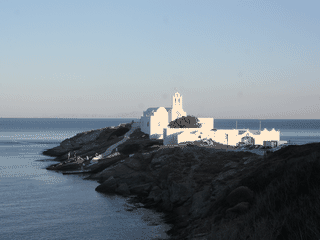
Sifnos rewards time in medieval Kastro, a Cycladic town on a rocky hilltop above the sea. From there, walks lead along the coast or through fields into the hills.
Sitia is the easternmost city on Crete and arguably the least developed tourist destination on the island. With a population of 9,500, it retains a genuine charm and laid-back character that larger resort towns have lost.
Atlas entry
Skala is the largest resort on southern Kefalonia, drawing thousands of visitors each summer to its long golden sandy beach backed by pine trees. The village combines a lively beachfront with historic interest — Roman villa mosaics sit in an olive grove an hour's walk uphill — while nearby turtle-nesting beaches at Kaminia and Mounda offer nature experiences rarely found at package resorts.
Atlas entry
Skiathos has a varied shoreline, from pine-backed Koukounaries to remote Lalaria. A boat trip to Lalaria adds another perspective to a beach-focused stay.
Skopelos is the largest of the Northern Sporades Islands and one of the greenest islands in the Aegean Sea, with extensive Aleppo Pine forests, Holm Oak groves, and olive terraces covering its mountainous interior. The island gained international fame as a filming location for Mamma Mia yet retains a quieter, more authentic Greek island atmosphere than better-known destinations like Mykonos or Santorini.
Atlas entry
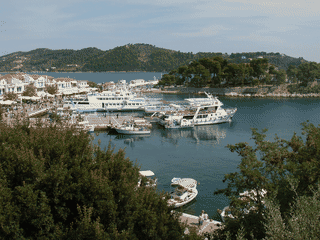
Skyros is a quiet Greek island in the Sporades archipelago where summer population swells from 3,000 to 8,000 but the island never feels exploited or overcrowded. Unlike party islands, Skyros offers traditional architecture in the Chora (main town), numerous secluded beaches, and literary history at the grave of war poet Rupert Brooke.
Atlas entry
Sparta serves as the administrative capital of Laconia Prefecture in Greece, offering a unique blend of ancient history and modern urban planning. The city was deliberately built in 1834 near the original ancient site, designed with wide, tree-lined boulevards as a model Greek town.
Atlas entry
Spata is a modest residential town of roughly 10,000 people situated 20 km east of Athens, functioning primarily as a suburb of the Greek capital. Its main claim to fame is that Athens International Airport occupies much of its territory, leading some to call it Spata Airport.
Atlas entry
Spetses is an upmarket Greek island in the Saronic Gulf, extremely popular with Athenians who flock here for Easter and summer weekends. The island has a population of 3,750 (2021) and maintains a car-free policy, giving it a more refined atmosphere than many tourist-heavy islands.
Atlas entry
Stavroupoli is the largest and most important village along the Nestos river in Western Thrace, Greece. Set on the forested slopes of the Rodhopi mountain range near the Bulgarian border, it serves as a gateway to the dramatic Nestos Gorge.
Atlas entry
Symi is a small island (22 sq. miles, pop.
Atlas entry
Ermoupoli gives Syros a neoclassical cityscape and a role as an administrative center. Its architecture makes the island a rewarding stop for exploring Greek island urban life.
Syvota is a small resort town in northwestern Greece with a 2011 population of 875. The town owes its popularity to numerous pristine beaches with clear waters on several islets immediately offshore.
Atlas entry
Thasos combines sandy beaches and sheltered bays with forested mountains. Archaeological sites add a historical dimension to an island stay close to mainland Greece.
Thebes is an unassuming modern town built on the site of the ancient city that dominated Classical Greece during the 4th century BC until Alexander the Great destroyed it in 335 BC. The only reason to make a stop here is to visit its archaeological museum, one of the most important in Greece, with exhibits spanning from the Palaeolithic to the Post-Byzantine periods.
Atlas entry
Thessaloniki is a Greek city with a long, continuous history. It offers an urban stop for travelers interested in Greece's historical layers.
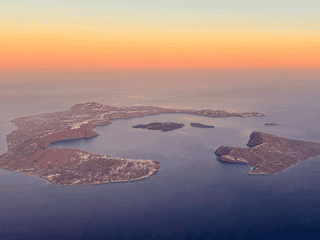
Thirassia is a small satellite island of Santorini with only about 270 residents across five villages. Once connected to Santorini before the catastrophic volcanic eruption of the 2nd millennium BCE, the island remains largely unchanged by mass tourism.
Atlas entry
Trikala is an ancient Thessalian city mentioned in Homer's Iliad, traditionally held as the birthplace of Asclepius, the god of healing. The city offers a pleasant riverside promenade along the Litheos River, a good cafe and nightlife scene, and serves as an agricultural hub with easy access to outdoor activities.
Atlas entry
Tripoli serves as the central transportation hub of the Peloponnese, making it a practical stopover between Athens and southern destinations like Kalamata, Sparti, and the Mani peninsula. The city itself has modest attractions including an archaeological museum in a Ziller-designed neoclassical building and a war museum documenting the 1821 Greek Revolution, but its real value is as a transit point for reaching mountain villages and hiking trails in Arcadia's interior.
Atlas entry
Tzoumerka National Park offers wild mountain nature without the crowds that pack the more famous Vikos-Aoos National Park further north. The area combines hiking trails through the Tzoumerka mountains, visits to traditional stone villages like Sirako and Kalarites (car-free at 1200m elevation), and spectacular waterfalls accessible only on foot.
Atlas entry
Vari-Voula-Vouliagmeni is a coastal municipality in Attica, part of Athens' greater urban area. The suburb is best known for Lake Vouliagmeni, a rare geophysical formation: a brackish water lake fed by underground currents from Mount Hymettus.
Atlas entry
Veria is a historic Macedonian town often called "Little Jerusalem" due to its exceptional collection of approximately 48 surviving Byzantine and post-Byzantine churches out of 72 originally built. The city holds global religious significance as a place where St.
Atlas entry
Vlychada is the largest coastal settlement on Santorini's south coast, offering a quieter alternative to Fira and Oia with accommodation that is much cheaper than other coastal towns on the archipelago. The village centers on a working marina where fishing vessels unload their catch directly to nearby restaurants, and the dramatic black sand beach features spectacular wind-eroded cliffs without the commercialisation found elsewhere on the island.
Atlas entry
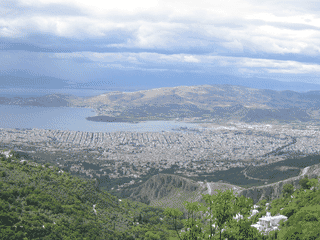
Volos is a base for exploring Mount Pelion by bus or car. Nearby Portaria and Makrinitsa offer traditional mansion architecture and views over the city.
Vourvourou is a stripped-back seasonal village on Sithonia's east coast with no real square or historic center. What it lacks in tradition it makes up for in access: the village fronts a string of calm bays and small islands perfect for paddling and snorkeling.
Atlas entry
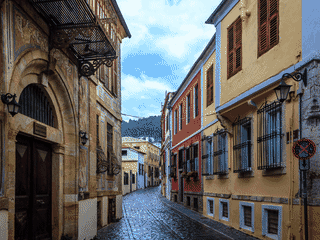
Xanthi's old town mixes Ottoman-era mansions with tobacco merchants' houses. Cobblestone lanes and backstreet pubs give it a lively student atmosphere after dark.
Zacharo is a small coastal town on the Gulf of Kyparissia offering long sandy beaches, the thermal springs and lake at Kaiafas, and access to Mount Lapithas for hiking. Its proximity to Olympia (18 km south) makes it a practical base for visiting the ancient site while enjoying a quieter, more authentic Greek town atmosphere than tourist-heavy coastal resorts.
Atlas entry
Zakynthos combines green landscapes with busy beach resorts and preserved natural areas. Winter rainfall helps give the island its lush character.
In development: the whole atlas offline, a trip planner and a private journal. We'll post here when it ships. No newsletter to join.
.jpg)


.jpg)
_Peace_Square_Komotini.jpg)


.jpg)


.JPG)

