Kefalonia
Eastern Europe and the Balkans · Greece
Did you know?
- Melissani is a cave lake with blue water and a small central island.
- Kreatopita is a hearty local meat pie.
- Assos occupies a peninsula beneath a Venetian castle.
See also
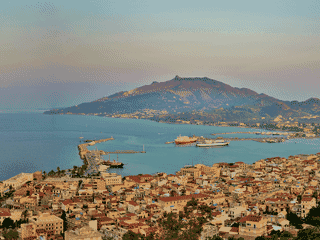

Zakynthos
Greece37.80°N 20.75°E · 758 m
Overview
Kefalonia brings together steep mountains, forests and blue coastal waters. Cave lakes such as Melissani add a distinctive inland attraction to a scenery-focused island visit.
Languages: Greek
Why go?
Kefalonia is the largest of the Ionian Islands and remains relatively uncrowded compared to islands like Corfu or Santorini. The island features dramatic mountains dropping to glittering azure seas, lush forests, and cave lakes like Melissani that glow with otherworldly blue light. It's the setting for Louis de Bernières' Captain Corelli's Mandolin (2001 film), though unlike other movie-linked destinations, the tourism machine hasn't fully taken over—most towns were rebuilt in functional concrete after the 1953 earthquake, leaving the natural scenery to do the heavy lifting.
Adapted from Wikivoyage contributors · CC BY-SA 4.0
Getting there
The main ferry from the Greek mainland arrives at Sami from Patra. There are also connections to other Ionian islands (Corfu, Zante) and Italy, though Kefalonia isn't on the traditional island-hopping circuit. Kefalonia Airport (EFL) has flights to Athens. Most visitors arrive via Athens or by ferry from the Peloponnese.
Adapted from Wikivoyage contributors · CC BY-SA 4.0
Get around
Unless you have your own yacht, you'll need a car or bike to explore. Car ferries connect to the mainland, and car hire places are scattered around but most concentrated in Argostoli and Lassi. Prices vary between hire companies. For experienced riders, a 100cc scooter is a cost-effective option—just inspect for previous damage before signing. Mountain roads wind precariously around cliff sides; some require four-wheel drive, though main routes are fine for standard vehicles.
Adapted from Wikivoyage contributors · CC BY-SA 4.0
When to go
July and August are very busy, especially with Italian camper vans—most of Europe heads south during peak summer. September is quieter, though rains can start. November through April, many local businesses close as the population heads abroad for work; there's simply not enough year-round employment on the island. The best balance of weather and reduced crowds falls in late May or early October.
Adapted from Wikivoyage contributors · CC BY-SA 4.0
Where to stay
Relatively few hotels exist; most accommodation is apartments, many block-booked by tour operators. Finding rooms to rent independently is possible but requires some effort. Lassi is a major tourist area adjoining Argostoli with many apartments and open-air bars (can be noisy at night). Fiskardo is pricey and upmarket at the northern tip, and it's the only part of the island that survived the 1953 earthquake intact. Skala and Poros offer relaxed resort atmospheres focused on beach holidays. Paliki is the western peninsula with fewer tourist facilities.
Adapted from Wikivoyage contributors · CC BY-SA 4.0
Food and drink
Local specialty Kefalonian meat pie (kreatopita) is a hearty farmhouse dish available in several restaurants—the Captain's Table in Argostoli is your best bet for a good example. For quick bites, the big bakery on Argostoli's main street opposite the harbour sells fantastic little round cheese pies. In Poros, the Dionysos tavern has spectacular views to Ithaca and serves exceptional kreatopita (up to three types of meat) plus standout mousakas. Traditional Greek dishes and Italian-influenced menus catering to tourists are common. Drink frappe (instant iced coffee) or freddo cappuccino—cheap, refreshing, and socially acceptable to nurse for hours at outdoor cafes. Mythos is the local lager; ouzo is the anise-flavored spirit.
Adapted from Wikivoyage contributors · CC BY-SA 4.0
Things to do
The island's natural scenery is the main draw. Melissani Cave at Karavomylos (2 km from Sami) has brilliant blue water from an underground current, stalactites 16,000-20,000 years old, and a small island in the center—it opens daily from 09:00. Drogarati Cave at Haliotata (3 km from Sami) measures 65m × 45m with 20m height and constant 18°C temperature; it's considered one of Greece's finest caves. Fiskardo nestles in a lush sheltered bay popular with international celebrities and yachts. Assos village sits on a charming little peninsula with a steep descent to a Venetian castle. The Roman villa near Skala has mosaic floors more or less intact. Boat rentals in Agia Efimia (like Yellow Boat) allow access to secluded beaches; glass-bottom boat tours and trips to Ithaca are popular. Horseriding through mountains, ruined villages, and ancient vineyards is highly recommended even in summer.
Adapted from Wikivoyage contributors · CC BY-SA 4.0
Buy
Buy Kefalonian wild thyme honey—it genuinely tastes special compared to other varieties. Robola is the local wine (from orealios.gr). Tourist shops have remained reasonably tasteful and low-key, though souvenirs are abundant. Some jewelry is of reasonable quality and price. Greeks are generally keen to ensure you get what you pay for in transactions; you're unlikely to get ripped off.
Adapted from Wikivoyage contributors · CC BY-SA 4.0
Safety
Kefalonia has very little crime; most petty crime involves tourists in busy areas. Traffic can be chaotic in towns. Out in the hills, mountain roads wind precariously—some only passable with four-wheel drive. Watch for uneven pavements in dimly lit streets. Mosquitoes are a minor issue in inland accommodation, less so at beaches. Local police have a low-key presence, focusing on speeding tickets and general suspicion of Albanians—you may need a representative or interpreter for insurance claims.
Adapted from Wikivoyage contributors · CC BY-SA 4.0
Connectivity
Free WiFi is provided in many apartments and bars throughout the island. Mobile coverage is generally good in populated areas but may be patchy in mountain regions.
Adapted from Wikivoyage contributors · CC BY-SA 4.0
Go next
Plenty of ferry connections to the mainland and other Ionian islands (Corfu, Zante, Lefkada) as well as Italy. Air services to Athens are available. While not on the traditional island-hopping route, Kefalonia connects reasonably well to nearby Ithaca (just across the water from Poros and Sami). The region includes neighboring Ithaki (Ithaca), which can be visited as a day trip or overnight.
Adapted from Wikivoyage contributors · CC BY-SA 4.0
Field guide adapted from Wikivoyage contributors · CC BY-SA 4.0. Text has been adapted and organized for this guide. About our sources.
Places to know
A few starting points from the guide. Check current hours and prices before you go.
- sleep
Avithos Resort
Avithos Resort in Kefalonia stands out as a resort with a unique character, giving the feeling of a small neighbourhood; a family friendly hotel.
Adapted from Wikivoyage contributors
- sleep
Eliamos Villas Hotel & Spa
A five-star retreat on the southern shores of Kefalonia above a secluded beach.
Adapted from Wikivoyage contributors
- sleep
Green Bay Hotel
A fairly new building, lying by the sea in Karavomilos-Sami Kefalonia near the cave-lake of Melissani.
Adapted from Wikivoyage contributors
- sleep
Luxury Stone Villas Gaia & Nemus
Villa Gaia & Villa Nemus are in a small village called Steliata at the northern part of Cephalonia. Both villas are restored olive oil mills, built of traditional stone and dating back to 1895. Gaia & Nemus are fringed by tastefully preserved ruins and verdant forests in a quintessentially rural setting yet at the same time only 500 m away from village amenities, 2.5 km from the beach and 4 km from the picturesque Fiscardo bay.
Adapted from Wikivoyage contributors
- sleep
Panas Hotel
Offers three-star hotel rooms next to the beach.
Adapted from Wikivoyage contributors
- sleep
The seasons of Nickolas
A small hotel in Agia Efimia that is tastefully decorated , run by a family that remind us what Greek hospitality used to be
Adapted from Wikivoyage contributors
- sleep
Vassaliki
The only nudist hotel on the island.
Adapted from Wikivoyage contributors
- eat
Big bakery on main street
Argostoli bakery selling fantastic little round cheese pies, located opposite the harbour.
Adapted from Wikivoyage contributors
Before you go
Connectivity
Free WiFi common in apartments and bars. Mobile coverage good in towns, patchy in mountains.
Language
English understood almost universally except among senior citizens. Italian widely recognized due to historical ties. Greek greetings get enthusiastic responses.
Money
Euro (€) is the currency. Cash widely available from ATMs in larger towns. Cards accepted at hotels and many restaurants.
Safety
Little crime. Mountain roads require caution. Watch uneven pavements at night. Mosquitoes inland, not at beaches.
Seasonality
July-August packed with Italian camper vans. September quieter but rains may start. November-April many businesses closed as locals work abroad.
Transport
Car hire is essential for exploring beyond towns; most offices are in Argostoli and Lassi. Scooter rental (100cc) works if you have experience. Ferries arrive at Sami from Patra.