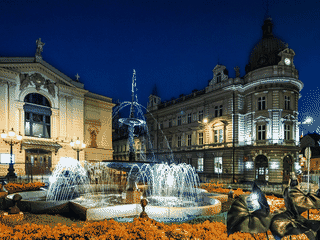

Bielsko-Biała
Poland49.82°N 19.04°E · 300 m
116 places in the index.
49.82°N 19.04°E · 300 m
50.30°N 18.95°E · 352 m
50.80°N 19.12°E · 317 m
54.17°N 19.40°E
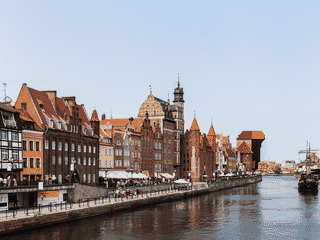
54.37°N 18.63°E · 11 m
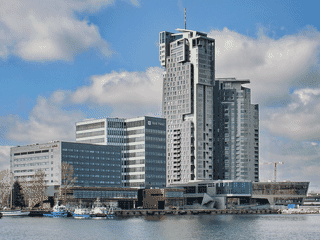
54.50°N 18.53°E · 0 m
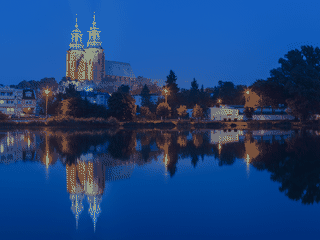
52.53°N 17.60°E · 100 m
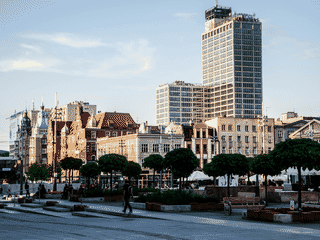
50.25°N 19.00°E · 272 m
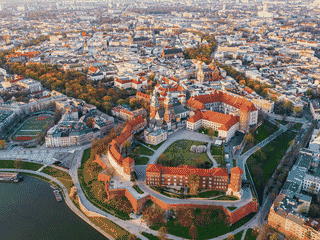
50.06°N 19.94°E · 219 m
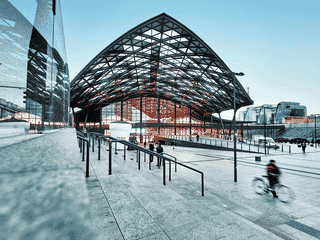
51.77°N 19.46°E · 219 m
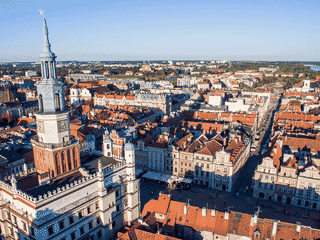
52.40°N 16.92°E
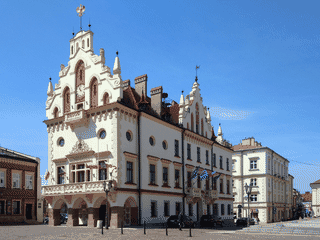
50.03°N 22.00°E · 384 m
54.43°N 18.55°E
53.43°N 14.53°E · 131 m
53.01°N 18.61°E · 59 m
52.10°N 21.00°E · 118 m
51.07°N 17.02°E · 111 m
49.30°N 19.97°E · 837 m
Białowieża is one of Europe's last and most significant primeval forests, a UNESCO World Heritage Site spanning Poland and Belarus. The park is most famous for its population of European bison (żubr), the continent's largest land mammal, which was brought back from near-extinction here after World War II when only 22 remained globally.
Atlas entry
Białystok serves as the main gateway to the Green Lungs of Poland, a collective name for the natural attractions of Podlaskie region. The city holds historical significance as the birthplace of Ludwik Zamenhof, inventor of Esperanto, hosting an international conference in 2009.
Atlas entry
Bielsko-Biała sits on the Biała River, with a hilltop castle recalling its medieval beginnings. A merger with neighboring Biała in 1951 created the city visitors explore today.
Bieszczady National Park is the largest mountainous national park in Poland, covering the Bieszczady range which forms part of the Carpathian Mountains. Due to its remoteness and lack of economic or strategic relevance, it contains some of the most pristine nature in Poland.
Atlas entry
Bochnia is a quieter, smaller alternative to the famous Wieliczka Salt Mine — same UNESCO status, fewer crowds, and lower prices. The underground chambers span 4.5 km across 16 levels, with sculptures, a subterranean restaurant, and even a sanatorium where visitors inhale salt particles overnight.
Atlas entry
Bory Tucholskie National Park protects a sprawling 3,200 km² coniferous forest in southern Pomerania, one of the largest such woodlands in Poland. The park offers ancient stone circles at Węsiory, the winding Brda River valley called Piekiełko, and a unique aqueduct at Fojutow where two watercourses cross at different levels.
Atlas entry
Braniewo is the nearest sizeable Polish town to three border crossings with Russia's Kaliningrad Oblast. Many travelers pass through here when crossing between mainland Poland and the Kaliningrad exclave, making it a practical transit stop rather than a destination itself.
Atlas entry
Brzeg is a medieval town in Opole Voivodeship founded in the mid-13th century, situated roughly halfway between Wrocław (40 km west) and Opole (35 km east). The town is notable for Renaissance architecture, with the Castle of the Silesian Piasts often called the 'Silesian Wawel' and the 16th-century Town Hall described as one of Poland's most valuable Renaissance monuments.
Atlas entry
Bydgoszcz is a major city of 360,000 in Poland, known as 'Little Berlin' before the world wars. It has well-preserved 19th-century architecture, green areas along the Brda river, intriguing museums, and a vibrant music scene with famous venues like Filharmonia Pomorska and Opera Nova.
Atlas entry
Bytom is a post-industrial city in the Silesian Metropolis that developed from 19th-century coal mining and steel production. While not a scenic destination like Krakow, it offers a window into Upper Silesian industrial heritage and serves as a practical base for visiting Katowice (7 km northwest), Auschwitz-Birkenau, and Krakow.
Atlas entry
Chałupy is a small village and seaside resort on the Hel Peninsula in Pomeranian Voivodship, Poland. The main draws are the wide, clean Baltic-side beach with soft sand and the pine-wood forests growing in the sand dunes just outside town.
Atlas entry
Chełmno is a small historic town in northern Poland with about 20,000 inhabitants, often visited as a day trip from nearby Toruń or Bydgoszcz. The town is best known for being the birthplace of "Chełmno rights" (prawo chełmińskie), a standardized city charter granted in 1233 that became the model for over 200 Polish towns.
Atlas entry
Park Śląski gives industrial Chorzów a spacious green setting for days outdoors. The zoo, planetarium and Legendia funfair cluster within this large park beside Katowice.
Ciechanów is a small city of 44,000 in Northern Masovia, offering a quieter alternative to larger Polish destinations. The main draw is the ruins of the Gothic Masovian Dukes castle, which hosts several festivals throughout the year.
Atlas entry
Cieszyn is a small Silesian town of 33,500 people straddling the River Olza, with its Czech twin Český Těšín just a short walk away. The border was fixed after World War I, split by war, re-united under Nazis, then restored after 1945—now relaxed under the Schengen Agreement.
Atlas entry
Czerniejewo is a small town in Wielkopolskie (Greater Poland) whose chief appeal lies in its handsome 18th-century palace and the expansive park surrounding it. The town was shaped by General Jan Lipski, who received it as a dowry around 1770 and invested heavily in its development, building the palace, a distillery, tannery, brick factory, and water mill.
Atlas entry
Jasna Góra monastery and its Black Madonna icon draw pilgrims to Częstochowa. Baroque churches and industrial heritage museums give the city appeal beyond the shrine.
Dąbrowa Górnicza is a post-industrial city in the Silesian heartland, 300 m above sea level, with a population of 117,000. Its main draw is the Sztygarka Museum in a former mining school, which tells the story of coal mining, metallurgy, and the industrial boom from 1795-1990.
Atlas entry
Drawa National Park spans the forested river valley of Drawa on the border of Zachodniopomorskie, Wielkopolskie, and Lubuskie voivodeships in western Poland. It is one of Poland's premier kayaking and wilderness camping destinations, offering a 190 km canoe trail along the Drawa river with multiple camping spots.
Atlas entry
Elbląg's Old Town is largely a post-war recreation of Gothic, Renaissance and Baroque architecture. The contrasting New Town offers a look at Poland's communist-era urban landscape.
Frombork is a small Baltic fishing village in Poland's Warmia-Masuria region, famous as the final residence of Renaissance astronomer Nicolaus Copernicus, who conducted his groundbreaking heliocentric research here until his death in 1543. The town was part of Prussia and later Germany until 1945, known as Frauenburg throughout the Middle Ages.
Atlas entry
Gdańsk pairs a Baltic setting with historic streets around Długa Street and the Long Market. Its old town rewards travelers interested in architecture and leisurely walks.
Gdynia is a Baltic port shaped by its expansion after the First World War. Interwar modernist architecture gives it a different character from nearby medieval city centers.
Gliwice is an industrial Silesian city that punches above its weight for history: it was the site of the 1939 false-flag radio attack that sparked World War II. The old town has been tastefully restored around a market square, and the city holds several museum branches, a Gothic church, and Europe's tallest wooden radio tower.
Atlas entry
Głogów is one of Poland's oldest cities, though almost entirely destroyed during World War II and rebuilt afterward. The city is nowadays mostly known for copper mining, with the KGHM Polska Miedź mine among the largest copper producers in Europe.
Atlas entry
Gniezno's cathedral and market square sit within a compact historic center. Exploring on foot gives travelers an easy way to connect its religious landmarks and central streets.
Gorzów Wielkopolski is one of the twin capitals of Lubuskie Voivodship in western Poland, with a population of over 125,000. The city serves as a regional center with a compact historic core featuring Gothic architecture, a 14th-century city wall remnant, and the imposing St.
Atlas entry
Hel is a compact Baltic seaside town at the tip of a 34 km peninsula, equidistant between Gdańsk and Władysławowo. The town combines fishing heritage with WWII history — a one-month defense against German invaders in 1939 is commemorated in museums and preserved bunkers.
Atlas entry
Iława is a small lakeside town in the Masuria region of Poland, best known for its proximity to Jeziorak lake—the longest lake in Poland. The town offers a slower pace of travel compared to major Polish cities, with opportunities for sailing, kayaking, and fishing.
Atlas entry
Jarosław is a Renaissance-era town in southeastern Poland's Podkarpackie region, offering a compact historical center where churches, synagogues, and noble houses reflect centuries of multicultural coexistence. The town of 37,000 people provides an authentic alternative to larger tourist destinations, with the entire old town walkable in under an hour.
Atlas entry
Jastarnia is a compact sea resort village in the middle of the Hel peninsula, one of the most popular on the Polish Baltic coast. It offers a broad beach with white sandy dunes northeast of the center, a working fishing harbour at the south beach, and a lively bar and cafe scene along Ulica Sychty.
Atlas entry
Jastrzębia Góra is Poland's most northern point and by many regarded as the most beautiful part of the Polish coast. This small seaside resort on the Baltic coast in Pomerania offers wide sandy beaches, dramatic coastal cliffs, and access to nearby natural wonders like Lisi Jar (Fox Gorge) and the Rozewie Lighthouse.
Atlas entry
Jawor is a modest town in Lower Silesia that draws visitors primarily for its Church of Peace (Kościół Pokoju), a UNESCO World Heritage Site and the largest evangelical church built in the 17th-century baroque style. The town offers Renaissance architecture, a historic market square, and a relaxed atmosphere without the crowds of larger Polish destinations.
Atlas entry
Jelenia Góra is a city of nearly 100,000 inhabitants in Lower Silesian Voivodship, serving as the main gateway to the Giant Mountains (Karkonosze). The city offers a historic old town with colorful facades around Town Hall Square, the spa district of Cieplice with hot spring waters dating back to the 13th century, and proximity to hiking trails and ski resorts.
Atlas entry
Kalisz (pop. 110,000) is the main city of south-eastern Greater Poland and probably the oldest town in Poland, mentioned by Ptolemy as 'Calisia' in his Geographia circa AD 142–174 along the Amber Road.
Atlas entry
Kalwaria Zebrzydowska is a small pilgrimage town in Małopolskie Province, southern Poland, centered around a beautiful Mannerist monastery complex that has been a UNESCO World Heritage Site since 1999. The town was built by the wealthy Zebrzydowski in 1600 as a spiritual landscape modeled on Jerusalem's Via Dolorosa.
Atlas entry
Kamień Pomorski is a small historic town on the Bay of Kamień in northwestern Poland, offering a glimpse into medieval Pomeranian history as the first known capital of the Duchy of Pomerania in the 12th century. The town serves as a quieter alternative to busier Baltic coast resorts, with brick Gothic architecture and a peaceful cathedral district.
Atlas entry
Karpacz is the most established Polish resort in the Giant Mountains (Karkonosze), offering both winter skiing and summer hiking access to Karkonosze National Park. The town retains German Silesian character with distinctive wood-decorated architecture, including two notable churches.
Atlas entry
Katowice is a base for exploring Silesia's industrial heritage. Museums and regional transport links give travelers ways into the story of coal and steel.
Kazimierz Dolny is a small artists' town of 2,500 people on the eastern bank of the Vistula (Wisła) in Lublin Voivodship. Once home to a large Jewish community — nearly half the population before WWII — it now draws Polish and foreign visitors for its galleries, historic architecture, and network of limestone gorges.
Atlas entry
Kędzierzyn-Koźle is a dual-heritage town in Poland's Opole Voivodeship, formed from the historical towns of Kędzierzyn (Kandrzin in German) and Koźle (Cosel in German). The town offers Silesian and German architectural layers, including a castle complex, Gothic churches, and a historic lock on the Oder River.
Atlas entry
Kielce is the capital of the Holy Cross Voivodeship (Świętokrzyskie) in central Poland with a population just under 200,000. The city offers baroque architecture, several museums, and a quieter atmosphere compared to Kraków, making it a practical base for exploring the region.
Atlas entry
Kłodzko is one of Poland's oldest towns, established in the 10th century and granted city rights in 1233. For its well-preserved Gothic architecture, Renaissance tower, and fortified fortress, it is sometimes called "Little Prague." Culturally rooted in Bohemia but administratively part of Silesia since 1763, the city offers a compact historic center with significantly lower prices than Prague or Wrocław.
Atlas entry
Kołobrzeg is a fishing city of 50,000 people on Poland's Baltic coast. It is the largest seaside resort in the northwestern part of the country, attracting Polish tourists to miles of sandy beaches and forest walking paths.
Atlas entry
Kórnik is a compact historic city in Greater Poland, 18 km southeast of Poznań, best known for its Dzialynski Castle with medieval roots and a fascinating Kórnik Library containing rare manuscripts including a first edition of Nicolas Copernicus's Works. The Arboretum is one of Poland's largest dendrological parks with over 3,500 tree species.
Atlas entry
Kraków brings together a medieval Old Town, Wawel Castle and the riverside setting of the Vistula. Kazimierz and Nowa Huta add contrasting chapters of Jewish and socialist-era history.
Kruszwica is a small historic town on Lake Gopło that served as an early capital of Kuyavia under the Piast dynasty. It offers medieval architecture including the rare Romanesque Church of St.
Atlas entry
Krynica Morska is a city on the Baltic coast in Pomorskie, Poland, near the Russian border. It serves as a beach destination for Polish tourists seeking coastal relaxation.
Atlas entry
Krynica-Zdrój is Poland's largest spa town, set in the forested Beskid mountains of Małopolskie Province. The town has drawn visitors since the 19th century for its mineral water springs, with 'Zdrój' literally meaning 'spa' in Polish.
Atlas entry
Kudowa-Zdrój is a historic spa town in Poland's Lower Silesia, sitting at 400 m elevation in the foothills of the Stołowe (Table) Mountains. The town draws visitors seeking spa treatments for heart and circulation ailments, along with nature lovers and hikers who use it as a base for exploring the border region.
Atlas entry
Lądek-Zdrój claims to be the oldest spa town in Poland, with baths dating to 1498. The town attracted famous guests including Frederick the Great, Goethe, and John Quincy Adams.
Atlas entry
Łańcut (pronounced Wine-tsoot) is a small town in Poland's Podkarpackie region, known for its grand 17th-19th century castle and a working vodka distillery that produces its own brands. The town sits on the edge of historic East Galicia, making it a quiet, walkable stop between Rzeszów and the Ukrainian border.
Atlas entry
Łeba is a resort town on Poland's Baltic coast known for its wide sandy beach and proximity to Slowinski National Park, home to Europe's largest sand dunes. The town has a relaxed summer-vacation atmosphere with affordable prices compared to Western European beach destinations.
Atlas entry
Łódź grew through a textile boom that shaped its factories, workers' neighborhoods and magnates' residences. That industrial past gives the city a distinctive historical character.
Lubin serves as a commercial center for the surrounding rural Lower Silesian region rather than as a tourist destination. The city has fragments of history visible between Soviet-era housing blocks and modern developments, though these historical elements are sparse and require effort to discover.
Atlas entry
Lublin's castle houses the Chapel of the Holy Trinity. Its Byzantine paintings give travelers a distinctive reason to explore the historic complex.
Malbork is a small Polish town made extraordinary by its massive Gothic castle complex, the largest of its kind in Europe. The castle served as headquarters for the Teutonic Knights and was once the world's largest brick building.
Atlas entry
Międzyzdroje (Misdroy) is a seaside resort on Wolin Island in Zachodniopomorskie, Poland, sitting directly on the Baltic coast with a wide sandy beach. The town offers water sports including diving, sailing, and delta-flying, plus access to Wolinski National Park to the south.
Atlas entry
Nako is a remote Himalayan village at 3,600m in Eastern Himachal Pradesh's restricted border zone with Tibet. It offers pristine Nako Lake with mirror-like morning reflections, a 996 AD monastery with ancient frescoes, and traditional stone-and-wood architecture unchanged for centuries.
Atlas entry
Niepołomice is a compact town 25 km southeast of Kraków centered around a well-preserved 14th-century Gothic hunting castle. The Royal Castle (Zamek Królewski) served Polish royalty and now houses a museum with art galleries and a hotel.
Atlas entry
Nowy Sącz is a historic town in Małopolskie Province, set against the Beskid mountains of southern Poland. It offers one of Poland's largest market squares, Jewish heritage sites including the Great Synagogue, and serves as a gateway to mountain recreation in the region.
Atlas entry
Nowy Targ sits 80 km south of Kraków as a practical base for accessing two mountain ranges: the Gorce Mountains directly north and the Tatra Mountains to the south. The town itself has limited sights but serves hikers targeting Turbacz (the Gorce's highest peak) and travelers heading to Zakopane without paying premium Zakopane prices.
Atlas entry
Nysa is a small medieval town in Opole Voivodeship that served as an important regional centre during the Middle Ages. With a population of 44,000 (2019), the town centre preserves Gothic architecture including churches, a bishop's palace, and two remaining fortified tower gates from the 14th century.
Atlas entry
Ogrodzieniec is a small town of 4100 people in the Silesian Voivodeship, famous for its Gothic-Renaissance ruined castle 2 km east in the village of Podzamcze. The limestone outcrops of the Kraków-Częstochowa Upland attract rock climbers, and the area is part of the Eagle Nests trail linking medieval castles.
Atlas entry
Opole is the smallest regional capital in Poland by population, offering a compact, walkable old town with Renaissance architecture and none of the tourist crowds of Krakow or Wrocław. The city is the historical capital of Upper Silesia, with roots dating to the 8th century, and hosts Poland's most popular song festival every June at the Millennium Amphitheatre.
Atlas entry
Oświęcim's town sights are close enough to explore on foot. Visits to the nearby camp memorials involve a separate journey and substantial walking.
Pilica is a drowsy market town of 1900 people in the Kraków-Częstochowa Upland, also called the Polish Jura for its limestone hills and castles. The main draw is proximity to Smoleń Castle (3 km south) and Pilica Castle itself, though the latter is closed and derelict as of 2024 due to a decades-long ownership dispute.
Atlas entry
Piotrków Trybunalski is an 800-year-old city in central Poland offering a quieter alternative to nearby Łódź. The city preserves a historic market square with antique tenement houses, significant Jewish heritage including the first Nazi ghetto, and Gothic-Renaissance architecture.
Atlas entry
Płock is an undiscovered tourist attraction away from Poland's main touristic corridors. Silent, picturesque, and interesting, it offers Art Nouveau (secesja) architecture, a dramatic location on steep Vistula river cliffs, and a genuine local feel without overtourism.
Atlas entry
Poznań's Old Market Square is a natural focus for a city visit. Cafés and bars line the square, making it a place to linger between walks.
Prudnik is one of Poland's oldest towns, founded in 1279 in the historic Silesia region. The town offers medieval architecture including the 14th-century Wok's Tower, Baroque churches, and a historic town hall from 1782.
Atlas entry
Przemyśl is Poland's second oldest town after Kraków, founded as early as the 8th century, making it aHidden gem for history enthusiasts. Its strategic location at the foot of a hill in the Przemyśl Gate connects the mountains and lowlands, offering fertile surroundings and views along the San River.
Atlas entry
Puszczykowo is a quiet residential town of 9,800 people (2016) at the northern edge of Wielkopolski National Park, 15 km south of Poznan. The main draw is The Arkady Fiedler Travel Museum, dedicated to the famous Polish travel writer who lived here from 1946 until 1985.
Atlas entry
Rabka-Zdrój ('Zdrój' means spa in Polish) is a mountain resort town in Małopolskie Province, 70 km south of Kraków. It serves as the main access point for Czorsztyn Lake 45 km southeast, with its twin castles, boat rides, and water sports.
Atlas entry
Radom is an inexpensive Polish city 100 km south of Warsaw that offers historic churches, museums, and annual festivals at prices significantly below the national average. The city has 220,000 inhabitants and is the second-largest in Mazowieckie, though it sees little tourist traffic due to its industrial reputation.
Atlas entry
Ruda Śląska is an industrial city in the Upper Silesian metropolis with a population of 135,008. The name "Ruda" means mineral ores, and iron and coal were mined here from medieval times.
Atlas entry
Rzeszów is the capital of Poland's Subcarpathian region. Its long association with the Lubomirski family provides a thread through the city's cultural history.
Sandomierz is a compact medieval town in Poland's Świętokrzyskie Voivodeship, positioned along the Vistula River. The town preserves an architectural ensemble from the late Middle Ages and Renaissance, with approximately 120 listed monuments including Gothic churches, a Renaissance town hall, and a fortified castle.
Atlas entry
Sanok offers a slower, more affordable alternative to Poland's major tourist cities. The town's crown jewel is the Open Air Village Museum (Skansen), one of Poland's finest ethnographic museums with 200 historic buildings.
Atlas entry
Sejny is a small, sleepy town in northeastern Poland's Podlaskie Voivodeship, situated just 12 km from the Lithuanian border. Historically a multinational crossroads where Poles, Lithuanians, Jews, Germans, and Belarusians coexisted, today it offers a quiet atmosphere with significant Jewish heritage sites.
Atlas entry
Słubice is a pleasant, quiet border town where Poland meets Germany across the Oder River. The main draw is eating traditional Polish food cheaply—pierogi, kebabs, and hearty meat dishes at a fraction of German prices.
Atlas entry
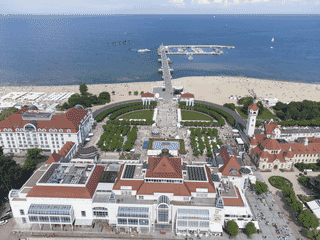
Sopot is a compact Baltic resort with spa traditions and pre-war architecture. Its beach and wooden pier provide a seaside counterpoint to the neighboring cities.
Sosnowiec is an industrial city of about 187,000 residents in the Silesian Voivodeship of southern Poland, forming part of the GZM metropolis centered on Katowice, 10 km west. The city grew mainly in the 19th and early 20th centuries as a coal and textile centre, earning the local nickname "city of four cultures" reflecting the diverse communities that shaped it.
Atlas entry
Sulejówek is a quiet suburban town in Mazowieckie province, best known as the birthplace of Polish national hero Marshal Józef Piłsudski. The town has tree-lined surroundings and a relaxed atmosphere, making it a pleasant escape from Warsaw for half a day or a full day.
Atlas entry
Suwałki is Poland's northeasternmost city, sitting next to the Czarna Hańcza river and close to the borders of Lithuania, Belarus, and Russia's Kaliningrad enclave. It's known for having the coldest average temperatures in Poland, earning the nickname "Polish pole of cold." Most travelers use it as a transit point or base for visiting Wigry National Park, Sejny, or the historic Augustów Canal, though the town itself offers modest attractions including a Regional Museum and a pedestrian street.
Atlas entry
Świdnica is a mid-sized city in Poland's Dolnośląskie region, located 55km southwest of Wrocław. Its main draw is the Peace Church (Kościół Pokoju), a 17th-century wooden Protestant church inscribed on the UNESCO World Heritage List.
Atlas entry
Świnoujście is a port town and seaside spa on Poland's western Baltic coast, directly bordering Germany near the island of Usedom. It offers the widest beach on the entire Polish Baltic coast, making it popular for sunbathing and swimming.
Atlas entry
Szamotuły is a small historic town in the Wielkopolskie Voivodship, situated 35 km north-west of Poznań. The town preserves a 15th-century castle, a medieval defense tower, and one of the region's most important baroque churches.
Atlas entry
Szczawnica is a historic spa town in the Małopolskie mountains offering therapeutic mineral waters, outdoor adventures, and access to the dramatic Pieniński National Park. The town features elegant 19th-century villas, a pedestrian main street with spa architecture, and serves as a gateway to the Dunajec River Gorge.
Atlas entry
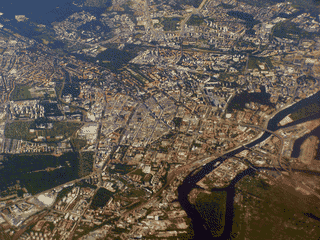
Szczecin's castle, reconstructed Old Town and riverfront promenade offer a varied urban walk. Wały Chrobrego looks over the Oder and the port.
Szczyrk is a winter sports resort in the Silesian Voivodeship of southern Poland, sitting at 500-600 m elevation in the Beskids mountains. The highest local peak is Skrzyczne at 1257 m, with ski lifts ascending toward the ridge at 1200 m.
Atlas entry
Szklarska Poręba is a year-round outdoor destination at the foot of the Giant Mountains (Karkonosze), serving as the main gateway into Karkonosze National Park. The town combines a small resort feel with access to 27-metre Kamieńczyk Waterfall, the Sudetes' tallest cascade, and the Szrenica ski area with 12 km of slopes.
Atlas entry
Tarnów is a historic medieval city in Małopolskie Province, southern Poland, with a population of just over 100,000. The city features a well-preserved Old Town with Renaissance tenement houses, a 14th-century Gothic/Renaissance City Hall, and significant Jewish heritage including remains of an old synagogue.
Atlas entry
Tarnowskie Góry is a city in the Silesian Voivodeship of southern Poland with a population of 61,842 in 2021. Its main attraction is the Historic Silver Mine, a UNESCO World Heritage Site where visitors descend by lift and tour 1,700 meters of tunnels by boat.
Atlas entry
Atlas entry
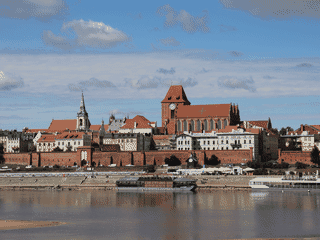
Toruń's Gothic Old Town survived the wartime bombing that reshaped many Polish cities. Its preserved medieval streets are the main draw for a history-focused visit.
Tychy is a working-class industrial city in the Silesian heartland, best known as the home of Tyskie beer (founded 1629). It offers an authentic slice of Polish urban life without tourist crowds—think coal-smoke heritage, brewery tours, and a surprising density of pubs.
Atlas entry
Tykocin preserves one of the largest pre-war centers of Jewish culture in Poland, with over 100 historic buildings forming the oldest urban complex of historical Podlasie. The reconstructed Baroque castle and the Great Synagogue (once one of Europe's largest wooden synagogues) offer a tangible connection to the town's rich multicultural past.
Atlas entry
Ustroń is a purpose-built mountain resort in the Beskids, offering sanatorium heritage, year-round chairlift access, and hiking trails reaching the Czech border. The town packs in hotels, guesthouses, and eateries along the Wisła valley without capital-city chaos, making it a practical base for outdoor activities.
Atlas entry
Wadowice is a small town in Małopolskie Province famous as the 1920 birthplace of Karol Wojtyła, who became Pope John Paul II. The town has become a major pilgrimage site, drawing visitors to the basilica where he was baptized and the museum at his birth house.
Atlas entry
Wągrowiec is a small historic town of 26,000 inhabitants in north-east Greater Poland, situated about 60 km NE of Poznań at the banks of the Wełna River and Durowskie Lake. The town is inseparably connected with the Cistercian Order in Poland and offers visitors a peaceful alternative to larger Polish cities, with notable Gothic churches, a regional museum, and proximity to some of Poland's oldest wooden churches.
Atlas entry
Wałbrzych is Poland's second-largest city in Dolnośląskie, serving as a gateway to the Karkonosze mountain range and a base for exploring Silesian castles. The city combines post-industrial heritage with historic architecture—it suffered relatively little WWII destruction, preserving buildings like the Baroque Market Square tenement houses and the grand Książ Castle nearby.
Atlas entry
Wambierzyce is a historic pilgrimage site in Lower Silesia, drawing visitors to its baroque Basilica of the Visitation and the beloved icon of Our Lady of Wambierzyce. The town is famous for the Szopka—a collection of centuries-old mechanized Nativity scenes hand-built and painted entirely by hand, still in working order.
Atlas entry
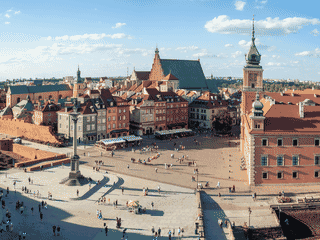
Warsaw combines a reconstructed Old Town with modern architecture and major museums. Its history, nightlife and public transport make for a varied city break.
Wieliczka is a small Polish town famous for its UNESCO-listed salt mine, one of the oldest in the world with over 700 years of mining history. The underground complex features chapels carved entirely from salt, including the famous St Kinga's Chapel, making it a unique cultural experience unlike typical European museums.
Atlas entry
Wielkopolski National Park offers accessible wilderness with post-glacial lakes, mixed forests, and rich wildlife including deer and boars. Located just 15 km from Poznań, it provides a quick nature escape without extensive travel.
Atlas entry
Wisła is a year-round mountain resort in the Silesian Beskids, 90 km south of Katowice. It developed from a tiny farming village in the 19th century and grew into Poland's premier winter sports destination.
Atlas entry
Władysławowo is a seaside resort city at the base of the Hel Peninsula in Pomorskie, Poland. Named after King Władysław IV who established a Polish Navy port here, it now draws holidaymakers with its sandy beaches, working fishing harbour, and amusement park.
Atlas entry
Wolsztyn (pronounced Volshtin) is a small town in southwest Greater Poland, notable as the last place in Europe where steam locomotives remain in regular scheduled service. The town sits on the Dojca river between Wolsztyn and Berzyńskie Lakes, offering a peaceful alternative to major tourist routes.
Atlas entry
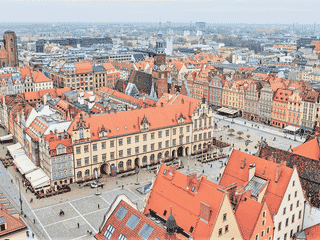
Wrocław combines Gothic architecture with the energy of a university city. Its youthful atmosphere makes it a lively setting for a city break.
Zabrze is an industrial city in Poland's Silesian Voivodeship, population 168,946 in 2021, forming part of the 2.7 million-person Katowice conurbation. Its top draw is the Coal Mining Museum, which operates two underground facilities—Guido Mine and Queen Louisa Adit—where visitors explore former workings by boat or foot.
Atlas entry
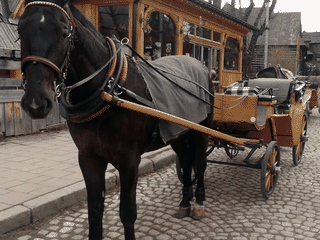
Zakopane pairs winter skiing at Kasprowy Wierch with summer hikes to Morskie Oko lake. Mountain activities give the resort a focus throughout the year.
Zamość is a UNESCO World Heritage site inscribed in 1992 for its Renaissance architecture. Founded in 1580 by Jan Zamoyski and designed by Italian architect Bernardo Morando, the town was intended as an international hub embracing Italian Renaissance values.
Atlas entry
Zielona Góra is Poland's wine capital and the northernmost wine-growing region in Europe, offering a unique Central European experience centered on viticulture. The city hosts Winobranie (September wine festival), one of Poland's most celebrated cultural events, alongside a summer film festival.
Atlas entry
Żnin is a compact historic market town of 24,000 people in Poland's Kujawsko-Pomorskie Province, sitting between the Żnin Great Lake and Żnin Small Lake along the Gąsawka river. The town makes an ideal base for exploring the Pałuki Land region, with nearby forests and lakes attracting summer visitors.
Atlas entry
Żywiec is a compact southern Polish town best known for its historic brewery founded by Archduke Albrecht in 1856, which remains operational despite suspended tours. The town sits beside Lake Żywiec, a reservoir created in 1966 for recreation including swimming, pedalos, and kayaks.
Atlas entry
In development: the whole atlas offline, a trip planner and a private journal. We'll post here when it ships. No newsletter to join.


.jpg)


.jpg)


.jpg)


.jpg)
.jpeg)
.jpg)