
Poznań
Eastern Europe and the Balkans · Poland
Did you know?
- Major trade fairs bring waves of business visitors into the city.
- Mechanical goats butt heads above the Old Market Square.
- St Martin's croissants contain a filling of white poppy seeds, nuts and raisins.
See also

Gniezno
Poland52.53°N 17.60°E · 100 m
Overview
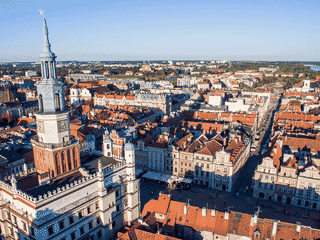
Poznań's Old Market Square is a natural focus for a city visit. Cafés and bars line the square, making it a place to linger between walks.
Languages: Polish
Why Go?
Poznań was the first capital of Poland alongside Gniezno, seen by many as the birthplace of the Polish nation. Today it is a diverse and vibrant city with many university students, a stunningly rejuvenated central square, thriving nightlife, fascinating museums, and many attractions in the surrounding area. For train buffs, Poznań is home to Europe's last surviving steam-hauled passenger service. Its strategic position on the Berlin–Moscow train line makes it a convenient entry point to Poland for those arriving from Germany.
Adapted from Wikivoyage contributors · CC BY-SA 4.0
Getting In
Poznań is accessible by air via Poznań-Ławica Henryk Wieniawski Airport (IATA: POZ), located 7 km from the city centre. The main railway station is Poznań Główny, handling virtually all trains from northwestern Poland and the Greater Poland Voivodeship. Platform numeration is not very intuitive, so arriving early is advisable. A local station, Poznań Garbary, serves regional and metropolitan rail on the Ostrów Tumski side. Poznań coach station offers bus connections across Poland and beyond.
Adapted from Wikivoyage contributors · CC BY-SA 4.0
Getting Around
Poznań has an extensive public transport network including trams and buses. Key tram lines include #5, #13, #16, #2, #17, #18 to various markets and neighborhoods. A park train called Park Railway Maltanka runs from near Rondo Śródka to Nowe Zoo with a stop at Termy Maltańskie, with some rides using a steam locomotive. The city centre is compact and walkable, with most major attractions within 15-20 minutes on foot.
Adapted from Wikivoyage contributors · CC BY-SA 4.0
When to Go
The best time to visit is April/May as it is dry, sunny, reasonably warm with long days. September/October offers similar qualities and is actually the peak tourist season, though with less sun as it is autumn. Winter should be avoided as weather is damp with intense smog and temperatures typically below zero, plus days are short. Summer can reach 30°C during heat waves lasting two weeks, but averages around 25°C during the day.
Adapted from Wikivoyage contributors · CC BY-SA 4.0
Where to Stay
Poznań is well known for its trade fairs when thousands of business travelers descend on the city. Accommodation can be quite difficult to find during these periods and prices tend to increase significantly. Budget options include Blooms Boutique Hostel and Apartments (from 50 zł with breakfast), Hanka Hostel, and Youth Hostel of Kids' Friends Society. Mid-range options include Hotel Włoski near the city centre with swimming pools and tennis courts nearby. The Hotel-Restaurant Brovaria offers a cozy stay on the Old Market Square with locally-brewed beer.
Adapted from Wikivoyage contributors · CC BY-SA 4.0
Food and Drink
Poznań has two main culinary locations: the Old Town around the Town Hall serving typical Polish fare (pierogi, pyzy, goose, bigos) catering mainly to tourists, and the Jeżyce district around Jeżyce Market and Dąbrowskiego/Szamarzewskiego streets focused on world cuisine with fine dining. Other districts have inexpensive bistro and kebab places. Traditional St. Martin's croissants (rogal świętomarciniński) are a famous local specialty available at H.P. Cukiernia. Budget dining options include Bar Pod Arkadami (traditional milk bar), Avanti (inexpensive pasta), and Piccolo (budget spaghetti). Nightlife centres on Stary Rynek and Wrocławska street.
Adapted from Wikivoyage contributors · CC BY-SA 4.0
Things to Do
The centrepiece Stary Rynek (Old Market Square) is one of the finest in Europe with cafés and bars lining the square. The Renaissance Town Hall, built in the 14th century and rebuilt in Renaissance style by Giovanni Battista di Quadro from Lugano, houses the Historical Museum of Poznań and is famous for mechanical goats that appear at noon. Other major attractions include the Cathedral of St. Peter and Paul (Poland's first cathedral, burial place of Polish kings), King's Castle with the Museum of Applied Art, and the Imperial Castle built 1905-1910 by the Berlin court architect of German Emperor Wilhelm II.
Adapted from Wikivoyage contributors · CC BY-SA 4.0
Stay Safe
In general you should feel safe in Poznań; crime including petty crime is low. City is not very popular among tourists so pickpocketing and tourist scams are rare. However, avoid strangers on Stary Rynek or Wrocławska street who want you to visit a club/bar with them as they may scam you or steal credit card data. On Friday and Saturday evenings in summer, avoid the west bank of the Warta river where large crowds of drunken people gather; instead go to the calmer east bank. Avoid areas near rail stations (Poznań Wschód, Poznań Dębiec) and final bus/tram stations (Rondo Rataje, Górczyn PKM) which may attract homeless people.
Adapted from Wikivoyage contributors · CC BY-SA 4.0
Connectivity
As of August 2022, the city centre has 5G coverage from all Polish carriers, while outlying districts and approach highways have 4G. WiFi is widely available in public places. The main tourist information centre is on the Old Market Square (building 59/60), open 09:00-21:00 in summer and 10:00-19:00 in winter, offering free maps, leaflets, souvenirs, and city-guide hire in multiple languages.
Adapted from Wikivoyage contributors · CC BY-SA 4.0
Budget Planning
Poznań offers good value for backpackers. Budget meals can be found at milk bars and kebab places for 40-50 zł, while hostels start from around 50 zł per night including breakfast. Museum admissions range from 6 zł (Fort VII) to 30 zł (Models of Old Poznań), with several offering free entry on specific days. Public transport tickets are affordable, and many attractions like Stary Rynek, churches, and outdoor areas are free to visit.
Adapted from Wikivoyage contributors · CC BY-SA 4.0
Day Trips
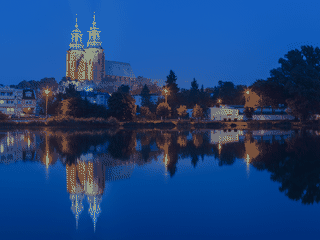
Poznań makes an excellent base for exploring Greater Poland. Gniezno (50 km northeast) is the first capital of Poland with one of the oldest cathedrals used for coronations. Kórnik (18 km southeast) features a neogothic castle with original furniture and dendrological park. Puszcza Zielonka (10-15 km northeast) offers walking and cycling trails, lakes, and a free observatory on Dziewicza Góra. Rogalin (16 km south) has a baroque palace of the Raczyński family with three oak trees over 800 years old named Lech, Czech, and Rus.
Adapted from Wikivoyage contributors · CC BY-SA 4.0
Go Next
For those arriving by train from Berlin, natural onward routes include south to Wrocław and Kraków, or continuing east to Warsaw. To the north lies Gdańsk on the Baltic coast. All these major Polish cities are well-connected by Intercity trains from Poznań Główny station.
Adapted from Wikivoyage contributors · CC BY-SA 4.0
Etiquette
Poznań is a modern European city where standard tourist etiquette applies. Dress modestly when visiting churches; shoulders and knees should be covered. Tipping is customary in restaurants (10-15%) if service wasn't included. Polish is the primary language; using basic greetings in Polish (dzień dobry for hello, dziękuję for thank you) is appreciated. Be aware that in suburbs, openly homosexual or non-white individuals may receive strange looks.
Adapted from Wikivoyage contributors · CC BY-SA 4.0
Field guide adapted from Wikivoyage contributors · CC BY-SA 4.0. Text has been adapted and organized for this guide. About our sources.
Places to know
A few starting points from the guide. Check current hours and prices before you go.
- eat
Avanti
For those on low budget, this is an inexpensive fast-serve place with few kinds of spaghetti or lasagne. Served almost immediately: pasta and sauce are always ready. (Tip: go for carbonara pasta).
Adapted from Wikivoyage contributors
- eat
Bamberka
In the middle of Old Market Square in the building of former Weigh House, Stary Rynek 2.
Adapted from Wikivoyage contributors
- eat
Bar Pod Arkadami
One of the last remaining milk bars in Poznań. A place to eat a meal on the cheap that is not spaghetti.
Adapted from Wikivoyage contributors
- eat
Czerwone Sombrero
Original Mexican cuisine with live Latino music.
Adapted from Wikivoyage contributors
- eat
Dark Koncept
A part of the Golden Apple-Tree restaurant, where all the meals are eaten in total darkness. Several bans are essential for the guests: it's forbidden to walk without waiter's assistance, to use cell phones or any other devices, which can be a source of any light. Beware of scammers selling vouchers to the old Dark Restaurant (it does not exist anymore).
Adapted from Wikivoyage contributors
- eat
Delicja
Centrally located, open from 12:00, serving mostly Polish, French and Italian meals, with a vast range of wines. Prices from €20 for a full meal, open-air tables from spring till autumn.
Adapted from Wikivoyage contributors
- eat
Double B's American Dinner
Restaurant based on popular image of American 50s restaurants. Serves burgers, hot-dogs and other American-inspired cuisine.
Recorded price: 60 zł
Adapted from Wikivoyage contributors
- eat
Dramat
A cheap place on the Rynek serving Polish food. Perennially popular.
Recorded price: €2-5
Adapted from Wikivoyage contributors
Before you go
Accommodation
Trade fairs cause accommodation shortages and price spikes. Book well in advance during major fair dates. Budget hostels available from 50 zł per night.
Language
English is common in the city centre but limited outside. Russian may work with Ukrainian or Belarusian migrants. German is rarely spoken despite proximity to Germany.
Money
Poland uses the Polish złoty (PLN). ATMs widely available. Credit cards accepted at most hotels, restaurants, and shops in the city centre.
Safety
General crime is low. Avoid strangers soliciting bar visits on Stary Rynek. West bank of Warta river attracts drunken crowds on weekend evenings.
Transport
Poznań Główny is the main railway station. Platform numbering can be confusing—arrive early. Local tram lines #5, #13, #16 serve the city centre and major markets.
Weather
Best months are April/May (dry, sunny) and September/October (peak season). Winter has smog and sub-zero temperatures; summer can reach 30°C during heat waves.