
Elbląg
Eastern Europe and the Balkans · Poland
Did you know?
- Church Path threads through brick houses to connect three churches.
- Canal boats climb inclines on rails between stretches of water.
- The local brewery produces Specjal beer.
See also

Gdańsk
Poland54.37°N 18.63°E · 11 m

Sopot
Poland54.43°N 18.55°E
Overview
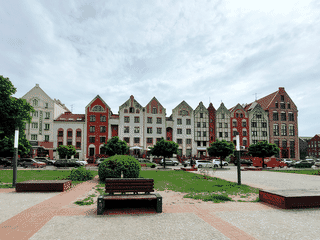
Elbląg's Old Town is largely a post-war recreation of Gothic, Renaissance and Baroque architecture. The contrasting New Town offers a look at Poland's communist-era urban landscape.
Languages: Polish
Why Go
Elbląg is a historic Hanseatic port city in Poland's Warmia-Masuria region with over 127,000 inhabitants (2021). The city lies on the Elbląg River, flowing into the Vistula Lagoon about 10 km north, providing access to the Baltic Sea via the Strait of Baltiysk. The Old Town features largely post-war recreated Renaissance, Baroque, and Gothic architecture, while the communist-era New Town offers an authentic glimpse into Poland's recent past with charming concrete-block canteens.
Adapted from Wikivoyage contributors · CC BY-SA 4.0
Get In
Elbląg is accessible by train from major Polish cities. The city is connected via PKP train services and has a PKS bus station adjacent to the railway station. The Warsaw-bound E7 motorway passes nearby. For travelers coming from Kaliningrad, the border crossing is at Braniewo. Regional bus routes connect Elbląg with nearby towns including Frombork (7 zł).
Adapted from Wikivoyage contributors · CC BY-SA 4.0
Get Around
Elbląg has a tram network linking the PKP train station and adjacent PKS bus station with the town centre. The main attractions are concentrated near each other, making walking a practical option. Tickets are available from newsagents, including one next to the train station. Bicycles can be rented from shops near the train station and behind the bus station for exploring the surrounding countryside.
Adapted from Wikivoyage contributors · CC BY-SA 4.0
When To Go
The summer months (July-September) offer the best weather for outdoor activities and the famous Elbląg-Ostróda Canal boat trips. The Archaeological and Historical Museum has extended hours during July-September (11:00-17:30) compared to off-season (11:00-15:30). Winter visits offer lower prices and fewer crowds, though some attractions may have reduced hours.
Adapted from Wikivoyage contributors · CC BY-SA 4.0
Where To Stay
Accommodation options range from camping to mid-range hotels. Hotel Pod Lwem (ul. Kowalska 10) occupies a restored 16th-century building in the Old Town, offering character and reasonable rates. Pensjonat MF (ul. św. Ducha 26) provides guesthouse accommodation. Camping No61 (ul. Panieńska 14) offers outdoor options. Kadyny Country Club in the town of Kadyny provides a countryside retreat. Prices are generally budget-friendly compared to major Polish cities.
Adapted from Wikivoyage contributors · CC BY-SA 4.0
Food And Drink
The Old Town offers menus in four languages with supposedly traditional Polish food in historic buildings, with main courses priced at 20-40 zł. The New Town features communist-style canteens in concrete blocks where two courses and a beer cost around 20 zł. Bar Kalinka (ul. 12 lutego 34/1) is a popular New Town canteen serving mains for 6 zł. Elbląg's own brewery produces Specjal beer. Local specialties include hand-picked wild mushrooms, fresh milk, honey, smoked sausage, fresh produce (market on Saturdays and Tuesdays mornings), vodka, mead, and sweets from the Wolność company flagship store at ul. ks. Osinskiego 4A.
Adapted from Wikivoyage contributors · CC BY-SA 4.0
Things To Do
The Elbląg-Ostróda Canal features boats that rise on rails, offering a unique 10-hour journey end-to-end with bar, snacks, and meals available. Shorter day trips are possible by disembarking early and taking the train back. St. Nicholas Cathedral (Mostowa 18) dates from the 13th century and is the focal point of the Old Town. The Archaeological and Historical Museum (Zygmunt August Boulevard 11, Old Town) is set in 13th-century Teutonic castle grounds with archaeology from the destroyed old town. Church Path (Scieżka Kościelna) connects three churches through brick houses and is popular for wedding photography. Take tram no. 2 to Bazantarnia forest for riverside walks through old trees with hills and ravines.
Adapted from Wikivoyage contributors · CC BY-SA 4.0
Buy
Elbląg is famous for amber jewelry. Visit the Galeria el (ul. Kuśnierska 6, Old Town) for shopping. Local products include hand-picked wild mushrooms, fresh milk, honey, smoked sausage, and fresh produce at the morning markets on Saturdays and Tuesdays. Don't miss local vodka and mead, or sweets from the Wolność company flagship store at ul. ks. Osinskiego 4A.
Adapted from Wikivoyage contributors · CC BY-SA 4.0
Safety
Elbląg is a generally safe city for travelers. Standard urban precautions apply: keep valuables secure in crowded areas and be aware of traffic when crossing streets. The Old Town and New Town areas are both considered safe for visitors at any hour.
Adapted from Wikivoyage contributors · CC BY-SA 4.0
Connectivity
Poland uses Type F electrical plugs (two-pin, round). Standard European mobile carriers provide coverage throughout the city. WiFi is commonly available in hotels, cafes, and restaurants. SIM cards can be purchased at convenience stores and mobile provider shops.
Adapted from Wikivoyage contributors · CC BY-SA 4.0
Budget
Elbląg is very affordable for backpackers. Budget travelers can eat well on 40-60 zł per day for food. Museum entry costs 25 zł (20 zł reduced). Tram tickets are available from kiosks. Basic dormitory or camping accommodation starts from around 50-80 zł per night. The Canal boat trip offers good value with meals included.
Adapted from Wikivoyage contributors · CC BY-SA 4.0
Day Trips
Frombork is an old coastal town where Nicolaus Copernicus worked, accessible by hourly buses from near the train station (7 zł). Malbork Castle (UNESCO World Heritage site since 1997) is a well-preserved medieval Gothic castle and museum. Sztutowo houses the Stutthof concentration camp memorial. The Elbląg-Ostróda Canal offers day-trip opportunities into the lake district with shorter options available by combining boat and train. Nowa Holandia nature and theme park (accessible via bus nr 6) features sleigh rides (8 zł per person), boat trips, canoeing, city farm, and playground.
Adapted from Wikivoyage contributors · CC BY-SA 4.0
Go Next
Nearby destinations include Malbork with its UNESCO-listed castle, Gdańsk (major Baltic city), Sztutowo (Stutthof concentration camp memorial), and Frombork (Copernicus's workplace). Kaliningrad is accessible via the border at Braniewo. The countryside around Elbląg is picturesque and well-suited for cycling, with routes available from bike rental shops near the train station. Maps of bike routes are sold in bookstores, though routes aren't always clearly marked—locals are generally helpful to lost travelers.
Adapted from Wikivoyage contributors · CC BY-SA 4.0
Etiquette
Standard European etiquette applies. Poles generally appreciate polite greetings and small talk before transactions. Tipping is appreciated in restaurants (10-15% is customary but not mandatory). Dress modestly when visiting churches and religious sites. Smoking is restricted in public indoor spaces.
Adapted from Wikivoyage contributors · CC BY-SA 4.0
Field guide adapted from Wikivoyage contributors · CC BY-SA 4.0. Text has been adapted and organized for this guide. About our sources.
Places to know
A few starting points from the guide. Check current hours and prices before you go.
- sleep
Camping No61
Adapted from Wikivoyage contributors
- sleep
Hotel Pod Lwem
Beautiful hotel in restored 16th-century building in the middle of the Old Town. Very smart but also very reasonable
Adapted from Wikivoyage contributors
- sleep
Kadyny Country Club
Adapted from Wikivoyage contributors
- sleep
Pensjonat MF
Adapted from Wikivoyage contributors
- eat
Bar Kalinka
A New Town canteen. Grab a tray and get some tasty soup, salad and snitzel in a genuine locals' place.
Recorded price: Mains 6 zł
Adapted from Wikivoyage contributors
- eat
Restauracja Slowianska
Charming restaurant with many dishes. Polish and Italian cuisine, also serve very good steaks.
Adapted from Wikivoyage contributors
- see
Archaeological and Historical Museum in Elbląg
Museum set in 13th-century Teutonic castle grounds (fragments remain). Quite hidden museum at the back of ul. św. Ducha. Containing archaeology from the foundations of the destroyed old town (still uncovered in the Old Town). Other exhibits include Saxon finds from the nearby early settlement of Truso (a reconstructed Saxon house is also situated in the gardens and can be viewed only by asking the cashier after buying a ticket for the rest of the museum). Art and photography exhibitions are set in the other buildings.
Recorded price: Standard ticket 25 zł, reduced 20 zł
Adapted from Wikivoyage contributors
- see
Bazantarnia Forest
Forest area accessible by tram no. 2 with riverside walks, old trees, hills and ravines.
Adapted from Wikivoyage contributors
Before you go
Accommodation
Budget options include Camping No61 and hostels from 50 zł. Mid-range hotels like Hotel Pod Lwem offer good value in historic buildings.
Connectivity
Type F power plugs (European two-pin). Mobile coverage is reliable. WiFi available at most accommodations.
Food
Old Town restaurants 20-40 zł mains; New Town canteens offer two courses plus beer for 20 zł. Local specialties include amber-related items, wild mushrooms, and honey.
Language
Polish is the local language. Some German is understood due to historical connections. English is limited outside tourist areas.
Money
Polish złoty (zł) is the local currency. ATMs are widely available. Major credit cards accepted at hotels and larger restaurants.
Transport
Tram network connects train and bus stations to town center. Walking is sufficient for Old Town attractions. Bicycles available for rent near stations.
Weather
Continental climate with cold winters and mild summers. Best visited May-September for outdoor activities.