.jpg)
Gdynia
Eastern Europe and the Balkans · Poland
Did you know?
- Dar Pomorza is a museum tall ship dating from 1909.
- ORP Błyskawica is a preserved destroyer that visitors can explore as a museum ship.
- The Emigration Museum traces Polish migration from medieval times to the present.
See also

Sopot
Poland54.43°N 18.55°E

Gdańsk
Poland54.37°N 18.63°E · 11 m
Overview
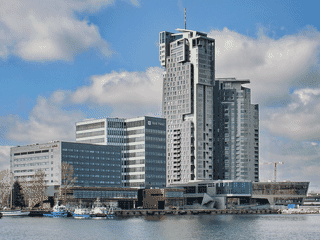
Gdynia is a Baltic port shaped by its expansion after the First World War. Interwar modernist architecture gives it a different character from nearby medieval city centers.
Languages: Polish
Why Go
Gdynia is a modern Baltic port city that offers a different experience from historic Gdańsk or snobby Sopot. Built almost from scratch after World War I as Poland's gateway to the sea, the city showcases interwar modernist architecture rather than medieval streets. The long sandy beaches, waterfront promenades, and maritime museums (including two historic ships) make it appealing for beach lovers and culture seekers alike, while prices tend to be slightly lower than neighboring Tricity destinations.
Adapted from Wikivoyage contributors · CC BY-SA 4.0
Understand
Gdynia is one of Poland's youngest cities, transforming from a small fishing village in the early 1900s to a major deep-sea port after World War I and the creation of the Free City of Danzig. Construction began in 1921, and the city expanded rapidly through the 1920s-1930s, leaving a distinctive architectural legacy of Monumentalism and early Functionalism. Today Gdynia has a population of 244,000 (2021) and remains Poland's second major Baltic port after Gdańsk.
Adapted from Wikivoyage contributors · CC BY-SA 4.0
Getting In
Gdynia is well-connected by rail, with Gdynia Główna railway station serving as the main hub. SKM (Fast Urban Railway) connects Gdynia with Sopot and Gdańsk frequently. For international travelers, Gdańsk Lech Wałęsa Airport (GDN) is the nearest airport, about 25 km away. The city can also be reached by ferry from Karlskrona, Sweden via Stena Line, with both day and night crossings available (day crossing around 240 zł for passenger with bike).
Adapted from Wikivoyage contributors · CC BY-SA 4.0
Get Around
Gdynia has good public transit including SKM trains, buses, and trolleybuses. Key trolleybus lines 21 and 26 serve Orłowo district and its beach. SKM Gdynia Orłowo station provides easy access to the Orłowo cliffs and beach area. The city center is walkable, and a 1.5 km promenade leads from the marina to Redłowo beach.
Adapted from Wikivoyage contributors · CC BY-SA 4.0
When To Go
Summer (June-August) is peak season for beach activities with the warmest weather, though prices for accommodation rise and beaches can be crowded. May-August sees extended aquarium hours (42 zł adult). The Open'er Festival in early summer draws over 70,000 music fans with top international acts. Shoulder seasons (May, September) offer milder crowds and reduced museum admission fees (36 zł at aquarium). Winter sees fewer tourists but some attractions like ORP Błyskawica close (April-October only).
Adapted from Wikivoyage contributors · CC BY-SA 4.0
Where To Stay
Gdynia offers mid-range hotel options concentrated around the city center and waterfront. The Mercure Gdynia Centrum (from 179 zł) provides modern comfort with harbor views after a thorough refurbishment. Hotel Nadmorski (from 395 zł) is a boutique property near the seaside boulevard with spa amenities. Budget-conscious travelers can consider staying in Gdańsk or Sopot, as the TriCity functions as a connected urban area with fast SKM train connections between them.
Adapted from Wikivoyage contributors · CC BY-SA 4.0
Food And Drink
Gdynia's main food street is Świętojańska with budget-friendly options like Gdyńska Zapiekanka at number 18 and PIEROŻEK at Skwer Kościuszki 15. For quick bites, there are multiple bars along Starowiejska. International cuisine is available: Pueblo (ul. Abrahama 56) serves Mexican food for around 35 zł daily 12:00-23:00, while Falla offers Israeli fare at Żołnierzy I Armii Wojska Polskiego 13. For the best seafood in Poland, Barracuda on Bulwar Nadmorski serves Baltic seafood daily 12:00-00:00. Hala Targowa (Wójta Radtkego 36, M-F 08:00-18:00, Sa 08:00-15:00) is a local market with fresh fish and produce.
Adapted from Wikivoyage contributors · CC BY-SA 4.0
Things To Do
Gdynia's maritime heritage draws visitors to its museum ships: ORP Błyskawica (30 zł, Apr-Oct, Tu-Su) is a WWII destroyer at Al. Jana Pawła II 1, while Dar Pomorza (28 zł) is the famous 1909 tall ship. The Emigration Museum in Poland (Adult 19 zł, free Wednesdays) at Polska 1 documents Polish migration history from medieval times to present. The Muzeum Marynarki Wojennej (30 zł, Tu-Su 10:00-16:00) at Zawiszy Czarnego 1B displays military helicopters, cannons, and torpedoes. Nature lovers can explore the Orłowo cliffs via trolleybus 21/26, or walk the 1.5 km promenade from the marina to Redłowo beach. Kamienna Góra (54m elevation) offers panoramic city views including the Hel peninsula.
Adapted from Wikivoyage contributors · CC BY-SA 4.0
Buy
The main shopping streets are Świętojańska and Starowiejska in the city center. Modern shopping malls include Batory (ul. 10 lutego 11), Klif near Orłowo cliff (Al. Zwycięstwa 256), and Gemini with cinema and restaurants (Ul. Waszyngtona 21). For local produce and fish, Hala Targowa market operates weekdays 08:00-18:00 and Saturdays 08:00-15:00 at Wójta Radtkego 36.
Adapted from Wikivoyage contributors · CC BY-SA 4.0
Safety
Gdynia is generally a safe city for tourists. Standard urban precautions apply in nightlife areas around Świętojańska. Beach areas and promenades are well-patrolled. The main concerns are typical of any port city—remain aware of your belongings in crowded areas and near the ferry terminal.
Adapted from Wikivoyage contributors · CC BY-SA 4.0
Go Next
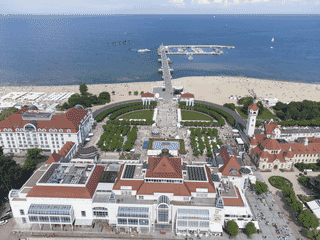
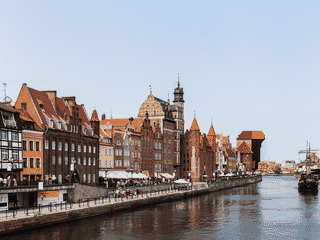
From Gdynia, the entire Tricity area is easily accessible by SKM train. Gdańsk (15 min north) features a beautiful old town and the world's largest Gothic brick church. Sopot (10 min north) offers the longest European pier and spa atmosphere. The Hel Peninsula is reachable by train/car with resorts like Chałupy, Jastarnia, Jurata, and Hel itself. The Kashubian Coast includes Słowiński National Park with Europe's largest dunes, plus sea resorts Łeba, Rowy, and Władysławowo. For history, visit Frombork (Copernicus's grave) or Elbląg. International travelers can take the Stena Line ferry to Karlskrona, Sweden (day crossing around 240 zł for cyclist).
Adapted from Wikivoyage contributors · CC BY-SA 4.0
Field guide adapted from Wikivoyage contributors · CC BY-SA 4.0. Text has been adapted and organized for this guide. About our sources.
Places to know
A few starting points from the guide. Check current hours and prices before you go.
- sleep
Antares
The Antares is a skillfully adapted older residential building, now complete with all the features of a midscale hotel, including a small gym.
Recorded price: 199 zł per single room
Adapted from Wikivoyage contributors
- sleep
Courtyard by Marriott Gdynia Waterfront
The limited-service Marriott hotel is an all-new property with very modern if simple furnishings. Some rooms, the hotel's small gym and the ground floor Scandinavian restaurant offer first-row waterfront views of the harbour.
Recorded price: Rack rates from 222 zł (single occupancy), breakfast 80 zł per person
Adapted from Wikivoyage contributors
- sleep
Hotel Kuracyjny
A spa-themed hotel in Orłowo with an adjacent wellness centre
Recorded price: Room rates starting at 179 zł
Adapted from Wikivoyage contributors
- sleep
Hotel Nadmorski
The boutique hotel features touches reminiscing Gdynia's glorious modernist past inside and out, and boasts a location at the end of the seaside boulevard. A bit out of the way, it positions itself as a leisure destination, and trades on amenities, including a spa institute, and great service, even if its fit-outs have fallen behind with time.
Recorded price: Room rates starting at 395 zł
Adapted from Wikivoyage contributors
- sleep
Mercure Gdynia Centrum
The former Orbis hotel underwent a thorough refurbishment and is now a recommendable modern property with a central location and views of the harbour from rooms facing that side. The hotel also features a large indoor swimming pool.
Recorded price: Room rates starting at 179 zł
Adapted from Wikivoyage contributors
- eat
Bar Chiński LIU
Adapted from Wikivoyage contributors
- eat
Barracuda
This restaurant, right on the shore of the Baltic Sea, serves up the best seafood in Poland, hand down. The interior is a cool fusion of dark and modern, but the ocean breeze and the Sinatra sonnets make the patio far more pleasant.
Adapted from Wikivoyage contributors
- eat
Falla
Really laid back Israeli food. Hummus, falafel, Baba ganoush etc. with a slight twist. Some of the best I've had and the price is really good. Massive portions.
Adapted from Wikivoyage contributors
Before you go
Connectivity
Major Polish mobile operators (Orange, Play, Plus, T-Mobile) provide coverage. SIM cards available at convenience stores and operator shops. Free WiFi common in hotels, cafes, and some public areas.
Language
Polish is the official language. English is widely understood in tourist areas, hotels, and restaurants, especially among younger Poles.
Money
Poland uses the Polish złoty (PLN). ATMs widely available. Credit cards accepted at hotels, restaurants, and malls but carry some cash for markets and smaller establishments.
Packing
Bring layers for changeable weather. Swimwear for beaches April-September. Comfortable walking shoes for promenades and exploring.
Transport
SKM trains connect all three Tricity cities (Gdańsk, Gdynia, Sopot) frequently. Trolleybuses 21 and 26 serve Orłowo district. Gdynia Główna is the main railway station.
Weather
Maritime climate with cool summers (15-25°C) and mild winters. Best beach weather June-August. Baltic coast can be windy year-round.