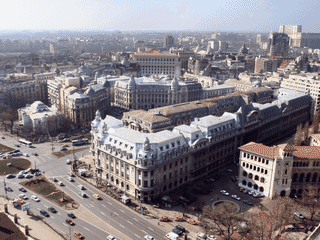

Bucharest
Romania44.43°N 26.10°E · 70 m
73 places in the index.
44.43°N 26.10°E · 70 m
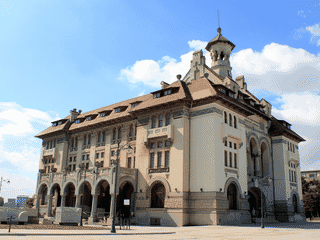
44.17°N 28.64°E · 1 m
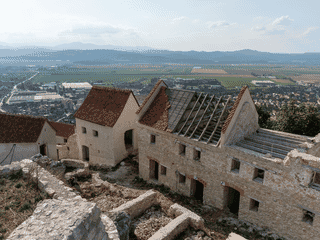
45.59°N 25.46°E · 650 m
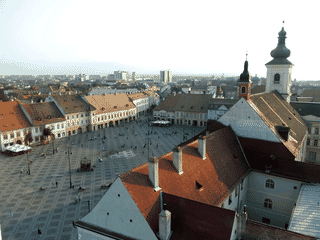
45.79°N 24.14°E · 434 m
46.22°N 24.79°E · 380 m
46.55°N 24.57°E · 320 m
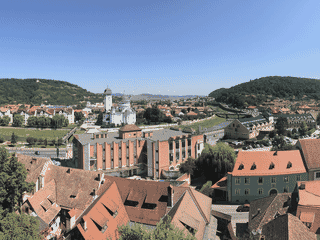
Alba Iulia is a compact historic city in Western Transylvania best known for its magnificent 18th-century Habsburg citadel, one of the largest and best-preserved baroque fortifications in Eastern Europe. The city holds immense national significance as the site where the 1918 assembly declared Transylvania's union with Romania, commemorated annually on December 1st.
Atlas entry
Anina is a small Romanian town nestled between Cheile Nerei-Beușnița National Park and Semenic-Cheile Carașului National Park. The town, named after the Romanian word for alder (anin), is predominantly a former mining settlement that developed around coal mines.
Atlas entry
Arad is an industrial city of about 160,000 at the western edge of Romania, close to the Hungarian border. It is a regional transportation hub with an intact Vauban-style fortress, a historic Habsburg-era old town, and a museum complex.
Atlas entry
Arieșeni sits in the Apuseni Mountains of Alba County, offering access to dramatic karst landscapes including the Ruginoasa Hole, multiple waterfalls, and cave systems. The Vartop ski facility provides winter sports, while summer brings trekking to peaks like Bihorul and Piatra Graitoare.
Atlas entry
Azuga is a small Romanian mountain resort town in the Prahova Valley, flanked by the Bucegi and Baiului ranges. Unlike neighboring resort towns, Azuga developed as an industrial center and retains an unusual patchwork of abandoned factories, Soviet-style apartment blocks, and quaint alpine guesthouses.
Atlas entry
Baia Mare is the largest city in the Maramureș region of northwestern Romania and serves as the main transportation hub and economic centre. While the new industrial parts of town may seem unsightly to some visitors, the old neighbourhood and lovely park offer charm.
Atlas entry
Băile Herculane is a historic spa town in southwestern Romania with 16 natural thermal mineral water springs scattered along a 4-km stretch of the Cerna river. The town dates to the second century and offers free public thermal pools fed by geothermal springs, making it one of Romania's most affordable spa destinations.
Atlas entry
Blaj served as the cultural heart of Transylvanian Romanians during the 18th and 19th centuries, playing a pivotal role in forming the modern Romanian language and national consciousness. The city is where the Blaj Bible appeared and where Timoftei Cipariu published the first Romanian grammar, making it significant for anyone interested in Romanian linguistic and cultural history.
Atlas entry
Borsec is a small spa resort town in the Carpathian mountains of eastern Transylvania, renowned for its mineral waters with purported healing properties. The resort attracts visitors seeking natural treatments for metabolic disorders through its unique microclimate, mineral-rich waters, and physiotherapeutic offerings.
Atlas entry
Brașov is a medieval walled town set in the Carpathian Mountains. Its pedestrianised old town and Council Square reveal a strong Saxon German heritage.
Bucharest mixes historic churches, communist-era buildings and modern towers. Its renovated old town gathers restaurants and clubs along cobblestoned streets.
Bușteni is the main entry point to the Bucegi Mountains, a high and scenic Carpathian range with rocky plateaus, alpine trails, and the famous Babele and Sphinx rock formations. Hikers, climbers, and weekend warriors come for the mountain access rather than the town itself.
Atlas entry
Calafat serves as a major border crossing between Romania and Bulgaria on the Danube River. The city is most useful as a transit stop for travelers moving between the two countries, particularly since the New Europe Bridge opened in 2013 connecting Calafat to Vidin in Bulgaria.
Atlas entry
Călan is a small spa town in Transylvania's Strei river valley, 230 meters above sea level, best known for its thermal waters that have attracted visitors since Roman times. The town dates to 1387 and offers a peaceful alternative to busier Transylvanian destinations.
Atlas entry
Carei offers a concentrated blend of Central European, Eastern European, and Balkan culture in a small, walkable town setting. The town preserves traditional Hungarian architecture alongside communist-era apartment blocks, creating a unique urban landscape.
Atlas entry
Cluj-Napoca is the capital of Cluj county and the unofficial capital of the historical region of Transylvania. The city, with about 320,000 people (2016), is very pleasant, offering fine dining, cultural activities, historical legacy, and a great atmosphere.
Atlas entry
Comana Natural Park is Romania's second-largest wetland after the Danube Delta, offering a rare escape into pristine marshes, forests, and meadows just 40 km from Bucharest. The park protects over 1,153 plant species and half of Romania's birdlife, making it a premier destination for birdwatchers and eco-tourists.
Atlas entry
Constanța combines a historic peninsula with nearby summer beach resorts. Roman mosaics, a Genoese lighthouse and an Art Nouveau casino give its cultural walks a varied backdrop.
Costești is a small town of approximately 10,000 people in Argeș County, Muntenia, Romania. The town preserves traces of habitation dating back to before the Roman conquest of Dacia, with archaeological finds including a Roman denarius issued by Emperor Domitian discovered in 1966.
Atlas entry
Costinești is a summer resort on Romania's Black Sea coast at the site of the ancient Greek settlement Parthenopolis. The resort has maintained a youthful, student-oriented atmosphere from its communist-era days as a youth sea resort.
Atlas entry
Craiova is one of Romania's five largest cities, serving as the administrative center of Dolj County and Oltenia. The city offers a more affordable alternative to Bucharest with 306,000 inhabitants, notable for Nicolae Romanescu Park—the second-largest romantic park in Europe—and a growing Wizz Air hub connecting Western European cities.
Atlas entry
Curtea de Argeș is a quiet Romanian city steeped in medieval history, once serving as Wallachia's first capital. The town draws visitors to its ensemble of Byzantine monasteries and churches, including the Princely Church Saint Nicholas (built 1310–1352) and the UNESCO-tentative Curtea de Argeș Monastery founded by Prince Neagoe Basarab (1515–1517).
Atlas entry
Deva is the county seat and largest city of Hunedoara County in Transylvania, Romania. The city serves as a gateway to Retezat National Park and makes a convenient base for exploring southern Transylvania.
Atlas entry
Făget is a small town in Timiș County, Banat region, serving as a gateway to rural Romanian heritage. The town is notable for its proximity to wooden churches, the Românești Cave system, and Surduc Lake.
Atlas entry
Geoagiu is a tranquil spa town in Hunedoara County, Transylvania, distinguished by its therapeutic thermal springs that have been used since Dacian and Roman times. The town sits at 217 meters altitude along the Mureș River, offering a quieter alternative to larger Romanian destinations.
Atlas entry
Gura Humorului is a small town in Southern Bukovina that serves as the main base for visiting the famous Painted Monasteries of Bucovina, UNESCO World Heritage Sites. While the town itself is modest compared to destinations like Sighișoara or Brașov, the surrounding scenery is very beautiful, with rolling hills and the foothills of the Carpathian Mountains.
Atlas entry
Hațeg is a small town in Hunedoara County, Transylvania, serving as a gateway to Retezat National Park and the Hațeg Country Dinosaur Geopark. The area is renowned worldwide among paleontologists for its unique dwarf dinosaur fossils from the Late Cretaceous period.
Atlas entry
Horezu is a small traditional town in northern Oltenia famous for its distinctive black-painted pottery and the UNESCO-connected Horezu Monastery, a masterpiece of 17th-century Brâncovenesc architecture. The surrounding area offers hiking in the Lunca Potelcului forests, cave exploration at Pesteră Liliecilor, and access to ski resorts in the Parâng mountains during winter.
Atlas entry
Huedin is primarily useful as a transit hub rather than a destination in its own right. The town sits 46 km west of Cluj-Napoca and serves as the main gateway to the Apuseni Mountains region.
Atlas entry
Hunedoara is a small Romanian industrial city that draws visitors almost exclusively for Hunyad Castle (Castelul Corvinilor), one of Europe\'s finest Gothic-Renaissance fortifications and legendary as the prison of Vlad III the Impaler for seven years. The castle has been beautifully restored and turned into a museum, making it a standout destination despite the city\'s modest size.
Atlas entry
Iași pairs Orthodox churches and monasteries with museums in the Palace of Culture. A large university community brings a lively atmosphere and a busy nightlife scene.
Lugoj is a compact, walkable city in Romania's Banat region where the Timiș River splits the settlement into Romanian Lugoj on the right bank and German Lugoj on the left. The city holds historical significance as the last seat of the Hungarian revolutionary government in August 1849, when Lajos Kossuth and other revolutionary leaders made their final stand before fleeing to the Ottoman Empire.
Atlas entry
Lunca Ilvei is a remote mountain community of approximately 4,000 residents in far northeastern Transylvania, immediately west of Bucovina. Visitors come to experience traditional Romanian village life—farming, forestry, and shepherding—away from tourist crowds.
Atlas entry
Lupeni serves as the access point for Straja ski resort, one of Romania's notable winter sports destinations. The city itself offers little for tourists beyond its role as a transit hub, but it provides access to ski slopes in the Vâlcan Mountains at altitudes of 1380-1445 m.
Atlas entry
Măgurele is a small Romanian town about 12 km south of Bucharest that gained town status in the early 2000s. With around 14,000 inhabitants and nine scientific institutes, it has a modest academic presence but no significant tourist reputation.
Atlas entry
Mamaia is Romania's most popular seaside resort, drawing crowds of Romanian beach lovers from early May through September. The resort sits on an 8-km long, 300-m wide sandy strip between Lake Siutghiol and the Black Sea, offering Europe's rare pure white sand typically found only in tropical destinations like Hawaii.
Atlas entry
Mangalia is Romania's southernmost seaside resort, distinguished by shallow calm waters perfect for families and children—1m depth near shore extending to 200m offshore. The city doubles as a balneoclimateric spa destination, the only Black Sea resort with mineral water springs used to treat degenerative rheumatic diseases.
Atlas entry
Mioveni is a small industrial town in Muntenia, Romania, best known as the home of the Dacia automobile factory. The town has a modest 500-year history with several Orthodox churches worth seeing for architecture enthusiasts.
Atlas entry
Ocna Sibiului is a spa town in Sibiu County, Transylvania, built around three salt lakes formed from abandoned mines dating to the 1700s. The resort opened in 1858, making it one of Romania's oldest wellness destinations.
Atlas entry
Oradea is one of Romania's most prosperous yet overlooked cities, blending 19th-century Austro-Hungarian baroque architecture with a distinctive Romanian-Hungarian cultural mix. The city has been called 'Le Petit Paris' for its elegant Secession-style buildings, yet remains uncrowded compared to Brasov or Sibiu.
Atlas entry
Orăștie is a small Transylvanian city with deep Dacian-Roman roots, documented since 1224 when Hungarian King Andrei II granted city privileges. The city preserves fortress ruins, an ethnographic museum, and a landmark Orthodox church, while serving as a gateway to the UNESCO-listed Dacian mountain fortresses including Sarmizegetusa Regia.
Atlas entry
Oravița is a small historic town in Caraș-Severin County, Romania, offering a glimpse into Banat's cultural heritage. It claims Romania's oldest theater (built 1816-1817), the Mihai Eminescu Theatre, which was also the first stone building in southeastern Europe.
Atlas entry
Orșova is a small port city on the Danube River at the gateway to the Iron Gates (Porțile de Fier), a dramatic gorge on the Romania-Serbia border. The city serves as a practical stop for travelers moving between southern Romania and Serbia, or as a base for visiting the Iron Gates Natural Park.
Atlas entry
Petroșani sits in the Jiu Valley as the main gateway to Retezat National Park and the Parâng mountain range, making it a base for hikers and nature lovers exploring Transylvania's rugged interior. The city itself is a working coal-mining town that grew rapidly during Romania's communist era, offering a glimpse into post-industrial Romanian life rather than polished tourism.
Atlas entry
Piatra Craiului National Park, founded in 1938, is one of Romania's most spectacular national parks. The park protects 4879 ha of core area plus a 9894 ha buffer zone, centered on the dramatic limestone ridge of the Piatra Craiului mountains.
Atlas entry
Piatra Neamț is one of Moldavia's most vibrant cities, wrapped in wooded mountains yet offering modern comforts. Its cozy streets, antique boutiques, and coffee shops give a warm, small-town feel that regular visitors describe as coming home.
Atlas entry
Pitești serves as the administrative capital of Argeș County with a 2021 population of 141,000, ranking as Romania's thirteenth-largest urban center. The city is nicknamed "the city of tulips" due to the annual Simfonia Lalelelor festival held each April.
Atlas entry
Ploiești offers historic mansions and specialist museums devoted to oil and timekeeping. Its railway connections make the city a useful stop while exploring Romania.
Predeal is Romania's highest town, sitting at 1033-1110m altitude in the Prahova Valley between Brașov and Bucharest. The resort town is surrounded by four mountain massifs—Postăvarul, Piatra Mare, Bucegi, and Baiului—making it a year-round destination for skiing in winter and hiking in summer.
Atlas entry
Râșnov is a small Saxon town in Transylvania crowned by a hilltop fortress. Its medieval fortifications and panoramic views are the main reasons to visit.
Retezat National Park is considered one of the most beautiful parks in Romania and probably all of Europe. Covering 380 km² with an additional 710 km² of protected area, it features over 100 glacier lakes and peaks reaching about 2500m at Peleaga.
Atlas entry
Săcele serves as a quiet mountain gateway into Transylvania, sitting at the foot of Piatra Mare massif where limestone peaks, the Ice Cave, and Seven Stairs Canyon attract hikers. Its proximity to Brașov (15 km) and position on the DN1 highway make it a practical stop for travelers exploring Romania's mountain corridor between Brașov and Poiana Brașov.
Atlas entry
Satu Mare is a historic city in Romania's Maramureș region with roots dating back to the Stone Age. It is most internationally famous as the wellspring of the Satmarer Chasidic Jews, giving the city significant cultural and religious importance.
Atlas entry
Saturn is a Soviet-era beach resort on Romania's Black Sea coast, completed in 1972. It offers budget accommodation and cheap dining by Western European standards, making it popular with Romanian and Bulgarian tourists seeking sun without the price tag of Western Mediterranean resorts.
Atlas entry
Sfântu Gheorghe is a quiet county capital in the heart of Transylvania where Romanian and Hungarian cultures blend. The town serves as a gateway to the Székely land region, with its distinctive fortified churches, rolling mountain trails, and proximity to the only crater lake in Romania.
Atlas entry
Sibiu is a medieval city in southern Transylvania with a well-preserved old town. Its main squares are connected by passages and stairways that invite exploring on foot.
Sighetu Marmației is the gateway to Maramureș, Romania's most traditional region, where wooden churches, painted monasteries, and village life preserved since the Middle Ages draw travelers seeking authentic cultural immersion. The town holds profound significance as the site of the Memorial to Victims of Communism — a former prison where political detainees were held during the communist era — making it essential for those exploring Romania's 20th-century history.
Atlas entry
Sighișoara's hilltop citadel is crowned by the Clock Tower. Its local history museum and panoramic balcony views reward a slow visit.
Simeria serves as a convenient transport hub on the E68/DN7 corridor between Deva and Orastie, making it useful for reaching Dacian fortress sites and the Transylvanian heartland. The town itself is modest but provides access to the 70-hectare Dendrological Park, one of Europe's largest botanical reserves, and lies 16 km from the UNESCO-nominated Dacian Fortresses of the Orastie Mountains.
Atlas entry
Sinaia pairs a royal castle with the mountain scenery of the Carpathians. Historic villas, summer hiking and winter skiing give the resort a varied rhythm through the year.
Slatina is the capital of Olt County in Oltenia, southern Romania, with a population of about 70,000. The city has 650 years of documented history and a preserved historic center.
Atlas entry
Ștefănești is a historic town of 15,000 people in Muntenia, nicknamed 'Mecca of the Liberals' for its association with the influential Brătianu political family. The town offers well-preserved 17th-century churches, manor houses, and access to Romanian wine country.
Atlas entry
Suceava serves as the practical gateway to Southern Bukovina's famous Painted Monasteries, a UNESCO World Heritage Site. The city itself centers on the Cetatea de Scaun fortress, begun by Prince Peter I in the 14th century and improved by Stefan the Great in the 15th century—never conquered in battle.
Atlas entry
Sulina is Romania's easternmost town and the easternmost point of the European Union, sitting at the confluence of the Danube Delta and the Black Sea. Once a bustling international port hosting the European Danube Commission and Europe's first duty-free zone in the 19th century, today it's a quiet fishing town and summer resort.
Atlas entry
Târgu Mureș brings Hungarian Secession architecture and elaborately decorated facades to the heart of Transylvania. Romanian and Hungarian heritage meet in its signage, religious buildings and food.
Târgu Ocna is a small Romanian resort town built atop and within rock salt hills, offering unique underground spa treatments in the Trotuș Salt Mine. The city has attracted visitors since 1888 for its seven mineral water springs and balneological treatments.
Atlas entry
Timișoara rewards a walk between its monumental central squares. Victory Square pairs the Orthodox cathedral with the Opera House, while Union Square adds a Baroque palace and Catholic and Serbian churches.
Tulcea sits at the western entrance of the Danube Delta, a UNESCO World Heritage site and Europe's largest river delta. The city serves primarily as the transport hub for delta tours, boat trips, and onward ferry connections to Black Sea resorts.
Atlas entry
Turda is a historic city on the Aries River in Cluj County, Transylvania, known for its extraordinary salt mine turned underground amusement park. The city holds special significance as the place where Europe's first Edict of Religious Freedom was declared in 1568.
Atlas entry
Uricani is a small industrial town serving as a practical base for exploring Retezat National Park, one of Romania's most spectacular mountain wilderness areas. The town sits at 729m altitude on the western side of the Jiu Valley, directly bordering the national park.
Atlas entry
Vama Veche is a small fishing village turned bohemian beach destination on Romania's Black Sea coast, right at the border with Bulgaria. Unlike package-tour resorts, it has retained a grungy, alternative atmosphere with camping on the beach, 24/7 beach bars, and rock festivals drawing thousands of young Romanians and backpackers each summer.
Atlas entry
Vișeu de Sus is a small Maramureș mountain town of 15,000 people that draws visitors almost exclusively for one reason: the historic narrow-gauge Mocăniţa steam train. The Vaser Valley Forestry Railway has been operating since 1932, winding 62 km through a spectacular canyon where cliffs alternate with fir and beech forests, clearings, and mineral water springs.
Atlas entry
Zalău is a historic administrative center in northwestern Romania, offering a concentrated dose of Romanian heritage without the tourist crowds of major destinations. The city showcases 24 monuments and architectural ensembles, from Roman-Catholic churches to Art Nouveau theaters, alongside excellent provincial museums.
Atlas entry
In development: the whole atlas offline, a trip planner and a private journal. We'll post here when it ships. No newsletter to join.

.jpg)

.jpg)
