.jpg)
Sighișoara
Eastern Europe and the Balkans · Romania
Did you know?
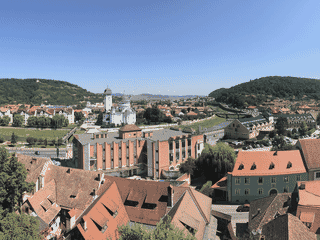
- The Clock Tower contains a museum of local history above the citadel.
- Romanian cooking here carries Transylvanian Saxon influences.
- A covered wooden stairway leads uphill toward the Church on the Hill.
See also

Târgu Mureș
Romania46.55°N 24.57°E · 320 m

Sibiu
Romania45.79°N 24.14°E · 434 m
.jpg)
Râșnov
Romania45.59°N 25.46°E · 650 m
Overview
Sighișoara's hilltop citadel is crowned by the Clock Tower. Its local history museum and panoramic balcony views reward a slow visit.
Languages: Romanian
Why go?
Sighiȟoara is one of Europe's best-preserved medieval towns and Romania's only inhabited UNESCO World Heritage Site. Founded in the 12th century by German craftsmen invited by the Hungarian king, the Saxon citadel ("Schäßburg") has retained its original layout and architecture. The city is famous as the birthplace of Vlad Țtepeş ("The Impaler"), the inspiration for Dracula, and draws visitors to his preserved birth house and a bust near the Clock Tower. The annual Medieval Festival in July brings roughly 30,000 tourists for three days of theatre, concerts, and craft demonstrations.
Adapted from Wikivoyage contributors · CC BY-SA 4.0
Getting in
Sighiȟoara has a railway station on the Bucharest-Brașov main line with connections to major cities. The bus station ("Autogara Cambus Sighiȟoara") serves regional destinations. Coming from elsewhere in Transylvania, Sibiu is approximately 2 hours away by train, while Brașov is about 3 hours. Bucharest is roughly 5-6 hours by train. The historic center has paid parking ("Parcare Centrul Istoric Sighiȟoara") but only accepts coins at the parkimeter.
Adapted from Wikivoyage contributors · CC BY-SA 4.0
Getting around
Sighiȟoara is compact enough to explore entirely on foot. The tourist information office inside the Café International and Family Center in Piata Cetății (Citadel Square) provides maps and advice for reaching fortified churches in the area. Bikes can be rented for €1/hour or €10/day for exploring surrounding villages and the Breite plateau oak forest.
Adapted from Wikivoyage contributors · CC BY-SA 4.0
When to go
Summer (June-August) offers warm weather and coincides with the Medieval Festival (usually July), though this is peak season. Spring and autumn bring smaller crowds and pleasant temperatures for hiking. Winter creates a atmospheric but quiet atmosphere with possible snow. The DAVA Festival is a young electronic music event held annually in a former glass factory, 5 minutes by car from the center. Pro Etnica is an annual interethnic music and art festival featuring performances by various ethnic groups.
Adapted from Wikivoyage contributors · CC BY-SA 4.0
Where to stay
Most accommodation clusters around the Citadel and Piața Cetății. Budget options include Burg Hostel (Strada Bastionului 11), a hostel/bar in the citadel near the Clock Tower, while Pension Sighiȟoara offers rooms from €17/person including breakfast, a 15-minute walk from the citadel toward Apold. Mid-range guesthouses include Casa Legenda (188 lei/night, 5 rooms, 2 minutes from the square) and Casa Cojo (spacious apartment sleeping 5, €40/night). Luxury options include Fronius Residence (€100/night) in a 500-year-old building.
Adapted from Wikivoyage contributors · CC BY-SA 4.0
Food and drink
Local cuisine combines Romanian standards with Transylvanian Saxon influences. Hotel Sighiȟoara restaurant serves Romanian and international fare in medieval surroundings. Casa Vlad Dracul (the birthplace of Vlad Țtepeş) offers good soups and traditional fare with tourist-inflated prices. La Perla is a local favorite across from the post office serving pizza and other dishes. Café International and Family Center (Piata Cetății 8) is a key resource with tour guides in traditional costumes, organic juices and cakes; breakfast sets reach up to 15 lei. Concordia Pizza and Spaghetti has a nice terrace open late. Vila Franka sits on a hill with panorama over the Târnava valley, about 1 hour walk from the Citadel.
Adapted from Wikivoyage contributors · CC BY-SA 4.0
Things to do
The Clock Tower (Turnul cu Ceas) built in 1360 stands 60 meters tall atop the citadel hill with a museum of local history and panoramic balcony views (20 lei). The Covered Staircase (Scara Ŝoalarilor) has 175 steps leading up to the Hill Church and cemetery. The Hill Church (Biserica din Deal) is a late Gothic Lutheran church with frescoes and a crypt (15 lei). The Monastery Church is a Lutheran Gothic structure built starting in 1291 (15 lei). Nine restored towers from the original 14 remain, including the Iron Smiths', Rope Makers', Boot Makers', Tailors', Butchers', Tin Smiths', and Coat Makers' towers. The Medieval Weapon Museum next to the Clock Tower displays swords and arrows. Outside the citadel, the Holy Trinity Church sits across the Târnava river and the 1797 Cornești Church is the oldest Orthodox church in town.
Adapted from Wikivoyage contributors · CC BY-SA 4.0
Safety
Sighiȟoara is generally a safe, quiet city with low crime rates targeting tourists. Standard urban precautions apply: watch belongings in crowded areas during the Medieval Festival, and be cautious near roads when cycling on the mountain tracks after rain, which can become very muddy. The town is very walkable at night with good lighting in the citadel area.
Adapted from Wikivoyage contributors · CC BY-SA 4.0
Connectivity
The Café International and Family Center has an internet point downstairs. Wi-Fi is available at Cross-country farm near the village of Prod, 16 km from Sighiȟoara. Romanian mobile operators provide coverage throughout the town and surrounding areas.
Adapted from Wikivoyage contributors · CC BY-SA 4.0
Budget
Sighiȟoara is one of Romania's more affordable destinations. Budget travelers can manage on 150-250 lei/day including dorm accommodation (50-80 lei), basic meals (50-100 lei), and entrance to 2-3 attractions (30-50 lei). Mid-range travelers spending 300-500 lei/day get private rooms, restaurant meals, and more activities. Key costs: bike rental €1/hour or €10/day, Clock Tower museum 20 lei, Monastery Church 15 lei, Hill Church 15 lei.
Adapted from Wikivoyage contributors · CC BY-SA 4.0
Day trips
The UNESCO-listed fortified churches of Transylvania are the standout excursion. Biertan (UNESCO), Saschiz, Valea Viilor, and Viscri are all World Heritage sites reachable by car or bicycle. Apold and Malancrav have fine examples closer to Sighiȟoara. A bike day trip (rent €10) can include Soas, Apold (fortified church), and Vulcan on a scenic 20+ km loop. The Breite plateau has a great oak forest for hiking or cycling. The cross-country farm in village of Prod, 16 km away, offers horse riding excursions from 2 hours to 5 days. Sibiu, with its beautiful medieval old town, is a 2-hour train ride and can be combined with fortified church visits.
Adapted from Wikivoyage contributors · CC BY-SA 4.0
Go next
The medieval fortified churches around Mediaș form a natural circuit: Biertan, Saschiz, Valea Viilor, and Viscri are all UNESCO World Heritage sites. Sibiu has a stunning medieval old town and makes a good base for the churches or stands alone. Other Transylvanian centers include Cluj-Napoca, Târgu Mureș, and Brașov. If heading to Bucharest, visit it before Transylvania—the capital is interesting but less picturesque, and will seem especially drab after Sighiȟoara.
Adapted from Wikivoyage contributors · CC BY-SA 4.0
Field guide adapted from Wikivoyage contributors · CC BY-SA 4.0. Text has been adapted and organized for this guide. About our sources.
Places to know
A few starting points from the guide. Check current hours and prices before you go.
- sleep
Apart-Hotel Sighișoara
Recorded price: €40
Adapted from Wikivoyage contributors
- sleep
Bethlen Estates
Luxury accommodation in the small town of Cris.
Recorded price: €300
Adapted from Wikivoyage contributors
- sleep
Burg Hostel
A nice hostel/bar in the Citadel, around the corner from the Clock Tower. Nice rooms, and a pub in the basement.
Adapted from Wikivoyage contributors
- sleep
Casa Cojo
Spacious self-catering apartment with garden in the medieval citadel, sleeps 5, €40 per night, historical house full of old world character.
Adapted from Wikivoyage contributors
- eat
Café International and Family Center
Key tourist resource with traditional-costumed guides, organic cakes and juice, and internet point
Recorded price: Breakfast sets up to 15 lei
Adapted from Wikivoyage contributors
- eat
Casa Vlad Dracul
Good soups and traditional Romanian fare in Vlad Țtepeş's childhood home
Adapted from Wikivoyage contributors
- eat
Concordia Pizza and Spaghetti
Italian cuisine with a nice terrace, open until late
Adapted from Wikivoyage contributors
- eat
Hotel Sighiȟoara restaurant
Romanian and international cuisine in a medieval atmosphere
Adapted from Wikivoyage contributors
Before you go
Culture
Sighiȟoara was founded by Transylvanian Saxons in the 12th century. The German-speaking community has largely departed, but architectural heritage remains well preserved. Romanian is the main language, with some German among older residents.
Money
Romanian Leu (RON) is the local currency. EUR and USD are sometimes accepted in tourist shops. ATMs available in town center. Some parking meters only accept coins.
Safety
Generally very safe for tourists. Standard precautions apply in crowded areas. Mountain bike tracks can be muddy after rain.
Transport
Train and bus stations both serve the city. Trains connect to Bucharest, Brașov, and Sibiu. Bicycle rental available in town for exploring surrounding villages and the Breite plateau.
Weather
Best visited May-September for warm weather. Winter offers atmospheric empty streets but shorter days. Medieval Festival takes place in July.