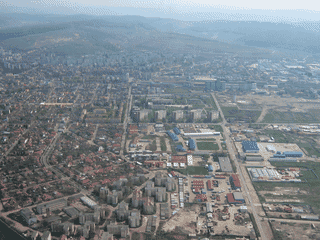

Târgu Mureș
Eastern Europe and the Balkans · Romania
Did you know?
- Teleki-Bolyai Library was established in 1802 by Transylvania's chancellor.
- Romanian and Hungarian heritage is reflected in dual-language signage.
- The Culture Palace hosts performances by the State Philharmonic.
See also
.jpg)
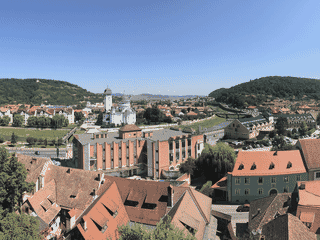
Sighișoara
Romania46.22°N 24.79°E · 380 m
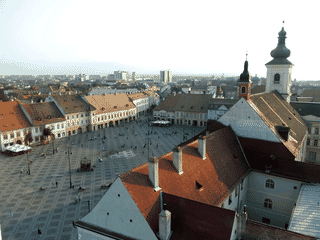

Sibiu
Romania45.79°N 24.14°E · 434 m
Overview
Târgu Mureș brings Hungarian Secession architecture and elaborately decorated facades to the heart of Transylvania. Romanian and Hungarian heritage meet in its signage, religious buildings and food.
Languages: Romanian
Why go?
Târgu Mureș is a cultural hub in Transylvania famous for its Hungarian Secession (Art Nouveau) architecture, with the main plaza and surrounding streets featuring elaborately decorated facades. The city offers a blend of Romanian and Hungarian heritage, evident in its dual-language signage, diverse religious buildings, and culinary scene. Unlike the heavily touristed towns of Sighișoara or Sibiu, Târgu Mureș provides a more authentic Romanian urban experience while remaining a convenient base for exploring the Székely Land region.
Adapted from Wikivoyage contributors · CC BY-SA 4.0
Understand
Târgu Mureș is sometimes abbreviated 'Tg. Mureș' and known as Marosvásárhely among its Hungarian-speaking population. First mentioned as Forum Siculorum in 1300, market rights were bestowed in 1482. Both the Romanian name Târgu Mureș and Hungarian Marosvásárhely mean 'market (place) on the river Mureș/Maros'. The town prospered especially during the late-19th and early-20th century, with the population quadrupling between 1869 and 1966. Before World War I, Marosvásárhely belonged to the Kingdom of Hungary and 90% of inhabitants were ethnic Hungarians and Hungarian-speaking Jews.
Adapted from Wikivoyage contributors · CC BY-SA 4.0
Demographics
Since 1919, when the town was awarded to Romania, the share of ethnic Romanians grew steadily, but Magyars (ethnic Hungarians) were the majority population until the 1990s. Today, ethnic Romanians make up just over half of the population, with 45% Magyars and more than 2% Romanies. Religious diversity includes 47% Romanian Orthodox, 30% Reformed (Protestant) Church, 13.5% Roman Catholic, 2.6% Eastern Catholic, and 2.6% Unitarian.
Adapted from Wikivoyage contributors · CC BY-SA 4.0
Get in
Târgu Mureș can be reached by train to the Târgu Mureș train station, located southwest of the centre. Wizz Air operates flights from Budapest and London-Luton to Târgu Mureș International Airport, 14 km southwest of the city. There are no domestic flights. For buses, Autogara Voiajor (1 km south of the train station) handles most intercity buses, while Autogara Transport Local/Siletina on Strada Bega runs frequent buses to Brașov (3 hours) and Cluj-Napoca (2.5 hours), passing through Sighișoara.
Adapted from Wikivoyage contributors · CC BY-SA 4.0
Getting around
The compact city centre can easily be explored on foot, with most major attractions clustered around Trandafirilor Square and within a short walking radius. Local buses connect the train station to the city centre and outlying areas including the bus stations.
Adapted from Wikivoyage contributors · CC BY-SA 4.0
Museums and historic buildings
Teleki Library (Biblioteca Teleki-Bolyai) is a historic library and museum established by Hungarian Sámuel Teleki, chancellor of Transylvania, in 1802. The Baroque building houses over 200,000 volumes, including many rarities, constituting one of the richest cultural collections in Transylvania. Saint John the Baptist Church (Biserica Sfântul Ioan Botezătorul) is a Baroque Roman Catholic church completed in 1764 during Habsburg rule.
Adapted from Wikivoyage contributors · CC BY-SA 4.0
Do
Platoul Cornești, east of the city, is a hill suitable for walking, hiking, or picnics, with Zoo Târgu-Mureș considered one of the nicest zoos in Romania. The Weekend aquapark near the Mureș river offers open-air pools, swimming facilities, and sports grounds, though the pools are open only in summer. The Târgu Mureș State Philharmonic (Filarmonica de Stat) offers classical concerts at the Culture Palace. The Târgu-Mureș Historical Society occasionally holds seminars on local history and mythology in English.
Adapted from Wikivoyage contributors · CC BY-SA 4.0
Buy
The main shopping area is Trandafirilor Square, the centre of the city. Mureș Mall near the city centre has 5 floors with renowned brands, some appearing in Romania for the first time. Promenada Mall is located near the industrial park on the outskirts of the city.
Adapted from Wikivoyage contributors · CC BY-SA 4.0
Eat
Tempo at Strada Morii nr. 27 offers a vast array of dishes and specialties with a Hungarian musical band every night. La Teo Restaurant at Alexandru Papiu Ilarian nr. 1, next to the Medieval Fortress, serves international dishes and local food with great coffee, a winebar, and house-made cakes and desserts; open 11:00-00:00. Pizza Sole on Str. Chinezu nr. 1 north of the centre offers very tasty Italian food.
Adapted from Wikivoyage contributors · CC BY-SA 4.0
Drink
The Back Stage at Piata Trandafirilor nr. 53 is a quiet place with good music, pleasant service, and live music on Tuesdays and Thursdays. Piaf at Strada Bolyai nr. 10 is a nice, cozy bar close to the main plaza. Sörpatika near the Mureș river and close to Weekend aquapark offers drinks in a unique setting. Jazz & Blues at Sinaia 3 in the rear building has a non-smoking area.
Adapted from Wikivoyage contributors · CC BY-SA 4.0
Sleep
Hotel Concordia at Piața Trandafirilor nr. 45, a five-minute walk from the centre, offers decent rooms from €30, popular with tour groups. Hotel Continental Forum at Piața Teatrului nr. 5-6 is a swanky luxury hotel in the centre with beautiful views of the churches, with rooms from €90. City Central Hostel on Strada Victor Babeș nr. 11 appears to be undergoing a transition and may not be open.
Adapted from Wikivoyage contributors · CC BY-SA 4.0
Go next
From Târgu Mureș, nearby destinations include medieval Sighișoara (55 km southeast), the wine region town of Mediaș (60 km southwest), and Cluj-Napoca (110 km northwest, 2.5-3 hours by train). The historic salt mine town of Turda is 75 km west, while Sibiu (120 km south) offers another well-preserved medieval old town. Brașov is 170 km southeast. Closer destinations include Târnăveni (37 km southwest).
Adapted from Wikivoyage contributors · CC BY-SA 4.0
Field guide adapted from Wikivoyage contributors · CC BY-SA 4.0. Text has been adapted and organized for this guide. About our sources.
Places to know
A few starting points from the guide. Check current hours and prices before you go.
- sleep
City Central Hostel
Hostel that seems to be undergoing a period of transition; may not be open.
Adapted from Wikivoyage contributors
- sleep
Hotel Concordia
Decent rooms popular with tour groups.
Recorded price: €30
Adapted from Wikivoyage contributors
- sleep
Hotel Continental Forum
A swanky luxury hotel in the center of town with a beautiful view of the churches.
Recorded price: €90
Adapted from Wikivoyage contributors
- eat
La Teo Restaurant
International dishes and local food. Great coffee, winebar, and house made cakes and desserts. Run by a friendly owner, Teo.
Adapted from Wikivoyage contributors
- eat
Pizza Sole
Very tasty Italian food.
Adapted from Wikivoyage contributors
- eat
Tempo
A restaurant with a vast array of dishes and specialties. A lot of character, and a Hungarian musical band every night.
Adapted from Wikivoyage contributors
- see
Annunciation Church
Romanian Greek Catholic cathedral, built 1926–1936 in a Neoclassical style, modelled after St Peter's Basilica in Rome.
Adapted from Wikivoyage contributors
- see
Art Nouveau city center
The main plaza (Trandafirilor Square) and nearby streets have many Art Nouveau (Hungarian Secession) style buildings.
Adapted from Wikivoyage contributors
Before you go
Accommodation
Budget options include Hotel Concordia (from €30), while the Hotel Continental Forum offers mid-range to luxury rooms from €90.
Culture
The city has a Hungarian-speaking minority of about 45%. Expect dual-language signage and a blend of Romanian and Hungarian cultural influences in food, architecture, and traditions.
Language
Romanian is the official language, but Hungarian is widely spoken by the local Székely population. English is limited outside tourist establishments.
Money
Romania uses the Romanian Leu (RON). Euro may be accepted at some upscale hotels. ATMs are available in the city centre.
Transport
Târgu Mureș has an international airport with Wizz Air flights from Budapest and London-Luton. The city is well-connected by train and bus to Cluj-Napoca, Sibiu, and Brașov.