Timișoara
Eastern Europe and the Balkans · Romania
Did you know?
- Local cooking reflects Serbian, Hungarian, German, Turkish and Arabic influences.
- Victory Square brings the Orthodox cathedral and Opera House together.
- Union Square pairs a Catholic cathedral with a Serbian church.
See also
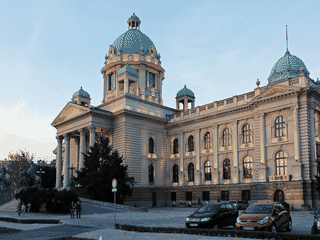

Belgrade
Serbia44.82°N 20.47°E · 117 m
Overview
Timișoara rewards a walk between its monumental central squares. Victory Square pairs the Orthodox cathedral with the Opera House, while Union Square adds a Baroque palace and Catholic and Serbian churches.
Languages: Romanian
Why go?
Timișoara is Romania's fifth-largest city (251,000 people) and the informal capital of the Banat region, a historic crossroads of Hungarian, Serbian, German, and Romanian cultures. Nicknamed 'Little Vienna' for its grand Habsburg architecture, it was one of three European Capitals of Culture in 2023 — expect a thriving arts scene, renovated squares, and a cosmopolitan café culture that feels more Central European than Eastern European. The city is also Romania's IT hub and a medical tourism destination, especially for dental care, with 40,000 students adding youthful energy.
Adapted from Wikivoyage contributors · CC BY-SA 4.0
Getting in
Timișoara Traian Vuia International Airport (TSR) is Romania's third-largest, 10 km from the city center, with regular flights across Europe. Two railway stations serve the city: Timișoara Nord (Gara Nord) on Str. Gării 2, handling most intercity trains to Bucharest, Arad, and Deva; and the smaller Timișoara Est for regional services. The main bus station (Autogara) connects to destinations including Szeged in Hungary (115 km northwest, 1½ hours), Lugoj, and Serbian border towns like Vršac (75 km south, 2 trains daily, 1½ hours). The A1 motorway runs west toward Arad and Hungary, east toward Sibiu.
Adapted from Wikivoyage contributors · CC BY-SA 4.0
Getting around
Timișoara has an extensive tram and trolleybus network; a mapframe shows routes converging on the historic center. The city center is walkable — Piața Unirii (Union Square) to Piața Victoriei (Victory Square) is about 10 minutes on foot. Bike rental is available from tBike on Circumvalatiunii Street (25 lei/24 hr), though dedicated bike lanes are limited and often share sidewalks with pedestrians. Taxis are plentiful; confirm the meter is running.
Adapted from Wikivoyage contributors · CC BY-SA 4.0
When to go
Timișoara experiences continental weather: cold winters (below freezing, occasional snow) and warm summers (25–30°C). Spring and early autumn offer the most comfortable temperatures for walking tours. The 2023 European Capital of Culture status has boosted year-round events, but summer brings outdoor concerts along the Bega Channel and riverside terraces. December brings Christmas markets in the main squares.
Adapted from Wikivoyage contributors · CC BY-SA 4.0
Where to stay
The historic center around Piața Unirii and Piața Victoriei is the best base for sightseeing. Budget options include Freeborn Hostel (57 lei dorms, 156 lei doubles at Str. Patriarh Miron Cristea Nr. 3), Hostel Cornel (111 lei, Strada Oituz 5), and InVerve Hostel (131 lei, Strada Mărășești nr 10). Mid-range choices: Hotel Arizona (144 lei, str Musicescu no 168) and Casa Leone (181 lei, B-dul Eroilor). For splurges: Hotel Continental (259 lei, Bulevardul Revoluției din 1989 2A) with pool, or Hotel La Residenza (439 lei, str.Independentei 14).
Adapted from Wikivoyage contributors · CC BY-SA 4.0
Food and drink
Timișoara's cosmopolitan history means cuisine spans Italian, Serbian, Hungarian, German, Turkish, and Arabic influences. Local specialty: try the Timișoreana beer (brewed at Strada Ștefan cel Mare 31-27) with barbecue. For budget eats: The Sandwich Factory (Strada Emanoil Ungureanu 8) and Fast Food Sultan (outside the train station) for excellent kebabs. Suppa Bar (Strada Florimund Mercy 7) serves soups. Traditional food at Casa Bunicii 1 (Strada Mareșal Alexandru Averescu 1B) or Casa Bunicii 2 (Strada Petőfi Sándor 79). Indian food at Radha Cuisine (Strada Emanoil Ungureanu 13). Serbian restaurants include Restaurant Karađorđe (Piața Unirii 4) and Dinar (Strada Barbu Iscovescu 2). Vegan option: BioFresh. For nightlife: D'Arc Club (Piața Unirii, no cover charge) is famous for Thursday Night Party; Scârț Loc Lejer has free Wi-Fi and a Communist Consumer Museum in the basement.
Adapted from Wikivoyage contributors · CC BY-SA 4.0
Things to do
The main squares are must-sees: Victory Square (Piața Victoriei) holds the Metropolitan Orthodox Cathedral, Opera House, City Hall, and Museum of Banat; Union Square (Piața Unirii) features St. George's Cathedral (Catholic Dome), Baroque Palace (art gallery), and Serbian Church. Parks: Botanical Park near Union Square, Rose Park and Central Park near Victory Square. History: Huniade Castle (built 1443–1447, houses Museum of Banat at Strada Martin Luther 4); Revolution Memorial (Oituz 2B, 10 lei entry, video in English) explains the 1989 uprising. Arts: Art Museum has the largest Corneliu Baba collection. For families: Banat Village Museum (Strada Avram Imbroane 1) shows traditional houses from different ethnic groups; small Zoo near the Village Museum. Culture: catch a performance at the National Theatre (Teatrul Național) or Banat Philharmonic.
Adapted from Wikivoyage contributors · CC BY-SA 4.0
Safety
Timișoara is generally safe for travelers, but exercise caution in the Traian Square (Fabric) neighborhood at night — the article advises keeping a close eye on valuables. The same warning applies to Piata Aurora and Brancoveanu shopping area; police assistance is reportedly limited there. Avoid petty theft by keeping bags zipped in crowded areas. At night, stick to well-lit main streets in the historic center. Tap water is safe to drink.
Adapted from Wikivoyage contributors · CC BY-SA 4.0
Connectivity
Timișoara has 4G coverage from all Romanian carriers (Orange, Vodafone, Digi, Telekom) throughout the city and approach roads. As of August 2022, city center has 5G from Digi, Orange, and Vodafone. SIM cards are readily available from carrier shops. Free public Wi-Fi is limited; most hostels and cafes offer it. Power plugs use Type C/F (two-pin European standard, 230V).
Adapted from Wikivoyage contributors · CC BY-SA 4.0
Budget
Budget travelers can get by on 200–300 lei/day: hostel dorms (57–131 lei), street food or cheap restaurant meals (20–40 lei), local transport (4–8 lei per tram ride), and free sightseeing in squares and parks. Mid-range budgeting: 350–500 lei/day covers private rooms, sit-down restaurants, museum admissions, and occasional taxi rides. Daily costs break down roughly as: accommodation 100–200 lei, food 80–150 lei, transport 20–40 lei, activities 30–50 lei.
Adapted from Wikivoyage contributors · CC BY-SA 4.0
Day trips
Several nearby destinations are reachable by public transport: Arad (60 km north, 50 minutes by train, 12 trains daily) has a citadel and Art Nouveau old town. Lugoj (60 km east, 1½ hours by bus). Deva (155 km east, 3½ hours by train, 8 daily). Jimbolia (45 km west) is a small town near the Serbian border. For cross-border adventures: Szeged (115 km northwest, 1½ hours by bus) in Hungary is famous for salami and paprika. Vršac (75 km south in Serbia) has 2 daily trains from Nord station (1½ hours). Belgrade (150 km southwest) is reachable via Vršac.
Adapted from Wikivoyage contributors · CC BY-SA 4.0
Etiquette
As a multicultural city with significant Hungarian, Serbian, German, and Romanian populations, Timișoara is cosmopolitan and tolerant. Dress modestly when visiting churches and cathedrals — cover shoulders and knees inside Orthodox and Catholic churches. Tipping 10–15% is customary in restaurants if service isn't included. Greet shopkeepers when entering small stores. Romanians are generally warm but formal; use 'Bună ziua' (good day) for initial greetings.
Adapted from Wikivoyage contributors · CC BY-SA 4.0
Go next
From Timișoara, onward routes include: west to Arad (60 km) and Hungary via the A1 motorway; east to Deva (155 km) and further to Sibiu; south to the Serbian border (Vršac 75 km) and Belgrade (150 km via Vršac); northwest to Szeged, Hungary (115 km). Regional train connections serve Arad, Deva, and Brașov to the east. Bus services connect to Lugoj, Jimbolia, and cross-border destinations in Serbia and Hungary.
Adapted from Wikivoyage contributors · CC BY-SA 4.0
Field guide adapted from Wikivoyage contributors · CC BY-SA 4.0. Text has been adapted and organized for this guide. About our sources.
Places to know
A few starting points from the guide. Check current hours and prices before you go.
- eat
BioFresh
Delicious vegan food.
Adapted from Wikivoyage contributors
- eat
Casa Bunicii 1
Serves really well cooked traditional and local food.
Adapted from Wikivoyage contributors
- eat
Casa Bunicii 2
This popular place opened a second location.
Adapted from Wikivoyage contributors
- eat
DAF Junior
Romania meets Las Vegas. This surreal complex that includes bowling, bars and tennis also has a very good value restaurant with outside terrace. The dishes are enormous and lots of fusion Romanian cuisine on offer at very good prices.
Adapted from Wikivoyage contributors
- eat
Dinar
Serbian restaurant.
Adapted from Wikivoyage contributors
- eat
Drunken Rat
Pub
Adapted from Wikivoyage contributors
- eat
Fast Food Sultan
Looks very crappy from the outside, but don't let that scare you away. This is seriously the best kebab and falafel place in town. Everything is fresh and home made. Be prepared to wait for a long time though: the owner is very slow and talks a lot with everybody that walks in.
Adapted from Wikivoyage contributors
- eat
Lera's Bistro
Adapted from Wikivoyage contributors
Before you go
Connectivity
4G available citywide; 5G in city center from Digi, Orange, Vodafone (Aug 2022). Buy local SIM at carrier shops for data. Type C/F power plugs, 230V.
Culture
Timișoara is Romania's most cosmopolitan city, with Hungarian, Serbian, German, and Turkish influences. European Capital of Culture 2023 status boosted arts and events scene.
Money
Romanian leu (RON) is the local currency. ATMs are plentiful in the city center. Credit cards accepted at most hotels, restaurants, and shops. Exchange offices near train stations and Piața Unirii offer decent rates.
Safety
General crime is low, but watch for pickpockets in crowded markets and at train stations. Traian Square (Fabric) area should be avoided at night. Keep valuables secure.
Transport
Tram and trolleybus network covers the city well. Single tickets cost around 4 lei. Taxis are reliable but confirm the meter is running. Main train station is Timișoara Nord.
Weather
Continental climate: cold winters (below 0°C) and hot summers (25–30°C). Spring and early autumn are best for sightseeing. Pack layers for variable weather.