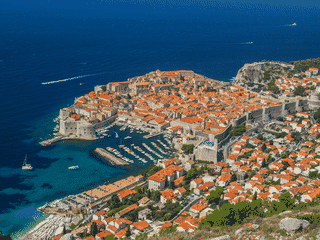

Dubrovnik
Croatia42.64°N 18.11°E · 10 m
47 places in the index.
42.64°N 18.11°E · 10 m
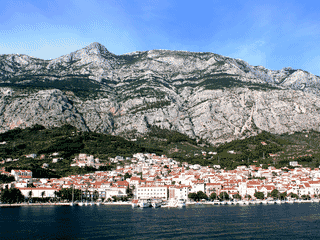
43.30°N 17.03°E · 0 m
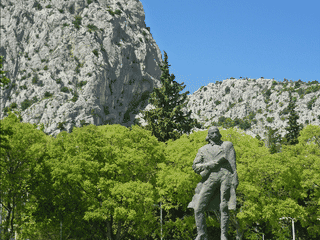
43.43°N 16.68°E · 0 m
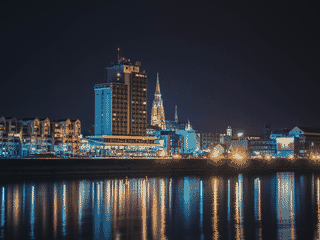
45.56°N 18.68°E · 95 m
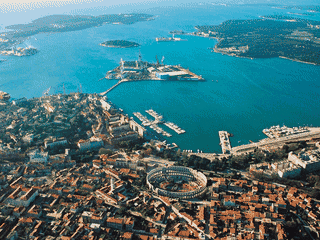
44.87°N 13.83°E · 5 m
45.32°N 14.42°E · 0 m
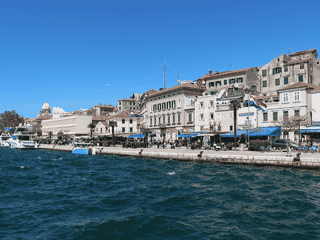
43.73°N 15.89°E · 0 m
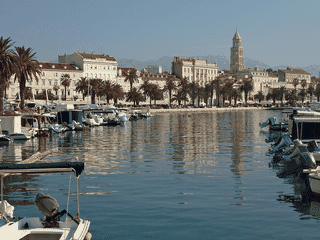
43.51°N 16.44°E · 0 m
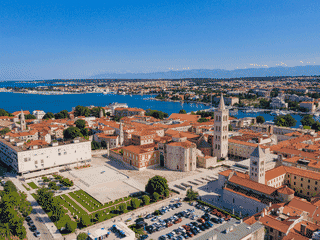
44.11°N 15.23°E · 5 m
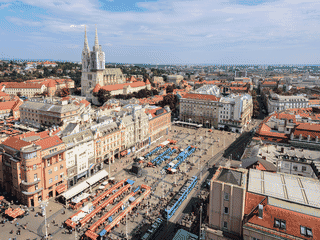
45.82°N 15.98°E · 127 m
Baska Voda is a modest coastal town on the Makarska Riviera offering a quieter alternative to nearby Makarska. With approximately 2,600 residents, it provides access to Adriatic beaches and serves as a convenient base for exploring the Dalmatian coast between Split and Makarska.
Atlas entry
Biograd na Moru is a small beach resort city in Dalmatia, Croatia, near Zadar. It offers a pleasant historic city center, beaches, and access to Kornati National Park.
Atlas entry
Bjelovar is one of Croatia's youngest cities, officially founded in 1756, yet built on centuries of history with Neolithic settlements dating to 5,000 BC. The planned Baroque layout with its orderly street grid makes navigation straightforward, while the beautiful central park and elegant architecture offer a slower pace than coastal destinations.
Atlas entry
Bol is the oldest town on Brac island and one of the most celebrated seaside resorts of the Adriatic. The town sits in a secluded spot on the island's southern coast, offering a slower pace compared to mainland Dalmatian destinations.
Atlas entry
Cavtat is a peaceful coastal town on the Dubrovnik Riviera that offers a quieter alternative to nearby Dubrovnik. Founded by Greeks in the 4th century BCE as Epidauros, the town has a rich history reflected in its name derived from Civitas Vetus (Old City).
Atlas entry
Dubrovnik is a fortified medieval city on the southern Adriatic coast. Its maritime republic once rivaled Venice, giving the city a strong seaborne history.
Hvar combines clear sea, green hills and lavender fields with a rich architectural heritage. A Renaissance theatre and the Cathedral of Saint Stephen give beach days a cultural counterpoint.
Karlovac sits at the confluence of four rivers—Korana, Mrežnica, Kupa, and Dobra—making it a natural base for river activities and summer beach life along the banks. The historic old town is laid out in a distinctive 6-pointed star pattern built in the 16th century as a fortress against Ottoman invasions.
Atlas entry
Knin served as the medieval capital of the Kingdom of Croatia, and its fortress still overlooks the city and surrounding plain. The city retains architectural character inspired by Turkish and Italian cultures, though it suffered deeply during the Yugoslav wars of the 1990s.
Atlas entry
Komarna is a small fishing village in Southern Dalmatia, Croatia, offering a quieter, cheaper alternative to nearby Dubrovnik. The village provides easy access to the Adriatic coast with calm swimming waters, and serves as an excellent base for day trips to Dubrovnik (1 hour drive), Ston, the Pelješac peninsula wine region, and even into Bosnia and Herzegovina.
Atlas entry
Korčula is the most populated island in the Adriatic Sea, lying off the Dalmatian coast near Dubrovnik. It offers a compact old town with Venetian walls and a distinct Moreška sword dance that no other place in the world performs.
Atlas entry
Kornati National Park is an uninhabited archipelago of 89 islands covering 220 km² in northern Dalmatia, south of Zadar and west of Šibenik. The park is famous for its dramatic limestone "crowns" (krune) — sheer rock formations rising dramatically from the sea — making it one of Croatia's most spectacular natural landscapes.
Atlas entry
Krapinske Toplice is one of the most popular thermal spas in northwest Croatia, renowned for having the 6th best thermal water in Europe. The city sits in a quiet valley surrounded by the picturesque hills of Croatian Zagorje, offering a peaceful retreat from the bustle of Zagreb, just 45 km away.
Atlas entry
Krka National Park is Croatia's second most-visited protected area after Plitvice Lakes, drawing crowds with its signature travertine waterfalls and emerald cascades. The park offers something Plitvice lacks: the chance to swim in the lower lake at Skradinski buk, though only at a single designated spot from June through September.
Atlas entry
Makarska sits between the Adriatic and the rugged Biokovo mountains. Across the channel lies Brač, adding an island backdrop to this Riviera resort.
Mljet is a forested island in Southern Dalmatia with one of Croatia's most scenic national parks. The island features two connected saltwater lakes (veliko jezero and malo jezero), a Benedictine monastery on an islet in the large lake, and secluded sandy beaches at Saplunara.
Atlas entry
Motovun is the most touristy of Istria's hilltop villages, crowned by 14th-century Venetian fortifications with two thick walls surrounding the historic center. The town has gained fame in the 21st century as a truffle destination, with black truffles harvested in summer and prized white truffles appearing in fall and winter.
Atlas entry
Murter is a quiet Dalmatian island of about 18.7 km² with 5,000 residents, 2,000 living in the village of Murter. The island offers steep southwestern coastlines divided by sandy coves, Roman ruins at the Colentum archaeological park, and access to the Kornati archipelago.
Atlas entry
Novalja is the party capital of Croatia's Adriatic coast, centered on Zrće beach where internationally acclaimed DJs spin at clubs like Papaya, Aquarious, and Kalypso. But beyond the foam parties and all-night clubbing, Pag island offers something unexpected: a 1,042-meter Roman aqueduct carved through solid rock, hidden nude beaches accessible only by boat, and lamb and cheese specialties that have earned worldwide fame.
Atlas entry
Omiš sits where the Cetina River canyon meets the Dalmatian coast. Pirate history and the climb to Mirabela Fortress give the town a distinctive setting.
Opatija is the principal resort town on Croatia's Liburnia riviera, a 13 km stretch of coast southwest of Rijeka. Known as the 'Croatian Cannes', it rose to prominence in the mid-1800s when Austro-Hungarian nobility built opulent hotels and villas along the shore.
Atlas entry
Orebić is a quiet port town of 3,700 people on the Pelješac Peninsula in Dalmatia. It serves as a gateway to Korčula Island, with three ferry options taking just 15 minutes.
Atlas entry
Osijek's Tvrđa quarter combines Habsburg baroque architecture with museums, churches and bars. Its historic square provides a compact introduction to the city's cultural life.
Atlas entry
Plitvice Lakes National Park is one of Europe's most stunning natural attractions, featuring 16 terraced lakes connected by spectacular waterfalls formed over thousands of years. The park was established in 1949 and inscribed as a UNESCO World Heritage Site in 1979, making it Croatia's oldest and most visited national park.
Atlas entry
Ploče is a modern port town of approximately 6,500 inhabitants on the Dalmatian coast, positioned at the delta of the Neretva River where it meets the Adriatic Sea. The town serves as a natural transit corridor connecting central Bosnia and Herzegovina to the sea via railway and road.
Atlas entry
Poreč is a compact Roman town on Istria's western coast, built around a preserved grid of streets laid out by ancient engineers. The star attraction is the Euphrasian Basilica, a UNESCO World Heritage Site with 6th-century Byzantine mosaics that rank among Europe's finest.
Atlas entry
Pula's historic center brings Roman gates and temples together with medieval fortresses. Its pedestrian streets make these layers of history easy to explore on foot.
Rijeka combines secession architecture with maritime museums. Its lively nightlife adds an evening dimension to a culture-focused city stay.
Rovinj is a historic town built on an island in Istria, connected to the mainland since ancient times. The city is officially bilingual (Croatian and Italian), reflecting its Venetian heritage and Adriatic location.
Atlas entry
Šibenik pairs a stone cathedral with Venetian-era fortresses and Dalmatian houses. Its historic center offers a distinctive setting for a coastal stay focused on architecture.
Sisak is a historic city where three rivers converge—the Sava, Kupa, and Odra—making it Croatia's largest river port. The city blends industrial heritage with cultural attractions, including a 16th-century fortress from the Battle of Sisak, Roman archaeological sites, and one of the world's most famous jazz clubs housed in a Baroque building.
Atlas entry
Slavonski Brod serves as a major transit hub on the Zagreb-Belgrade railway and highway corridors, making it a practical overnight stop for overland travelers between Croatia's capital and Serbia. The city offers a genuine slice of Slavonian urban life without tourist crowds, centered on the expansive Ivana Brlić-Mažuranić Square—the largest square in Croatia—and the 18th-century Brod Fortress.
Atlas entry
Šolta is a quiet Dalmatian island just 15 km (9 nautical miles) west of Split, offering Mediterranean village charm without the crowds of more popular islands. The island measures 19 km long with a 73.1 km coastline, and features seven smaller islets.
Atlas entry
Split's compact center is easy to explore on foot. The Old Town and Riva waterfront link historic streets with the seafront.
Ston is a small fortified port on the Pelješac peninsula that rewards visitors with one of Europe's most impressive medieval wall systems and some of Croatia's finest oysters. The town served as the southern defensive gateway for the Dubrovnik Republic, and its massive stone fortifications spanning 5 km across the isthmus remain largely intact.
Atlas entry
Supetar is the main city of Brač island with 3062 residents, known for its architecture, cultural tradition, and past. The town features long gravel and sand beaches surrounded by pine woods and crystal blue sea, making it a popular bathing resort.
Atlas entry
Telašćica Nature Park is a protected area on the island of Dugi Otok featuring a unique salt lake called Jezero Mir (Lake Mir), towering sea cliffs on the western coast, and access to 13 small surrounding islands. The park offers excellent hiking trails, kayaking in the sheltered bay, and some of the clearest waters in the Adriatic for diving.
Atlas entry
Trogir is a UNESCO World Heritage site and one of the best-preserved medieval towns in Europe, featuring enchanting tiny streets, Romanesque and Renaissance architecture, and a charming harbor full of sailboats. The town sits on an island connected to the mainland by two bridges, offering a car-free old town that can be walked in about 20 minutes.
Atlas entry
Umag is a small Mediterranean harbor town on Croatia's Istrian peninsula, often called the Croatian gate to Europe. It sits 50 nautical miles from Venice, offering easy access to the northern Adriatic.
Atlas entry
Unije is a tranquil Croatian island in the Cres-Lošinj archipelago with no cars and fewer than 100 permanent residents. The island offers hiking trails with views of nearby islands Cres, Lošinj, Srakane, and Susak, plus pebble and rocky beaches with crystal-clear Adriatic waters.
Atlas entry
Varaždin is one of the most important tourist centers of northern Croatia, offering a compact Baroque old town with historic fortifications, museums, and galleries. Located on the Drava river 79 km north of Zagreb, it served as Croatia's capital in 1756 before a devastating fire in 1776 redirected administration to Zagreb.
Atlas entry
Vis is the most distant inhabited Croatian island, less influenced by mass tourism than nearby Hvar. The island served as a hiding place for Tito during WWII and has been part of British, Venetian, Ottoman, Yugoslav, and Italian empires, creating a layered cultural heritage.
Atlas entry
Vrsar is a centuries-old town in Istria that was once a fishing village and has evolved into a family-oriented beach destination. Just off its coast lies one of the most beautiful archipelagos in Istria, with 18 uninhabited islands offering clear waters and secluded beaches.
Atlas entry
Vukovar, known as "The Hero Town," is a city in Slavonia along the Danube River that has become a living war and massacre monument. Although the city has a long cultural history dating back to the Vučedol culture (c.
Atlas entry
Zadar brings Roman ruins and medieval churches together with contemporary waterfront art. Venetian walls, the Sea Organ and Greeting to the Sun give its historic center a varied coastal character.
Zagreb pairs an old hilltop core with broad lower-town streets, cafes and museums. Trams make it a practical base for exploring the Croatian capital.
In development: the whole atlas offline, a trip planner and a private journal. We'll post here when it ships. No newsletter to join.


.jpg)
.jpg)