.jpg)
Zagreb
Eastern Europe and the Balkans · Croatia
Did you know?
- The Museum of Broken Relationships displays objects tied to ended romances.
- ZET's transport network combines trams, buses and a funicular.
- Saint Mark's Church has a tiled roof bearing historic coats of arms.
See also
Overview
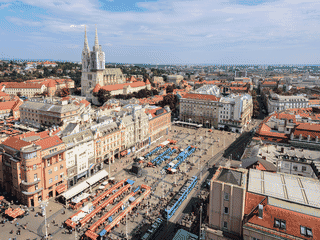
Zagreb pairs an old hilltop core with broad lower-town streets, cafes and museums. Trams make it a practical base for exploring the Croatian capital.
Languages: Croatian
Why Go?
Zagreb is Croatia's vibrant capital offering Central European charm at a fraction of the cost of Vienna or Prague. The city features a charming medieval 'old city' (Gornji Grad) with cobbled streets, historic churches, and the iconic St. Mark's Church with its colorful roof tiles. Zagreb hosts over a million tourists annually, drawn by its excellent museums including the Museum of Broken Relationships, affordable dining scene, and the world-famous Advent festival from December to early January featuring vibrant nightlife, cultural events, and gastronomic activities.
Adapted from Wikivoyage contributors · CC BY-SA 4.0
Getting In
Zagreb is accessible by air via Franjo Tuđman Airport (17 km southeast of city centre) with connections across Europe. The main railway station (Zagreb Glavni kolodvor) offers international connections to Vienna, Budapest, and Munich. The Autobusni Kolodvor Zagreb bus terminal operates 24/7 with services across Croatia and international destinations. Trams connect all major transport hubs to the city centre.
Adapted from Wikivoyage contributors · CC BY-SA 4.0
Get Around
Zagreb has an efficient public transport system operated by ZET featuring trams, buses, and a funicular railway. The tram network operates 24 hours with 15 daytime lines (04:30-00:00) and 4 night lines (00:00-04:00) on 30-40 minute frequencies. Download the ZET app or use Easyway/Google Maps for route planning. Bike sharing is available through BajsZagreb (nextbike) with over 180 stations and 2000+ bikes at €0.50/hour.
Adapted from Wikivoyage contributors · CC BY-SA 4.0
When to Go
The best time to visit is during the Advent festival (December to early January) when Zagreb transforms with festive markets, ice skating rinks, and cultural events. Summer (June-August) brings warm weather (24-27°C) ideal for outdoor dining and lake activities at Jarun. Spring and fall offer mild temperatures, fewer crowds, and lower accommodation prices. Note that several historical buildings including Zagreb Cathedral remain closed due to earthquake damage from March 2020.
Adapted from Wikivoyage contributors · CC BY-SA 4.0
Where to Stay
Budget travelers can find hostel dorm beds from €11-15.5 at centrally-located options like Chillout Hostel Zagreb (from €25), Nokturno Hostel (from €11), and Hobo Bear Hostel (€14). Mid-range hotels include Hotel Central (from €57) near the railway station and Hotel Jägerhorn, the city's oldest hotel founded in 1827. For luxury, the Esplanade Zagreb (built 1925 for Orient Express passengers) and Sheraton Zagreb offer premium accommodations.
Adapted from Wikivoyage contributors · CC BY-SA 4.0
Food and Drink
Zagreb's food scene ranges from street food to fine dining. Local specialties include ćevapčići (grilled minced meat sausages), zagrebački šnicl (Vienna-style breaded meat cutlet), andstrukli (rolled pastry filled with cheese). Budget options include Sandwich Bar Pingvin on Nikole Tesle, Taquitos Bandidos for Mexican street food, and La Štruk for traditional fast food. Upper Town (Gornji Grad) offers traditional konobas like Konoba Didov San on Mletačka. The Tkalčićeva street area is packed with bars, with Mali Medo offering local Medvedgrad beer and excellent ćevapčići.
Adapted from Wikivoyage contributors · CC BY-SA 4.0
Things to Do
Must-see attractions include the Zagreb Cathedral (currently closed due to earthquake damage), St. Mark's Church with its iconic roof tiles, and the Museum of Broken Relationships (€7). The Grič Tunnel offers free pedestrian passage through a 450m WWII bomb shelter. For nature, hike Mount Sljeme (1,035m) on Medvednica mountain via cable car, or relax at Maksimir Park and Zagreb Zoo. Sports fans can catch GNK Dinamo Zagreb matches at Stadion Maksimir.
Adapted from Wikivoyage contributors · CC BY-SA 4.0
Safety
Zagreb is statistically safer than most European capitals including London, Paris, Vienna, Rome, and Budapest. Use normal urban precautions in poorly lit areas and parks at night. Avoid drunk groups on weekend nights as random beatings have occurred. Exercise caution near the main railway station where pickpocketing occasionally happens. Avoid strip clubs as they notoriously overcharge foreigners (some report bills of €2000+). Park Ribnjak should be avoided after dark.
Adapted from Wikivoyage contributors · CC BY-SA 4.0
Connectivity
As of April 2023, Zagreb has 5G coverage from all three major carriers: HT, A1, and Telemach. Public WiFi is widely available in cafes and public spaces. Power plugs use Type C and F (European two-pin and Schuko). The airport offers limited free WiFi and paid internet access.
Adapted from Wikivoyage contributors · CC BY-SA 4.0
Budget
Budget travelers can get by on €40-60/day including hostel dorm (€11-15), street food meals (€5-10), and public transport (tram tickets around €0.65-1.30). Museum admissions typically range from €3-9. A coffee or beer costs €1.50-3. Evening drinks and rakija (local schnapps) at Tkalčićeva bars run €2-5 per drink.
Adapted from Wikivoyage contributors · CC BY-SA 4.0
Day Trips
Zagreb makes an excellent base for exploring Central Croatia. Samobor (25 km west) is a picturesque medieval town reachable by bus in ~30 minutes for ~€3. Sisak (50 km southeast) offers riverside beauty accessible by fast train in 30 minutes. Karlovac (45 km southwest) sits at the intersection of four rivers. Ljubljana in Slovenia and Sarajevo in Bosnia and Herzegovina are both reachable by direct bus for multi-day excursions.
Adapted from Wikivoyage contributors · CC BY-SA 4.0
Etiquette
Croatians are generally friendly and informal. Dress modestly when visiting churches - cover shoulders and knees. Smoking is banned in enclosed public spaces including restaurants, though some smaller bars may allow it. Tipping is appreciated but not mandatory (round up or 10% for good service). Croatians value punctuality less rigidly than Northern Europeans.
Adapted from Wikivoyage contributors · CC BY-SA 4.0
Go Next
From Zagreb, continue to the Adriatic coast cities of Split and Dubrovnik (reachable by bus or internal flights). The Plitvice Lakes National Park is a must-see UNESCO site accessible as a long day trip or overnight stay. Lake Bled in Slovenia makes an excellent 2-3 day addition for a different Alpine experience.
Adapted from Wikivoyage contributors · CC BY-SA 4.0
Field guide adapted from Wikivoyage contributors · CC BY-SA 4.0. Text has been adapted and organized for this guide. About our sources.
Places to know
A few starting points from the guide. Check current hours and prices before you go.
- drink
Aquarius
Saturday night is drum'n'bass & dancehall music, Friday is hip-hop/r'n'b night. Good concerts.
Adapted from Wikivoyage contributors
- drink
BP Club
Jazz and blues lovers should check it out.
Adapted from Wikivoyage contributors
- drink
Booksa
A cafe, bookshop and library famous with local young intellectuals.
Adapted from Wikivoyage contributors
- drink
Cica
Bar mostly known for its great and varied choice of the local schnappses (rakija). Interesting always changing, gallery-like interior. The whole bar is small but offers outdoor seating. Very popular and crowded, brimming with young business and student clientele.
Adapted from Wikivoyage contributors
- do
CineStar Arena IMAX
Adapted from Wikivoyage contributors
- do
CineStar Novi Zagreb
Adapted from Wikivoyage contributors
- do
CineStar Zagreb
Adapted from Wikivoyage contributors
- do
CineStar Zagreb Zapad Z Centar
Adapted from Wikivoyage contributors
Before you go
Connectivity
5G available from HT, A1, and Telemach as of April 2023. SIM cards readily available at convenience stores and operator shops. Public WiFi common in cafes.
Culture
Zagreb hosts the famous Advent festival December-early January with markets, concerts, and festivities. The city has a growing digital nomad scene with expanding coworking spaces.
Language
Croatian is the official language. English is widely spoken by younger people and in tourist areas. German is also commonly understood due to tourism from Austria and Germany.
Money
Croatia uses the Euro (€) as of 2023. ATMs are widely available. Credit cards accepted at most hotels, restaurants, and shops. Small establishments may be cash-only.
Safety
Zagreb is very safe for a European capital. Normal precautions apply at night near parks and train station. Avoid strip clubs which notoriously overcharge foreigners.
Transport
Zagreb's ZET tram and bus network operates 24/7 with night lines running every 30-40 minutes. Single rides cost around €0.65-1.30 depending on transfer time. Download the ZET app for real-time schedules.
Visa
Croatia is an EU member (not yet in Schengen). EU/EEA/Swiss citizens need only ID. Other nationalities should check visa requirements before travel.
Weather
Summers are warm (24-27°C) with occasional afternoon thunderstorms. Winters are cold (0-5°C) with occasional snow. Spring and fall offer pleasant temperatures with fewer tourists.