
Split
Eastern Europe and the Balkans · Croatia
Did you know?
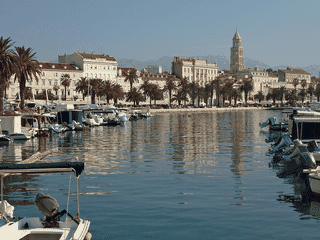
- The Riva is a waterfront promenade beside the Old Town.
- The palace complex includes subterranean Basement halls.
- Peristil square and Jupiter's Temple belong to the palace complex.
See also

Omiš
Croatia43.43°N 16.68°E · 0 m
Hvar
Croatia43.13°N 16.73°E
Overview
Split's compact center is easy to explore on foot. The Old Town and Riva waterfront link historic streets with the seafront.
Languages: Croatian
Why go?
Split is the largest city in Dalmatia and Croatia's main transit hub on the Adriatic coast. Built around the extraordinary Diocletian's Palace, one of the best-preserved Roman palaces in the world, the city offers a unique blend of ancient history and Mediterranean beach life. With 2,800 hours of sunshine annually, Split attracts visitors seeking Roman ruins, island-hopping adventures, nearby national parks, and vibrant waterfront nightlife. The city is also famous for its football culture centered around Hajduk club and Torcida, Europe's oldest supporters group.
Adapted from Wikivoyage contributors · CC BY-SA 4.0
Getting in
Split Airport (SPU) is 25 km west of Split, 5 km east of Trogir, handling mostly budget and charter flights from European cities including London, Berlin, Paris, Amsterdam, Rome, and many others, plus domestic flights from Zagreb, Dubrovnik, and Pula. By ferry, Split is Croatia's main Dalmatian port with connections to Italian cities (Ancona, Pescara, Bari) and nearby islands including Hvar, Vis, Korčula, and Brač. The main bus station (Autobusni kolodvor Split) offers frequent services to destinations across Croatia and beyond including Bosnia and Herzegovina. The Split railway station connects to Zagreb and Ljubljana.
Adapted from Wikivoyage contributors · CC BY-SA 4.0
Getting around
Central Split is very compact and most sights can be easily seen on foot within the old town and along the Riva waterfront. Local buses operated by Promet Split connect outlying attractions, beaches, and the airport, with bus No. 12 serving Bačvice beach. Taxis and ride-sharing services like Bolt and Uber are readily available. Walking is the best way to explore the Diocletian's Palace complex, Peristil square, and the narrow streets of the historic center.
Adapted from Wikivoyage contributors · CC BY-SA 4.0
When to go
July and August are peak season with the warmest weather (25-30°C), busiest beaches, and highest prices, coinciding with the Split Summer Festival. May-June and September-October offer milder temperatures, fewer crowds, and lower accommodation rates—ideal for sightseeing and outdoor activities. Winters are mild (5-15°C) with occasional rain, though snow can disrupt traffic in January or early February. Spring brings wildflowers and is perfect for hiking Marjan hill or visiting national parks.
Adapted from Wikivoyage contributors · CC BY-SA 4.0
Where to stay
Split offers a wide variety of private accommodation, hostels, and hotels. Budget hostels cluster near the bus station and old town, with dorm beds from €10-25 (Hostel Split Backpackers, Tchaikovsky Hostel, CroParadise Green Hostel). The Old Town area inside the palace walls has charming guesthouses like Al's Place and Old Town Hostel. Mid-range hotels include Hotel Park near the ferry piers and Hotel Mondo near the harbor. Many travelers arrive without bookings and find rooms at the bus station or ferry terminal, where touts offer accommodation even late at night.
Adapted from Wikivoyage contributors · CC BY-SA 4.0
Food and drink
Dalmatian cuisine features Italian-influenced dishes: risotto with scampi or black calamari, Dalmatinski pršut (cured ham similar to prosciutto), and Pag cheese. Don't miss pašticada s njokama (beef stew with dumplings) or winter specialty soparnik (chard pie). Ćevapi/ćevapčići, small grilled minced meat rolls from Bosnia, are ubiquitous and served with kajmak or ajvar. The Riva waterfront has many cafes, while restaurants like Fife offer generous Croatian portions. Budget eating includes fast food spots between the Old Town and bus station, with pizzettas from €2 and sandwiches at Popaj. Excellent Croatian wines from Dalmatian vineyards are widely available.
Adapted from Wikivoyage contributors · CC BY-SA 4.0
Things to do
The Diocletian's Palace complex is the centerpiece: explore the Basement halls (€6), Peristil square, Jupiter's Temple (€0.70), and St. Duje's Cathedral with its bell tower offering panoramic views (€3.40 cathedral, €4 bell tower). The Archaeological Museum (adults €8) displays Roman artifacts from Salona. Beach activities include swimming at Bačvice (shallow sandy beach, accessible by bus No. 12) and Split city beach near the ferry terminal. Active options include white river rafting on the Cetina river, Seabob underwater exploration, and watching football at Poljud stadium (Hajduk Split games). The Marjan hill offers hiking trails and city views.
Adapted from Wikivoyage contributors · CC BY-SA 4.0
Safety
Split is generally a safe city, but standard precautions apply against pickpockets in crowded tourist areas and around the ferry terminal. Striptease bars are identified as tourist traps and should be avoided. The city has an LGBTQ+-friendly bar-club called Ghetto (gay-owned) and gay-friendly venue Kocka for concerts. A notable local law prohibits walking in swimwear or shirtless in the historic center—wardens issue on-the-spot fines of €150 for dress code violations.
Adapted from Wikivoyage contributors · CC BY-SA 4.0
Connectivity
Split has good 4G and 5G coverage from major providers Telemach, A1, and T-Mobile. Prepaid SIM cards are available at convenience stores and telecom shops. Free WiFi is widely available in public spaces, cafes, and restaurants around the city center. Internet Club 100 at Sinjska ul 2/4 offers computer access, printing, and phone calls Monday to Friday 09:30-15:30. Split Airport provides free WiFi.
Adapted from Wikivoyage contributors · CC BY-SA 4.0
Budget
Budget travelers can manage on €50-70 per day in shoulder season, rising to €80-100 in peak summer. Dorm beds cost €10-25, while budget meals start at €5-8 (sandwiches, fast food, market produce). Local buses are affordable, though taxis add up. Museum entry ranges from €0.70-13. Free activities include walking the Palace, swimming at city beaches, hiking Marjan hill, and people-watching on the Riva waterfront. Island day trips by ferry to Hvar cost €15-30 one way.
Adapted from Wikivoyage contributors · CC BY-SA 4.0
Day trips
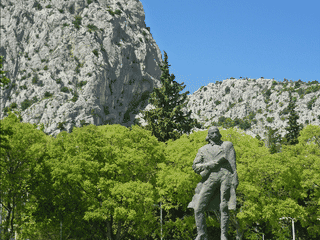
Numerous islands are accessible by ferry from Split: Hvar (popular nightlife and lavender fields), Brač (famous Zlatni Rat beach, accessible by ferry to Supetar with buses to Bol), and Šolta (quieter, great for cycling). Krka National Park features beautiful waterfalls and is one of Croatia's eight national parks. Ancient Salona near Solin (10-20 min bus ride) was once the capital of Roman Dalmatia with a well-preserved amphitheater. Omiš offers rafting and canyoning in the Cetina river canyon. Makarska (60 km southeast) has beautiful beaches reachable by frequent buses. Day trips into Bosnia and Herzegovina include Mostar, Medjugorje, and Ljubuški.
Adapted from Wikivoyage contributors · CC BY-SA 4.0
Go next
From Split's ferry port, island-hop to Hvar, Vis, Korčula, or the car-free Pakleni islands. By bus, continue north to Zadar and the pagoda-studded Kornati Islands, or south to Dubrovnik along the scenic coastal road. The Dalmatian hinterland offers hiking in the Biokovo mountains. Across the border, Mostar in Bosnia and Herzegovina showcases Ottoman bridge architecture and is a popular day trip. Zagreb, Croatia's capital, is a 6-7 hour train ride north with rich Austro-Hungarian architecture.
Adapted from Wikivoyage contributors · CC BY-SA 4.0
Field guide adapted from Wikivoyage contributors · CC BY-SA 4.0. Text has been adapted and organized for this guide. About our sources.
Places to know
A few starting points from the guide. Check current hours and prices before you go.
- eat
BaĆe
Balkan atmosphere. Ba.Cevapi is their flagship dish, which consists of minced meat, well spiced and grilled, served with typical bread and sauces
Adapted from Wikivoyage contributors
- eat
Bakra - Steak & Pizza Bar
Definitely one of the best pizza in town, baked on fireplace.
Adapted from Wikivoyage contributors
- eat
Biser Orijenta
Good "European Chinese" cuisine. Not too popular among the locals, but the prices are fair and the service is friendly.
Adapted from Wikivoyage contributors
- eat
Fife
Lively and busy restaurant with lots of seating and deliciously large Croatian dishes.
Recorded price: Mains €12-20
Adapted from Wikivoyage contributors
- eat
Fino i Friško 2 - Biškić
Because of its proximity to school, this bakery always has fresh and tasty food.
Adapted from Wikivoyage contributors
- eat
Kod Joze
The traditional family-run konoba serves tasty dishes in style. Prices very reasonable considering the quality and atmosphere.
Adapted from Wikivoyage contributors
- eat
Kod Sfinge Vanevropske Zviri
A Konoba/Trattoria. Good Dalmatian specialties: Pašticada, Paški sir, etc. Also proposes good seafood catch of the day, but sometimes unavailable. Seems to be operated by a single family: The waiters knows very well the menu.
Recorded price: Pašticada for €20 (Aug 2016)
Adapted from Wikivoyage contributors
- eat
Konoba Insula
Small side street restaurant run by a young married couple, incredible food at a very fair price.
Adapted from Wikivoyage contributors
Before you go
Connectivity
4G/5G available from Telemach, A1, T-Mobile. Free WiFi common in cafes and public areas. Internet Club 100 offers computer access.
Culture
Split is passionate about football; Hajduk club colors (blue and white) dominate the cityscape. Local symbols include the Dalmatian dog and donkey. Strong Catholic heritage with numerous churches.
Etiquette
Dress modestly when visiting churches. Remove shoes when entering homes. Tipping 10% appreciated but not mandatory.
Food
Italian-influenced Dalmatian cuisine featuring seafood, cured meats, and local cheeses. Try pašticada, ćevapi, and Dalmatian wines. Markets at Pazar and Ribarnica offer fresh produce.
Money
Croatia uses the Euro (€) as currency since 2023. ATMs are widely available. Credit cards accepted in most hotels, restaurants, and shops, though smaller establishments may be cash-only.
Safety
Generally safe city. Avoid striptease bars. Historic center prohibits swimwear; fines of €150. Gay-friendly venues include Ghetto and Kocka.
Transport
Split Airport is 25 km from city with bus connections. Ferry terminal connects to Dalmatian islands. Bus station handles intercity services. Central old town is walkable; local buses for beaches and suburbs.
Weather
Mediterranean climate with 2,800 sunshine hours annually. Hot dry summers (25-30°C), mild winters (5-15°C). Snow rare but possible January-February.