
Agadir
Morocco30.43°N 9.60°W · 74 m
50 places in the index.
30.43°N 9.60°W · 74 m
31.43°N 8.14°W · 569 m
31.05°N 7.13°W
31.22°N 8.25°W · 1,004 m
34.92°N 2.32°W
33.65°N 7.58°W · 115 m
35.17°N 5.27°W · 564 m
31.51°N 9.77°W · 11 m
34.03°N 5.01°W · 408 m
28.98°N 10.07°W · 298 m
33.53°N 5.12°W · 1,713 m
31.13°N 7.92°W
35.18°N 6.15°W
31.63°N 7.99°W · 465 m
33.90°N 5.55°W · 535 m
31.10°N 4.01°W
29.58°N 10.04°W
34.05°N 5.53°W · 530 m
30.87°N 5.86°W
30.92°N 6.92°W · 1,151 m
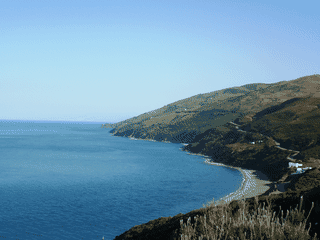
35.45°N 5.08°W
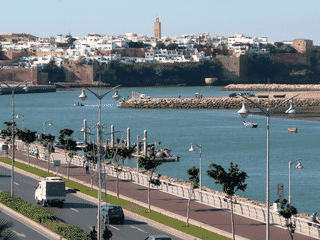
34.00°N 6.84°W · 87 m
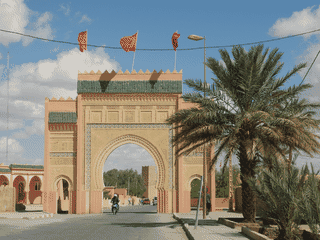
31.28°N 4.27°W · 760 m
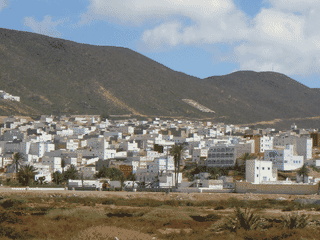
29.37°N 10.18°W · 155 m
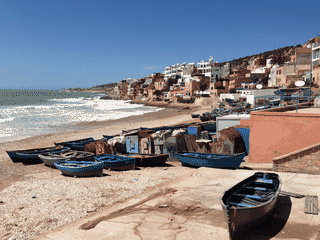
30.53°N 9.70°W
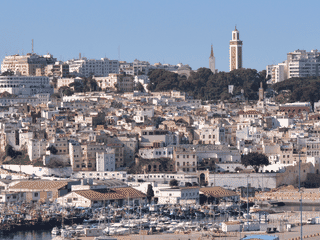
35.80°N 5.83°W · 56 m
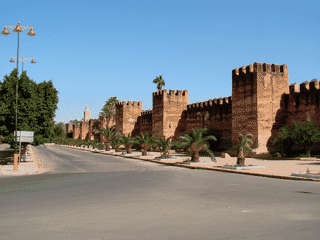
30.47°N 8.87°W · 240 m
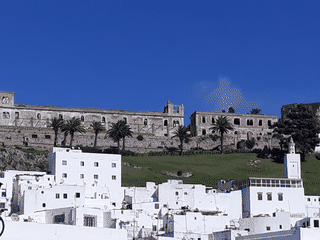
35.57°N 5.37°W · 90 m
31.52°N 5.53°W · 1,340 m
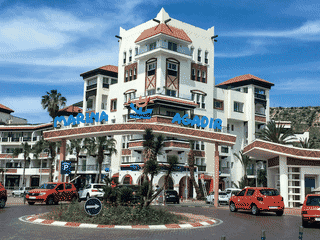
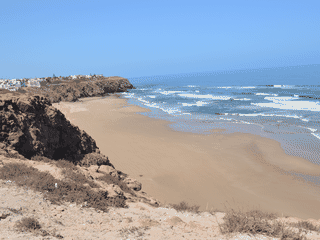
Agadir is a popular beach resort on Morocco's southern coast, offering clean beaches and a friendly atmosphere. It is particularly attractive for European travelers and Moroccans seeking beach tourism with modern facilities.
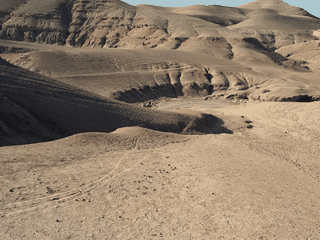
The Agafay Desert is a rocky reg (not a sandy erg like the Sahara) located just 30 kilometers south of Marrakech, making it accessible for day trips or overnight stays without a long desert journey. The landscape features stone dunes, white hills, and dramatic views of the snow-capped High Atlas Mountains—a striking contrast of arid terrain against alpine peaks.
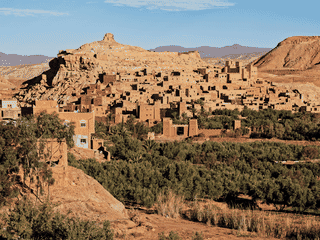
Aït-Benhaddou is a traditional mud brick ksar (fortified village) on the edge of the High Atlas Mountains, and one of Morocco's most iconic UNESCO World Heritage Sites. The ancient city has appeared in over 10 films including Lawrence of Arabia and Gladiator, often serving as a stand-in for Jerusalem.
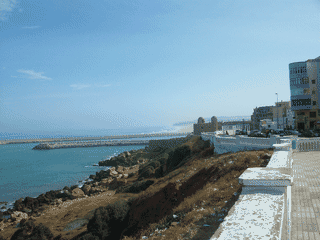
Al Hoceima is a compact coastal city on the northern Rif Mountains edge, drawing Moroccan and some European visitors to its sandy beaches like Cala Iris, Bades, Torres, Quemado, and Tala Youssef. The city carries a distinctly Berber character, with Spanish colonial echoes from its era as Villa Sanjurjo (1926-1956).
Atlas entry
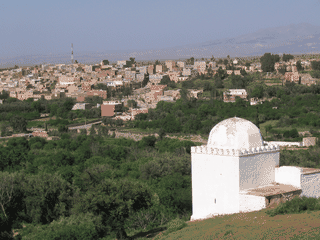
Amizmiz is a traditional Berber market town nestled at the foot of the High Atlas mountains, approximately 55 km south of Marrakech. The town is known for its weekly souk every Tuesday, which draws vendors and buyers from surrounding mountain villages.
Asilah is a small coastal town in northern Morocco that draws visitors for its clean, artistic medina adorned with murals painted by African artists during the annual Moussem festival. Its Atlantic beaches to the north and south offer a quieter alternative to busy Tangier, just 40 km away.
Atlas entry
Asni is a transit town on the road into the High Atlas mountains, about an hour from Marrakech. It's noticeably less touristy than Imlil, offering a glimpse of 'real' Morocco with all essential amenities.
Atlas entry
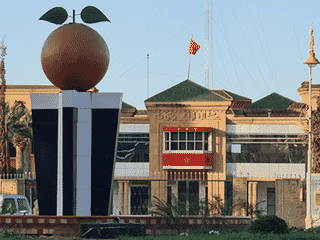
Berkane earns its nickname “Orange City” from vast citrus farms in the Triffa plain that export high-quality oranges across Morocco and internationally. The city offers a slower-paced alternative to larger Moroccan cities, with a compact walkable center, local markets, and strong football culture centered on Renaissance Sportive de Berkane (RSB), a club with national and continental titles.
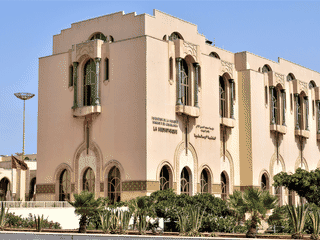
Casablanca is the economic heart of Morocco, offering the awe-inspiring Hassan II Mosque, lively nightlife, and colonial architecture. It's a gateway to Morocco with international flights and trains.
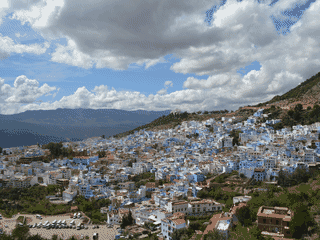
Chefchaouen is a gorgeous mountain city in northeastern Morocco, known for its blue-washed medina set against the Rif Mountains. It's a relaxed place to unwind, with picturesque streets, a friendly atmosphere, and easy access to nature.
El Jadida is a coastal holiday town for Morocco's wealthier city dwellers, offering long beaches and a more relaxed atmosphere than inland cities. The town preserves Portuguese colonial architecture including a famous cistern that appeared in Orson Welles' Othello.
Atlas entry
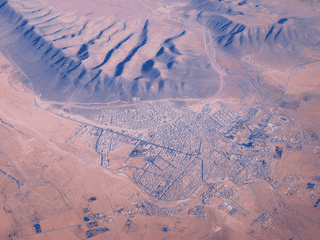
Errachidia is a utilitarian Saharan city of 92,000 people serving primarily as a transit hub on National Road 10 between Ouarzazate and Merzouga. It holds limited independent tourist appeal but offers clean, organized streets courtesy of military presence.
Atlas entry
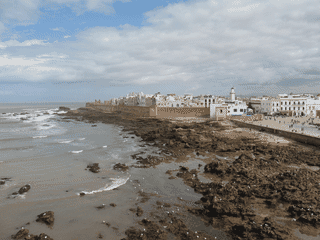
In addition to the new town, Essaouira offers a picturesque medina (old town) surrounded by seawalls and city walls, designed by a French architect in the 18th century, a harbor with fish market, and a long beach with numerous water sports opportunities. Once a hippie hangout, Jimi Hendrix and Cat Stevens spent some time here.
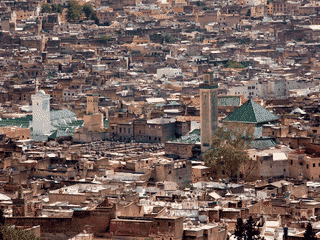
Fez is the medieval capital of Morocco, home to the world's oldest university (Qarawiyyin University, 859) and the oldest continuously-operating library (1359). It has the best-preserved old city in the Arab world, the sprawling, labyrinthine medina of Fes el-Bali, which is the world's largest car-free urban zone.
Guelmim calls itself the Gateway to the Desert for good reason. Once a major caravan stop on the route to Timbuktu, it remains the largest city in the Anti Atlas and the primary departure point for Saharan experiences in this part of Morocco.
Ifrane is a small Atlas mountain city with a distinctly European feel, unusual architecture with steep roofs designed for snow, and a population of roughly 80,000. The town is best known for its large stork population, cedar forests with wild Barbary macaques, and the American-style Al-Akhawayn University.
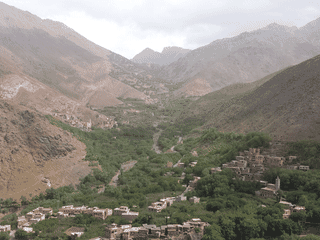
Imlil is the primary base for climbing Jebel Toubkal (4,167 m), the highest peak in North Africa. The village sits at the transition from Marrakech's arid plains into green Berber mountain country, offering cooler temperatures and a progressive community where tourism funds local projects like litter collection and a community hammam.
Jerada is a small Moroccan city of about 30,000 residents tucked against the Beni Snassen Mountains in Oriental Morocco. It offers an authentic, off-the-beaten-path experience with local souqs, traditional food, and mountain scenery without tourist crowds.
Atlas entry
Khouribga is Morocco's phosphate capital, a city built around vast phosphate deposits that drive much of the nation's mining economy. Founded in 1923 by French Protectorate authorities, the city offers visitors a unique industrial tourism experience through guided tours of the OCP phosphate mines.
Atlas entry
Larache is a quieter alternative to Morocco's tourist-heavy destinations, sitting on the North Atlantic Coast where tourists are rarely seen. The city offers a hassle-free, friendly atmosphere where you can explore crumbling Portuguese fortifications, stroll the waterfront, and experience local life without the pressures of guided tours or sales pitches.
M'Rirt is a modest mining and agricultural town in Morocco's Middle Atlas, sitting at 1,100 m elevation. It's not a tourist destination itself, but draws travelers for its weekly Thursday souk, regional Berber crafts, and proximity to the road corridor between Marrakech and Fez.
Atlas entry
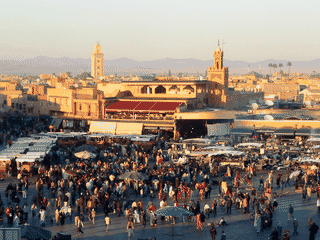
Marrakech is a sensory explosion: the medieval medina with its labyrinthine souks, the vast Djemaa El-Fna square filled with performers and food stalls at night, and the modern Gueliz district with its cafes and shops. It's a gateway to the High Atlas and Sahara, and a city where you can haggle for leather goods, sip fresh orange juice for 4 dirham, and stay in a traditional riad.
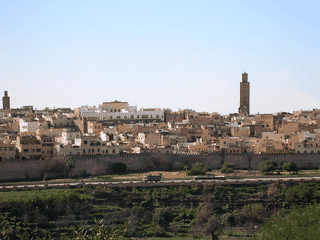
Meknes offers a compelling alternative to the tourist chaos of Fez and Marrakech. The city is an imperial capital created in the 17th century by King Moulay Ismaïl, featuring dramatic gates, palaces, and mosques.
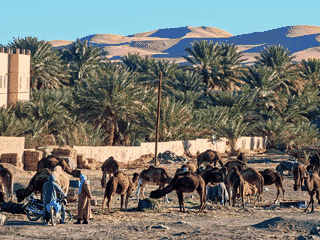
Merzouga is a tiny Saharan village on the edge of Erg Chebbi, a 50-km long and 5-km wide expanse of towering sand dunes reaching up to 350 m above the plain and 808 m above sea level. Most visitors come here for camel safaris into the dunes and to experience remote Berber life in the desert.
Mirleft is a tiny village in Morocco's Anti-Atlas region that has drawn backpackers since the 1970s, when hippies discovered its windswept Atlantic beaches and mellow vibe. Unlike nearby resort towns, it remains unpretentious — a single main road winds through, flanked by cafes, simple guesthouses, and a daily fish market.
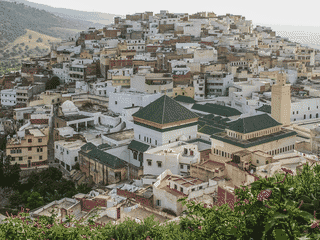
Moulay Idriss is Morocco's holiest city, where Moulay Idriss I arrived in 789 CE bringing Islam and founding the dynasty that would later build Fez. The town draws Moroccan pilgrims who believe six visits during the annual festival equals one Haj to Mecca.
Nador is Morocco's second largest city in the Oriental province, offering a slower pace than major tourist destinations. The city sits beside Mar Chica, the country's largest saltwater lagoon, and borders the Spanish exclave of Melilla to the north.
Atlas entry
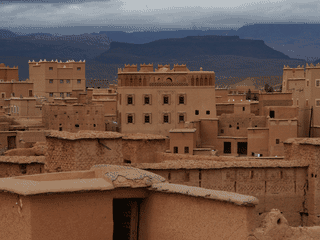
Nkob is a traditional Berber village and the capital of the Ait Atta tribe, offering deep immersion into southern Morocco's indigenous culture. The village sits surrounded by Saghrou Mountains and two palm oases, with easy access to Erg Chebbi Dunes.
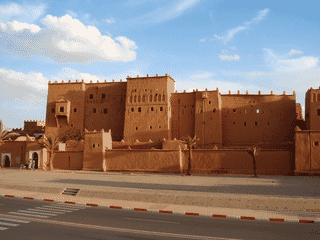
Ouarzazate is a quiet, refreshing stop after the chaos of Marrakech or Fez. With just 60,000 inhabitants, it's nicknamed 'without noise' from Berber roots—you can walk freely without constant hassle.
Oued Laou is a small Mediterranean coastal town that grew from a fishing village into a quiet summer beach destination. The main draw is the clean, wide sand beach and relaxed atmosphere, which feels calm and peaceful outside the summer season.
Oujda is the capital of Oriental Morocco and the main crossing point from Algeria, giving the city a distinct border-town atmosphere. The historic medina features 13th-century architecture including the grand mosque and clock tower at Bab Sidi Abdel Wahab.
Atlas entry
Rabat is Morocco's capital and a UNESCO World Heritage Site, offering a calmer alternative to Marrakesh and Fez. The city sits on the Atlantic at the mouth of the Bou Regreg River, with the old city (medina), Kasbah of the Oudaias, and the 12th-century Hassan Tower within walking distance.
Rissani is the closest town with significant population to the Erg Chebbi Sahara dunes near Merzouga, making it a practical gateway for desert excursions. Its location at the crossroads between north and south gave it historic importance as a trading hub.
Safi offers an unpolished glimpse of Morocco's working Atlantic coast. The city is famous for its sardine fishing industry and ceramics, with a gritty authenticity that many beach towns have lost.
Atlas entry
Saidia is nicknamed the 'Blue Pearl' (Arabic: السعيدية, Al-sa'idiyya; Berber: ⴰⵊⵔⵓⴷ, Ajrud) for good reason. Located in the Berkane Province along the Mediterranean Sea, this coastal town boasts 14 km (9 miles) of golden sand beaches—the longest in Morocco.
Atlas entry
Sidi Ifni is a fishing town in the northern coastal part of Anti Atlas, built by the Spanish in Art Deco style. It's a very calm and relaxed destination — ideal if Essaouira and Chefchaouen feel too crowded.
Souss-Massa National Park is Morocco's premier birdwatching destination, most celebrated for hosting nearly the entire world population of the endangered northern bald ibis. The 33,800-hectare park stretches along the Atlantic coast between Agadir and Sidi Ifni, protecting a unique mosaic of grazed steppe, coastal dunes, sandy beaches, and wetlands.
Atlas entry
Tafraoute sits deep in the Anti Atlas mountains, far from Morocco's tourist coast. The town is famous for the Rochers Peints (Painted Rocks) and Chapeau de Napoléon (Napoleon's Hat) — colorful granite formations scattered across the desert valley.
Taghazout is Morocco's premier surf destination, offering world-class waves at Anchor Point without the crowds of European beaches. The village has a relaxed, bohemian atmosphere where surf culture meets Moroccan hospitality.
Tangier is a fascinating port city where north Africa, Spain, and France converge at the Strait of Gibraltar. Founded in the 5th century BCE, it has been contested by major European powers and was under international control from 1925 to 1956 as the Tangier International Zone.
Tarfaya is a small port town on Morocco's southwestern Atlantic coast, about 32 km north of the disputed Western Sahara border. The town is home to the largest wind farm in Africa, the Tarfaya Wind Farm, and serves as a quiet stopover for travelers crossing between southern Morocco and Western Sahara.
Atlas entry
Taroudannt is a walled market town in Southern Morocco, 72 km inland from Agadir, often called 'little Marrakech' for its similar medina atmosphere. Unlike Marrakech, it remains largely unspoiled by tourist touts.
Taza is a strategic city positioned as a natural passage between the Rif and Middle Atlas mountains, making it an important transit point in northern Morocco. Unlike larger Moroccan tourist destinations, Taza remains relatively untouched by mass tourism, offering a more authentic experience of small-town Moroccan life.
Atlas entry
Tétouan is a northern Moroccan city with a UNESCO World Heritage-listed Medina that showcases Andalusian-inspired architecture and Spanish colonial influence. Many travelers only pass through on buses between Ceuta or Tangier and Chefchaouen, but the city rewards those who linger with a compact, walkable old town, excellent museums, and easy access to Mediterranean beaches and Rif Mountain trails.
Tinejdad is a small Saharan Morocco town positioned along the Road of Kasbahs, making it a convenient overnight stop between Errachidia and Tinghir. The town is celebrated for its palm groves and authentic Berber culture, offering travelers a taste of traditional oasis life away from larger tourist hubs.
Atlas entry
Tinerhir (Tinghir) is a traditional Amazigh oasis town in Morocco's High Atlas region, best known as the gateway to the spectacular Todra Gorge. With a population of about 42,000 and an elevation of 1,300 m, it offers a cooler, quieter alternative to Marrakech for travelers seeking mountain trails, Berber culture, and desert access.
Tiznit is a functional market town where Moroccans within 70 km radius do their household shopping, but it has earned a reputation for silverware sold by the gram. It makes a practical stop on longer road trips through the Anti-Atlas region, offering a chance to stock up on supplies or pick up distinctive jewelry designs.
Atlas entry
Toubkal National Park is Morocco's premier mountain destination, centered on Jbel Toubkal at 4167m—the highest peak in North Africa and the Arab world. Unlike many mountains of comparable height, Toubkal is significantly easier to climb on well-marked trails, making it accessible to determined backpackers with basic fitness.
Atlas entry
Zagora sits at the edge of the Sahara, famous for its 'Tombouctou 52 jours' sign marking 52 days by camel to Timbuktu. The town serves as the last real settlement before the desert and is the gateway to camel treks and dune excursions in the Draa Valley.
Atlas entry
Zaouiat Ahansal is a remote High Atlas mountain town founded in the 13th century by traveller and Islamic scholar Sidi Said Ahansal. The town has a population of 10,000 and is inhabited by nomadic Berber people, most notably the Aït Atta tribes.
Atlas entry
In development: the whole atlas offline, a trip planner and a private journal. We'll post here when it ships. No newsletter to join.


.jpg)


.jpg)


.jpg)


.jpg)


