.jpg)
Moulay Idriss
Africa · Morocco
See also

Meknes
Morocco33.90°N 5.55°W · 535 m
.jpg)
Fez
Morocco34.03°N 5.01°W · 408 m

Ifrane
Morocco33.53°N 5.12°W · 1,713 m
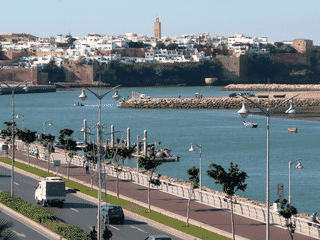

Rabat
Morocco34.00°N 6.84°W · 87 m
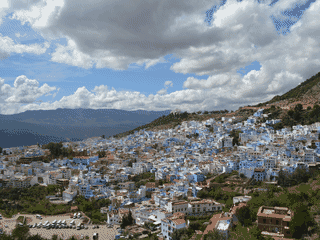

Chefchaouen
Morocco35.17°N 5.27°W · 564 m
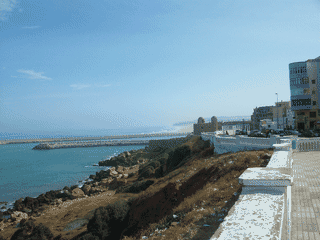

Larache
Morocco35.18°N 6.15°W
Overview
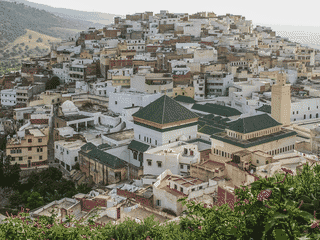
Moulay Idriss is Morocco's holiest city, where Moulay Idriss I arrived in 789 CE bringing Islam and founding the dynasty that would later build Fez. The town draws Moroccan pilgrims who believe six visits during the annual festival equals one Haj to Mecca.
Languages: Arabic, Berber
Why Go
Moulay Idriss is Morocco's holiest city, where Moulay Idriss I arrived in 789 CE bringing Islam and founding the dynasty that would later build Fez. The town draws Moroccan pilgrims who believe six visits during the annual festival equals one Haj to Mecca. For backpackers, it offers an intimate alternative to larger Moroccan medinas with narrow streets, a unique cylindrical minaret found nowhere else in Morocco, and easy access to the stunning Roman ruins at Volubilis just 5 km away.
Adapted from Wikivoyage contributors · CC BY-SA 4.0
Understand
The compact town is named after Moulay Idriss I, who arrived in 789 and initiated construction of Fez, later completed by his son Moulay Idriss II. The town feels familiar to anyone who has explored Moroccan medinas with its winding narrow streets. The Mausoleum of Idriss I near the main square is sacred to Muslims and closed to non-Muslims. Moulay Idriss I sourced building materials from the nearby Phoenician and Roman city of Volubilis.
Adapted from Wikivoyage contributors · CC BY-SA 4.0
Getting In
Buses and grand taxis from Meknes drop passengers along the highway where vehicles turn toward Moulay Idriss. The town lies north of Meknes in the Middle Atlas region. Transport is basic, with the Gare Routière serving as the main bus and taxi stand. Shared grand taxis offer a fixed per-seat price, while private taxis cost more.
Adapted from Wikivoyage contributors · CC BY-SA 4.0
Get Around
Everything in Moulay Idriss is walkable within the compact town center. The walk to Volubilis ruins is 2.4 km and can be done on foot or by taxi for around 40 dirham. When arriving by bus or grand taxi, passengers disembark at the roundabout along the main highway before vehicles turn toward the town.
Adapted from Wikivoyage contributors · CC BY-SA 4.0
When To Go
Spring and autumn offer pleasant temperatures for exploring. Summers can be extremely hot with little shade—bring a hat and water. The annual festival honoring the saint draws many Moroccan pilgrims. The town is quiet most of the year, making overnight stays peaceful but with limited nightlife.
Adapted from Wikivoyage contributors · CC BY-SA 4.0
Things To Do
Walk up to the grand terrace for sunset views over the town and Saiss Valley. The Sentissi Mosque features the only cylindrical minaret in Morocco, built in 1939 by a local man returning from hajj. The Zawiya of Moulay Idris I complex includes a mosque and mausoleum with a green-tiled roof, though non-Muslims cannot enter the mausoleum. Hiking opportunities exist in the surrounding hills with olive groves and views of the fertile valley. The Roman ruins of Volubilis, 5 km away, feature spectacular mosaics in preserved houses including the House of Orpheus, House of the Athlete, and House of Venus.
Adapted from Wikivoyage contributors · CC BY-SA 4.0
Where To Stay
A small selection of hotels exists in Moulay Idriss, though most backpackers choose to visit as a day trip from Meknes where accommodation options are more varied. Overnight stays allow visits to the grand terrace at sunset and a more relaxed pace to explore the town and nearby Volubilis.
Adapted from Wikivoyage contributors · CC BY-SA 4.0
Food And Drink
The town has basic eateries serving traditional Moroccan cuisine near the main square. Expect tagines, couscous, and mint tea. Budget around 40-60 dirham for a basic meal. For more dining options, return to Meknes for the evening.
Adapted from Wikivoyage contributors · CC BY-SA 4.0
Stay Safe
There is hardly any shade in the town, so bring a hat and water—temperatures can become very hot, especially in summer. The town is generally safe with a welcoming local population. Standard Moroccan city precautions apply regarding belongings.
Adapted from Wikivoyage contributors · CC BY-SA 4.0
Go Next
Fez is a major destination reachable by transport from Moulay Idriss, featuring one of the world's largest medieval medinas. Meknes, the nearest major city, makes an ideal base with better accommodation options and connects easily via bus or grand taxi. Volubilis archaeological site is walkable or a short taxi ride away.
Adapted from Wikivoyage contributors · CC BY-SA 4.0
Field guide adapted from Wikivoyage contributors · CC BY-SA 4.0. Text has been adapted and organized for this guide. About our sources.
Places to know
A few starting points from the guide. Check current hours and prices before you go.
- see
Gordian palace
A building dubbed the Gordian Palace is located further up the Decumanus Maximus. It was the largest building in the city and was probably the residence of the governor, rather than the emperor Gordian III; it was rebuilt during Gordian's reign in the mid-3rd century. It combined two separate houses to create a complex of 74 rooms with courtyards and private bathhouses serving both domestic and official functions. It also incorporated a colonnaded front with a dozen shops behind the colonnade, and an oil factory consisting of three oil presses and an oil store in the north-east corner of the complex. The decoration of the Gordian Palace is today quite plain with only a few scanty mosaics remaining.
Adapted from Wikivoyage contributors
- see
House of Venus
The House of Venus, towards the eastern side of the city under a prominent cypress tree, was one of the most luxurious residences in the city. It had a set of private baths and a richly decorated interior, with fine mosaics dating from the 2nd century CE showing animal and mythological scenes. There were mosaics in seven corridors and eight rooms. The central courtyard has a fanciful mosaic depicting racing chariots in a hippodrome, drawn by teams of peacocks, geese and ducks. The mosaic of Venus for which the house is named has been removed to Tangier, but in the next-door room is a still-extant mosaic showing Diana and a companion nymph being surprised by Actaeon while bathing. Actaeon is depicted with horns beginning to sprout from his head as he is transformed by the angry goddess into a stag, before being chased down and killed by his own hunting dogs. The house appears to have been destroyed some time after the city's fall around 280; a mosaic depicting Cupids feeding birds with grain has been charred by what appears to have been a fire burning directly on top of it, perhaps resulting from the building being taken over by squatters who used the mosaic as the site of a hearth.
Adapted from Wikivoyage contributors
- see
Sentissi Mosque
A mosque with the Cylindrical Minaret, allegedly the only one in Morocco. Built in 1939 by a local man after his return from the hajj in Mecca. It is now a Qur'anic school (madrasa).
Adapted from Wikivoyage contributors
- see
The House of Orpheus
Located in the southern part of the city this house takes its name from the large mosaic depicting Orpheus playing his harp to an audience of trees, animals and birds. The mosaic is situated in the triclinium, the dining room, where the diners would have reclined on couches set against the walls and admired the central mosaic. Other mosaics can be seen in the atrium, which has a depiction of Amphitrite in a chariot pulled by a seahorse and accompanied by other sea creatures, and in the bathing rooms. One room off the main courtyard has a mosaic of a dolphin, considered by the Romans to be a lucky animal.
Adapted from Wikivoyage contributors
- see
The House of the Athlete or Desultor
Located near the forum, contains a humorous mosaic of an athlete or acrobat riding a donkey back to front while holding a cup in his outstretched hand. It may possibly represent Silenus. The most prestigious houses in the city were situated adjoining the Decumanus Maximus, behind rows of shops that lined the street under an arcade. They were entered from side streets between the shops.
Adapted from Wikivoyage contributors
- see
The House of the Ephebe
Named after a bronze statue found there. It has a prominent interior courtyard leading to a number of public rooms decorated with mosaics, including a depiction of Bacchus in a chariot being drawn by leopards.
Adapted from Wikivoyage contributors
- see
The House of the Knight
Next door from the house of Ephebe, this house also has a mosaic of Bacchus, this time showing coming across the sleeping Ariadne, who later bore him six children. The house takes its name from a bronze statue of a rider found here in 1918 that is now on display in the archaeological museum in Rabat.
Adapted from Wikivoyage contributors
- see
Volubilis Archaeological Site
UNESCO World Heritage Roman ruins with stunning mosaics, 5 km from Moulay Idriss, featuring preserved houses with intricate floor designs.
Adapted from Wikivoyage contributors
Before you go
Culture
As a holy city, respect local customs, especially near religious sites. The mausoleum is closed to non-Muslims. Dress modestly out of respect.
Money
Moroccan dirham (MAD) is the local currency. ATMs are limited in Moulay Idriss; withdraw cash in Meknes before visiting. Prices are modest by Moroccan standards.
Safety
Generally safe town. Main concern is sun exposure—hydration and sun protection are essential, especially for the walk to Volubilis.
Transport
Grand taxis and buses run between Meknes and Moulay Idriss. Taxis to Volubilis cost around 40 dirham. Everything in town is walkable.
Weather
Very hot summers with little shade—bring water, a hat, and sunscreen. Best visited in spring or autumn for comfortable temperatures.