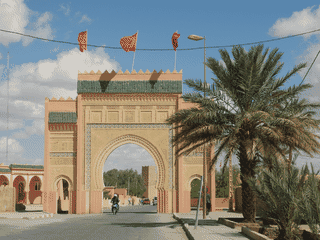

Rissani
Africa · Morocco
See also
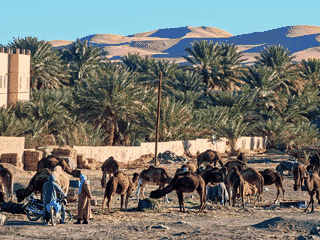

Merzouga
Morocco31.10°N 4.01°W
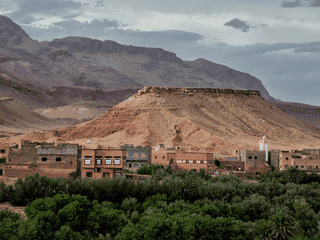

Tinerhir
Morocco31.52°N 5.53°W · 1,340 m
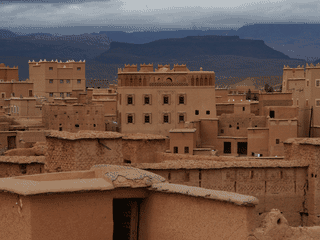

Nkob
Morocco30.87°N 5.86°W
Overview
Rissani is the closest town with significant population to the Erg Chebbi Sahara dunes near Merzouga, making it a practical gateway for desert excursions. Its location at the crossroads between north and south gave it historic importance as a trading hub.
Languages: Arabic, Berber
Why Go
Rissani is the closest town with significant population to the Erg Chebbi Sahara dunes near Merzouga, making it a practical gateway for desert excursions. Its location at the crossroads between north and south gave it historic importance as a trading hub. The town offers authentic pre-Saharan Moroccan atmosphere with traditional ksars (fortified villages), local markets, and fewer tourists than nearby Merzouga.
Adapted from Wikivoyage contributors · CC BY-SA 4.0
Getting In
Rissani is accessible by bus, with CTM services dropping passengers in the medina rather than the bus station. Grand taxis (shared long-distance taxis) also serve the route. From Alnif, minibuses cost 25 dirham from outside the bus station.
Adapted from Wikivoyage contributors · CC BY-SA 4.0
Get Around
Rissani is best explored on foot, as the town is compact enough to walk between the main sights, souk, and hotels. Bicycle rental is available for reaching more distant ksars and sites.
Adapted from Wikivoyage contributors · CC BY-SA 4.0
When to Go
The best time to visit Rissani is during cooler months (October to April) to avoid extreme desert heat. The Sunday, Wednesday, and Thursday souks at Ksar Oulad Abdelhlim draw Berber and Arab nomads from the surrounding mountains, offering an authentic market experience.
Adapted from Wikivoyage contributors · CC BY-SA 4.0
Where to Stay
Accommodation options in Rissani are limited but affordable. Hotel Merzouga near the souk offers double rooms for 150 dirham per night with clean facilities, hot showers, and a garden. Budget travelers should arrive early or book ahead during high season.
Adapted from Wikivoyage contributors · CC BY-SA 4.0
Food and Drink
Rissani's signature dish is Madfouna, also called Berber pizza—a traditional stuffed flatbread filled with meat, onion, herbs, and spices. Drink mineral water brands like Sidi Ali, Sidi Hrazem, or Ciel, costing no more than 5-6 dirham per liter. Avoid paying more than 5 dirham for bottled water.
Adapted from Wikivoyage contributors · CC BY-SA 4.0
Things to Do
Visit the Moulay Ali Cherif Mausoleum, rebuilt in 1965 after flood damage, with its distinctive green ceramics and dome—non-Muslims can only enter the Islamic garden. Explore Ksar El Fida, 4 km northeast, the most important Alaouite ksar in Tafilalet, now housing a museum with no admission fee. Walk to Sijilmasa ruins on the northwest edge, site of a medieval trans-Saharan trade city (757–1393 AD) recognized as endangered by the World Monuments Fund. Experience a traditional hammam (public bath) or rent a bicycle to explore further.
Adapted from Wikivoyage contributors · CC BY-SA 4.0
Buy
Rissani's signature souvenir is plates made from palm tree paper, crafted by women in the old ksar—find them in the market for as little as 5 dirham. Fossil stones, particularly ammonite orthoceras and small decorative pieces, are also popular purchases.
Adapted from Wikivoyage contributors · CC BY-SA 4.0
Stay Safe
Tourism is a major income source here, and aggressive touts often greet bus arrivals—particularly noticeable when arriving via CTM. To minimize hassle, arrange a reputable tour operator to meet you at the bus, or simply say "La, shokran" (No, thank you) firmly. Remember no one will harm you—stay relaxed and enjoy your Sahara adventure.
Adapted from Wikivoyage contributors · CC BY-SA 4.0
Go Next
The N12 national road starts at Rissani and ends in Sidi Ifni, passing through Anti-Atlas mountains and arid villages. Merzouga lies to the south, offering direct access to the Erg Chebbi desert and dunes. From Alnif, shared taxis continue to Tazzarine (25 dirham) and Zagora (50 dirham further).
Adapted from Wikivoyage contributors · CC BY-SA 4.0
Field guide adapted from Wikivoyage contributors · CC BY-SA 4.0. Text has been adapted and organized for this guide. About our sources.
Places to know
A few starting points from the guide. Check current hours and prices before you go.
- sleep
Hotel Merzouga
Basic but clean hotel near the souk with hot showers and a garden, offering good value for desert travelers.
Recorded price: 150 dirham per night/double room
Adapted from Wikivoyage contributors
- eat
Madfouna (Berber pizza)
Traditional stuffed Berber flatbread filled with meat, onion, herbs, and spices—a local specialty found throughout Rissani.
Adapted from Wikivoyage contributors
- see
Ksar El Fida
The most important and the most ancient of the Alaouite ksars in Tafilalet. The first ksar dates back to the reign of King Moulay Ismail who built it to house his son King Moulay Abdellah. It was reduced to rubble except for the high outside walls and the towers. It was rebuilt under the reign of Moulay Abd al Rahman about 800 m southeast of the first site. Until 1965, it was used by the ruling Khalifa or Caid of Tafilalet. The empty inner courts are now a museum. No admission fee. Photographs are not allowed inside.
Adapted from Wikivoyage contributors
- see
Ksar Oulad Abdelhlim
You can see the souk (market) every Sunday, Wednesday and Thursday. It draws people who live around Rissani in the mountains—Berber and Arab nomads. And you can see what people in this area use as medicine, the sheep market and bird market.
Adapted from Wikivoyage contributors
- see
Mausoleum of Moulay Ali Chérif
When you go through the big gate ornamented by green ceramics and topped by a dome you will find on your right the big room that shelters the tomb of Moulay Ali Chérif, founder of the Alaouite dynasty. This mausoleum was rebuilt in 1965 after it was destroyed by high waters of the River Ziz. The sacred precinct has a wide yard, a patio and picturesque mosque. Non-Muslims are restricted to the Islamic garden. The tomb and the mosque are off-limits to non-Muslims.
Adapted from Wikivoyage contributors
- see
Sijilmasa
Ruins of a medieval Moroccan city that served as the northern point of the trans-Saharan trade route from about 757–1393 AD. Invaded several times by Berber dynasties. Was excavated in the 1980s-1990s. It is recognized by the World Monuments Fund as an endangered site and preserved by the Moroccan Ministry of Culture. Maybe you can just walk out there from Rissani.
Adapted from Wikivoyage contributors
- do
Bicycle rental
Rent a bicycle to explore the surrounding ksars and reach sites further from the town center.
Adapted from Wikivoyage contributors
- buy
Fossil stones (Ammonite, Orthoceras)
Moroccan fossil stones including ammonite and orthoceras, popular decorative souvenirs.
Adapted from Wikivoyage contributors
Before you go
Culture
The Sunday, Wednesday, Thursday souk at Ksar Oulad Abdelhlim draws Berber and Arab nomads—worth timing your visit for this authentic market experience.
Money
Use Moroccan dirham (MAD). Mineral water should cost no more than 5-6 dirham per liter. Hotel doubles start around 150 dirham.
Safety
Aggressive touts meet buses, especially CTM arrivals. Firmly saying 'La, shokran' usually works. No safety threats beyond tourist harassment.
Transport
CTM buses arrive directly in the medina rather than the bus station, making touts unavoidable. Walking is the main way to get around this compact town.