

Buenos Aires
Argentina34.60°S 58.38°W · 25 m
66 places in the index.
34.60°S 58.38°W · 25 m
49.33°S 72.93°W · 397 m
41.15°S 71.30°W · 794 m
Adrogué is a distinguished residential suburb 23 km south of Buenos Aires, offering a stark contrast to the capital's chaos. With slightly more than 30,000 inhabitants, it features cobbled streets, lush trees forming arcade-like canopies, and numerous squares.
Atlas entry
Ayacucho is a small cattle-ranching city in the Pampas, best known as "La capital del ternero" (capital of the calf) for its status as the region's top calf producer. The city comes alive during the seven-day Fiesta Nacional del Ternero y de la Yerra, when thousands of visitors flock to see equestrian skills, traditional parades, folklore music, and asados cooked on the streets.
Atlas entry
Bahía Blanca combines Art Nouveau buildings around Plaza Rivadavia with museums and the port district of Ingeniero White. Student life, theatre and nightlife add variety to a city stop.
Balneario El Cóndor is a beach spa town on Patagonia's Atlantic coast, famous for hosting the world's largest colony of burrowing parrots. With around 80,000 annual visitors, it ranks as the second most important spa destination in Río Negro province.
Atlas entry
Berisso is a small city in the southeast of Greater La Plata, famous as the Capital City of the Immigrant. The city preserves rich European immigrant heritage dating back to those who fled war in Europe to start new lives in Argentina.
Atlas entry
Buenos Aires combines parks, belle époque architecture and intimate cafés. Its cosmopolitan nightlife adds an after-dark side to a cultural city break.
Cafayate is a wine town known for Torrontés and the surrounding Quebrada's rock formations. It is a base for exploring the Calchaquí valleys along Ruta Nacional 40.
Chapelco is a mid-sized Patagonian ski resort known for its tree-skiing, ungroomed terrain, and a challenging back bowl. The resort attracts intermediate skiers who want varied runs without the crowds of larger resorts, and it serves as the après-ski base for nearby San Martin de los Andes, 20 minutes away.
Atlas entry
Colón is a quiet riverside city on the western coast of the Uruguay River in eastern Entre Ríos province, 324 km from Buenos Aires. Founded in 1863 by Justo José de Urquiza, Argentina's first constitutional president, it offers thermal water complexes, historic monuments, artisan markets, and access to El Palmar National Park.
Atlas entry
Comodoro Rivadavia is the largest city in Chubut province and serves as the cultural and economic hub of southern Patagonia. The city was founded in 1901 as an agricultural port but transformed when petroleum was discovered in 1907, attracting immigrants from Argentina, Chile, Bolivia, and Peru.
Atlas entry
Córdoba's Jesuit block draws visitors interested in historic church architecture. Iglesia Compañía de Jesús is part of the complex.
El Bolsón is a relaxed base for hiking beneath Piltriquitron Mountain. An artisan market, microbreweries and live music reflect the town's counterculture heritage.
El Calafate sits beside Lago Argentino in southern Patagonia. It is a base for visiting Los Glaciares National Park and the Perito Moreno glacier.
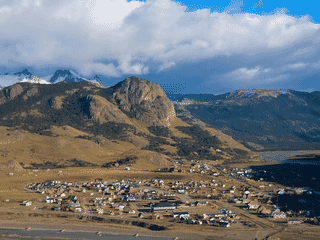
El Chaltén is a base for walks toward Mount Fitz Roy and Cerro Torre. Laguna de los Tres and Laguna Torre offer mountain views, while the Condor and Eagle viewpoints make shorter outings.
El Leoncito National Park protects a representative sample of Central Andean Puna and Southern Andean steppe ecosystems in San Juan province. The park offers exceptional stargazing opportunities with clear skies on approximately 300 nights per year, plus unique land sailing on the wind-swept Pampa El Leoncito.
Atlas entry
Esquel is a laid-back Patagonian town that serves as the departure point for the famous La Trochita, a vintage narrow-gauge steam train that has been running since 1947. In winter (June-September), it transforms into a popular ski destination attracting visitors from across Argentina.
Atlas entry
Formosa serves as a practical crossing point between Asunción, Paraguay and northern Argentina. The city sits along the Paraguay River with access to the Laguna Oca biosphere reserve, offering outdoor recreation in a laid-back provincial atmosphere without tourist crowds.
Atlas entry
Humahuaca combines colonial architecture with local festivals. Colorful mountain formations add an outdoor focus to a stay in this Quebrada town.
Ischigualasto Provincial Park, also known as Valle de la Luna (Moon Valley), is a UNESCO World Heritage Site shared with Talampaya National Park in La Rioja. The park offers otherworldly rock formations sculpted by 250 million years of erosion, revealing one of the most complete Triassic fossil records on Earth.
Atlas entry
Islote Lobos National Park protects one of Patagonia's most dramatic coastal landscapes—six promontories that become islands at high tide and connect via exposed sand bars at low tide. The park provides critical habitat for colonies of sea lions and Magellanic penguins, making it a premier wildlife destination along Argentina's Atlantic coast.
Atlas entry
La Plata's planned grid is crossed by diagonal boulevards and dotted with green squares. Neo-Gothic and Art Deco buildings sit alongside natural history and fine arts museums.
La Punta is notable as the first Argentine city founded in the 21st century, established in March 2003 by the provincial government of San Luis. The city was designed as a planned community with modern infrastructure including a technology center, astronomical park, and educational facilities.
Atlas entry
La Rioja is a provincial capital in Argentina's Andean Northwest that offers a quieter alternative to larger cities. Despite being a regional hub, it has a sleepy small-town atmosphere with few traditional sights.
Atlas entry
Lago Puelo is a small lakeside town in Argentine Patagonia, best known as a gateway to Lago Puelo National Park and the Greater Patagonia Trail. It offers a quieter, less crowded alternative to busier Patagonian hubs, with direct lake views, forest walks, and access to a 97 km trail heading south to Lago Cholila.
Atlas entry
Lago Puelo National Park protects a stunning valley in Argentine Patagonia where the Andes meet dense forests of Arrayanes and Coihues. The park's centerpiece is a pristine glacial lake, 19 km long and up to 200 meters deep, surrounded by mountains including Cerro Tres Picos.
Atlas entry
Los Alerces National Park covers 2,630 km² along the Argentine-Chilean border in Patagonia's Chubut region. It offers ancient Alerce (Patagonian cypress) forests, glacial lakes, and a rare natural environment, though visitors should note that hiking infrastructure is limited compared to neighboring parks like Los Glaciares.
Atlas entry
Los Arrayanes National Park protects one of the world's most unusual forests: thousands of Arrayanes trees (Luma apiculata), a rare flowering Myrtle species with cinnamon-colored bark that can live up to 650 years. Set on a peninsula of Lake Nahuel Huapi against a backdrop of towering Andean peaks, the park offers pristine hiking trails and mountain biking routes through Patagonia's Andean highlands.
Atlas entry
Los Cardones National Park protects 65,000 hectares of arid Andean mountains in northwestern Argentina's Andean Northwest region. The park is famous for its photogenic cardon grande cactus, also called the Argentinian saguaro, which grows throughout the semi-desert landscape.
Atlas entry
Maipú is the epicenter of Argentina's wine industry, a compact suburb of Mendoza capital where world-class Malbec flows freely. Wine tourists flock here to tour historic 19th-century wineries, taste robust reds at source, and pedal between vineyards on rented bikes.
Atlas entry
Malargüe is a Mendoza-province base for Las Leñas and the Pierre Auger cosmic ray observatory. Nearby wetlands attract birdwatchers when rainfall raises water levels.
Mar del Plata combines Atlantic beaches with a working fishing port. Victorian summer homes and a lively theatre scene add reasons to explore beyond the sand.
Mendoza sits at the foot of the Andes, with access to mountain outings and Cacheuta's hot springs. Irrigation keeps its streets green amid the dry Cuyo landscape.
Monte Leon National Park protects a unique confluence of Patagonian steppe and Atlantic coast, making it the only place in the world where pumas hunt penguins. The park offers pristine wilderness with minimal infrastructure and crowds, ideal for nature photographers and wildlife enthusiasts seeking an off-the-beaten-path Patagonian experience.
Atlas entry
Nahuel Huapi National Park encompasses Andean peaks, glacial lakes and trails to mountain refugios. Bariloche serves as the main base for exploring this part of Argentine Patagonia.
Neuquén has a modern center with museums and craft beer bars. Riverside beaches along the Limay add an outdoor side to a city stay.
Posadas serves as a convenient break point on the long route between Iguaçu Falls and Buenos Aires. The city sits on the Paraná River opposite Paraguay's Encarnación, offering pleasant riverside walks and a relaxed atmosphere.
Atlas entry
Puerto Iguazú is a base for visiting the falls and crossing to nearby Brazil and Paraguay. Onward journeys can also take in the Jesuit ruins at San Ignacio Miní.
Puerto Madryn is a compact coastal base for the wildlife reserves of Península Valdés. Seasonal southern right whale watching is a major reason to visit its shores.
Puerto San Julián is a small coastal city of 7,000 inhabitants in Santa Cruz province, Argentina. It holds historical significance as the wintering site of Magellan's expedition in 1520, as well as visits from Francis Drake's and the Beagle expeditions.
Atlas entry
Purmamarca is one of Argentina's most photographed destinations, sitting at the heart of the Quebrada de Humahuaca—a UNESCO World Heritage valley celebrated for its dramatic multicolored rock formations and pre-Columbian heritage. The town itself is tiny, with a worn cobblestone plaza and the 17th-century Church of Santa Rosa de Lima that makes visitors feel transported back centuries.
Atlas entry
Resistencia markets itself as the 'City of Sculptures' (Ciudad de las Esculturas), with over 600 sculptures scattered across public spaces. The Bienal Internacional de Esculturas draws artists worldwide for a week-long celebration of sculptural creation, making it the city's flagship cultural event.
Atlas entry
Rio Gallegos is a remote provincial capital in southern Patagonia, primarily useful as a transit hub rather than a destination itself. The town of roughly 116,000 people was established to enforce Argentine influence over the far south.
Atlas entry
Rosario pairs Art Nouveau boulevards with Paraná River scenery. The birthplace of Lionel Messi also has a lively late-night scene.
Salta sits in the mountains of northwestern Argentina. It makes a base for exploring the Valles Calchaquíes and Quebrada de Humahuaca.
San Antonio Oeste is the main fishing port in Northern Patagonia and gateway to the Bay of San Antonio, which has the warmest waters in Argentina due to shallow depths and sunny climate. The suburb of Las Grutas has been a popular beach resort since the 1990s, while the proper town and San Antonio Este offer quieter alternatives.
Atlas entry
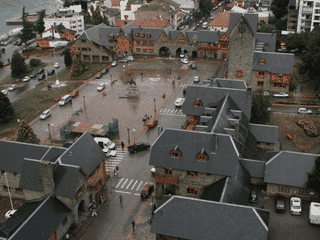
San Carlos de Bariloche pairs an alpine atmosphere with outdoor adventures in Patagonia. Trek in Nahuel Huapi National Park or head to Catedral Alta Patagonia for skiing.
San José de Jáchal is a quiet colonial town of 10,993 inhabitants in the northeast of San Juan province, serving as the head town of Jáchal Department. The town offers access to thermal baths, scenic mountain drives from La Rioja, and proximity to Ischigualasto Provincial Park (Moon Valley).
Atlas entry
San Juan's wide, tree-lined avenues reflect its rebuilding after the 1944 earthquake. The modern street grid lends itself to exploring on foot.
San Luis serves as the access point to the charming valleys of the Sierras de San Luis, a mountainous region with reservoirs and deep gorges located just a few kilometers from the city center. The city itself is modern and industrial with good infrastructure but few traditional sights, making it primarily useful as a base for outdoor exploration rather than urban tourism.
Atlas entry
San Miguel de Tucumán is the birthplace of Argentine independence—the July 9, 1816 Declaration of Independence was signed here at the Casa Histórica. The city offers colonial architecture, Lola Mora sculptures, and access to the Yungas Cloudy Forest in surrounding hills.
Atlas entry
San Salvador de Jujuy is a gateway to the Quebrada de Humahuaca, Puna desert and Salinas Grandes. Colonial buildings and local markets give the city its own reasons to linger.
Santa Fe offers a compelling alternative to larger Argentine cities with its riverside setting along the Paraná, vibrant cultural calendar, and laid-back littoral atmosphere. The city draws visitors for its historic colonial architecture, proximity to Laguna Setúbal (one of the world's largest shallow lakes), and a nightlife scene centered on waterside bars and nightclubs.
Atlas entry
Santa Rosa serves as the capital of La Pampa Province, a city of roughly 100,000 inhabitants that functions as an important agricultural center for Argentina. While not the most exciting destination, it offers a transitional geography where the flat Pampas meet undulating slopes to the west, creating natural breaks and scenic variety.
Atlas entry
Sierra de la Ventana is the main gateway to the Sierras de Ventania mountain region with peaks up to 1,239 m altitude. It is a resort town with numerous nature-based activities and plenty of accommodation and services.
Atlas entry
Sierra de las Quijadas National Park protects dramatic red rock formations and desert landscapes in western Argentina's San Luis province. The park offers exceptional hiking through millions of years of geological history, from fossilized dinosaur footprints to sheer cliff overlooks.
Atlas entry
Talampaya National Park is a UNESCO World Heritage Site inscribed in 2000, protecting one of South America's most striking geological landscapes. The park spans 215,000 hectares of La Rioja Province in Argentina's Cuyo region, with only 5% accessible to visitors, preserving a rare wilderness experience.
Atlas entry
Tandil offers an outdoor escape in the Tandilia hills southeast of Buenos Aires. Its activity mix includes horseback riding, mountain biking and glider flights.
Tigre sits at the edge of the Paraná Delta, making it a natural weekend escape for porteños seeking river air and open water. The city gives its name to the tiger jaguars once hunted in these wetlands, and today the delta's maze of channels and islands draws day-trippers aboard wooden commuter boats.
Atlas entry
Tilcara combines colonial architecture, archaeology and Indigenous markets in a compact center. It makes a base for the colorful mountain valleys and nearby towns of the Quebrada de Humahuaca.
Trelew is a Welsh-founded city in the Chubut valley. It makes a practical base for exploring Patagonia's Atlantic coast attractions.
Uquía is a tiny town of dusty roads and cacti in the dry mountains of Jujuy, Argentina. It feels like a smaller, quieter version of nearby Humahuaca, with hiking trails and an old 17th-century church.
Atlas entry
Ushuaia has grown from a penal colony into a lively tourist center. It draws visitors for dramatic mountains, Cerro Castor winter sports and Antarctic cruises.
Viedma is a low-key Patagonian capital that serves as a gateway to a little-known series of Atlantic beaches stretching from El Cóndor to San Antonio Este. The city offers riverfront scenery, a charming old town across the water at Carmen de Patagones, and direct access to sea-lion and parrot colonies.
Atlas entry
Villa El Chocón is a small town of about 4,000 inhabitants in Neuquén province, Patagonia, Argentina. Located on the shores of the Ramos Mexia reservoir, it serves as the main tourist center of the region with improving infrastructure.
Atlas entry
Villa la Angostura is a small Patagonian town on Lake Nahuel Huapi. It gives travelers a base for Los Arrayanes and Nahuel Huapi national parks.
Villa Unión serves as the strategic base camp for visiting two of Argentina's most dramatic natural attractions: Talampaya National Park with its massive red canyons, and Ischigualasto National Park (Valle de la Luna) famous for its lunar-like landscapes. The town sits nestled among intensely red mountain ranges of Sierra de Famatina and Sierra de Maíz, surrounded by traditional local wineries.
Atlas entry
In development: the whole atlas offline, a trip planner and a private journal. We'll post here when it ships. No newsletter to join.

