La Plata
South America · Argentina
Did you know?
- The city's street plan is a square crossed by diagonal boulevards.
- Curutchet House is a Le Corbusier design on the UNESCO World Heritage list.
- The Cathedral of the Immaculate Conception opened in 1932.
See also
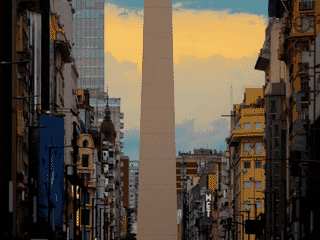

Buenos Aires
Argentina34.60°S 58.38°W · 25 m
Colonia
Uruguay34.47°S 57.84°W · 27 m
Overview
La Plata's planned grid is crossed by diagonal boulevards and dotted with green squares. Neo-Gothic and Art Deco buildings sit alongside natural history and fine arts museums.
Languages: Guaraní, Spanish
Why go?
La Plata is the capital of Buenos Aires Province, designed in the 1880s by architect Pedro Benoit as a perfectly planned city. Its distinctive layout features a perfect square cut diagonally by boulevards, creating rhombus-shaped intersections with forests and squares placed exactly every six blocks. The city offers exceptional Neo-Gothic and Art Deco architecture, world-class natural history and fine arts museums, and serves as a quieter alternative to Buenos Aires for travelers exploring the pampas region.
Adapted from Wikivoyage contributors · CC BY-SA 4.0
Getting in
La Plata is located 56 km southeast of Buenos Aires city on the wet pampas. The main arrival point is La Plata railway station (Estación La Plata) at the intersection of Calle 1 and 44, north of downtown. Local train-tram service called Tren Universitario runs in a half-circle from the station via the University and city's largest hospital to Los Hornos neighborhood. Bus connections from Buenos Aires are also available.
Adapted from Wikivoyage contributors · CC BY-SA 4.0
Getting around
La Plata's numbered grid system makes navigation straightforward, though missing street signs can be challenging. Walking across the city takes about 45 minutes. Taxis are plentiful and inexpensive but be cautious of meter manipulation on diagonal avenues. City buses (micro) cost AR$6.25 within the downtown zone as of September 2016, accepting only prepaid Sube cards (AR$30 at newsstands) throughout the Buenos Aires metropolitan area.
Adapted from Wikivoyage contributors · CC BY-SA 4.0
When to go
La Plata has a mild climate with 16.3°C annual average temperature and 1023 mm annual rainfall. Summers (December-February) are hot and humid while winters (June-August) are cool and cloudy with average lows of 5-6°C. The predominant southeast winds blow for about four months yearly. Spring and fall offer the most comfortable temperatures for sightseeing.
Adapted from Wikivoyage contributors · CC BY-SA 4.0
Where to stay
Accommodation options in La Plata include Hotel Corregidor (Calle 6 Nº 1026, four-star) and Grand Brizo La Plata (Avenida 51 715, five-star). Budget travelers will find fewer hostels compared to Buenos Aires, making La Plata better suited as a day trip or overnight stay from the capital rather than a primary backpacking base.
Adapted from Wikivoyage contributors · CC BY-SA 4.0
Food and drink
La Plata offers reasonable dining with Argentine barbecue specialties. Recommended restaurants include A Rienda Suelta for BBQ at reasonable prices, Green Garden for varied dishes in a nice setting, and Olibar for high-end dining with an on-site wine cellar (reservations recommended). For nightlife, Wilkenny (Calle 50 797) is an Irish pub and restaurant, while Pura Vida on Diagonal 78 attracts locals, musicians, and artists with indie concerts starting around 02:00.
Adapted from Wikivoyage contributors · CC BY-SA 4.0
Things to do
The Argentino Theatre is a lyric opera house and cultural center with free guided tours. The Coliseo Podestá Theatre, built in Art Deco style in the early 20th century, hosts plays and comedies in a historic French-decorated hall with perfect acoustics. The Dardo Rocha Cultural Centre houses the MUMART (Municipal Museum of Art), MUGAFO photography showroom, and MACLA (Museum of Latin American Art) alongside shows, fairs, and concerts.
Adapted from Wikivoyage contributors · CC BY-SA 4.0
Go next
The primary onward destination is Buenos Aires, located 56 km northwest, accessible by train or bus. La Plata serves as part of the Buenos Aires (province) region, making it an ideal day trip from the capital city. The surrounding pampas region offers additional exploration opportunities for those with more time.
Adapted from Wikivoyage contributors · CC BY-SA 4.0
See
The Museum of La Plata (Museo de La Plata) in the northern green parks contains world-class dinosaur skeletons and pre-Columbian culture exhibits (AR$9 entry). The Cathedral of the Immaculate Conception, opened in 1932, features granite floors, stained glass windows, and wood engravings by the Mallknecht brothers and Leo Moroder. Curutchet House (Boulevard 53, 320) is one of the few Le Corbusier buildings in the Americas and a UNESCO World Heritage Site, now housing the Buenos Aires Professional Association of Architects with public tours available.
Adapted from Wikivoyage contributors · CC BY-SA 4.0
Field guide adapted from Wikivoyage contributors · CC BY-SA 4.0. Text has been adapted and organized for this guide. About our sources.
Places to know
A few starting points from the guide. Check current hours and prices before you go.
- sleep
Grand Brizo La Plata
Five-star hotel.
Adapted from Wikivoyage contributors
- sleep
Hotel Corregidor
A four-star hotel.
Adapted from Wikivoyage contributors
- eat
A Rienda Suelta
Reasonable prices. BBQ is recommended.
Adapted from Wikivoyage contributors
- eat
Green Garden
Variety of dishes and nice setting.
Adapted from Wikivoyage contributors
- eat
Olibar
Reservations recommended. High-end. Wine cellar on-site.
Adapted from Wikivoyage contributors
- see
Casa Mariani Teruggi
The city of La Plata was one of the hardest hit cities by the military dictatorship between 1976 and 1983. Thousands of young people belonging to different political and guerrilla groups were persecuted, tortured, killed or they just “disappeared”. Among the most painful events is what happened in the house on 30th Street between 55th and 56th Street, where Diana Teruggi and Daniel Mariani lived with their daughter Clara Anahí. From outside, the house seemed to be a place where the owners bred rabbits and prepared and sold them as marinade food. But indeed there was one of the most important secret printing houses belonging to the “Montoneros” Organization. On November 24, 1976, the house was attacked by a Commando of the Provincial Police and Military Force: five guerrillas were killed. Clara Anahí was 3 months old at that moment and she has never been found since then. Her grandmother is still looking for her. The house is in its original state. It's part of Argentine memory and history, and certainly worth a visit.
Recorded price: Free
Adapted from Wikivoyage contributors
- see
Cemetery of La Plata
Established in 1886 for the new capital, it was designed by Pedro Benoit, also responsible for the design of the city. It has some remarkable architectural features in its main entrance, as well as in many of the family vaults, which include neoclassical, neo-gothic, Art Nouveau (in its variant of Catalan Art Nouveau), Art Deco and Egyptian revival styles. The main entrance is a neo-classical portico with Doric columns. The Catholic chapel, in Romanesque revival style, was finished in 1950. Some famous people are buried at this cemetery, among them poet Pedro Bonifacio Palacios, naturalist Florentino Ameghino and writer Manuel Puig.
Adapted from Wikivoyage contributors
- see
Curutchet House
Curutchet House is a landmark to visit in La Plata. It is located in a green, sunny area with plenty of plants and trees facing the “Paseo del Bosque” park. It is one of the very few buildings in America designed by the famous architect Le Corbusier, and a world heritage site. He projected four levels with a ramp and a spiral staircase mainly because the piece of land where it was built was very narrow. Nowadays it houses the Buenos Aires Professional Association of Architects (Colegio de Arquitectos) and it is open to the public for tours and occasionally hosts events.
Adapted from Wikivoyage contributors
Before you go
Connectivity
Standard Argentine mobile carriers operate in La Plata with 3G/4G coverage in the city center.
Language
Spanish is the local language. English is less commonly spoken than in Buenos Aires.
Money
Local currency is Argentine pesos (AR$). Prices mentioned in listings use AR$ denominations.
Safety
Standard urban precautions apply. Missing street signs can cause disorientation, particularly near diagonal avenues.
Tourist information
Official tourism website: turismo.laplata.gob.ar (check for current status as link dated June 2025).
Transport
City buses cost AR$6.25 within downtown using a Sube card (AR$30 at newsstands). Taxis are cheap but watch meters on confusing diagonal avenues.
Weather
Summers are hot and humid (28-29°C average highs), winters cool and cloudy (14-15°C). Humidity averages 77.6% year-round.