
Bohemian Paradise
Czechia50.52°N 15.17°E
65 places in the index.
50.52°N 15.17°E
49.20°N 16.62°E · 237 m
48.97°N 14.47°E · 395 m
48.81°N 14.32°E · 492 m
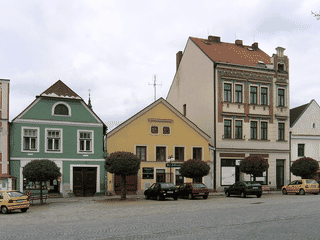
49.30°N 15.08°E · 563 m
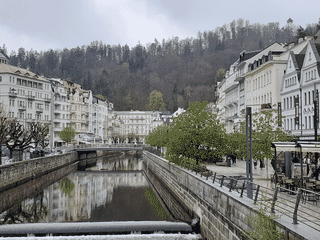
50.23°N 12.87°E · 447 m
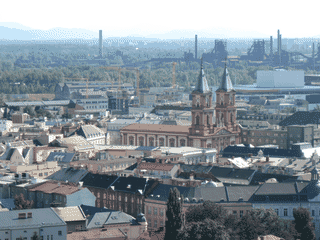
49.84°N 18.29°E · 260 m
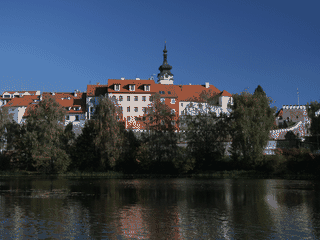
49.30°N 14.13°E · 378 m
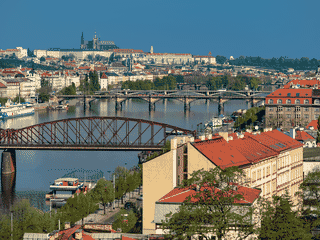
50.07°N 14.47°E · 235 m
Beroun sits in the Berounka River valley about 30 km southwest of Prague, making it an easy escape from the capital without losing access to town services. The town is famous for its bear mascot — three movie-star bears live at Medvědárium on Městská Hora hill.
Atlas entry
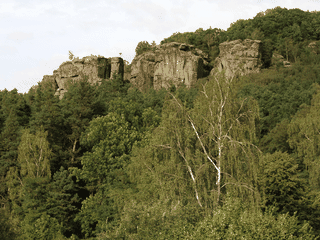
Bohemian Paradise is a protected landscape of sandstone formations, castles and chateaus. Hiking and cycling trails connect its rocky scenery and historic sights.
Bohemian Switzerland (České Švýcarsko) is a compact sandstone wilderness in North Bohemia where towering natural arches, forested ravines, and river gorges create one of Central Europe's most dramatic landscapes. The park is directly adjacent to Saxon Switzerland in Germany, forming a cross-border hiking destination with well-marked trails and accessible logistics from Dresden or Prague.
Atlas entry
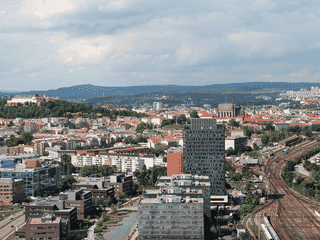
Brno combines castles and a large historic center with a lively student atmosphere. The Cathedral of Saints Peter and Paul and underground sights offer contrasting ways to explore.
Bruntál is a small historic town of about 15,000 people in Czech Silesia, offering a well-preserved town centre protected as an urban monument zone. The town sits in a valley of the Nízký Jeseník range surrounded by hills, with the highest peak Uhlířský vrch at 672 m.
Atlas entry
Červená Lhota is a near-ghost village of about 30 permanent residents that punches far above its weight as a Czech tourist destination. The star attraction is the bright-red Renaissance château standing on a rock in the middle of a pond—extremely photogenic in any season.
Atlas entry
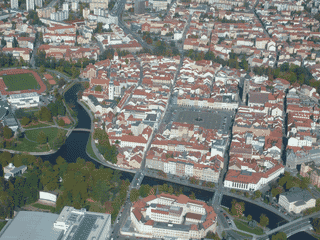
České Budějovice centers on a grand square framed by Gothic, Renaissance and Baroque architecture. The town also serves as a transport base for South Bohemia.
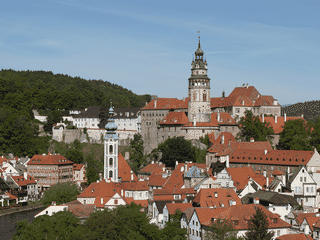
Český Krumlov's castle dominates a town of Baroque buildings on the Vltava. Cafes and bars occupy historic houses around its old center.
Český Těšín is a compact Czech-Polish border town of 23,300 people, split by the Olza River from its twin Cieszyn in Poland. The open Schengen border makes it easy to explore both towns on foot, with Polish shops and Czech pubs sharing the same streets.
Atlas entry
Cheb is a Czech city of 33,500 near the German border, notable for its quaint historic town square with winding alleys and Gothic architecture. The city was formerly known as Eger in German and retains a dual Czech-German heritage visible in its street names and cultural sites.
Atlas entry
Dačice is a small, quiet town in the Bohemian-Moravian Highlands that draws visitors primarily for one claim to fame: the invention of the sugar cube here in 1841 by Jakob Christof Rad. The historic town centre is protected as an urban monument zone and features Baroque churches, a Renaissance town hall, and two castles.
Atlas entry
Děčín is a 47,000-person city in North Bohemia positioned at the confluence of nature reserves and international rail corridors. Its main appeal is serving as a staging point for the Elbe Sandstone Mountains, Bohemian Switzerland National Park, and Saxon Switzerland, with hiking trails beginning directly from the old town.
Atlas entry
Dvůr Králové nad Labem is a mid-sized East Bohemian town best known for Safari Park Dvůr Králové, one of the Czech Republic's largest and most celebrated zoos with over 2,300 animals of 500 mostly African species. The compact historic centre features T.
Atlas entry
Františkovy Lázně is a small spa town of 5,500 residents founded in 1793, forming the western point of the West Bohemian Spa Triangle alongside Karlovy Vary and Mariánské Lázně. All three spa towns are part of the UNESCO "Great Spa Towns of Europe" World Heritage site.
Atlas entry
The Giant Mountains (Krkonoše/Karkonosze) straddle the Czech-Polish border and offer a rare blend of accessible wilderness 40 km long and 20 km wide. Unlike the Alps, the landscape resembles Scottish or Scandinavian moors—rolling ridges without tall cliffs—making it ideal for hikers who want dramatic views without technical climbing.
Atlas entry
Hluboká nad Vltavou is a small South Bohemia town famous for its 19th-century Tudor-style château, widely considered one of the Czech Republic's most beautiful. Beyond the château, the town offers Ohrada Zoo, a Mikoláš Aleš Art Gallery in a former riding house, and access to swimming ponds like Bezdrev.
Atlas entry
Hradec Králové surprises visitors with its architectural wealth, earning the nickname "Salon of the Republic" in the 1920s-30s for its bold modernist buildings by Josef Gočár. The city sits at the confluence of the Elbe and Orlice rivers on the historic Golden Road, combining Gothic heritage (cathedral founded 1303) with avant-garde interwar design.
Atlas entry
Jeseník is a compact mountain city of 11,000 people in North Moravia, best known as home to the Priessnitz Medical Spa—the world's first hydrotherapy institute, founded in 1822. The surrounding Jeseníky mountain range offers year-round outdoor activities: summer hiking trails to peaks like Praděd and Králický Sněžník, winter skiing, and scenic observation towers such as Borůvková hora.
Atlas entry
Jičín is a compact, well-preserved historic town in East Bohemia with strong connections to the legendary general Albrecht von Wallenstein, who rebuilt it in the 17th century. The town serves as a quiet base for exploring the Prachov Rocks rock formation area and makes an easy half-day or overnight trip from Prague.
Atlas entry
Jihlava is a historic royal mining town at the border between Bohemia and Moravia, now serving as the administrative center of the Vysočina region with a population of over 50,000. The city offers 25 km of underground corridors open for guided tours, local breweries producing Ježek and Bernard beers, and hosts the annual Jihlava International Documentary Film Festival at the end of October.
Atlas entry
Jindřichův Hradec is a quieter, lesser-known alternative to better-touristed Czech towns, offering one of the largest castles in Czechia, a remarkably preserved Renaissance old town, and the world's biggest mechanical nativity scene. The surrounding South Bohemian pond landscape and Česká Kanada micro-region make it ideal for cyclists and hikers seeking nature without crowds.
Atlas entry
Kamenice nad Lipou pairs a Renaissance chateau and an ancient garden lime tree with a rural Czech setting. Swimming ponds, forests and gentle trails make it a base for unhurried outdoor days.
Karlovy Vary is a historic spa town of mineral springs and colorful Belle Epoque buildings. Artists and royalty, including Beethoven and Peter the Great, once visited.
Karlštejn is the most visited and one of the most beautiful castles in the Czech Republic, completed in 1365 under Holy Roman Emperor Charles IV. The town sits about 20 km west of Prague and is an ideal day trip for castle enthusiasts and hikers alike.
Atlas entry
Karviná is a working Czech town in North Moravia and Silesia, notable as one of the centers of the declining coal mining industry. It offers a modest town square, a small chateau, and an animal park.
Atlas entry
Kladno is the largest city in Central Bohemia, serving as an industrial hub that transformed since the 1990s from heavy steel production to services and light industry. The city offers historic churches, a Baroque castle with a beararium, and significant memorial sites including the Lidice Memorial commemorating the village destroyed during WWII.
Atlas entry
Kralupy nad Vltavou is a satellite town 27 km to the north of Prague, making it an easy day trip from the capital. The town offers a genuine slice of Czech life away from tourist crowds—pubs and restaurants are much cheaper than in the city, and the atmosphere is convivial and untouristed.
Atlas entry
Krnov is a small historic town of about 22,000 people in Czech Silesia, part of the North Moravia and Silesia region near the Polish border. Its well-preserved historic town centre is protected as an urban monument zone, featuring Baroque architecture and a 52-metre neorenaissance town hall tower.
Atlas entry
Kroměříž is a UNESCO World Heritage town in South Moravia famous for its Baroque Archbishop's Palace, used as a filming location for the film Amadeus. The town features the Italian-style Flower Garden covering 10 hectares, built by Italian architects Filiberto Lucchese and Giovanni Pietro Tencalla.
Atlas entry
Kutná Hora is a UNESCO World Heritage town in Central Bohemia that was once the second-most-important Czech city during the medieval silver-mining boom. Today it draws visitors primarily for two Gothic masterpieces—St.
Atlas entry
Liberec sits at the foot of Ještěd mountain in the Jizera Mountains, offering a slower alternative to Prague with Art Nouveau architecture, a distinctive hyperboloid tower hotel on the summit, and excellent access to Nordic-style nature. The city was historically a German textile capital (Reichenberg), evidenced in its Liebig's town Art Nouveau apartment colony built for factory workers.
Atlas entry
Litoměřice is one of the oldest Czech towns, granted royal-town status in the early 13th century. The city preserves a compact historic centre with Renaissance buildings, Gothic city walls, and Baroque monuments including St.
Atlas entry
Litovel is a historic royal town in North Moravia, Czech Republic, nicknamed "Hanácké Benátky" (Venice in Haná) due to seven branches of the Morava river flowing through its center. The town offers a charming historic core with a notable town hall, stone bridge, and connections to nearby caves and castles for day trips.
Atlas entry
Loket is a small, postcard-pretty town in Western Bohemia where the Ohře River wraps around the historic core, creating a dramatic natural moat. The main draw is Loket Castle, a 14th-century fortress that served as a prison until 1947 and now houses a museum with 90 Kč admission.
Atlas entry
Mariánské Lázně (German: Marienbad) is a quieter spa town in West Bohemia, close to the German border. It is one of three towns forming the West Bohemian Spa Triangle alongside Karlovy Vary and Františkovy Lázně.
Atlas entry
Mělník sits at the confluence of the Vltava and Elbe rivers, offering views from 80 meters above the meeting point. The city has a population of 19,000 and a growing reputation for dry wines from the surrounding region.
Atlas entry
Mikulov is a compact Moravian wine town (pop. 7,700) on the old imperial road from Vienna to Brno, just 18 km from the Austrian border.
Atlas entry
Mladá Boleslav is the birthplace of Škoda Auto, one of Europe's oldest automobile manufacturers now part of the VW Group. The city offers a compact medieval core with a castle dating to the 10th century, making it a practical half-day or full-day excursion from Prague at 54 km northeast.
Atlas entry
Moravian Karst is the Czech Republic's most impressive cave system and gorge landscape, offering guided tours through vast underground rivers and sinkholes. The area features Punkva Caves with boat rides on underground rivers, the terrifying 138-meter deep Macocha Gorge with 80+ fatalities from cliff falls, and over 1,100 documented caves in a compact area.
Atlas entry
Nové Hrady (German: Gratzen) is a small South Bohemian town straddling the Czech-Austrian border. Its medieval fortress history and location make it a gateway to the Novohrad Mountains (Náchod Hills) with hiking and cycling opportunities.
Atlas entry
Nové Město pod Smrkem is a quiet Czech town at the northern edge of the Jizera Mountains, near the Polish border. Founded in the 16th century near tin ore mines, it later became a textile center after deposits were depleted.
Atlas entry
Olomouc's baroque center brings together the Holy Trinity Column, an astronomical clock and historic churches. Its former role as Moravia's capital remains visible in these monuments.
Opava is a historic city in Czech Silesia that served as the regional capital before the area's administrative center moved. It offers several churches, museums, and serves as a base for visiting nearby castles in the Moravian-Silesian region.
Atlas entry
Ostrava turns its coal and steel history into museums and cultural attractions. Stodolní's bars and recurring music festivals give a city break a lively evening side.
Pardubice is a historic city of 92,000 people in East Bohemia with a well-preserved old town protected as an urban monument reservation. It is best known internationally for the Velká pardubická steeplechase, Europe's toughest horse race, and the Golden Helmet motorcycle race drawing over 100,000 spectators.
Atlas entry
Pilsen combines its brewing heritage with a Gothic cathedral and historic underground passages. The city also serves as a base for nearby West Bohemian spa towns.
Písek's historic center sits beside the Otava and a medieval stone bridge. Its compact scale suits slow walks through a former royal trading town.
Prague pairs a largely preserved Old Town with a skyline of golden spires. Its castle complex provides a monumental focus for a city break.
Říčany (population 15,000) is a small city in Central Bohemia, 20 km southeast of Prague's center. According to the quality of life index, it ranks as the best town in the Czech Republic to live in.
Atlas entry
Říp is a solitary hill rising above the flat Bohemian plains, visible from as far as Sněžka mountain and high spots in Prague. Czech legends regard it as a kind of "national mountain" with deep historical significance to the Czech people.
Atlas entry
Slavonice is a charming, off-the-beaten-path destination in South Bohemia with a well-preserved Renaissance centre of over 50 historic houses in Gothic, Renaissance, and Baroque styles. Called "smaller Telč," it offers authentic historic atmosphere without the tourist crowds of more famous Bohemian towns.
Atlas entry
Šumava (Bohemian Forest) is the largest protected forest area in Central Europe, spanning three countries: Czech Republic, Germany, and Austria. The national park protects pristine wilderness with deep forests, peat bogs (slať), and rare wildlife including lynx and eagles.
Atlas entry
Tábor is a historic South Bohemian city founded in 1420 by radical followers of Jan Hus, who paved the way for Martin Luther's church reforms. Much of its old town has been preserved, perched on a hilltop between the Luznice River and medieval Jordán Lake.
Atlas entry
Telč is one of the Czech Republic's best-preserved Renaissance towns, its perfect arcaded square frozen in the 16th century by surrounding fish-ponds that prevented urban sprawl. The UNESCO-listed old town is astonishingly photogenic, with orange rooftops, painted facades, and a chateau that rivals Czech grander destinations without the crowds.
Atlas entry
Teplice is the oldest spa town in Central Europe, with thermal mineral springs first documented in 1154. The city attracts visitors seeking treatment for musculoskeletal disorders, nervous system diseases, and vascular diseases, particularly travelers from the Middle East.
Atlas entry
Terezín serves as a powerful memorial to Holocaust victims, particularly those who passed through the Theresienstadt 'showcase' camp. The town offers a sobering but essential historical experience, combining a preserved fortress from 1780 with the remnants of the Nazi concentration camp where around 30,000 people died before being deported to Auschwitz.
Atlas entry
Třebíč is a compact Moravian town with a rare distinction: it holds two UNESCO World Heritage sites in one place. The Jewish Quarter is one of the best-preserved in Europe, telling the story of interconnected Jewish and Christian societies before the Holocaust.
Atlas entry
Třeboň is a quiet, well-signposted South Bohemian town where Renaissance-era fish farming shaped the landscape. The old town centers on a large chateau complex, and the surrounding Třeboňsko protected area is threaded with cycling and hiking trails that loop ancient fish ponds like Svět (dating from the 1570s).
Atlas entry
Třešť is a quiet town of 5,600 people in the Bohemian-Moravian Highlands, halfway between Jihlava and Telč. It is famous as a 'town of Christmas nativity scenes' — a tradition where local families maintain dozens to hundreds of carved wooden figures in their homes, with some welcoming visitors between Christmas and early February.
Atlas entry
Ústí nad Labem is the second largest city in North Bohemia and seventh most populous in the Czech Republic with over 91,000 residents. While not the prettiest Czech city, it offers access to hiking trails and attractive countryside, sitting just 20 km from the Czech-German border along the Elbe river.
Atlas entry
Žďár nad Sázavou is a small Czech city in the Bohemian-Moravian Highlands at the frontier of Bohemia and Moravia. Its main draw is the UNESCO-listed Pilgrimage Church of St.
Atlas entry
Železný Brod is a quiet Czech town of about 1,400 residents that serves as a crossroads for tourists heading to the Krkonoše Mountains, Jizera Mountains, and Bohemian Paradise. Its claim to fame is its glassmaking heritage: in 1920 it became home to the first Czech professional glassmaking school, and the town retains architectural reminders of its late 19th-century glassmaking boom.
Atlas entry
Zlín is an unconventional Czech destination built around the Baťa shoe empire—its 14-story Art Deco headquarters remains a landmark of functionalist architecture. The city preserves an entire urban vision from the 1930s: worker housing, hospitals, and social facilities all designed in the same modernist style.
Atlas entry
Znojmo is a compact historic town of 33,000 people in South Moravia, Czech Republic, offering a slower-paced alternative to larger Czech cities. The old town centre features buildings dating back to the 12th century, with the Austrian border just 15 km away making it ideal for cross-border day trips.
Atlas entry
Zruč nad Sázavou is a small town in Central Bohemia offering a Renaissance castle with multiple museums, a historic church, and a castle park. It's a quiet destination for those interested in Czech history and architecture, located about 60 km southeast of Prague.
Atlas entry
In development: the whole atlas offline, a trip planner and a private journal. We'll post here when it ships. No newsletter to join.
.jpg)


.JPG)
