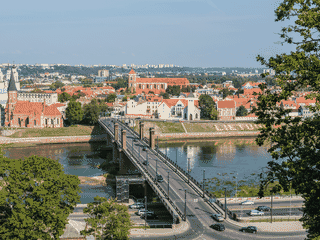

Kaunas
Lithuania54.90°N 23.93°E · 48 m
25 places in the index.
54.90°N 23.93°E · 48 m
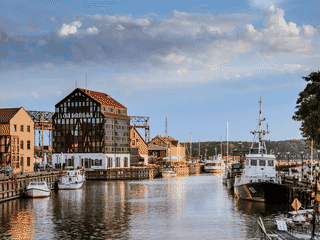
55.70°N 21.13°E · 21 m
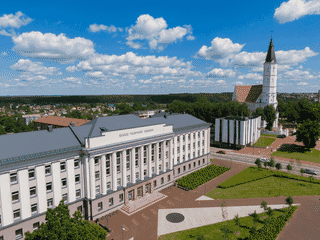
55.93°N 23.32°E · 129 m
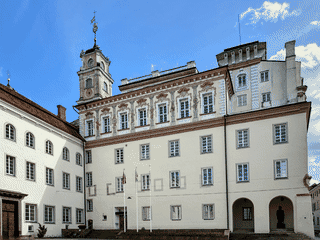
54.68°N 25.28°E · 98 m
Alytus sits at the confluence of the rivers Nemunas and Alytupelis in Lithuania's Dzūkija region. It's primarily an industrial center known for refrigerator manufacturing, timber products, and textiles rather than tourism.
Atlas entry
Aukštaitija is Lithuania's oldest national park, established in 1974, protecting a landscape of 120 lakes, pine forests, and traditional rural villages. The park blends natural habitats with centuries of human farming and forestry, making it ideal for nature lovers who want to experience authentic Lithuanian countryside.
Atlas entry
Birštonas is a small spa resort on a loop of the River Nemunas in southern Lithuania, known since the mid-19th century for its mineral water. With a population of just over 3,000, it has hotels and sanatoria disproportionate to its size, offering spa treatments, forested parks, and a relaxed riverside atmosphere.
Atlas entry
Daugai is a small holiday resort town in southern Lithuania's Dzūkija region, with a population of just 928 as of 2020. Located on the shores of Lake Didžiulis, it offers a peaceful escape focused on outdoor activities like swimming, kayaking, and fishing.
Atlas entry
Druskininkai is a historic Lithuanian spa town with very salty mineral springs rising from aquifers 300 m below ground. Since the 18th century, visitors have sought the therapeutic waters, with demand so high that boreholes were sunk to reach the salt beds.
Atlas entry
Jonava is a practical stopover for travelers moving between Vilnius and western Lithuania, sitting 30 km northeast of Kaunas on the A6 highway. The city offers a genuine local Lithuanian experience away from tourist crowds, with Soviet-era industrial heritage, riverside walks along the Neris, and a modest selection of cafes and supermarkets.
Atlas entry
Juodkrantė (literally 'Black Shore') is a quiet seaside resort on the Lithuanian side of the Curonian Spit with about 720 permanent residents. The village retains some 19th-century wooden architecture and offers a slower pace than Nida to the south, making it an ideal stop for day-trippers from Klaipėda or a peaceful overnight between destinations on the spit.
Atlas entry
Kaunas served as Lithuania's capital between the World Wars. Its interwar story makes the city a rewarding stop for travelers interested in the country's modern history.
Kėdainiai offers one of the best-preserved Old Towns in Lithuania outside of Vilnius, with 17th-century architecture lining Didžioji gatvė and a multicultural history shaped by Scottish merchants and a once-thriving Jewish community. The town is home to an unusual 25-metre Ottoman-style minaret built by a Russian general who served in the Russo-Turkish War, a decorative structure with no associated mosque.
Atlas entry
Klaipėda mixes a working port with cobbled old-town squares and unusual statues. It is a gateway to the Curonian Spit's dunes and pine forests.
Kretinga is one of Lithuania's oldest cities in Samogitia, though repeated destruction means most buildings are modern. The 1605 Bernadine monastery and Count Tyszkiewicz manor museum are the main draws, set in a compact walkable center.
Atlas entry
Marijampolė is the administrative centre of the Sūduva region in southern Lithuania, serving as a practical stopover on routes between Vilnius/Kaunas and Poland. The city grew around a 1765 monastery of the Marian Fathers (hence 'Maryam-pol'), but has been rebuilt multiple times after fires and WWII devastation.
Atlas entry
Mažeikiai is Lithuania's eighth-largest city with about 32,470 residents (2020), serving as a regional hub in northwestern Samogitia close to the Latvian border. It's not a major tourist destination but functions as a useful transit point between Lithuania and Latvia, with easy bus and train connections.
Atlas entry
Nida is a small resort town on the Curonian Spit, a 99 km peninsula of sandhills between Lithuania and Russia's Kaliningrad. Its haunting landscape of shifting dunes, amber museums, and Thomas Mann's former summer home make it unlike anywhere else in the Baltics.
Atlas entry
Palanga is Lithuania's main seaside resort on the Baltic coast, drawing domestic tourists for its sandy beach stretching kilometers north and south, the iconic L-shaped pier, and rich amber heritage. Unlike crowded Baltic beach destinations, Palanga sees few foreign visitors, keeping prices modest and atmospheres authentic.
Atlas entry
Panevėžys is Lithuania's fifth-largest city with a population of 89,100 in 2021, situated midway along the highway between Vilnius and Riga. The name means 'by the River Nevėžis', which loops through the city center.
Atlas entry
Plungė is a quiet farming town in Samogitia with 17,000 residents. The main reason to visit is as a base for Žemaitijos National Park, 10 km north around Lake Plateliai.
Atlas entry
Šiauliai combines a pedestrian centre with museums and churches. It also serves as a base for visiting the Hill of Crosses outside town.
Šilutė is a quiet market town of 16,000 people in Lithuania Minor, 40 km south of Klaipėda. The main reason to visit is to access the Nemunas river delta, a nature reserve below mean sea level with Dutch-style polders.
Atlas entry
Telšiai is the chief city of Samogitia region with about 22,000 residents in 2023. While industrial (home to the Orlen oil refinery and food/furniture/metal industries), the Old Town has survived relatively intact.
Atlas entry
Trakai is a small lakeside town 28 km west of Vilnius, famous for its redbrick Gothic Island Castle rising from Lake Galvė. The 14th-century castle was built when Lithuania's capital moved here to fortify against the Teutonic Knights, and it remains a national symbol.
Atlas entry
Tytuvėnai is a small Lithuanian town in Samogitia with just 1,805 residents, but it draws visitors for its significant Bernadine monastery complex dating to the 1630s. The town offers a peaceful, unhurried atmosphere compared to Lithuania's busier cities, with four scenic lakes nearby for summer swimming and kayaking.
Atlas entry
Ukmergė is a small provincial town in northern Lithuania with a population of 21,000 (2023). It was first mentioned in 1225 as Vilkmergė, possibly meaning 'farm girl' or 'she-wolf' – the local brewery and football team prefer the latter interpretation.
Atlas entry
Utena is a small industrial city in northeast Lithuania with a population of 25,608 (2023), set within a landscape of forests and lakes. It serves as a regional center for Aukštaitija, offering lakeside strolls around Dauniškis Lake, historical churches, and a local museum.
Atlas entry
Vilnius has a UNESCO-listed Old Town of baroque churches and cobbled lanes. Hidden courtyards reward unhurried walks through the historic centre.
In development: the whole atlas offline, a trip planner and a private journal. We'll post here when it ships. No newsletter to join.


