
Vilnius
Eastern Europe and the Balkans · Lithuania
Did you know?
- Halės market hall was built in 1906.
- Cepelinai are stuffed potato dumplings served in traditional Lithuanian cooking.
- The cathedral contains the baroque St Casimir chapel.
See also

Kaunas
Lithuania54.90°N 23.93°E · 48 m
Overview
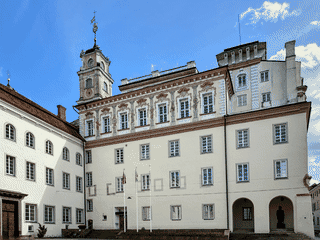
Vilnius has a UNESCO-listed Old Town of baroque churches and cobbled lanes. Hidden courtyards reward unhurried walks through the historic centre.
Languages: Lithuanian
Why Go
Vilnius offers one of Europe's most atmospheric Old Towns, a UNESCO World Heritage Site of baroque churches, cobblestone lanes, and hidden courtyards. As Lithuania's capital since the 13th century, it carries layers of history—from medieval Grand Duchy to Soviet occupation to EU member—without the tourist crowds of Prague or Budapest. The city welcomes budget travelers with affordable hostels, cheap beer, and an emerging food scene centered on traditional cepelinai dumplings and street food markets.
Adapted from Wikivoyage contributors · CC BY-SA 4.0
Get In
Vilnius Airport (VNO) sits 6 km south of the city center with budget airline connections across Europe including Ryanair, Wizz Air, and airBaltic. The airport has car rental facilities and tourist information. Vilnius railway station on Geležinkelio is just south of Old Town Gate of Dawn, adjacent to the bus terminal, with helpful ticket offices and coin-operated luggage lockers in the basement. Trains connect to Kaunas (2 hours) and the Belarus border, though international routes are limited.
Adapted from Wikivoyage contributors · CC BY-SA 4.0
Getting Around
Vilnius is compact enough to explore on foot, especially the Old Town and central districts. Trolleybuses and buses (including routes #2 and #20 to St Peter and Paul Church) serve outer areas. The LFF Stadium is 500 m east of the railway and bus stations. Bike rental is available in summer months.
Adapted from Wikivoyage contributors · CC BY-SA 4.0
When to Go
Vilnius experiences extreme continental climate: winters freeze to -25°C in January-February, turning rivers and lakes into ice. Summers reach 30°C with heat waves. Early summer (June) and autumn (September-October) offer mild temperatures ideal for walking tours. The city is a year-round destination, though overcast winter days can feel bleak. No specific festivals are mentioned, but the compact Old Town hosts open-air markets and concerts throughout summer.
Adapted from Wikivoyage contributors · CC BY-SA 4.0
Where to Stay
Budget hostels cluster near Old Town and Užupis district. Filaretai Hostel in Užupis offers dorm beds from €33 with self-service kitchen. Jimmy Jumps House near Savičiaus provides dorms from ~€18 and private rooms from ~€40. Mid-range options include Pogo Hostel (€20 dorm, great location by cathedral) and Ibis Vilnius Centre (B&B double €60, 500 m north of Cathedral Square). Užupis, the quirky self-declared republic neighborhood along the river, offers bohemian atmosphere with affordable accommodations.
Adapted from Wikivoyage contributors · CC BY-SA 4.0
Food and Drink
Traditional Lithuanian cuisine features cepelinai (stuffed potato dumplings), dark rye bread, and beet soup. Halės turgus market hall built in 1906 hosts food stalls and eateries. Budget options include Vyno Rūselis (traditional Lithuanian lunches €5.80, M-F 10:00-17:00), Vegafè vegan café, and Plus Plus Plus Gastrobaras near St Catherine's Church with late-night hours. Beer culture thrives at Šnekutis (daily 11:00-23:00) with traditional beer and food in long-table settings. Lithuanian beer brands are available at Alaus Namai (M-Th 12:00-23:00, F 12:00-00:00).
Adapted from Wikivoyage contributors · CC BY-SA 4.0
Things to Do
Gediminas Castle (Tower adult €8, child €4, daily 10:00-20:00) offers panoramic views from its 13th-century red brick tower, accessible via cobbled lane or funicular. Vilnius Cathedral at Cathedral Square is free to enter (daily 07:00-19:30) with its baroque St Casimir chapel and 57-m belfry. Gate of Dawn (Aušros vartai) with its pilgrimage Virgin Mary icon is open 24 hours. The Palace of the Grand Dukes of Lithuania (adults €10.50) is a modern replica of the 15th-century original. Hill of Three Crosses commemorates Lithuania's late Christianization with city views. Užupis district features the Angel of Užupis statue and creative galleries.
Adapted from Wikivoyage contributors · CC BY-SA 4.0
Connectivity
As of August 2023, Vilnius has 4G coverage from Bite and 5G from Tele2 and Telia. WiFi is widely available in public places throughout the city. The article does not specify SIM card prices or providers, but major Lithuanian carriers operate stores downtown.
Adapted from Wikivoyage contributors · CC BY-SA 4.0
Safety
Vilnius is generally safe for travelers. However, the article notes that people of color may experience strange looks or discrimination from locals. Standard urban precautions apply regarding petty theft in crowded tourist areas.
Adapted from Wikivoyage contributors · CC BY-SA 4.0
Go Next
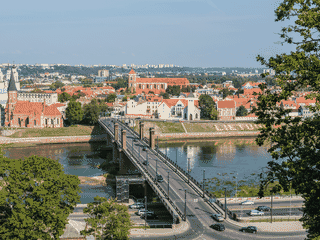
Transport routes from Vilnius radiate to nearby destinations within one hour's travel. Trakai (30 km west) features two castles amid scenic lakes. Purnuškės (25 km north) claims to be the geographical center of Europe. Kernavė (35 km northwest) was the medieval capital of Lithuania and is a UNESCO World Heritage Site for its ancient mounds. Kaunas (100 km west) is Lithuania's second-largest city with a small Old Town.
Adapted from Wikivoyage contributors · CC BY-SA 4.0
Field guide adapted from Wikivoyage contributors · CC BY-SA 4.0. Text has been adapted and organized for this guide. About our sources.
Places to know
A few starting points from the guide. Check current hours and prices before you go.
- eat
Amatininkų užeiga
Lithuanian and international food.
Adapted from Wikivoyage contributors
- eat
Balzac
Traditional French cuisine, well prepared, great atmosphere.
Adapted from Wikivoyage contributors
- eat
Belmontas Cafe
Folk-themed outdoor restaurant by a 19th century mill and waterfall.
Adapted from Wikivoyage contributors
- eat
Bistro 18
Small restaurant and wine bar with good selection of European cuisine.
Adapted from Wikivoyage contributors
- eat
Buga Sotu
Trad food: chicken, dumplings, kibinai, pizzas and carp. Live music on Friday and sometimes on Saturday. You'd most likely eat here if you visited the TV Tower and baulked at their restaurant prices.
Adapted from Wikivoyage contributors
- eat
Cozy
Well-named place, with laid-back restaurant upstairs, DJ-bar downstairs, serves hearty modern food with a few vegetarian options.
Adapted from Wikivoyage contributors
- eat
Da Antonio
Excellent upscale Italian food.
Adapted from Wikivoyage contributors
- eat
Dėvėti
Calls itself a gastropub, more like a bar with pizza and pita bread sandwiches.
Adapted from Wikivoyage contributors
Before you go
Connectivity
4G available from Bite; 5G from Tele2 and Telia as of August 2023. WiFi is widely available in public places.
Money
Lithuania uses the Euro (€). ATMs are very common throughout Vilnius, and most shops and restaurants accept credit cards.
Safety
Generally safe city, though people of color may encounter insensitive behavior.
Transport
Vilnius Airport (VNO) is 6 km south with budget airline connections. The railway station is adjacent to the bus terminal south of Old Town.
Visa
Lithuania is part of the Schengen Area. EU/EEA citizens need only an ID card; other nationalities typically need a Schengen visa for stays up to 90 days.
Weather
Winters are extremely cold with temperatures often reaching -25°C in January and February, freezing all rivers and lakes. Summers are warm to hot, with heat waves pushing temperatures above 30°C.