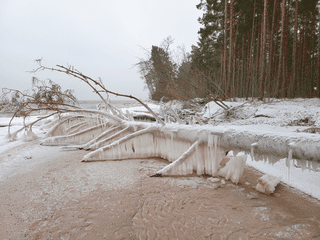

Hiiumaa
Estonia58.90°N 22.58°E
29 places in the index.
58.90°N 22.58°E
58.38°N 24.50°E · 10 m
58.33°N 22.65°E · 62 m
59.44°N 24.75°E · 28 m
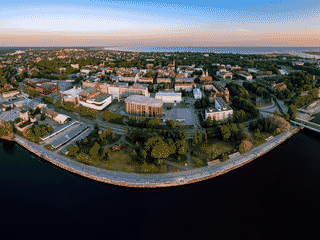
Haapsalu is a major seaside resort town on Estonia's west coast, approximately 100 km southwest of Tallinn. Chartered in 1279, it offers historic maritime ambience, warm sea water, curative mud baths, and narrow streets perfect for families and romantic couples who enjoy picnics, walking, spas, sailing, and swimming.
Atlas entry
Hiiumaa combines lighthouses with long sandy beaches on the Tahkuna and Kõpu peninsulas. The coastal landscape offers a relaxed focus for an island visit.
Jõhvi is a small Estonian town of 10,000 people serving as the transport and administrative hub of Ida-Viru county in northeastern Estonia. Its main appeal lies in its 13th-century Gothic fortress church, Russian Orthodox architecture from 1895, and the modern Jõhvi Concert Hall that opened in 2005.
Atlas entry
Kärdla is the biggest and only town on Hiiumaa, Estonia's second-largest island in the Baltic Sea. Founded as a Swedish settlement in the 14th century, it grew around an 1829 broadcloth textile factory whose directors' house (the Long House) still stands as the Hiiumaa Museum.
Atlas entry
Atlas entry
Kihnu is the largest island in the Gulf of Riga and one of Estonia's smallest municipalities. In 2003, UNESCO proclaimed Kihnu's cultural space and traditions as a Masterpiece of the Oral and Intangible Heritage of Humanity.
Atlas entry
Kiviõli ("stone oil" in Estonian) is an industrial town built around oil shale mining, located in East Estonia. The town is notable for two massive artificial ash hills—the highest in the Baltics at 138 and 135 meters—which dominate the landscape and serve as year-round sports tourism hubs.
Atlas entry
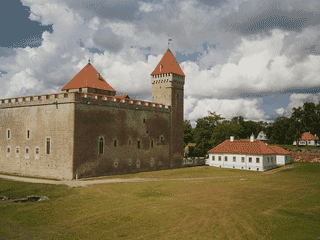
Kuressaare is the capital of Saaremaa, the largest island in Estonia, offering a tranquil escape from the mainland. The town is best known for its remarkably well-preserved Kuressaare Episcopal Castle (Saaremaa Museum), one of the Baltic region's most complete medieval fortresses.
Atlas entry
Lahemaa National Park is the largest national park in Estonia and one of Europe's biggest, covering 1,000 km². The name translates as "land of bays" and encompasses four peninsulas (Juminda, Pärispea, Käsmu, and Vergi) and four bays along the Gulf of Finland.
Atlas entry
Maardu is an industrial town in North Estonia located 15 km east of Tallinn. It is primarily known for the Port of Muuga, the largest cargo port in Estonia, which is partly located within Maardu.
Atlas entry
Muhu is Estonia's third-largest island at 198 square kilometres, sitting between the mainland and Saaremaa, connected by a causeway. It offers a slower pace of life with traditional village eldermen still heading local villages, famous Muhu folk art patterns, and 23 species of rare orchids.
Atlas entry
Hermann Castle anchors Narva's compact centre, alongside the Town Hall and churches. The main sights are close enough to explore on foot.
Narva-Jõesuu is a historic spa town on the Gulf of Finland with Estonia's longest coastal beach. Originally popular with wealthy St Petersburg visitors in the 19th century, it retains faded Soviet-era resort architecture alongside still-operating spa hotels.
Atlas entry
Otepää is Estonia's "Winter Capital" and the best-known winter sports centre in the Baltics, set in the hills of south Estonia approximately 50 km south of Tartu. The small town of about 2,000 inhabitants offers ski jumping, cross-country skiing, snow tubing, and snow scooter rentals, while summer brings hiking trails through picturesque landscapes with Estonian hot smoke saunas and icy lake bathing.
Atlas entry
Paldiski is a unique Soviet-era open-air museum where the grey past meets the Baltic Sea. As the former largest submarine base in the Soviet Union, the town offers abandoned bunkers, military debris, and decaying apartment blocks that feel frozen in time.
Atlas entry
Pärnu pairs a long white-sand beach with spa culture and Hanseatic history. Summer festivals, the promenade and nightlife near Rüütli street give the seaside city an active holiday atmosphere.
Põltsamaa is a small town of 4,100 people in South Estonia, best known as the centre of Estonian winery and wine production. The main attraction is the castle, first established in the 13th century but now reduced to its walls, surrounding a square with several historic buildings including St.
Atlas entry
Rakvere's castle puts medieval fortifications at the centre of a visit. Summer activities include archery, a smithy and a medieval tavern.
Ruhnu is a tiny isolated island in the Gulf of Riga, offering a rare escape from mainland Estonia. With fewer than 100 permanent residents, it preserves a unique Swedish heritage dating back centuries before 1944.
Atlas entry
Saaremaa mixes juniper-dotted landscapes with windmills, medieval stone churches and quiet coastal villages. Stone fences and thatched roofs give its rural settlements a distinctive character.
Sillamäe is Estonia's most Soviet town—88% Russian-speaking, with Stalinist architecture lining the main Kesk street and a rare metals plant where a uranium facility once stood. Built as a closed secret city from 1947 to 1991, it offers a time-capsule of Soviet planning: monumental administrative buildings, a central square with a monument celebrating the 'peaceful atom,' and a seaside boulevard that looks incongruously Mediterranean for northern Estonia.
Atlas entry
Soomaa National Park offers 390 km² of pristine Estonian wilderness with its famous 'fifth season' — spring flooding in March/April that transforms the landscape, raising water levels up to five meters above normal. The park protects large raised bogs, flood plain grasslands, paludified forests, and meandering rivers, making it ideal for nature lovers seeking uncrowded trails and authentic wilderness experiences away from Estonia's urban centers.
Atlas entry
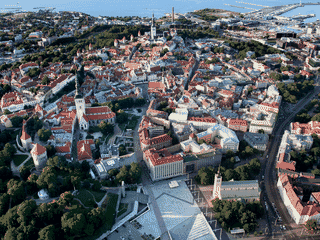
Tallinn's Old Town is well suited to exploring on foot. Buses and trams connect the rest of the city for trips beyond the historic centre.
Tartu's walkable centre gathers sights around Town Hall Square and the university district. Cathedral Hill adds another focus for exploring on foot.
Türi is the self-proclaimed spring capital of Estonia, famous for its flower fair and exceptional greenery in spring months. The town preserves an unusual density of interwar (1920s–1930s) functionalist architecture for a small Estonian city, combined with a striking medieval church whose bell tower rises in an elegant, harmonious spire unlike typical angular Estonian church towers.
Atlas entry
Valga is a small Estonian border town of approximately 12,000 inhabitants, sharing an unusual dual identity with Valka on the Latvian side—together they form one town split by an invisible international boundary. While Valga lacks medieval monuments or charming wooden architecture common to other Estonian towns, its unique position on the Estonia-Latvia border makes it historically interesting.
Atlas entry
Viljandi is a small cultural hub of 17,000 people in South Estonia, often called the 'capital of folk music' for Estonians. The city combines medieval history with living traditions—the 13th-century castle ruins sit dramatically above Lake Viljandi, while the annual Viljandi Folk Music Festival draws over 20,000 visitors to concerts in the castle, churches, and venues across the county.
Atlas entry
Vormsi is a small Estonian island offering a peaceful retreat from mainland tourism. With only about 240 inhabitants, it provides an authentic glimpse into rural Baltic island life where coastal Swedish heritage is still visible in the architecture and cemetery.
Atlas entry
Võru is a small southern Estonian city with a picturesque lakeside location but limited medieval history. Its main appeal lies in literary heritage—the city was home to Friedrich Reinhold Kreutzwald, collector of the Estonian epic Kalevipoeg.
Atlas entry
In development: the whole atlas offline, a trip planner and a private journal. We'll post here when it ships. No newsletter to join.
.jpg)

