
Visegrád
Eastern Europe and the Balkans · Hungary
Did you know?
- A museum called Zugfőzde explores pálinka, Hungary's fruit brandy.
- Solomon Tower houses displays of Gothic fountains and Renaissance sculpture.
- Royal congresses met here in 1335 and 1338.
See also

Nagymaros
Hungary47.79°N 18.96°E

Verőce
Hungary47.83°N 19.03°E

Szentendre
Hungary47.67°N 19.07°E · 110 m

Rétság
Hungary47.93°N 19.14°E
Vác
Hungary47.78°N 19.13°E · 146 m
Overview
Visegrád is a compact castle town on the Danube Bend. Its medieval citadel and Renaissance Royal Palace make royal history the focus of a visit.
Languages: Hungarian
Why Go?
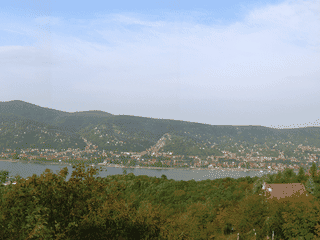
Visegrád is a compact castle town on the Danube Bend, north of Budapest, famous for the spectacular Early Renaissance Royal Palace of King Matthias Corvinus and the ruins of a medieval citadel. The town served as Hungary's royal seat in the 14th century, hosting international congresses in 1335 and 1338. Today it offers a concentration of historical monuments, hiking trails in the Visegrád Mountains, and views across the Danube valley—all easily reachable as a day trip from Budapest.
Adapted from Wikivoyage contributors · CC BY-SA 4.0
Getting In
The most common approach is by bus from Budapest's Árpád Bridge bus station (Volánbusz), with bus 883 running to Visegrád and continuing to Esztergom. The journey takes about 1.5 hours and costs around HUF 1,000-1,500. Regional trains do not reach Visegrád directly; you must take a train to Szob or Nagymaros, then connect by bus or ferry. The MAHART passenger ferry service runs from Budapest to Visegrád Port in summer months.
Adapted from Wikivoyage contributors · CC BY-SA 4.0
Getting Around
There is no local public transport within Visegrád. The main street (Fő utca) is walkable and connects the key attractions. A "Hop on/Hop off" tourist bus operates on weekends and holidays, connecting the castle, Royal Palace, ferry piers, and bus stops. Taxis are available (Dunakanyar Taxi), and regional Volánbusz services connect to nearby villages. Parking is available at the Castle of Visegrád Parking on Panoráma út.
Adapted from Wikivoyage contributors · CC BY-SA 4.0
When to Go
The peak season is summer (June-August) when ferry services run and outdoor activities are fully operational. Spring and autumn offer pleasant hiking weather with fewer crowds. The Castle and Royal Palace have reduced hours in winter (January-February: Friday-Sunday only). Key events include the International Palace Games (Visegrádi Nemzetközi Palotajátékok) in the second weekend of July—a large medieval festival with hundreds of reenactors—and the Visegrock Festival in May combining rock music with hunting-gastronomy.
Adapted from Wikivoyage contributors · CC BY-SA 4.0
Where to Stay
Accommodation options range from guesthouses to hotels. Budget travelers can try Ági Vogel's Guesthouse (Fő utca 60) with apartments from HUF 14,000, or Tölgyfa Guesthouse from HUF 15,000 for two persons. Mid-range options include Butikhotel (from HUF 15,000 single) and Hotel Honti (from HUF 16,000). The larger hotels like Hotel Silvanus (151 rooms, from HUF 26,000) and Thermal Hotel Visegrád (164 rooms, from HUF 35,000) offer more amenities including wellness facilities. Dunabogdány village nearby has additional guesthouses like Bonifert (6 rooms, from HUF 10,000) and Herold (17 rooms, from HUF 12,000 double).
Adapted from Wikivoyage contributors · CC BY-SA 4.0
Food and Drink
Visegrád offers traditional Hungarian cuisine at restaurants like Kovács-kert (Rév utca 4), Mogyoróhegy Restaurant, and Ördögmalom Forest Restaurant specializing in fried trout. Budget options include Ételbárka (under HUF 2,700) and Gondűző Pizzeria in Dunabogdány. Mid-range dining (HUF 2,700-3,200) includes Palotaház, Nagyvillám Restaurant, and Sirály Restaurant. Higher-end options (over HUF 3,200) feature the Renaissance Restaurant with medieval-style dining, and Don Vito Ristorante for Italian cuisine. For sweets, try Rigoletto Confectionery or Szent Korona Bakery. Local pálinka (fruit brandy) can be learned about at the Zugfőzde museum.
Adapted from Wikivoyage contributors · CC BY-SA 4.0
Things to Do
The Castle of Visegrád (Visegrádi vár) sits atop a hill with triangular ground plan and three corner towers, dating from the 1240s. The Royal Palace (Királyi Palota, Fő utca 23) showcases extensive Renaissance ruins built by King Charles I and later expanded by King Louis I and Sigismund. The Solomon Tower (Salamon-torony) houses exhibitions on Gothic fountains and Renaissance sculpture. For views, climb the Zsitvay Observation Tower on Nagyvillám peak (378m) to see Budapest and the surrounding mountains. Nature attractions include the Pilis Protected Area, Mogyoró Hill Wildlife Park with red deer and wild boars, and the Miklós Bertényi Botanical Garden with Alpine and sub-Mediterranean plants. The Spartacus Trail is one of the most beautiful hiking routes in the Visegrád Mountains.
Adapted from Wikivoyage contributors · CC BY-SA 4.0
Day Trips
Several destinations are reachable from Visegrád: Esztergom (24 km west) with Hungary's largest cathedral; Szentendre (23 km southeast), known for museums and the Open-Air Ethnographic Museum; Vác (19 km east), a historic town; Szob (13 km northwest); Nagymaros (1 km west) accessible by ferry; and Leányfalu (16 km southeast). The Danube Bend (Dunakanyár) region offers scenic boat trips between these towns.
Adapted from Wikivoyage contributors · CC BY-SA 4.0
Connectivity
Visegrád's postal code is H-2025 and telephone area code is 26. Mobile coverage is provided by Hungarian carriers (Telekom, Vodafone, Telenor/Yettel) with 4G available in the town center. WiFi is typically available at hotels and restaurants but not in public spaces. Power plugs use Type F (Schuko) with 230V—standard European format.
Adapted from Wikivoyage contributors · CC BY-SA 4.0
Safety
Visegrád is generally a safe small town with low crime rates. Standard precautions apply: watch your belongings at tourist sites and on public transport. The hiking trails are well-marked but can be steep—wear appropriate footwear. The Danube ferries operate weather permitting; check schedules in advance.
Adapted from Wikivoyage contributors · CC BY-SA 4.0
Field guide adapted from Wikivoyage contributors · CC BY-SA 4.0. Text has been adapted and organized for this guide. About our sources.
Places to know
A few starting points from the guide. Check current hours and prices before you go.
- eat
Don Vito Ristorante
Italian restaurant and pizzeria.
Recorded price: HUF
Adapted from Wikivoyage contributors
- eat
Forgó Restaurant
Traditional restaurant with local cuisine.
Recorded price: HUF
Adapted from Wikivoyage contributors
- eat
Gondűző Pizzeria
Pizzeria.
Recorded price: HUF
Adapted from Wikivoyage contributors
- eat
Kovács-kert Restaurant
Traditional restaurant with local cuisine.
Recorded price: HUF
Adapted from Wikivoyage contributors
- eat
Mogyoróhegy Restaurant
Traditional restaurant with local cuisine.
Recorded price: HUF
Adapted from Wikivoyage contributors
- eat
Nagyvillám Restaurant
Traditional restaurant with local cuisine.
Recorded price: HUF
Adapted from Wikivoyage contributors
- eat
Palotaház
Self-service restaurant with local cuisine.
Recorded price: HUF
Adapted from Wikivoyage contributors
- eat
Pisztrángos
Fish restaurant, were you can eat fried or smoked trout.
Recorded price: HUF
Adapted from Wikivoyage contributors
Before you go
Connectivity
Postal code H-2025, area code +36 26. Hungarian mobile carriers provide 4G coverage. WiFi available at hotels and cafes.
Culture
Visegrád was Hungary's royal seat in the 14th century and hosted international congresses. King Matthias Corvinus used it as his summer residence. The Renaissance Palace is the most significant architectural remnant.
Money
Hungary uses the Hungarian Forint (HUF). ATMs are available in Visegrád town center and Dunabogdány. Most restaurants and hotels accept cards, but smaller establishments may be cash-only.
Transport
Bus 883 connects Budapest Árpád Bridge station to Visegrád (1.5 hours). Ferries to Nagymaros and Kisoroszi operate from Visegrád Ferry Station. The Hop on/Hop off bus runs hourly on weekends.
Weather
Best visited April-October for hiking and outdoor activities. Winter (Dec-Feb) has reduced opening hours at attractions; ski resort at Nagyvillám operates.