_(14995308504).jpg)
Budapest
Eastern Europe and the Balkans · Hungary
Did you know?
- Chimney cake is known locally as kürtőskalács.
- Ruin bars in the Jewish Quarter combine Hungarian wine with bohemian surroundings.
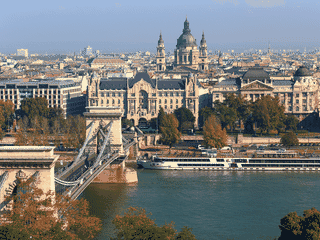
- The Danube separates a castle hill from a flatter bank rich in architectural heritage.
See also
_(1).jpg)
Budaörs
Hungary47.46°N 18.95°E
Érd
Hungary47.38°N 18.92°E
Overview
Budapest brings Castle Hill, the Chain Bridge and Parliament into a varied city visit. Thermal baths, riverside walks and Margaret Island add a relaxed side to the sightseeing.
Languages: Hungarian
Why go?
Budapest is the capital of Hungary, known for its unique youthful atmosphere, world-class classical music scene, pulsating nightlife, and exceptional natural thermal baths. The city straddles the Danube with Buda's castle hill and Pest's flat, architectural heritage, earning the nickname 'Paris of the East'. It's a delightful city for budget travelers and culture lovers alike.
Adapted from Wikivoyage contributors · CC BY-SA 4.0
Getting in
Budapest's main airport is Liszt Ferenc International, served by many airlines with terminals 2A and 2B connected via SkyCourt. International trains arrive at Nyugati, Keleti, and Déli stations, with connections to Prague, Vienna, Berlin, and more. Buses from abroad use Népliget station. The hydrofoil on the Danube operates seasonally to Esztergom.
Adapted from Wikivoyage contributors · CC BY-SA 4.0
Getting around
Budapest has an extensive public transport network including metros, trams, buses, HÉV suburban trains, and the cogwheel railway. A single ticket costs Ft350 (HÉV extra). The Buda Castle funicular (Ft1400/2000 one-way/return) and chairlift are scenic options. Rent a bike from Yellow Zebra (daily 09:00-21:00) or use Bolt e-scooters.
Adapted from Wikivoyage contributors · CC BY-SA 4.0
When to go
Winter (November to early March) is cold with snow and -15°C nights. Spring (March-April) is variable. Summer (May to mid-September) is warm with occasional heavy showers, as sunny as Mediterranean resorts. Autumn (mid-September to late October) is best: little rain, long sunny days, moderate temperatures.
Adapted from Wikivoyage contributors · CC BY-SA 4.0
Where to stay
Accommodation ranges from hostels starting at €7 per night to luxury hotels. The most expensive area is Castle Hill, while Pest has many reliable backpacker hostels. Buda offers better air quality near hills. Apartments are a cheap alternative for longer stays.
Adapted from Wikivoyage contributors · CC BY-SA 4.0
Food and drink
Hungarian food is a highlight: try goulash soup (€4 budget lunch), pörkölt, paprikás, and chimney cake (kürtőskalács). Mid-range dinner €8-14. Local wines include Tokaji, Egri Bikavér, and spirits like pálinka. Ruin bars in the Jewish Quarter offer cheap Hungarian wine and a bohemian vibe.
Adapted from Wikivoyage contributors · CC BY-SA 4.0
Things to do
Top sights include Castle Hill with the Royal Palace, Matthias Church, Fisherman's Bastion, the Chain Bridge, and Parliament. Relax at thermal baths, walk along the Danube, or explore Margaret Island. The city has many museums, the zoo, and an ice-skating rink in winter. Opera and folklore performances are also popular.
Adapted from Wikivoyage contributors · CC BY-SA 4.0
Safety
Central emergency number is 112. Be cautious on Váci utca: avoid its restaurants and bars (overpriced), never enter erotic/topless bars (scams), and change money only at exchange offices. Street money changers are common but unreliable. General rule: better quality and prices outside Váci utca.
Adapted from Wikivoyage contributors · CC BY-SA 4.0
Connectivity
Budapest has 5G from Telecom, Telenor, and Vodafone, and 4G from Digi. WiFi is widely available in the city.
Adapted from Wikivoyage contributors · CC BY-SA 4.0
Budget
Daily backpacker budget: dorm from €7, budget lunch around €4, dinner €8-14. Attractions can be free (walking, bridges). A single public transport ticket Ft350. Tours and river cruises extra.
Adapted from Wikivoyage contributors · CC BY-SA 4.0
Day trips
Popular day trips include Szentendre (picturesque town, HÉV 19 km), Visegrád (medieval citadel), Esztergom (largest basilica in Central Europe), Gödöllő (royal palace of Sisi), and the Kiskunság National Park (Puszta). Most are reachable by train or bus within an hour.
Adapted from Wikivoyage contributors · CC BY-SA 4.0
Go next
From Budapest, onward destinations include Lake Balaton, Eger, Pécs, and other Hungarian cities. International connections to Vienna, Prague, Bratislava, and more via train or bus.
Adapted from Wikivoyage contributors · CC BY-SA 4.0
Field guide adapted from Wikivoyage contributors · CC BY-SA 4.0. Text has been adapted and organized for this guide. About our sources.
Places to know
A few starting points from the guide. Check current hours and prices before you go.
- sleep
Budget Hostels in Pest
Many reliable backpacker hostels across the river in Pest, starting from €7 per night.
Recorded price: from 2,500 Ft
Adapted from Wikivoyage contributors
- eat
Leroy Cafe
(See district article Pest for details) Mid- to high-priced restaurant chain that offers Hungarian classics with other Italian and European cuisine. Very fashionable interiors and popular with the well-paid white collar crowd. Reservations are recommended during traditional peak times. When eating here, always make sure that you won't be slapped on an extra 100% service charge. Read the menu before entering the restaurant carefully and insist on talking to someone who speaks English.
Adapted from Wikivoyage contributors
- eat
Trófea Grill
The best among all-you-can-eat (buffet) and all the alcohol you can drink. Best to book a table in advance. Has 4 locations. 1 on Buda downtown by Margaret Bridge (Margit körút 2)
Adapted from Wikivoyage contributors
- see
Chain Bridge
The oldest permanent bridge over the Danube, floodlit at night, currently closed to pedestrians for reconstruction until 2023.
Adapted from Wikivoyage contributors
- see
Liberty Bridge
Elegant bridge opened in 1896, connects Gellért Baths with Central Market Hall.
Adapted from Wikivoyage contributors
- see
Margaret Bridge
Distinctive shaped bridge connecting to Margaret Island, used by trams 4 and 6.
Adapted from Wikivoyage contributors
- do
Budapest Spring Festival
In March, a dazzling variety of cultural events mainly revolving around classical music and performing arts - including folklore.
Adapted from Wikivoyage contributors
- do
Firework above Danube River
National Holiday. Sound & light show with fireworks. Around half hour open air show.
Recorded price: Free except if you wish to see from the air
Adapted from Wikivoyage contributors
Before you go
Connectivity
5G available from Telecom, Telenor, Vodafone; 4G from Digi. WiFi widely available.
Culture
Hungarians appreciate polite greetings. Tipping 10-15% in restaurants is customary.
Emergency
Ambulance: 104, Fire: 105, Police: 107. Central emergency: 112.
Food
Budget meal ~€4, mid-range dinner €8-14. Try goulash, pörkölt, chimney cake.
Health
Tap water is safe to drink. Emergency number 112. Pharmacies open on rotation in evenings.
Language
Hungarian is official; English and German widely spoken in tourist areas.
Local transport
Public transport network includes metro, tram, bus, trolleybus, HÉV, and funicular. Tickets cheap; validate before travel.
Money
Currency is Hungarian forint (Ft). Exchange at bureaux for better rates; ATMs available. Credit cards accepted in most places.
Safety
Avoid Váci utca restaurants and bars; beware of street money changers and erotic bar scams. Emergency number 112.
Transport
Public transport single ticket Ft350; HÉV extra. Funicular Ft1400/2000. Taxis can be unreliable.
Visa context
Visa rules depend on passport; check current entry rules before booking. Hungary is part of Schengen Area.
Water
Tap water is safe to drink.