
Uros Islands
South America · Peru
Did you know?
- The floating reed islands can be moved.
- The white base of a fresh totora reed is edible.
- Tourist reed rafts carry twin puma heads at the bow.
See also

Puno
Peru15.84°S 70.02°W · 3,830 m
Isla Amantani
Peru15.66°S 69.71°W
Juliaca
Peru15.49°S 70.13°W · 3,825 m
Isla del Sol
Bolivia16.02°S 69.18°W
Copacabana
Bolivia16.17°S 69.08°W · 3,841 m
Sorata
Bolivia15.77°S 68.65°W · 2,700 m
Overview
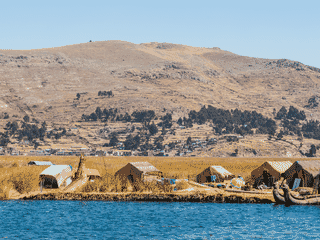
Floating reed islands lie among Lake Titicaca's marshes near Puno. Their channel setting offers a distinctive view of the Peruvian Altiplano.
Languages: Aymara, Quechua, Spanish
Why Go
The Uros Islands are floating islands made of tortora reeds, situated along a river-like channel through the marshy fringes of Lake Titicaca near Puno on the Peruvian Altiplano. They are known equally as a "tourist trap" and a genuine wonder of the world. The original Uru people have lived this lifestyle since before the Inca Empire, and the islands can actually be moved—some were relocated in the 1980s due to the Shining Path revolutionary movement. The islands now serve both as an opportunity for tourism money and as stable anchorage as Lake Titicaca's water levels have dropped.
Adapted from Wikivoyage contributors · CC BY-SA 4.0
Getting In
Tourists incur an entry fee of S/8 per person, which may not be included in tour prices. Dozens of agencies in Puno arrange visits with guides—tours leave frequently until about 4pm daily and cost at least S/10 per person as of March 2025. Tickets can be bought directly at the tourism pier in Puno where they are likely cheaper than through agencies. If staying overnight, some accommodations will pick you up at Puerto Kalapajra boat landing northeast of Puno town. Part of the tour includes an interpretive talk on one of the floating islands, so shop around for guides in your language if that matters to you.
Adapted from Wikivoyage contributors · CC BY-SA 4.0
Getting Around
If on a tour, you'll move between islands with the provided boat. Most islands can be walked across in about 10 seconds to a minute. When staying overnight, simply ask someone on your island for a ride elsewhere and ask about cost—there is no public transit between islands. Some accommodations rent kayaks for S/30 per person per hour as of March 2025. Going beyond the main rows of floating islands probably requires more than an hour.
Adapted from Wikivoyage contributors · CC BY-SA 4.0
When To Go
The islands are located along a river-like channel through reed beds just east of Puno. Most islands had to be rebuilt after a major storm and flood in 1985-1986. The best birding is actually on the boat ride from Puno, but even among the islands it's often possible to find the unique Titicaca Grebe, found only here and on nearby lakes in Bolivia. Local fishermen are available at dawn (05:30) if sleeping on the islands—coordinating ahead with locals is recommended.
Adapted from Wikivoyage contributors · CC BY-SA 4.0
Where To Stay
As of 2025, the community is largely made up of waterfront tourist accommodations—many on floating islands but also some built on stilts sunken into riverbanks. Qananpacha Hospedaje offers rooms made entirely of reed with double beds, a restaurant, and a post office (claimed to be the only floating post office in the world) at S/15 per bed or S/40 including dinner and breakfast. Isla Quechua is a real floating island occupied half by an Uru extended family and half by semi-rustic tourist accommodations, with electricity and warm water available from US$22 per night. Uros Khantati costs S/165 per person per night including pickup, boat ride, history lessons, cultural events, fishing, and three meals, with money going directly to the community.
Adapted from Wikivoyage contributors · CC BY-SA 4.0
Food And Drink
Trucha (trout) is available only on islands with restaurants, which is now many of them. Because it takes time to prepare, it's available only when there is a long stop or when staying overnight. The bottom part of a fresh reed (totora), colored white, is actually edible and surprisingly not bad—worth a try if your guide offers it. Muña mate, a minty tea made from a herb growing in the Titicaca lake environment, is said to help cope with high altitude. Local people have traditionally eaten other fish species, wild wetland birds, and their eggs, but these don't seem to be available to tourists.
Adapted from Wikivoyage contributors · CC BY-SA 4.0
Things To Do
Most tours include a ride between islands in a huge, gaudy yellow, double-hulled reed "raft" (balsa) with twin puma heads at the bow—this may cost an additional S/15-20 per person or solicit donations as of 2025. These boats are based on smaller canoe-like reed rafts used until the 1960s by the Uru people. Souvenir stands are ubiquitous—you'll be confronted by them and may be pressured to buy, reportedly at higher prices than on the mainland. Many tourists get photos in traditional Uru clothing for an additional price. Reed artesanry, artwork built from the same plant used for houses and islands, is also available.
Adapted from Wikivoyage contributors · CC BY-SA 4.0
Safety
Traditional reed huts and floating islands are gradually giving way to wooden and sheet-metal buildings and stilt houses perched directly on low riverbanks due to scarcity of naturally-floating reed roots. Still, visitors should be aware that the islands can indulate subtly underfoot when bigger boats pass by. The water level of Lake Titicaca has dropped due to climate changes, leaving many reed beds high and dry. Kayaking beyond the main rows of islands requires more than an hour and should be done with local guidance.
Adapted from Wikivoyage contributors · CC BY-SA 4.0
Connectivity
As of 2025, some accommodations on the island have WiFi, but don't expect it to be great. Claro 4G barely works here—don't count on it for anything more than sending messages. Movistar gets you 3-5Mbps in at least some areas. On Qananpacha island there is a post office where you can send a postcard. Not all tours include a stop there, so ask before booking if you want to visit the floating post office.
Adapted from Wikivoyage contributors · CC BY-SA 4.0
Budget
Entry fee is S/8 per person. Day tours from Puno cost at least S/10 per person as of March 2025. Kayak rental is S/30 per person per hour. Reed boat rides may cost an additional S/15-20 per person. Accommodation ranges from S/15 per bed at Qananpacha to S/165 per person per night at Uros Khantati (including meals). Isla Quechua offers rooms from US$22 per night. Souvenirs are available but reportedly at higher prices than on the mainland.
Adapted from Wikivoyage contributors · CC BY-SA 4.0
Go Next
Tours to the Uros floating islands can optionally be combined with a day trip to Isla Taquile or Isla Amantaní—each offered only once a day starting in the morning. Alternatively, travelers can return to Puno on the mainland for further exploration of the Peruvian Altiplano region.
Adapted from Wikivoyage contributors · CC BY-SA 4.0
Field guide adapted from Wikivoyage contributors · CC BY-SA 4.0. Text has been adapted and organized for this guide. About our sources.
Places to know
A few starting points from the guide. Check current hours and prices before you go.
- sleep
Isla Quechua
A real floating island occupied half by an Uru extended family and half by semi-rustic tourist accommodations. Staying here overnight must be one of the most authentic experiences you can have on the islands, and some of its cabins are also among the cheapest. Called “Quechua” because of a Quechua man who married into the family, but the island’s matriarch, Yolanda, is an Aymara-speaking Uru who still remembers the old ways. Next to the busier Hanan Pacha island, but not connected by walkways, and apparently not affiliated with the tour companies. Electricity and warm water available.
Recorded price: US$22 and up
Adapted from Wikivoyage contributors
- sleep
Qananpacha Hospedaje
Reed-built accommodation on a floating island with restaurant and post office
Recorded price: S/15 per bed; S/40 including dinner and breakfast
Adapted from Wikivoyage contributors
- sleep
Uros Khantati
This is one of the only floating reed islands where the money goes directly to the community and not a tour company in Puno. The cost is S/165 each a night and this included pickup from the hostel, boat ride to the island, some lessons on the local history and their way of life, cultural events, fishing and 3 meals.
Recorded price: S/165 pp
Adapted from Wikivoyage contributors
- eat
Fresh Reed (Totora)
Edible white bottom part of the fresh reed plant; surprisingly tasty
Adapted from Wikivoyage contributors
- eat
Island Restaurants
Trucha (trout) served on islands with restaurants; requires long stop or overnight stay
Adapted from Wikivoyage contributors
- see
Floating Reed Islands
The main attraction—entire islands made of tortora rushes that can actually be moved
Adapted from Wikivoyage contributors
- see
Reed Artesanry
Artwork built from the same reed (totora) used for houses and islands
Adapted from Wikivoyage contributors
- see
Sunrise Over Lake Titicaca
Best viewed at dawn (05:30) from the water if staying overnight; lake must be calm
Adapted from Wikivoyage contributors
Before you go
Connectivity
WiFi is available at some accommodations but unreliable. Movistar provides 3-5Mbps in some areas. Claro 4G barely works. A floating post office exists on Qananpacha island.
Culture
The Uru people have lived on these floating islands since before the Inca Empire. They now speak Aymara but originally had their own language. The islands are made of tortora reeds and can technically be moved.
Money
The local currency is Peruvian Sol (S/). Entry fee is S/8 per person. Day tours cost at least S/10 per person. Some operators may try to add extra charges for photo ops or boat rides.
Transport
Boats depart from the tourism pier in Puno. Puerto Kalapajra is the boat landing for some island accommodations northeast of Puno. There is no public transit between islands.
Weather
Located at high altitude on the Altiplano near Puno. Dress in layers as conditions can change quickly. The area is a wetland with reed beds and beautiful hills in the distance.