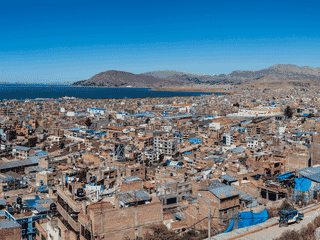

Puno
South America · Peru
Did you know?
- Puma and Condor statues mark viewpoints over the bay.
- Boats from the port reach the floating Uros islands.
- The market's upper floor has juguerías serving fruit juice.
See also
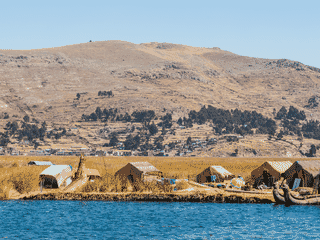

Uros Islands
Peru15.80°S 69.97°W
Isla Amantani
Peru15.66°S 69.71°W
Juliaca
Peru15.49°S 70.13°W · 3,825 m
Isla del Sol
Bolivia16.02°S 69.18°W
Copacabana
Bolivia16.17°S 69.08°W · 3,841 m
Sorata
Bolivia15.77°S 68.65°W · 2,700 m
Overview
Puno is a high-altitude port on Lake Titicaca and a base for visits to its islands. Its central square and pedestrian Calle Lima offer restaurants and bars between lake excursions.
Languages: Aymara, Quechua, Spanish
Why Go
Puno is a high-altitude port city (3,822 m) on the Peruvian shore of Lake Titicaca, serving as the main departure point for the famous Uros floating islands. With a 2018 population of about 129,000, the city has a pleasant central square and pedestrian Calle Lima lined with restaurants and bars. While not visually stunning itself, Puno's significance lies in its access to Lake Titicaca's islands (Taquile, Amantani, Uros) and its position on the Gringo Trail near the Bolivian border. The city is a melting pot of Aymara and Quechua cultures where women in traditional clothing work alongside their modern counterparts.
Adapted from Wikivoyage contributors · CC BY-SA 4.0
Getting In
Puno is reachable by road and rail. The train to Cusco via Peru Rail is considered unforgettable for railway enthusiasts, offering luxury and beautiful scenery (book through perurail.com). Buses connect Puno to Juliaca and onward destinations. The area is secure but advisable to hire transfers from Juliaca through reputable tour operators.
Adapted from Wikivoyage contributors · CC BY-SA 4.0
Getting Around
Many hostels sit on a hill above the Plaza de Armas, feeling steeper due to altitude. Taxis cost up to S/3 within the city, motor-rickshaws (motos) up to S/2, and urban colectivos just S/0.50.
Adapted from Wikivoyage contributors · CC BY-SA 4.0
When To Go
Puno's high season falls in July and August. However, at 3,822 m elevation, the city is cold at night year-round and blisteringly hot during the day with less atmospheric protection from the sun. There is an 80% risk of altitude sickness for those arriving directly from sea level; a gradual ascent through the Sacred Valley, then Cusco, then Puno is recommended. During high season, nearly daily tourists are hospitalized with severe sunburn, especially after falling asleep on slow boats to Taquile or Amantani islands.
Adapted from Wikivoyage contributors · CC BY-SA 4.0
Where To Stay
Budget accommodation is plentiful. The WalkOn Inn (Jirón Libertad 115) offers doubles/twins with hot water at S/60. Pirwa Hostels Peru (Av. La Torre #492, 2 blocks from main square) charges from US$8.50/person with free continental breakfast, pickup, internet, and 24-hour reception. Inka's Rest B&B (Pasaje San Carlos 158) provides backpacker-friendly dorms with fast Wi-Fi, kitchen access, and free breakfast. Lucky Your House (Titicaca 144) offers US$30 doubles 4 blocks from Plaza de Armas with free Wi-Fi and hot water.
Adapted from Wikivoyage contributors · CC BY-SA 4.0
Food And Drink
Fruit juices are available at juguerias on the second floor of the market. Pacha cafe-bar on calle Independencia (main pedestrian boulevard) offers coffee and cocktails with happy hour deals around S/12 for two drinks, though food is brought in from outside and staff have been reported to short-change tourists. The pedestrian mall area has many gringo-oriented establishments.
Adapted from Wikivoyage contributors · CC BY-SA 4.0
Things To Do
Most Puno sights are outside the city. The Uros floating islands are reachable by boat departing every 40 minutes from the dock (S/5 by taxi to dock, S/10 return boat plus S/10 island entry fee; last boat around 16:30). Kayaking with Augusto offers 3-hour tours to Reserva Titicaca (US$35/person) and 5-hour trips to Uros. Panoramic viewpoints at the Puma and Condor statues offer bay views; take a taxi (S/8) to the top and descend 100+ stairs in about 10 minutes to the main square. The Dreyer Museum near the main square charges S/15 admission.
Adapted from Wikivoyage contributors · CC BY-SA 4.0
Buy
Souvenirs in Puno are cheaper than in Cusco or Lima. A fairly large market operates down by the water where visitors can purchase local crafts and Andean goods.
Adapted from Wikivoyage contributors · CC BY-SA 4.0
Safety
The Puno area is generally secure but transfer from Juliaca should be arranged through reputable tour operators. Walking in the hills provides nice views but is dangerous; tourists have been victims of armed robberies in high areas. The Condor viewpoint particularly has had security issues in recent years—visit in groups or with locals.
Adapted from Wikivoyage contributors · CC BY-SA 4.0
Go Next
Numerous agencies and hotels offer trips from Puno (hotels often charge S/5 extra for reservations). The Uros Islands are reachable by day tour or overnight stay. Isla Taquile offers the closest views of the main Lake Titicaca expanse and can be done as daytrip or overnight. Isla Amantani has daily boats from Puno. Chucuito (19 km, S/1 by colectivo) works as a daytrip or en route to Bolivia. Sillustani has the best pre-Inca tombs in the area with lakeside views. Cutimbo, 30 km away, has ruins and cave paintings reachable by van (S/2.5) with S/15 adult entry, S/5 student, S/2 children. For railway enthusiasts, the train to Cusco via Peru Rail is unforgettable though expensive.
Adapted from Wikivoyage contributors · CC BY-SA 4.0
Field guide adapted from Wikivoyage contributors · CC BY-SA 4.0. Text has been adapted and organized for this guide. About our sources.
Places to know
A few starting points from the guide. Check current hours and prices before you go.
- sleep
Eco Inn
View of Lake Titicaca in an eco-friendly atmosphere.
Adapted from Wikivoyage contributors
- sleep
Hostal Los Pinos Inn
Helpful staff, breakfast, private bathrooms, affordable.
Adapted from Wikivoyage contributors
- sleep
Hotel Libertador Laga Titicaca
Adapted from Wikivoyage contributors
- sleep
Inka's Rest B&B
Backpackers' hostel with fast Wi-Fi, kitchen access, and free breakfast. Calm but friendly atmosphere.
Adapted from Wikivoyage contributors
- sleep
Lucky Your House
Free Wi-Fi, hot water, 4 blocks from Plaza de Armas, breakfast, no kitchen.
Recorded price: US$30 double or twin room
Adapted from Wikivoyage contributors
- sleep
Pirwa Hostels Peru
Services: Free continental breakfast, free pick up, free internet access, 24 hours reception, in house bar and more.
Recorded price: From US$8.50/person
Adapted from Wikivoyage contributors
- sleep
The WalkOn Inn
Downtown Puno. Rooms with ample space and private bathroom cost S/60 for a double/twin with hot water 24/7. Breakfasts cost S/8 for a buffet. The hotel can also connect you with tours.
Recorded price: 60
Adapted from Wikivoyage contributors
- sleep
Titilaka
A modern luxury refuge located on the shores of the Peruvian side of Lake Titicaca, providing a travelers a rich authentic experience and a variety of excursions to choose from. The lodge has two types of Suites; dawn & dusk, all with lake-views spa bathrooms, heated floors, in house amenities, including meals and excursions. Staff of the hotel will pick you up from Juliaca Airport or Puno train station and transfer you to the Lake port, from where you will depart to the hotel.
Adapted from Wikivoyage contributors
Before you go
Connectivity
Wi-Fi available at some hostels and cafes including Pacha cafe-bar. SIM cards available from local providers.
Culture
Puno is a melting pot of Aymara and Quechua cultures. Traditional and modern clothing worn side by side. Respect local customs at island communities.
Health
Altitude of 3,822 m causes 80% risk of altitude sickness from sea level. Cold nights and intense daytime sun require layers, sunscreen, hat, and sunglasses. Acclimatize gradually—spend time in Sacred Valley or Cusco first.
Money
Local currency is Peruvian Sol (PEN/S/). ATMs available near Plaza de Armas. Prices significantly lower than Cusco or Lima for souvenirs and basic services.
Safety
Hills above city are dangerous—armed robberies reported. Use reputable tour operators for Juliaca transfers. Visit high viewpoints in groups.
Transport
Taxis S/3, motor-rickshaws S/2, colectivos S/0.50 within city. Colectivos to nearby destinations like Chucuito (S/1). Peru Rail train to Cusco available.