Isla Amantani
South America · Peru
Did you know?
- Homestay families share visitors through a rotational allocation system.
- Hosts lend colorful traditional clothing for communal dance gatherings.
- Pachatata has a temple still used for ritual offerings.
See also
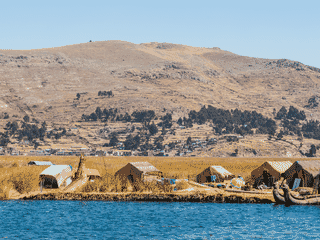

Uros Islands
Peru15.80°S 69.97°W
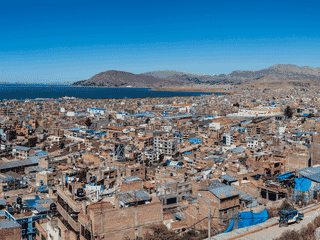

Puno
Peru15.84°S 70.02°W · 3,830 m
Juliaca
Peru15.49°S 70.13°W · 3,825 m
Isla del Sol
Bolivia16.02°S 69.18°W
Copacabana
Bolivia16.17°S 69.08°W · 3,841 m
Sorata
Bolivia15.77°S 68.65°W · 2,700 m
Overview
Family homestays, mountain hikes and ancient ruins draw visitors to Isla Amantani. Traditional dance gatherings add a cultural dimension to an overnight visit.
Languages: Aymara, Quechua, Spanish
Why go?
Isla Amantaní is a peaceful island on the Peruvian side of Lake Titicaca where time seems to have halted a century ago. The island offers authentic homestay experiences with local families, stunning mountain hikes with ancient ruins, and nightly traditional dance parties in colorful local dress. It provides a rare glimpse into traditional Andean rural life far from tourist crowds.
Adapted from Wikivoyage contributors · CC BY-SA 4.0
Getting in
Shared boats from the tourist pier in Puno depart every morning around 8am, with all boats making a mandatory 1+ hour stop at the floating Uros Islands. Round-trip boat tickets cost S/60 per person from the pier office, or S/40 from independent touts who include an interpretive guide. Tickets do not include island entry fees (approximately S/10 for Amantaní as of 2025). Alternative cheaper access is from Puerto Chifrón on the Capachica Peninsula, 1.5 hours from central Puno, with 45-minute boat rides and frequent colectivo connections until 3pm. There is also at least one daily boat from Taquile Island.
Adapted from Wikivoyage contributors · CC BY-SA 4.0
Getting around
The village has no integrated electricity, so visitors should bring a torch (flashlight) for navigating after dark. The island is small enough to explore on foot, with paths leading to the mountain peaks and around the community.
Adapted from Wikivoyage contributors · CC BY-SA 4.0
When to go
Lake Titicaca sits at high altitude (approximately 3,812m), so temperatures can drop sharply after sunset even on warm days. Hikers should bring a jacket for sunset views on pachamama. The island can be visited year-round, but the dry season (May-October) offers clearer skies.
Adapted from Wikivoyage contributors · CC BY-SA 4.0
Where to stay
About 50 families offer basic homestay accommodation, with tourists assigned on a rotational system to ensure fair distribution of tourist income. Accommodations are very simple but include tasty lunch, dinner, and breakfast. The all-inclusive rate is approximately S/20 per person. As of 2025, several accommodations can be booked online.
Adapted from Wikivoyage contributors · CC BY-SA 4.0
Food and drink
There are no restaurants on the island; all meals are included in the homestay accommodation. A small shop sells snacks and candies. Local beer is available for S/5-10. Every night the community organizes traditional dance parties for tourists where locals lend colorful traditional clothing.
Adapted from Wikivoyage contributors · CC BY-SA 4.0
Things to do
The main activities are hiking to the twin peaks of pachatata and pachamama, both offering superb views and ancient ruins. On pachatata (slightly lower) there is a small museum and a temple still used for ritual offerings. On pachamama (higher peak) is an ancient tower with 360-degree views—hike here for spectacular sunset, though temperatures drop quickly after dark. Another popular activity is challenging locals to a soccer match, though the high altitude makes this physically demanding for unacclimatized visitors.
Adapted from Wikivoyage contributors · CC BY-SA 4.0
Go next
From Amantaní, travelers can continue to Taquile Island, which has at least one daily boat connection. The nearby Uros floating islands are typically visited en route from Puno. The island is part of the Altiplano region of Peru.
Adapted from Wikivoyage contributors · CC BY-SA 4.0
Field guide adapted from Wikivoyage contributors · CC BY-SA 4.0. Text has been adapted and organized for this guide. About our sources.
Places to know
A few starting points from the guide. Check current hours and prices before you go.
- buy
Local Crafts
Some of the villagers weave beautiful hats out of alpaca wool. They are a bit more expensive than the ones on the mainland, but they are more unique and helps your host family out to buy them.
Adapted from Wikivoyage contributors
- do
Nightly Cultural Dance Party
Traditional Andean dance party where locals lend tourists colorful traditional clothing and teach local dances.
Adapted from Wikivoyage contributors
- do
Pachamama Hike
Ancient mountain peak with a stone tower offering 360-degree panoramic views of Lake Titicaca, best visited at sunset.
Adapted from Wikivoyage contributors
- do
Pachatata Hike and Museum
Lower peak with a small museum and ancient temple still used for ritual offerings to the earth mother.
Adapted from Wikivoyage contributors
- do
Soccer Match with Locals
Popular tourist activity playing soccer against local residents, though physically challenging due to altitude.
Adapted from Wikivoyage contributors
Before you go
Accommodation
Homestays cost ~S/20 per person with meals included. Tourists assigned to families on rotational basis. Book online for some options as of 2025.
Connectivity
No electricity on the island; bring a power bank and torch/flashlight for nighttime navigation.
Health
High altitude (3,812m) requires acclimatization. Sunscreen and hydration are essential. Soccer matches are challenging without acclimatization.
Money
Prices in Peruvian soles (S/). Cash is essential as there are no ATMs or card facilities on the island.
Transport
Boat from Puno tourist pier (S/60) or Puerto Chifrón (cheaper, faster at 45 min). Boats run until 3pm. Check if itinerary includes Uros and Taquile stops.
Weather
Temperatures drop sharply after sunset even in summer. Bring a jacket for sunset hikes on pachamama peak.