Overview
Juliaca is a high-altitude commercial city and a transport gateway to Puno and Lake Titicaca. Textile markets and colonial churches offer a glimpse of everyday Andean urban life.
Transit Hub · Culture · Shopping · Food
Did you know?
- Market dishes include chairo soup and trout from Lake Titicaca.
- Cristo Blanco stands on Huaynarroque hill southeast of the Plaza de Armas.
- Las Calceteras Gallery sells woolen chullos, shawls and socks made by local artisan women.
Why Go?
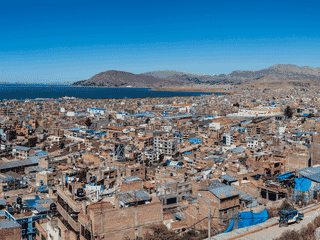
Juliaca is a gritty, high-altitude commercial hub of 276,000 people (2017) serving as the financial capital of Peru's Puno region. It sits at 3,825 metres (12,549 ft) on the windy Collao Plateau, 45 km northwest of Lake Titicaca. Travelers typically pass through for its transport connections rather than its attractions—it's the main overland gateway to Puno and the Peruvian side of the lake—but the colonial churches and textile markets offer a taste of Andean urban life away from the tourist trail.
Getting In
Juliaca is well-connected by air and bus. Inca Manco Cápac International Airport (JUL) lies 5 km northwest of the Plaza de Armas along Av Ferrocarril and Av Aviacion, serving flights from Lima and handling airlines including LATAM and Peruvian Airlines. The Terminal Terrestre is the main bus station, with operators Cruz del Sur, Civa/ExcluCiva, and Transzela offering routes to Puno, Cusco, Arequipa, and Lima. Buses to Puno (42 km south) take roughly 1 hour; to Cusco expect 6-8 hours on mountain roads.
Getting Around
Juliaca is walkable within the city center around the Plaza de Armas and Plaza Bolognesi. Taxis and mototaxis (three-wheeled motorbike taxis) are readily available for reaching outlying areas like the Cristo Blanco monument or the airport. Mototaxi rides within the city typically cost a few soles.
When to Go
Juliaca's high-altitude climate is cool and dry year-round. The best time to visit is during the dry season (May–October), when sunny days and clear skies make sightseeing and travel easier. Juliaca's Carnival takes place between February and March, featuring colorful costumes and traditional Collao Plateau dances in the streets—a lively time to experience local culture. Saint Sebastian's feast on 20 January is another local celebration.
Where to Stay
Accommodation options in Juliaca are limited compared to nearby Puno. Hotel Sakura on San Roman offers clean rooms with cable TV and WiFi at S/70 for a double—adequate for a transit stop. Many travelers choose to stay in Juliaca only long enough to catch an early bus to Puno (42 km south), where lodging options are more varied and geared toward tourists visiting Lake Titicaca.
Food and Drink
For vegetarian travelers, La Fuente de la Salud on Jr. Jorge Chavez (around the corner from Hotel Sakura) offers a complete menu for S/6—clean, friendly, and good value. Juliaca's markets offer Andean staples like cuy (guinea pig), chairo soup, and trout from Lake Titicaca. The city lacks the tourist-oriented restaurants found in Puno, so visitors seeking international or varied cuisine should plan accordingly or bring supplies.
Viewpoints and Markets
The Cristo Blanco del Mirador Huaynarroque sits on Huaynarroque hill southeast of the Plaza de Armas—a reinforced concrete and fiberglass Christ the Redeemer statue with outstretched arms, inaugurated in 1987 and illuminated at night in sacred purple. A viewpoint at its foot overlooks the city and surrounding Altiplano. For textiles, Las Calceteras Gallery on the north wing of Plaza Bolognesi is a three-story crafts market selling socks, chullos (knit caps), shawls, sweaters, and rugs made from llama, alpaca, and vicuña wool by local artisan women.
Safety
Juliaca is a working commercial city with typical urban precautions—guard valuables in crowded areas and at the bus terminal, avoid walking alone late at night in less-traveled neighborhoods, and use registered taxis or mototaxis. The high altitude (3,825 m) poses a health risk for those unacclimatized; ascending slowly and staying hydrated is essential.
Connectivity
Hotel Sakura offers wireless internet. Local SIM cards from major Peruvian carriers (Claro, Movistar, Entel) are available in Juliaca for data and calls; shops near the Plaza de Armas and Terminal Terrestre sell prepaid SIMs. Peru uses Type A and Type B electrical outlets (same as US), so travelers from North America may not need adapters.
Budget
Juliaca is one of Peru's more budget-friendly cities. A dorm bed in hostels is rare here; budget double rooms at hotels like Hotel Sakura cost around S/70. Meals at local markets or cheap restaurants run S/5-15; the vegetarian menu at La Fuente de la Salud is S/6. Local buses to Puno cost S/10-20; mototaxi rides within the city are S/2-5. Daily budget for a backpacker staying in Juliaca: S/80-150 (approximately US$21-40).
Day Trips
Chacas Lagoon lies 10 km northwest of Juliaca near the towns of Kokan and Chacas, surrounded by hills including Iquinito (the highest in the area). Local flora and fauna are abundant, especially during the summer rainy season (December–March). The colonial town of Lampa, 35 km northwest, features an impressive church and catacombs with a replica of Michelangelo's La Pietà plus South American camelids.
Go Next
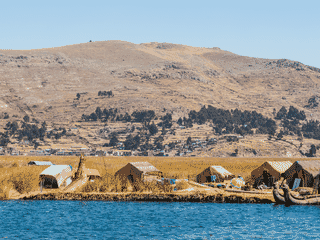
Puno (42 km south, ~1 hour by bus) is the gateway to Lake Titicaca and the Uros floating islands—most travelers head here. Cusco is a 6-8 hour bus ride northwest, serving as a base for Machu Picchu and the Sacred Valley. Arequipa, Peru's second city and UNESCO-listed colonial center, lies 5-7 hours southwest via bus.
Guide text adapted from Wikivoyage contributors under CC BY-SA 4.0.
Where to start
Sleep
Hotel Sakura
Clean hotel, cable TV, wireless internet. Pretty decent accommodation.
Price when recorded: S/70 for a double
Eat
La Fuente de la Salud
A very nice vegetarian restaurant. S/6 for a very complete menu. Clean and friendly staff. Definitely worth stopping by if you are in town.
See
Chacas Lagoon
It is a lagoon surrounded by vast hills, such as Iquinito (which is the highest in the area). Local flora and fauna abound in this lagoon, mainly during the summer (rainy season).
See
Church of La Merced
This church is a beautiful work of architecture from the time of the republic. Carved in red limestone and with a structure typical of the modern era (iron frame). Like the main Church of Santa Catalina, it only has a symmetrically arranged bell tower unlike the previous one, and it also features a clock with four circular faces. It was inaugurated in 1959 and renovated in 1995, where indigenous elements were included.
See
Cristo Blanco del Mirador Huaynarroque
Colossal work embodied in reinforced concrete and fiberglass, which represents the image of the vigorous redeemer, with outstretched arms. It has good night lighting, which highlights a sacred purple and radiant heart. At the foot of the monument there is a viewpoint, from which you can contemplate the urban and non-urban area that includes the city of Juliaca. The complex was built in just two and a half weeks, and was inaugurated in 1987.
See
Franciscan Convent
It is a four-level building built, it has an essentially Romanesque style. It is built from rocks, bricks, iron and cement; roofed with stainless steel sheets. It has four levels and impressive arched windows, totaling more than a hundred finely finished and clear Greco-Roman style. It also highlights a watchtower and a flanking tower, which suggest the idea of being a medieval castle.
See
Las Calceteras Gallery
It is a three-story crafts shopping center, which sells all types of garments (socks, chullos, booties, shawls, sweaters, rugs, gloves, etc.) woven or made with native materials (llama, alpaca, vicuña). You can also see the handwork done by the artisan women with their typical clothing (called the hosiery), in different types of wool and fibers.
See
Mother Church of Santa Catalina
It presents an indigenous baroque architectural style. The Jesuits began its construction in 1649, but it was not completed until 125 years later. Its bell tower was built entirely with ashlar brought from the quarries of Arequipa. It is under the command of the Franciscan congregation. In its structure, carved ashlar predominates. Its dome, its doorway and bell tower stand out. Works of art, such as canvases, are preserved inside.
Before you go
Health
High altitude (3,825 m) can cause altitude sickness. Acclimatize in Puno or Cusco before ascending. Carry altitude medication if susceptible. Drink only bottled or purified water.
Money
Peruvian sol (PEN, symbol S/) is the local currency. ATMs and money exchange are available near the Plaza de Armas and Terminal Terrestre. Hotel Sakura costs S/70/double; a complete vegetarian meal costs S/6.
Safety
Standard urban precautions apply—guard valuables, use registered taxis, avoid late-night walks in unfamiliar areas. The Terminal Terrestre can be crowded and requires caution with belongings.
Transport
Inca Manco Cápac International Airport (JUL) is 5 km northwest of town. Bus companies Cruz del Sur, Civa, and Transzela operate from the Terminal Terrestre to Puno, Cusco, and Arequipa. Mototaxis serve local transport.
Weather
At 3,825 m elevation, Juliaca is cool year-round with temperatures rarely exceeding 20°C. The dry season (May–October) offers the best weather for sightseeing; the rainy season (December–March) brings afternoon showers.