Maras
South America · Peru
Did you know?
- Moray's concentric terraces may have served as an Inca agricultural laboratory.
- A large white church acts as a visible landmark when returning from Moray.
- Salineras has family-owned salt pans terraced into a canyon.
See also
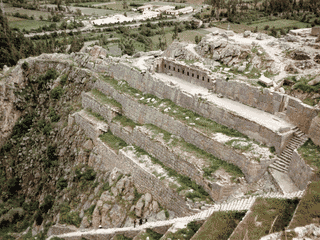

Ollantaytambo
Peru13.25°S 72.27°W · 2,792 m
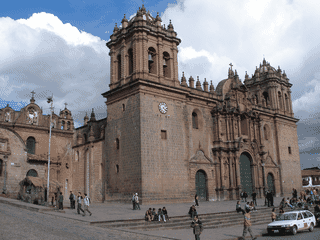

Cuzco
Peru13.53°S 71.97°W · 3,399 m
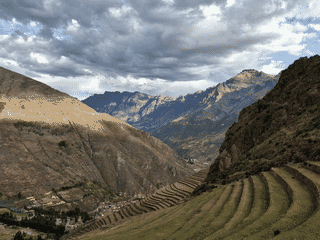

Pisac
Peru13.42°S 71.86°W · 2,972 m
.jpg)
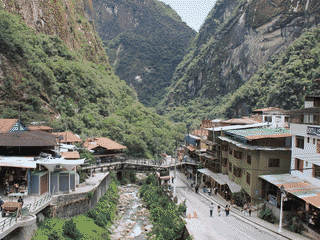
Aguas Calientes
Peru13.15°S 72.52°W · 2,040 m
.jpg)
Machu Picchu
Peru13.16°S 72.55°W · 2,430 m
Urubamba
Peru13.30°S 72.12°W · 2,870 m
Overview
Maras provides access to the salt pans at Salineras and the agricultural terraces at Moray. These sites make a focused Sacred Valley outing from nearby towns such as Urubamba or Pisac.
Languages: Aymara, Quechua, Spanish
Why Go?
Maras serves as a useful base for two significant Inca sites: the salt pans at Salineras and the agricultural terraces at Moray. The town itself is dusty and not particularly tourist-friendly, but it offers access to these remarkable ruins that are often combined in a single day trip from nearby towns like Urubamba or Pisac.
Adapted from Wikivoyage contributors · CC BY-SA 4.0
Getting In
Buses traveling between Urubamba and Chinchero (including many en route to Cusco) usually stop at the turnoff to Maras, a few kilometers outside Urubamba. You can also take a cab to the turnoff from Urubamba for a few soles. At the turnoff, cabs are usually waiting to take visitors into town or on to Moray.
Adapted from Wikivoyage contributors · CC BY-SA 4.0
Getting Around
The most common way to reach Moray (13 km away) is by taxi, though rates can be steep. You can also walk back from Moray in about an hour as the road is winding but the town is clearly visible by its large white church. Salineras is best visited on foot from the town center—follow the road past the church toward the turnoff, then continue straight when the road turns right until you find the dirt path descending into the canyon with the salt pans.
Adapted from Wikivoyage contributors · CC BY-SA 4.0
See
The town itself has little to hold a traveler's attention beyond the ruins. Salineras features terraced Inca salt fields in a valley still in production today, with around 3000 family-owned salt pans in a canyon. Moray is a fabulous depression where Incas built concentric terraces, theorized to be an agricultural laboratory for growing crops in different microclimates 600 meters above the Sacred Valley. It makes sense to visit both sites together since you drive past Salineras to reach Moray.
Adapted from Wikivoyage contributors · CC BY-SA 4.0
Do
After climbing down into Moray and back up, climb the hill overlooking the site for the best photo of two of the concentric circles in the same shot. On this hill are the Inca water storage reservoirs. A mountain biking tour from Cusco can include a guided tour of the Moray ruins—inquiring with a reputable tour operator in Cusco is the best way to arrange this.
Adapted from Wikivoyage contributors · CC BY-SA 4.0
Eat
There are no restaurants in Maras, only small stores selling simple supplies. At the ruins, there are walking snack vendors. Near the Salt Ponds, vendors sell better options like ice cream, salted nuts, and dehydrated bananas. Bringing your own lunch is recommended. Alternatively, eat in Pisac (Ulrike's Cafe is highly recommended for vegetarian options, good value, and local experiences like Chicha Morada—three-plate meal with soup, entrée, and cheesecake for S/17) or Urubamba.
Adapted from Wikivoyage contributors · CC BY-SA 4.0
Sleep
There are no accommodations in Maras itself. Sleep in Pisac (inquire at Ulrike's Cafe), Ollantaytambo, or Cusco. There are no hostels or campgrounds in Maras or at Moray.
Adapted from Wikivoyage contributors · CC BY-SA 4.0
Go Next
Take a taxi to the highway turnoff and wait for a bus to Urubamba or Chinchero, or pay for a taxi to take you directly (though this will be expensive). Consider visiting Chinchero on the same trip since buses go through it. Ollantaytambo and Pisac offer more amenities and are better bases for exploring the Sacred Valley.
Adapted from Wikivoyage contributors · CC BY-SA 4.0
Field guide adapted from Wikivoyage contributors · CC BY-SA 4.0. Text has been adapted and organized for this guide. About our sources.
Places to know
A few starting points from the guide. Check current hours and prices before you go.
- see
Moray
A fabulous depression in which, experts theorize, the Incas built concentric terraces to grow crops in different microclimates. Moray sits six hundred meters above Urubamba and the Sacred Valley of the Incas. Moray was the Incan agricultural laboratory that was likely used to cultivate resistant and hearty varieties of plants high in the Andes. The site is not on the typical tourist agenda; however, it is included in the boleto turístico offered in Cusco. This ticket covers 14 sites in Cusco and the Sacred Valley, and cost S/70 for one day, or S/130 for ten days (Mar 2018). Moray is on the way back from Machu Picchu between Ollantaytambo and Pisac.
Adapted from Wikivoyage contributors
- see
Salineras
Terraced Inca salt fields in a valley, still in production today. Salt has been harvested from the briny waters of the Salineras spring for thousands of years. There are around 3000 family-owned salt pans nestled in a canyon, which are used to evaporate water to extract the salt. All are filled, dried, and harvested on a rotating basis. They are not mined on Sunday. It is interesting to see the pans being mined by people in traditional garb, but if you go on an off day you are likely to have the whole place to yourself. The top-quality salt, flor de sal, which is much sought-after by chefs, is sold for S/4 per kilo, or S/10 for 3 bags.
Recorded price: Admission is S/10, and is not covered by the Cusco boleto tuistico
Adapted from Wikivoyage contributors
Before you go
Accommodation
Maras has no hotels, hostels, or campgrounds. Stay in Urubamba, Pisac, or Ollantaytambo instead.
Food
Bring your own food or eat in nearby Pisac or Urubamba. There are no restaurants in Maras, only small convenience stores.
Money
Currency is Peruvian soles (S/). Admission to Salineras is S/10. Boleto turístico covering Moray and 13 other Sacred Valley sites costs S/70 for one day or S/130 for ten days (March 2018).
Transport
Buses between Urubamba and Chinchero/Cusco stop at the Maras turnoff. Cabs wait there to take visitors into town or to nearby ruins.