Chinchero
South America · Peru
Did you know?
- Nested agricultural terraces rise toward a plateau topped by a colonial church.
- Sunday is the main market day for textiles, crafts and local produce.
- Colonial church frescoes blend religious art with indigenous motifs.
See also
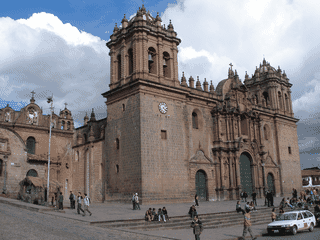

Cuzco
Peru13.53°S 71.97°W · 3,399 m
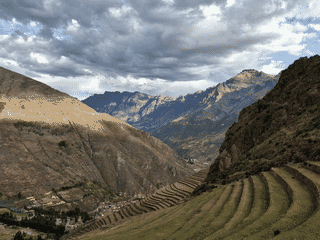

Pisac
Peru13.42°S 71.86°W · 2,972 m
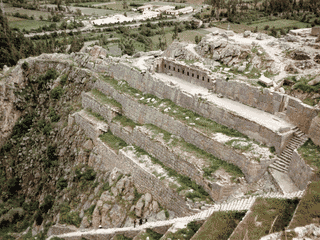

Ollantaytambo
Peru13.25°S 72.27°W · 2,792 m
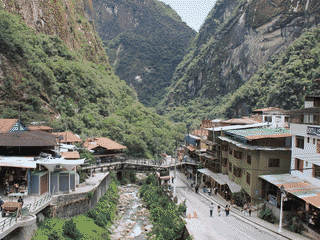
.jpg)
Aguas Calientes
Peru13.15°S 72.52°W · 2,040 m
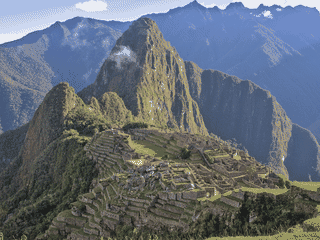
.jpg)
Machu Picchu
Peru13.16°S 72.55°W · 2,430 m
Urubamba
Peru13.30°S 72.12°W · 2,870 m
Overview
Chinchero combines Inca terraces, a frescoed colonial church and a living weaving tradition. Its market and plaza offer a close look at local textiles in a high Andean setting.
Languages: Aymara, Quechua, Spanish
Why Go
Chinchero sits at 12,500 ft, higher than Cusco, making it crucial to acclimate before visiting. The town offers a rare combination of Incan terrace ruins, a 17th-century colonial church with elaborate frescoes, and a traditional weaving craft tradition. Sunday markets draw local and tourist visitors for textiles, though women often sell crafts in the plaza throughout the week.
Adapted from Wikivoyage contributors · CC BY-SA 4.0
Understand
Chinchero is one of the few towns in the region higher than Cusco at 12,500 ft, so proper acclimation is essential before exploring on foot. Access to the Chinchero ruins and church requires a boleto turistico (tourist ticket) covering 14 sites in Cusco and the Sacred Valley.
Adapted from Wikivoyage contributors · CC BY-SA 4.0
Get In
Many buses pass through Chinchero en route to Urubamba or Cusco. The bus ride costs approximately S/3 from either direction. Combis (shared minibuses) are the primary public transport option, departing when full.
Adapted from Wikivoyage contributors · CC BY-SA 4.0
Get Around
The town is walkable, but the altitude makes every step feel heavier. The ruins sit above the main plaza and church, accessed by climbing the nested terraces. Combis to nearby towns like Urubamba leave from the main road when full.
Adapted from Wikivoyage contributors · CC BY-SA 4.0
See
The Chinchero ruins feature a series of nested agricultural terraces rising to a plateau where a church built in the early 1600s stands. The elaborately frescoed 19th-century church is also worth a peek, showcasing colonial religious art blended with indigenous motifs.
Adapted from Wikivoyage contributors · CC BY-SA 4.0
Do
Several hikes originate from Chinchero. One popular route walks through the ruins, descends into the valley, and follows a riverbed path for a few hours to a small town with frequent combis to Urubamba. The trail traverses a verdant steep-sided valley with striking views of the surrounding Andes.
Adapted from Wikivoyage contributors · CC BY-SA 4.0
Buy
The main market day is Sunday, featuring textiles, crafts, and local produce. Even on non-Sundays, women often arrange crafts for sale in the main plaza, particularly for bus tourists passing through. Local shops sell fine hand-woven textiles at relatively low prices compared to Cusco.
Adapted from Wikivoyage contributors · CC BY-SA 4.0
Go Next
Maras, located a few kilometres outside Urubamba, is the primary onward destination. It features the Incan salt fields (Salineras) where salt is hand-harvested from hundreds of pool-like evaporation ponds, and the concentric agricultural terraces at Moray used for agricultural experimentation in Inca times. Both are accessible by combi or taxi from Urubamba.
Adapted from Wikivoyage contributors · CC BY-SA 4.0
Field guide adapted from Wikivoyage contributors · CC BY-SA 4.0. Text has been adapted and organized for this guide. About our sources.
Places to know
A few starting points from the guide. Check current hours and prices before you go.
- see
Chinchero Church (Iglesia de Chinchero)
Colonial church from early 1600s with elaborate 19th-century frescoes blending Catholic and indigenous artistic traditions.
Adapted from Wikivoyage contributors
- see
Chinchero Ruins
Nested Incan agricultural terraces rising to a plateau with 17th-century colonial church, offering panoramic Andean views.
Adapted from Wikivoyage contributors
- see
Sunday Market
Weekly market day with textiles, crafts, and local produce. Larger selection than weekday visits.
Adapted from Wikivoyage contributors
- do
Chinchero to Urubamba Hike
Multi-hour trek through ruins, down a steep-sided verdant valley, along riverbed to a town with combis to Urubamba. Beautiful Andean scenery throughout.
Adapted from Wikivoyage contributors
Before you go
Activities
Hiking from Chinchero through the valley to Urubamba takes several hours and offers excellent scenery. Combis return from the endpoint.
Altitude
At 12,500 ft, Chinchero exceeds Cusco's altitude. Spend 2-3 days acclimating in Cusco first. Drink coca tea, move slowly, and stay hydrated.
Entry
The boleto turistico (tourist ticket) is required to enter Chinchero ruins and church. Cost: S/70 for one day or S/130 for ten days (March 2018). Covers 14 sites in Cusco and Sacred Valley.
Shopping
Sunday markets are best for variety. Weaving and crafts are available daily but more limited. Prices are generally lower than Cusco.
Transport
Buses and combis to/from Cusco (S/3) and Urubamba (S/3) pass through regularly. Combis depart when full rather than on fixed schedules.