
La Paz
South America · Bolivia
Did you know?
- Tiwanaku's archaeological site includes the Pyramid of Akapana and Puerta del Sol.
- Urban cable cars link hillside neighborhoods with El Alto.
- Api is a purple-corn drink among the local street refreshments.
See also

Coroico
Bolivia16.18°S 67.73°W · 1,744 m
Huayna Potosí
Bolivia16.26°S 68.15°W
Sorata
Bolivia15.77°S 68.65°W · 2,700 m
Quime
Bolivia16.98°S 67.22°W
Copacabana
Bolivia16.17°S 69.08°W · 3,841 m
Isla del Sol
Bolivia16.02°S 69.18°W
Overview
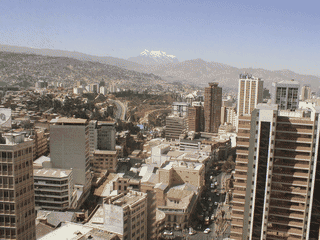
La Paz fills an Andean bowl with colonial streets and neighborhoods climbing the surrounding slopes. Its dramatic terrain shapes the experience of exploring the city.
Languages: Aymara, Guaraní, Quechua, Spanish
Why go?
La Paz is the world's highest capital at 3,600-4,058m, a surreal bowl of colonial streets and shantytowns clinging to Andean cliffs. The sight from the air as you fly in is incredible—sprawling El Alto giving way to the city clinging to a large gash in the earth. It offers a raw, authentic South American experience with excellent budget travel infrastructure, Spanish schools, and access to iconic destinations like Lake Titicaca, the Salar de Uyuni, and Amazon jungle tours.
Adapted from Wikivoyage contributors · CC BY-SA 4.0
Getting in
El Alto International Airport (IATA: LPB) is the world's highest international airport at 4,058m above sea level—almost half as high as a jetliner's cruising altitude. Takeoffs require longer runways due to thin air; take things very easily walking to immigration or risk serious altitude sickness. Airport departure tax is US$25 for international flights, Bs. 15 for domestic flights (payable in cash). Buses arrive at the La Paz Bus Station with food, ATMs, and free WiFi; routes include Cochabamba (7-8 hr, normal Bs. 20, semi-cama Bs. 40-50), Santa Cruz, and Sucre. For Lake Titicaca destinations (Copacabana, Sorata Bs. 20, 3 hr, Tiwanaku), buses depart from Cementerio north of the city.
Adapted from Wikivoyage contributors · CC BY-SA 4.0
Getting around
Public transport is underdeveloped compared to European or East Asian cities. Due to narrow streets, driving is not recommended. Taxis are preferred—take only Radio Cabs with telephone numbers displayed (Magnifico Taxis, La Paz Taxis, Gold Taxis); avoid Gypsy Cabs at night. The best way to see the real La Paz is to jump on and off public minibuses and micros at random, going to the end of the line and back (each jump costs about US$0.15). Cable cars (Teleférico) offer spectacular views of El Alto and the city—Bs. 3 per ride, red line connects to El Alto. Local buses to Mallasa (Valle de La Luna) cost Bs. 2.30.
Adapted from Wikivoyage contributors · CC BY-SA 4.0
When to go
Despite being near the equator, La Paz occasionally gets snow during the middle of the year (May-August). The dry season runs May-October with clear skies and cool nights (3-7°C); wet season November-April brings afternoon showers. Pack warm clothing year-round—layering is essential. Major protests are frequent, especially around midday, usually non-violent but accompanied by firecrackers; police roadblocks may occur. Foreigners are prohibited from participating in political activity.
Adapted from Wikivoyage contributors · CC BY-SA 4.0
Where to stay
Budget accommodation clusters around Sagarnaga Street and Calle Illampu in the colonial center, with hostels like Loki Backpackers (dorms from Bs. 40), Wild Rover Backpackers (dorms from Bs. 40), and Hostel Maya offering terraces with city views. For ultrabudget, sleep along Calle Sagarnaga or Calle Illampu which merge into fairs and museums full of people all day. Midrange options include Hotel Majestic (doubles Bs. 130 with breakfast), Hotel Rosario (US$63 doubles), and Hotel Savoy (doubles from Bs. 160). Zona Sur (Calacoto/San Miguel) offers upscale options like Hotel España and Colibri Camping (US$7 per person).
Adapted from Wikivoyage contributors · CC BY-SA 4.0
Food and drink
La Paz offers diverse cuisine: try mocochinchi from street vendors and api (purple corn drink). Budget meals include Sultan (falafel Bs. 7, super Bs. 10) and Café Ciudad (burgers Bs. 15-20, open 24 hr). For local lunch deals, Popular Cocina Boliviana serves contemporary Bolivian food for Bs. 60 (three courses with juice), while La Coca in Sopocachi offers a four-course almuerzo for Bs. 20. Market food abounds—try the fish meals at Mercado Uruguay (Fish Alley). For upscale dining, Gustu (Calle 10, Calacoto) ranks among Latin America's best restaurants. Bars include Sol Y Luna (coca leaf mojitos), Mongo's (Hermanos Manchego, since 1995), and Hard Rock Cafe (Calle Santa Cruz).
Adapted from Wikivoyage contributors · CC BY-SA 4.0
Things to do
Must-see attractions include the Witches' Market (Mercado de Hechicería, Calle Linares) selling llama fetuses and dried frogs for Aymara rituals; Plaza Murillo with the Presidential Palace (Palacio Quemado); Calle Jaen with preserved colonial buildings housing museums. For views, ride the red cable car line to El Alto, then visit the Thursday & Sunday Market in El Alto (Feria de 16 de Julio)—one of the world's biggest Aymara markets. Valle de La Luna (Bs. 20 entry, take local bus to Mallasa) offers surreal eroded rock formations. Museums include Museo San Francisco (Bs. 40, climb tower for panoramic views), Coca Museum (Calle Linares 906, Bs. 18, daily 10:00-19:00), and National Ethnographic Museum (Ingavi 916, Bs. 35). Day tours include Tiwanaku archaeological site (72 km) and Chacaltaya mountain hikes.
Adapted from Wikivoyage contributors · CC BY-SA 4.0
Safety
Beware of plain-clothed police officer scams (read Bolivia#Stay safe). In crowded areas watch for pickpockets and bagslashers—one person spills something on you while another lifts your wallet. Keep all bags in sight at hotels. El Alto is one of Bolivia's most dangerous cities; if visiting the market, avoid valuables and keep your backpack in front. Take only Radio Cabs—several violent muggings have occurred in illegal Gypsy Cabs, especially when leaving after-hours bars like Fin Del Mundo or Route 36. Lock car doors and don't share journeys. If in a dodgy situation, walk away and vanish in the crowds. Laptop hard drives can be damaged at altitude—backup your data before arrival; most drives safely work up to 3,000m, but La Paz exceeds this.
Adapted from Wikivoyage contributors · CC BY-SA 4.0
Stay healthy
Altitude sickness is the primary health concern—La Paz is 3,627m above sea level. On your first night, expect difficulty breathing and waking up panting. Take it easy your first day; don't eat too much. Mate de Coca (coca leaf tea) is a popular remedy though studies haven't confirmed benefits; "soroche-pills" sold at pharmacies may help. Marathon runners can get altitude sickness while less healthy people have few symptoms. People with ailing hearts or bronchial problems should consider staying away. Despite equatorial location, pack warm clothing year-round—snow occasionally falls during May-August. Laundrettes charge from Bs. 6 per kilo wash and dry.
Adapted from Wikivoyage contributors · CC BY-SA 4.0
Connectivity
WiFi is available at many hostels and cafes: Cafe Confiteria La Paz (Avenida Camacho & Ayacucho, near Obelisco) offers free WiFi for customers. Most hostels provide free internet and WiFi, though quality varies—Loki Backpackers has notoriously poor connection. Local SIM cards available from various providers; check connectivity sections for current packages. Power plugs use Type A/B/C (European/American two-pin), 115/230V 50Hz.
Adapted from Wikivoyage contributors · CC BY-SA 4.0
Budget
La Paz is extremely budget-friendly. Hostel dorms start at Bs. 20-40 (Loki, Wild Rover), private rooms Bs. 60-130. Street food Bs. 5-15, restaurant meals Bs. 20-60 for lunch deals, midrange dinners Bs. 40-100. Local bus rides US$0.15, cable cars Bs. 3, taxis within city Bs. 10-30. Spanish lessons US$4.50-8/hour at schools like Pico Verde Languages (Sagarnaga St) or Instituto Exclusivo (Avenida 20 de Octubre). Day trips to Tiwanaku cost Bs. 10-20 in transport; Salar de Uyuni 2-day tours as separate destination. Daily budget of Bs. 100-200 covers basic needs.
Adapted from Wikivoyage contributors · CC BY-SA 4.0
Day trips
Popular day trips from La Paz include Tiwanaku (72 km, visit Lithic and Ceramic Museum plus archaeological site with Pyramid of Akapana, Semi Underground Temple of Kalasasaya, and Puerta del Sol). Laja (Bs. 10 from La Paz) is the original location of La Paz with a big church and local bread. Chacaltaya offers mountain hikes with views of Cordillera Real. Lake Titicaca (world's highest navigable lake) requires more time—go to Copacabana or Isla del Sol. For adventure, Rurrenabaque (US$160 flight or long bus) accesses Madidi National Park. Sorata offers climbs of Illampu and Ancohuma. Chulumani in South Yungas is accessible via thrilling road.
Adapted from Wikivoyage contributors · CC BY-SA 4.0
Go next
From La Paz Bus Station: Cochabamba (7-8 hr, Bs. 20-100 depending on bus class), Santa Cruz, Sucre. From Cementerio: Lake Titicaca destinations (Copacabana, Sorata Bs. 20, 3 hr), Tiwanaku, Desaguadero. From Terminal Provincial Minasa Yungas (Villa Fatima): Coroico, Chulumani, Rurrenabaque, Caranavi, San Borja. Flights from El Alto airport to Rurrenabaque (Bs. 670 with Amaszonas). Major onward routes include Salar de Uyuni (2-day trips or longer), Lake Titicaca crossing to Peru, Amazon jungle tours, and Yungas road to Coroico or Chulumani.
Adapted from Wikivoyage contributors · CC BY-SA 4.0
Field guide adapted from Wikivoyage contributors · CC BY-SA 4.0. Text has been adapted and organized for this guide. About our sources.
Places to know
A few starting points from the guide. Check current hours and prices before you go.
- eat
Al amir
Nice Arabic food.
Adapted from Wikivoyage contributors
- eat
Alo Cubano
Best place to pretend you're back in the 1950s plotting a Pan-American revolution with Fidel and Che.
Adapted from Wikivoyage contributors
- eat
Angelo Colonial
A dark, bohemian cafe set in an old mansion decorated with scads of antiques. Serving Bolivian and mediocre international food. The best drip coffee in La Paz. Painfully slow service. Another location on the Prado. Serves llamas.
Adapted from Wikivoyage contributors
- eat
Cafe Karlovy
An elegant coffee shop in the hip southern part of La Paz. Serves fantastic food all day.
Adapted from Wikivoyage contributors
- eat
Cafe del Mundo
Cosy restaurant with good food, music and interior. The place is run by a Swedish-Bolivian couple. Prices not so high by European standards. Try Titicaca salad - it's huge, has fish, and is yummy.
Adapted from Wikivoyage contributors
- eat
Café Ciudad
Open 24 hr.
Recorded price: Burgers Bs. 15-20, main courses Bs. 30-40
Adapted from Wikivoyage contributors
- eat
Café Vida
Organic vegan restaurant serving healthy, fresh meals: some Andean cuisine and some from further afield. Good for breakfast and lunch – the lunch combo includes soup, bread, hummus, a bowl, and a drink. Lots of gluten-free options. Menu in English. Wi-Fi available.
Recorded price: Bs. 32 for the lunch combo
Adapted from Wikivoyage contributors
- buy
A Manos
Good quality handicrafts. Has a café (Café El Consulado), travel agency; Topas Adventure Travel Bolivia, and 5 great rooms.
Adapted from Wikivoyage contributors
Before you go
Altitude
La Paz sits at 3,600-4,058m—take it very easy your first day to avoid altitude sickness. Mate de coca and soroche pills available at pharmacies.
Safety
El Alto is dangerous—avoid valuables and keep backpack in front. Watch for pickpockets and bagslashers in crowded areas. Protests frequently shut down streets.
Transport
Take only Radio Cabs (with phone numbers displayed) not Gypsy Cabs—several violent muggings reported. Cable cars (Bs. 3) offer spectacular city views.
Visa
Extend visas at Immigration Office (Avenida Camacho 1468), Monday-Friday 07:30-15:30. Cannot exceed 90 days total stay. Bring passport photocopy, entry stamp, and immigration card.
Weather
Pack warm clothing year-round—snow occasionally falls May-August despite equatorial location. Dry season May-October offers clearest skies.