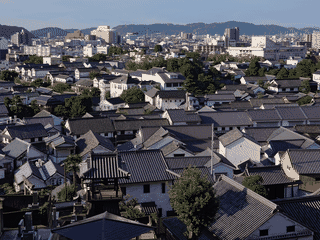

Kurashiki
East Asia · Japan
Did you know?
- The Ohara Museum was Japan's first Western art museum.
- The Bikan canal is lit at night beside white-walled storehouses with lattice windows.
- Bukkake udon arrives with sauce served separately for you to pour over thick noodles.
See also

Okayama
Japan34.66°N 133.92°E

Naoshima
Japan34.47°N 134.00°E

Takahashi
Japan34.79°N 133.62°E
Overview
Kurashiki is a walkable canal town where white-walled storehouses, willow-lined water, and merchant streets frame a living historic district. Add bukkake udon, the Ohara Museum, and a short rail hop to Okayama or Kojima's denim quarter.
Languages: Japanese
Why go?
Kurashiki is one of Japan's best-preserved old merchant towns, escaped largely unscathed from World War II bombing. The Bikan Historic Area features white-walled storehouses (kura) with lattice windows lining a willow-shaded canal illuminated at night. While some over-enthusiastic tourist associations call it "the Venice of Japan," Kurashiki is actually a rare piece of authentic old Japan that shows where people lived and worked, not just temples. The town also houses Japan's first Western art museum and a remarkable collection of specialized museums, making it far more than just a pretty canal.
Adapted from Wikivoyage contributors · CC BY-SA 4.0
Getting there
JR Kurashiki Station on the Sanyo Main Line is the main gateway, located south of the Bikan Historic Area. The Kodama Shinkansen stops at JR Shin-Kurashiki Station (新倉敷駅), about 8 km west of downtown in the Tamashima area. From Shin-Kurashiki, take two local JR Sanyo Main Line stops to reach Kurashiki Station. Okayama Momotarō Airport is accessible via shuttle bus from Kurashiki Station (45 min, ¥1,130). From Tokyo, take the Sanyo Shinkansen to Okayama (3 hrs 20 min) and transfer to a local train (15 min). From Osaka/Shin-Osaka, the Sanyo Shinkansen takes about 50 min to Okayama.
Adapted from Wikivoyage contributors · CC BY-SA 4.0
Getting around
The Bikan Historic Area is compact and best explored on foot—most attractions are within a 15-minute walk of each other. JR Kurashiki Station serves as the transport hub for the wider city, with local buses departing from the south exit. The Kojima area (home to jeans and textile museums) is reached via JR Sanyo Main Line from Kurashiki Station (about 30 min). Bicycles can be rented near the station for exploring the wider city.
Adapted from Wikivoyage contributors · CC BY-SA 4.0
When to go
Spring (March-May) is ideal, with cherry blossoms and the Kurashiki Hina Meguri (Girls' Doll Festival, late February to mid-March). Golden Week (late April to early May) brings the Heartland Kurashiki festival (wisteria and boat ceremony) and Kojima Textile Festival (last weekend of April). Summer features the Tenryo Summer Festival (first Saturday after July 20) with drums and evening parade. Autumn is pleasant for walking. Winter museums are less crowded but some close early (Dec-Feb).
Adapted from Wikivoyage contributors · CC BY-SA 4.0
Where to stay
The Bikan Historic Area is the prime location, with traditional ryokan like Ryokan Kurashiki (¥28,000 per person with meals) and Tsurugata (¥12,000-30,000, 250-year history) offering atmospheric canal-side stays. Budget options include Kurashiki Youth Hostel (¥2,940 per person) in the hills accessible by bus #6. Business hotels near JR Kurashiki Station include Toyoko Inn (singles from ¥5,300), Hotel Cent Inn (¥5,500), and Court Hotel (single from ¥7,200). The Kurashiki Ivy Square Hotel (¥10,500-18,900) offers mid-range comfort with shopping access.
Adapted from Wikivoyage contributors · CC BY-SA 4.0
Food and drink
Kurashiki's signature dish is bukkake udon—thick noodles served with sauce poured separately by the customer. The Marubu chain has eight locations including four near JR Kurashiki Station (HQ at 2-3-23 Achi-dori, 07:00-21:00, look for yellow/black logo, ¥600). Local seafood specialty is Shimotsui octopus, featured at Atchan (Kojima Ekimae) in okonomiyaki. For upscale dining, Yae (5-14 Hon-machi, ¥5,000 set) serves excellent seafood with sake. Bars cluster around JR Kurashiki Station south exit, while Ivy Square has a beer garden. Coffee Kan (4-1 Hon-machi) serves serious French-press coffee.
Adapted from Wikivoyage contributors · CC BY-SA 4.0
Things to do
The Ohara Museum of Art (1-1-15 Chuo-dori, ¥1,300) is Japan's first Western art museum with Picasso, Monet, Renoir, and Matisse works; English audio guide ¥500, open Tu-Su 09:00-17:00. The Archaeological Museum (1-3-13 Chuo-dori, ¥400) occupies a lovely old rice warehouse with Japanese, Chinese, and Incan artifacts. Japanese Folk Toy Museum (1-4-16 Chuo-dori, ¥300) displays 40,000+ toys. Ohashi House (3-21-31 Achi-dori, ¥500) shows a samurai family's merchant conversion. Entsuji Temple offers views of the Seto Inland Sea and is the 7th temple on the Chugoku 33 Kannon Pilgrimage. For views, Washuzan Hill provides free panoramas of the Seto Ohashi Bridge.
Adapted from Wikivoyage contributors · CC BY-SA 4.0
Safety
Kurashiki is a safe, quiet city with low crime. Standard precautions apply—keep valuables secure in crowded areas and be mindful of traffic. Evening walks along the canal in the Bikan area are pleasant and safe, though some back alleys near bars can be dimly lit. The city is very walkable with good lighting on main tourist streets.
Adapted from Wikivoyage contributors · CC BY-SA 4.0
Budget tips
A day in Kurashiki can cost ¥4,000-6,000 including budget accommodation (¥3,000 hostel), simple meals (¥600-1,000 udon), and 2-3 museum visits (¥300-700 each). Museum combo tickets are rare; most charge separately. The Ohara Museum at ¥1,300 is the priciest single site. Ryokan stays run ¥12,000-28,000 per person including meals. JR local trains within Okayama Prefecture are affordable (Kojima trips under ¥500).
Adapted from Wikivoyage contributors · CC BY-SA 4.0
Day trips
Okayama (15 min by Shinkansen or local train) features Koraku-en, one of Japan's Top 3 gardens, and the Kibi Trail. Takahashi (40 min) has Bitchu Matsuyama Castle—one of Japan's few original castles and the highest. Fukuyama (1 hr) offers Fukuyama Castle and museums. Within Kurashiki, the Kojima area (30 min by train) is famous for jeans production—visit Jeans Street and the Betty Smith Jeans Museum (09:00-18:00). Tamashima area has Saisou-tei (seppuku bloodstains preserved) and Shimotsui Castle ruins with Seto Ohashi Bridge views.
Adapted from Wikivoyage contributors · CC BY-SA 4.0
Go next
Okayama (15 min) is the natural hub—home to Koraku-en garden, the Kibi Trail, and Momotaro attractions. Takahashi (40 min) has Bitchu Matsuyama Castle. Fukuyama (1 hr) features Fukuyama Castle and museums. Soja has Hofukuji Temple where painter-priest Sesshu lived. Niimi offers Ikura Ravine and Maki Cave. Tsuyama has Kakuzan Park for cherry blossoms. The Shinkansen connects Kurashiki west to Hiroshima (1 hr 10 min) and east to Shin-Osaka (50 min) and Kyoto (1 hr 20 min).
Adapted from Wikivoyage contributors · CC BY-SA 4.0
Field guide adapted from Wikivoyage contributors · CC BY-SA 4.0. Text has been adapted and organized for this guide. About our sources.
Places to know
A few starting points from the guide. Check current hours and prices before you go.
- eat
Atchan
Famous for its octopus okonomiyaki which uses the fresh, locally fished Shimotsui octopus.
Adapted from Wikivoyage contributors
- eat
Bukkake Udon
The Kurashiki brand of udon carries influence from Edo-period Tokyo, courtesy of the local business magnates who did trade with the shogunate. Today, Kurashiki natives will tolerate no other noodles. The sauce is served separately, so customers can pour it (bukkakeru) onto the noodles themselves. This popular chain has eight locations in the city, including four surrounding JR Kurashiki Station; hours vary, but the HQ at 2-3-23 Achi-dori (07:00-21:00) is the easiest to find. Look for the distinctive yellow and black logo.
Recorded price: ¥600
Adapted from Wikivoyage contributors
- eat
Cafe Biscuit
A sandwich shop that is known for its crackers and jellies. It's a good place for a quick, light meal. The crackers and jellies can also be purchased independently if you'd like to take them home as souvenirs.
Adapted from Wikivoyage contributors
- eat
La Cenetta
Japanese pizzerias are famously creative (and sometimes bizarre) with their choice of pizza toppings, but La Cenetta is an exception; chef Sekizen Kohara serves authentic Neapolitan-style pies, made in a small wood oven.
Recorded price: ¥1000 and up
Adapted from Wikivoyage contributors
- eat
Misokatsu Umenoki
Umenoki serves a Nagoya specialty: breaded, fried (without oil) pork cutlets with a thick miso-based sauce, usually served over shredded cabbage or noodles.
Recorded price: Dishes from ¥1,000, sets from ¥2,500
Adapted from Wikivoyage contributors
- eat
Takataya
A smoky yet fantastic little yakitoriya (grilled chicken kebab joint) in the back alleys of the Bikan Area. Prices are reasonable and the food is fantastic. No English spoken.
Adapted from Wikivoyage contributors
- eat
Yae
Always packed with locals, Yae serves good seafood and sake, and the talkative staff will be happy to make recommendations.
Recorded price: ¥5000 for a filling set and a drink
Adapted from Wikivoyage contributors
- eat
Yasunoya
This is the first restaurant in the Shimotsui area to start serving dishes featuring the locally caught octopus that has since become so famous in the region.
Adapted from Wikivoyage contributors
Before you go
Culture
Kurashiki preserves authentic Edo-period merchant architecture in the Bikan area. Storehouses (kura) feature distinctive lattice windows. The canal is illuminated at night, creating a magical atmosphere especially in early morning and late evening.
Money
Japan is predominantly cash-based in smaller establishments. Convenience stores and larger hotels accept cards, but many Bikan area shops and smaller restaurants are cash-only. ATMs at convenience stores (7-Eleven, FamilyMart) accept foreign cards.
Transport
JR Kurashiki Station is the main transport hub with Sanyo Main Line local trains. Shinkansen stops at Shin-Kurashiki Station (8 km west). Buses depart from the station's south exit. A IC card (Suica/Pasmo) works on local trains and buses.
Weather
Summer is hot and humid (July-August). Winter is mild but some museum hours shorten (Dec-Feb). Spring brings cherry blossoms and festivals. Autumn is comfortable for walking.