Overview
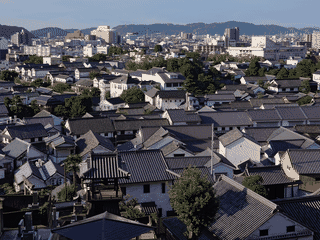
Okayama is a bright, easygoing Shinkansen hub with a celebrated garden, castle culture, and Momotarō folklore in the streets. It also makes a convenient base for Kurashiki, Bizen pottery, and wider Chugoku or Shikoku day trips.
Transit Hub · Architecture · Culture · Day Trips · Food
Did you know?
- Kōrakuen dates to 1687 and includes waterfalls, shrines, teahouses, and a lotus pond.
- Kibi dango is the local sweet tied to the Momotarō legend.
- Direct Shinkansen trains reach Osaka in 50 minutes and Hiroshima in 40.
Why Go
Okayama serves as a major Shinkansen hub connecting Kansai and Hiroshima, but it's far more than a transit stop. The city stakes its identity on Momotarō, the Peach Boy, with statues, street names, and manholes celebrating the local fairytale hero. Its cultural trio—Kōrakuen Garden (one of Japan's three great gardens), the striking black Okayama Castle, and nearby Bizen pottery—offers more depth than most regional cities. The region is also famed for white peaches and muscat grapes, earning Okayama a reputation as a fruit lover's destination.
Getting In
JR Okayama Station sits on the Sanyō Shinkansen line with direct trains to Osaka (50 min), Hiroshima (40 min), and Hakata (2 hr). Regular JR lines connect to Kurashiki (15 min), Tsuyama, and other Chugoku destinations. Okayama Momotarō Airport has domestic flights to Tokyo Haneda, Sapporo, and Okinawa, plus international routes to Hong Kong, Seoul, Shanghai, Kaohsiung, and Taipei. Airport buses to the station cost ¥780 and take 30 minutes.
Getting Around
Public transport accepts both cash and IC cards (Pasmo, Suica, Icoca). The local Hareca Card offers a 2% bonus for pre-paid rides within Okayama only. For cash fares on trams and buses, board at the rear, take a boarding ticket, and pay at the front when disembarking—the driver won't give change, but a coin-changing machine is available on trams. The city is walkable between major sights, with Korakuen Garden and Okayama Castle both reachable in 15 minutes on foot from the station.
When To Go
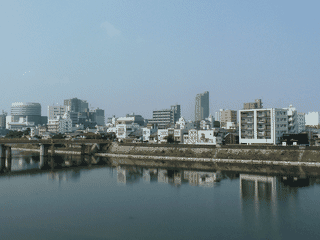
Okayama earns its nickname 'Land of Sunshine'—mountains often block rainfall before it reaches the city, giving more sunny days than surrounding prefectures. Winter is mild with little snow. Cherry blossom season in early April brings lantern-lit riverside walks along the Asahi River. The Naked Man Festival (Hadaka Matsuri) on the third Saturday of February sees men in loincloths competing for lucky sticks. Summer's Momotarō Festival in early August features Okayama's biggest fireworks display and the lively Uraja dance parade.
Where To Stay
Most hotels cluster near JR Okayama Station, ranging from budget options like KAMP Backpackers Inn (dorm ¥3,000, private ¥7,000) to mid-range chains like Toyoko Inn (singles from ¥5,980 with free breakfast). For budget travelers, Kurashiki offers additional affordable options just 15 minutes west by train. The main station area provides the best access to sights and transport, while the Saidaiji area to the west suits those visiting that temple or the Naked Man Festival.
Food And Drink
Kibi dango (sweet millet-flour dumplings) are Okayama's signature sweet, tied to the Momotarō legend. The region produces famous white peaches (hakutō) and muscat grapes—muscats command 95% of Japan's market, priced at ¥2,000-10,000 per bunch with peak season in early October. Mamakari (herring-like fish from the Seto Inland Sea) and sawara (white-fleshed fish) are local seafood specialties. For quick meals, Tenjin Soba near Shiroshita tram stop serves 'heavenly' soy-based ramen from ¥750. The area east of the station has hundreds of izakaya and bars, with the biggest concentration along Nishigawa Canal.
Things To Do
Kōrakuen Garden (¥400), one of Japan's three great gardens, dates to 1687 with waterfalls, shrines, teahouses, and a lotus pond—open 07:30-18:00 April-September. Okayama Castle (¥300), nicknamed 'Crow Castle' for its distinctive black color, stands in contrast to Japan's typical white castles. The 15-km Kibiji cycling trail from Okayama to Soja ranks among Japan's top 100 bike routes—bike rental at Bizen-Ichinomiya Station costs ¥1,500 per day, with a ¥500 surcharge for one-way return to Soja. Saidaiji temple hosts the famous Naked Man Festival each February. The Okayama Orient Museum (¥300) showcases Middle Eastern art, while the Okayama Prefectural Museum (¥250) displays Bizen swords and pottery.
Safety
Okayama is generally a safe city with low crime rates typical of Japanese urban areas. Standard urban precautions apply—guard valuables in crowded areas and be cautious near train tracks. The city is walkable day and night in central areas. Cycling the Kibi Plain trail requires returning rentals by 6 PM when shops close; hikers should start no later than 10 AM at Bizen-Ichinomiya Station to cover the trail before evening.
Connectivity
WiFi is available at most hotels and cafes. The comic buster and internet cafes like Comic Buster (¥250/30 min, ¥980/3 hrs, open 24 hours) near the station offer connectivity for longer sessions. Major carriers provide 4G/LTE coverage throughout the city. Japan uses Type A and B power plugs (two flat prongs, similar to US), typically 100V.
Budget
A backpacker can manage on ¥4,000-6,000 per day: dorm beds from ¥3,000, budget meals at ramen shops ¥600-900, local transport ¥200-400, and attractions like Korakuen (¥400) and Okayama Castle (¥300). Street food at cherry blossom festivals costs ¥300-500. Cycling the Kibiji trail keeps activity costs minimal—the trail sites are free, with only bike rental as the main expense. Museum entrance fees typically range ¥250-700.
Day Trips
Kurashiki (15 min by train) preserves historic merchant quarters and Japan's oldest art museum. Bizen, accessible by JR train toward Okayama, offers Bizen-yaki pottery workshops (¥2,000 for a day class). Soja, the other end of the Kibiji cycling trail, contains Kibitsu Shrine and burial mounds connected to the Momotarō legend. Hiroshima and Miyajima are reachable in under an hour by Shinkansen. Takamatsu and Ritsurin Garden are about an hour away on express trains. Naoshima art island requires a train to Uno Port plus a ferry.
Etiquette
Okayama follows standard Japanese etiquette—remove shoes when entering some traditional establishments, bow when greeting, and speak quietly on public transport. When visiting shrines like Kibitsu Shrine or Kibitsuhiko Shrine, observe proper shrine protocols: bow at the gate, wash hands at the basin, and don't photograph restricted areas. Tipping is not customary and can be considered rude. The local Okayama dialect uses 'ja' instead of 'da' and vocabulary like 'eroo' for 'very'—using local phrases will delight residents.
Go Next
From Okayama's position as a regional hub, day trips extend across Chugoku and into Shikoku. Westward: Hiroshima and Miyajima (Shinkansen 40 min), Kurashiki (15 min), Takahashi with Japan's highest original castle at Bitchu Matsuyama. Southward via Uno Port: Naoshima's contemporary art museums and Shodoshima island. Northward: Tsuyama for cherry blossoms at Kakuzan Park. Eastward: Himeji Castle (50 km, 50 min by Sanyo line). For Shikoku: direct express trains reach Takamatsu, Kotohira, and Matsuyama within 1-2 hours.
Guide text adapted from Wikivoyage contributors under CC BY-SA 4.0.
Where to start
Eat
Ajitsukasa Nomura
This restaurant serves a variety of katsu dishes, including Okayama's local specialty, Demi-katsudon, katsudon topped off with a demiglace sauce.
Price when recorded: Prices range from ¥560-1600
Eat
Asuka
Serves aji sashimi, vinegared aji and deep-fried aji, along with a variety of other sashimi. It's also a decent place to try Okayama's mackerel (sawara) dishes and other seasonal specialties. Perhaps more of a drinking spot/pub than a restaurant, Asuka is still a fine place for food and drink and an excellent place to experience "after-work Japan" in a relaxed, friendly atmosphere.
Price when recorded: Prices vary and cheap options are available, but most dishes cost over ¥1100. Sets over ¥2000
Eat
Cafe.the Market Mai Mai
This bakery and dessert shop serves a variety of fresh breads and pastries. Try the Peach Juice (¥600), made from the delicious homegrown white peaches.
Price when recorded: ¥600–1200
Eat
Fujiya
A ramen restaurant that has gained fame for its delicious chuuka soba ("Chinese noodles", old name for ramen). Has another branch in GranVia.
Price when recorded: ¥680
Eat
Hamasaku
A teppanyaki restaurant with local seafood specialties, including oysters.
Price when recorded: ¥3150 and up
Eat
Heartland and Ryoutei
Serves a wide variety of pasta, meat, and seafood dishes.
Price when recorded: ¥700–1,800
Eat
Kappo Mamakari
The best place in Okayama to dine on the city's famous mamakari, fresh from the Seto Inland Sea.
Price when recorded: Some of the cheapest dishes cost ¥2625, but some meals cost more than ¥10,000
Eat
Korean Cafe and Dining Tanatana
One of Okayama's most popular (and expensive) Korean restaurants, most famous for its Korean-style hot pot.
Price when recorded: ¥3000 and up
Before you go
Connectivity
WiFi at hotels and cafes. Internet cafes like Comic Buster near station offer 24-hour access from ¥250 per 30 minutes.
Culture
Momotarō (Peach Boy) is everywhere—statues, manholes, street names. The city of ~700,000 celebrates its fairytale heritage throughout the urban landscape.
Food
Famous for white peaches (hakutō) and muscat grapes. Kibi dango is the local sweet specialty. Mamakari fish and sawara are regional seafood dishes.
Language
Okayama dialect differs from standard Japanese with unique vocabulary. English ability is generally limited; basic Japanese helps, and attempts at local dialect are appreciated.
Transport
Okayama is a major Shinkansen hub on the Sanyō line connecting Osaka and Hiroshima. IC cards (Suica, Pasmo, Icoca) work on all local transport.
Weather
Known as the 'Land of Sunshine' with more clear days than surrounding prefectures. Winters are mild with little snow; summers are hot and humid.