Overview
Iwakuni is a compact castle town centered on the Kintai-kyo bridge, Nishiki River, and feudal heritage. Its unusual local character pairs cormorant-fishing spectacles with square-molded sushi and famously varied ice cream.
Architecture · Food · History · River · Culture
Did you know?
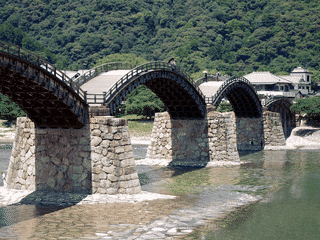
- The 1673 wooden arch bridge was rebuilt after wartime destruction and uses no metal nails.
- Three nearby shops offer 25, 50, and up to 100 ice-cream flavors, including garlic.
- Nightly cormorant fishing runs June through August over the river.
Why go?
Iwakuni is a compact castle town in Yamaguchi Prefecture best known for the stunning Kintai-kyo bridge, a 1673 wooden arch bridge rebuilt after wartime destruction. The city blends feudal samurai heritage with a modern US Marine Corps base, creating a unique cultural atmosphere. While smaller than nearby Hiroshima, it offers a more intimate experience with historical sites, cormorant fishing spectacles, and the bizarre phenomenon of 100-flavor ice cream shops.
Getting there
JR Iwakuni Station sits on the San'yo Main Line, about 45 minutes from Hiroshima by local train (¥760 one-way). Shin-Iwakuni Station on the San'yo Shinkansen is faster at 20 minutes from Hiroshima, but only Kodama bullet trains stop there and the station area lacks hotels and restaurants. Iwakuni Kintaikyo Airport reopened in 2012 after 48 years, with ANA flights from Tokyo Haneda and Naha; the airfield was previously military-only and remains controversial as residents push for international status.
Get around
All tourist attractions cluster near Kintai-kyo and the Nishiki River within walking distance. A cheerful cartoon map near JR Iwakuni Station makes routes look short, but actual walking takes about 1 hour along less direct paths. Buses run from JR Iwakuni Station (¥240, 15 minutes) and Shin-Iwakuni (¥280, 15 minutes). To walk from JR Iwakuni Station, head west on Route 2 toward the Nishiki River.
When to go
The Kintai-kyo Festival on April 29 (Showa Day) draws over 40,000 visitors with a Daimyo Procession crossing the bridge in traditional dress. Friendship Day during Golden Week (May 5) features a Marine Corps air show attended by up to 250,000 people. Summer brings cormorant fishing nightly June through August, while the Nishiki River Water Festival holds fireworks over the bridge on the first Saturday of August. The Iwakuni Festival in mid-October offers food, flea markets, and public tug-of-war.
Where to stay
Iwakuni can easily be visited as a day-trip from Hiroshima where accommodation is more plentiful. Options in town include City Hotel Andoh with Western and Japanese-style rooms from ¥4900 single, the Iwakuni Youth Hostel with beds at ¥2835 (offering sushi experience classes by reservation), and Shiratame Ryokan with traditional rooms from ¥11,000 including breakfast and views of the bridge—seasonal seafood dinners include fugu with advance notice.
Food and drink
Iwakuni's signature is square-molded sushi with chrysanthemum and special flavorings, distinct from rolled nori sushi. The town has become famous for extraordinary ice cream variety: three nearby shops offer 25, 50, and up to 100 flavors including garlic, chocolate, and blueberry, with the 100-flavor store playing TV appearances on loop. Food tents near the bridge and Kikko Park serve hot dogs, chicken, and summer favorites. Nightlife is limited; many foreign residents head to Hiroshima for drinking, though bars exist around the military base. The Iwakuni Business Hotel & Spa has a rooftop beer garden in warm weather.
Things to do
The iconic Kintai-kyo bridge (¥300 adults, ¥150 children) spans the Nishiki River with its original 1673 design using no metal nails. Iwakuni Castle (¥260, daily 09:00-16:30) is a 1960s reconstruction with a small historical museum inside. The Kikkawa Museum (¥500, Th-Tu 09:00-17:00) displays warlord artifacts and weapons, while the Iwakuni Art Museum (¥800 adults, ¥200 children) offers better English information and remarkable sword exhibits. The White Snake Museum is free and dedicated to white snakes considered messengers of Benten, the goddess of wealth. Cormorant fishing (ukai) runs nightly June-August with boat rides at ¥3500 adults, ¥2600 children, boarding at 6:30PM beside Kintai-kyo.
Go next
Hiroshima and Miyajima are short distances away via the San'yo Shinkansen or San'yo Main Line. Yanai to the east features the Edo-era Shirokabe no Matchi. Other nearby destinations include Suo-Oshima, Hirao, Shunan, Hofu, Yamaguchi, Mine, and Higashihiroshima, all accessible by train or expressway.
Safety
The US Marine Corps base maintains good community relations but occasional tensions arise from noise complaints and incidents involving stationed Marines. The base's role as a bulwark against North Korea means local support remains strong despite these issues. Most tourist areas near Kintai-kyo are safe for visitors.
Budget planning
Budget travelers can expect to spend ¥3000-5000 daily including local transport (¥240-280 bus fares), budget meals at food tents and convenience stores, and attraction entry fees (Kintai-kyo ¥300, Castle ¥260). Mid-range travelers budgeting ¥8000-12000 daily can enjoy restaurant meals like Hangetsuan's lunch sets from ¥2500, accommodation at business hotels from ¥4900, and multiple museum visits.
Guide text adapted from Wikivoyage contributors under CC BY-SA 4.0.
Where to start
Sleep
City Hotel Andoh
Most of the rooms in this business hotel are Western-style, but a few rather nice Japanese-style rooms are available for slightly more. Rooms have Internet access, and there are PCs in the lobby.
Price when recorded: Rooms from ¥4900 single, ¥8000 double
Sleep
Hotel Alpha One Iwakuni
Sleep
Iwakuni Youth Hostel
Offers an "Iwakuni Sushi Experience Classroom", although only by reservation.
Price when recorded: Beds ¥2835
Sleep
Shiratame Ryokan
Traditional Japanese rooms with a great view of the bridge. The seasonal seafood meals are excellent — they can even swipe a page from the Shimonoseki chapter and serve fugu with advance notice.
Price when recorded: Rooms from ¥11,000 with breakfast, ¥17,250 and up with dinner
Eat
100-Flavor Ice Cream Store
Famous shop with 100 unusual soft-serve flavors including garlic, blueberry, and chocolate, playing TV appearances on loop.
Eat
Food Tents near Kintai-kyo
Seasonal food stalls serving hot dogs, chicken, and summer favorites near the bridge and Kikko Park.
Eat
Hangetsuan
Built in 1869 to serve as an Officer's Club of the Japanese Navy, this restaurant specializes in ayu, a kind of sweet fish that's often caught by the cormorant fishermen of Iwakuni. If you enjoy the food and the atmosphere, ask about overnight lodgings.
Price when recorded: Lunch sets from ¥2500, dinner ¥4000
See
Chōko-kan
A library with historical documents and scroll paintings.
Price when recorded: free
Before you go
Culture
Blend of traditional samurai heritage sites and modern military culture. Kintai-kyo Festival (April 29) and Friendship Day (May 5) are major cultural events.
Money
Japan uses yen (¥). ATMs at convenience stores and post offices accept foreign cards. Credit cards accepted at larger hotels and restaurants but cash preferred at smaller establishments.
Safety
City is generally safe. Military base presence occasionally causes minor tensions but tourist areas near Kintai-kyo are secure.
Transport
JR Iwakuni Station on San'yo Main Line, 45 min from Hiroshima (¥760). Shin-Iwakuni Station on Shinkansen (Kodama only), 20 min from Hiroshima. Local buses ¥240-280.
Weather
Summer (June-August) is hot and humid—ideal for cormorant fishing spectacles. Cherry blossom season (March-April) is popular at Kikko Park, a Top 100 Cherry Blossom Spot.