.JPG)
Choquequirao
South America · Peru
Did you know?
- The ruins are divided into 12 sectors.
- White-stone llamas decorate the Llama Terraces.
- The approach trek overlooks the Apurimac River and cloud forest.
See also
.jpg)
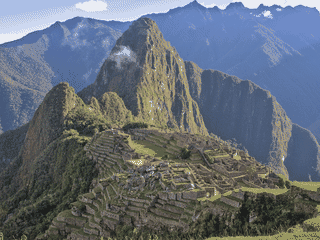
Machu Picchu
Peru13.16°S 72.55°W · 2,430 m
.jpg)
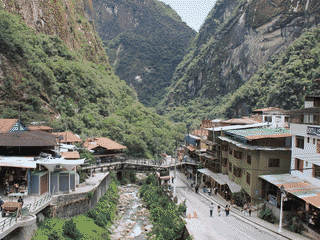
Aguas Calientes
Peru13.15°S 72.52°W · 2,040 m
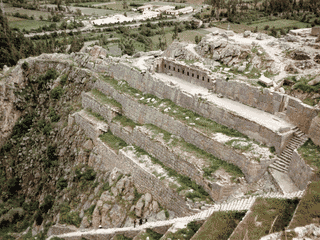

Ollantaytambo
Peru13.25°S 72.27°W · 2,792 m
Abancay
Peru13.63°S 72.88°W · 2,500 m
Maras
Peru13.33°S 72.16°W · 3,300 m
Urubamba
Peru13.30°S 72.12°W · 2,870 m
Overview
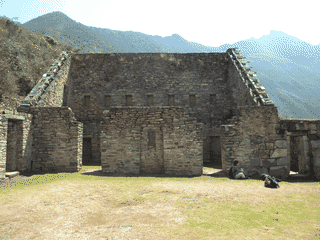
Terraces, plazas and residential ruins spread across Choquequirao. Its approach trek opens onto views of the Apurimac River and cloud forest.
Languages: Aymara, Quechua, Spanish
Why go?
Choquequirao is a large Inca ruin in the Sacred Valley of the Incas in Peru. Much less visited than Machu Picchu, it is only accessible by a strenuous two-day trek. The site features extensive terraces, plazas, and residential areas, with few tourists and a sense of discovery. The trek itself offers stunning views of the Apurimac River and cloud forest.
Adapted from Wikivoyage contributors · CC BY-SA 4.0
Getting in
To reach Choquequirao, take a bus from Cusco to Abancay and get off at Ramal, the turnoff for Cachora or Huanipaca. Buses leave from Cusco's Terminal Terrestre, with prices around S/15 (June 2019). From Ramal, a taxi to Cachora costs about S/10. Alternatively, hire an arriero (mule driver) and mules in Cachora for S/25 per day each, with a minimum of 4 days hire.
Adapted from Wikivoyage contributors · CC BY-SA 4.0
Fees and permits
There is a S/60 entry fee (2019) collected at the Capuliyoc Mirador or Choquequirao campsite by Culture Ministry employees.
Adapted from Wikivoyage contributors · CC BY-SA 4.0
Getting around
The trek from Cachora is the most popular and well-serviced trail. With a mule carrying your pack and good fitness, the hike can be done in 3 days, but the standard is 4-5 days. The route includes campsites at Chiquisca, Cocamansana, Playa Rosalina, Santa Rosa, and Marampata. Water from streams should be treated.
Adapted from Wikivoyage contributors · CC BY-SA 4.0
When to go
Due to the altitude, it is hot in the sun and cold at night, sometimes below 0°C. The air is dry on the north side of the mountains, humid on the south sides and in cloud forest. The dry season (May to September) is the best time to trek, as rain can make paths slippery.
Adapted from Wikivoyage contributors · CC BY-SA 4.0
Language
Locals speak only Spanish and/or Quechua. Some American archaeologists work at the site and may speak English.
Adapted from Wikivoyage contributors · CC BY-SA 4.0
See
The site is divided into 12 sectors, including the Plaza Superior Hanan, the main plaza Hauccaypata, the Llama Terraces with white stone llamas, and extensive cultivation terraces. The path down to the lower terraces is steep and can be slippery. Allow at least one full day to explore.
Adapted from Wikivoyage contributors · CC BY-SA 4.0
Do
Trekking to Choquequirao is the main activity. The trail offers excellent scenery and is a great alternative to the Inca Trail to Machu Picchu. You can also hike onward to Huanipaca or Santa Teresa.
Adapted from Wikivoyage contributors · CC BY-SA 4.0
Buy
There are tiny settlements along the trail selling cooked food, snacks, beer, bottled water, and soft drinks. A plate of food or bowl of soup costs about S/3.
Adapted from Wikivoyage contributors · CC BY-SA 4.0
Food and drink
Simple cooked meals are available at Chiquisca, Santa Rosa, and Marampata for about S/3 per plate. Drink fresh water from streams, but treat it first. Chicha (a local drink) and soft drinks are also sold at campsites.
Adapted from Wikivoyage contributors · CC BY-SA 4.0
Where to stay
Campsites along the trail include Capuliyoc (S/5 per tent, cold showers), Chiquisca (S/5, no snacks), Cocamansana (S/5, biting flies), Playa Rosalina (S/5, concrete shelters), Santa Rosa (S/5), Marampata (S/5, rooms with beds available for S/20), and a campsite inside the ruins (S/5, no food, colder).
Adapted from Wikivoyage contributors · CC BY-SA 4.0
Safety
The trail is well-maintained but isolated. In August 2011, remnants of the Shining Path robbed a group of tourists; however, such incidents are rare. Exercise caution and consider traveling with a guide. The altitude and temperature extremes require proper preparation.
Adapted from Wikivoyage contributors · CC BY-SA 4.0
Go next
From Choquequirao, three trails lead out: to Cachora, Huanipaca, and Yanama. From Yanama you can continue to Machu Picchu, Santa Teresa, or Mollepata. An easier exit is via Huanipaca, where you can reach the hotel Villa Los Loros (rooms S/100) and then take a taxi (S/40) to Huanipaca and bus to Cusco.
Adapted from Wikivoyage contributors · CC BY-SA 4.0
Field guide adapted from Wikivoyage contributors · CC BY-SA 4.0. Text has been adapted and organized for this guide. About our sources.
Places to know
A few starting points from the guide. Check current hours and prices before you go.
- sleep
Capuliyoc
You can camp next to the little huts behind Choquequirao Wasi although they are very windy (S/5). Cold showers and toilets. You can buy snacks and some food and eat any meal of the day there. Generous portions, and menu more varied compared to later campsites
Adapted from Wikivoyage contributors
- sleep
Chiquisca
A simple campsite run by an old couple who have been farming for over 30 years. No snacks or drinks. Water must be brought from the nearby stream.
Recorded price: S/5 per tent
Adapted from Wikivoyage contributors
- sleep
Choquequirao
A campground that is inside the Choquequirao ruins, though you will have to walk at least 30 min to get to the main plaza. Basic bathroom facilities and showers but no food. As it receives less sun than Marampata, it is much colder at night.
Adapted from Wikivoyage contributors
- sleep
Cocamansana
A campground and shop a few km above the Apirumac river on the path to Choquequirao, at km 19. The 'standard itinerary' often stays here the first night. It is, however, less pleasant than most of the other campsites, due to the presence of many biting flies that leave tiny blood blisters at the bite site. You can buy simple cooked food, snacks and drinks here. The shopkeeper is very friendly, and may try to feed you chicha or the deadly-strong distilled alcohol caña.
Recorded price: S/5 per tent
Adapted from Wikivoyage contributors
- sleep
Colmena
A homestead owned and run by the Sullcahuasami Lopez family, this is 4 km along the way to Choquequirao, and is a great place to stay the night before beginning the trek, as it gives you a bit of a head start. The Lopez family are very hospitable and can help you with hiring an arriero and mules, although they only speak Spanish. To reach it you can either walk the 4 km down the hill from Cachora, or else it is reachable by taxi.
Adapted from Wikivoyage contributors
- sleep
Marampata
A small village with several campsites and shops to purchase snacks, drinks, and meals. Most campsites have basic bathrooms and showers, though not all. Rooms with beds are available at some guest houses if you do not have a tent. It has beautiful views of the valley below and, at km 28, it is only 4 km below Choquequirao.
Recorded price: S/5 per tent
Adapted from Wikivoyage contributors
- sleep
Playa Rosalina
This is a well-fitted out campsite next to the Apurimac river on the trek to Choquequirao, around km 21. Ice cold drinks, snacks and simple cooked food is available, as are concrete shelters, clean bathrooms and showers. Compared to the other campsites, this one feels less homely and more artificial.
Recorded price: S/5 per tent
Adapted from Wikivoyage contributors
- sleep
Santa Rosa
Santa Rosa is a campground at km 25 along the path to Choquequirao. There are two campsites - both offer room-temperature drinks, snacks, and simple cooked meals.
Recorded price: S/5 per tent
Adapted from Wikivoyage contributors
Before you go
Accommodation
Campsites along trail cost S/5 per tent; rooms at Marampata S/20.
Language
Locals speak Spanish and Quechua; little English spoken.
Money
Entry fee S/60; bus from Cusco S/15; taxi from Ramal S/10; arriero S/25/day.
Safety
Isolated area; armed robbery incident in 2011; travel with guide recommended.
Water
Stream water available; treat with iodine or filter.