Chachapoyas
South America · Peru
Did you know?
- Casa Monsante combines a restored colonial mansion with orchid gardens.
- Tourist Week brings village parades in traditional dress each June.
- The Museum of Leymebamba displays 219 mummies from cliff tomb excavations.
See also
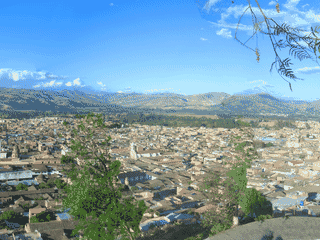

Overview
Day trips and longer treks lead to Gocta and surrounding archaeological sites. Provincial parades and traditional dress add a cultural reason to visit.
Languages: Aymara, Quechua, Spanish
Why go?
Chachapoyas serves as the gateway to northern Peru's most spectacular pre-Inca ruins and cloud forest adventures. The city itself is a quiet colonial-era destination with a pleasant main plaza, but the real draw is Kuelap—South America's largest pre-Columbian stone city with walls up to 12 meters high. Unlike crowded Machu Picchu, these sites offer genuine solitude, and the 2017 cable car now makes Kuelap accessible without multi-day treks. The surrounding region holds cliff tombs, sarcophagi, waterfalls, and trekking routes through cloud forest that most international travelers never discover.
Adapted from Wikivoyage contributors · CC BY-SA 4.0
Getting in
ATSA flies daily from Lima to Chachapoyas for S/70 each way if booked in advance (2022). Cheaper options include flying to Tarapoto ($30, 8 hours by road) or Jaén ($50, 4 hours by road) with daily Latam flights. Overnight buses from Lima take 22 hours with Civa (about S/180 one way) or Movil Tours, offering bed buses with meals and movies. Nightly departures from Trujillo (4PM), Chiclayo (7-8PM) arrive around 5AM. From Cajamarca, Virgen del Carmen departs at 4:30AM (S/50, May 2014). The most adventurous route crosses from Ecuador via Vilcabamba, Zumba, and Balsas over two days.
Adapted from Wikivoyage contributors · CC BY-SA 4.0
Getting around
Daily vans and taxis connect Chachapoyas to Kuelap, Leymebamba, and Luya, departing from stations 2-3 blocks from the main square. For Kuelap, take a combi to Pueblo Maria (2 hours, early morning departures around 5AM from Roller's office near the market), then walk 2 hours to the base or continue by taxi. The new cable car saves a 2-hour gorge crossing—board at Nuevo Tingo after the 300m uphill walk from the parking area.
Adapted from Wikivoyage contributors · CC BY-SA 4.0
See
Kuelap is the crown jewel: the largest pre-Inca ruins in South America, now accessed by thrilling 20-minute cable car (S/26 as of May 2024) with views 220 meters above the valley floor. Horse hire to the entrance costs S/25 each way; a 1.5km uphill walk (30 minutes) is required after a 2020 wall collapse. Guides are mandatory (groups limited to 12) and day tours from Chachapoyas cost S/100. Karajia features anthropomorphic sarcophagi perched on cliff ledges, reached via steep 1.5km walk from Trita village (S/20 horse hire) on combined tours (~S/90, 2-3 times weekly). Revash displays cliff tombs resembling small painted houses. The Museum of Leymebamba houses 219 mummies recovered from cliff tombs. Gocta Waterfalls drop 711 meters—Peru's most impressive cascade, accessible as a day trip or by overnighting in Cocachimba or San Pablo.
Adapted from Wikivoyage contributors · CC BY-SA 4.0
Do
Agencies like Turismo Explorer and Vilaya Tours offer day trips and multi-day treks ranging from the 6-hour Gocta hike to 4-5 day routes visiting Gran Vilaya and other archaeological sites. Tourist Week in the first week of June brings village parades from across Amazonas province in traditional dress. The Virgin of Asunta festival runs the first two weeks of August. Levanto, the nearest ruins to Chachapoyas (2 hours by vehicle), offers spectacular 3-4 hour downhill walks along restored Inca roads with a side path to Yelape fortress—Peru's second largest after Kuelap.
Adapted from Wikivoyage contributors · CC BY-SA 4.0
When to go
The dry season (May-September) offers the best conditions for trekking and visiting ruins, though June brings Tourist Week with its colorful provincial parades. August features the Virgin of Asunta festival with two weeks of celebration. Rainfall peaks December-March, making some cliff sites like Pueblo de los Muertos inaccessible. The shoulder months of April and October balance smaller crowds with reasonable weather.
Adapted from Wikivoyage contributors · CC BY-SA 4.0
Where to stay
Budget and mid-range hotels cluster within two blocks of the main plaza. Casa Monsante (Jr. Amazonas 746) occupies a restored colonial mansion in the historical section with extensive orchid gardens—walk uphill from the church for 2 blocks. The plaza area offers the most options for budget travelers, with basic hospedajes starting around S/30-50 per night. For Kuelap visits, consider overnighting in Pueblo Maria where villagers have built simple rooms for visitors, or the basic hotel in Tingo midway between Chachapoyas and Leymebamba.
Adapted from Wikivoyage contributors · CC BY-SA 4.0
Food and drink
El Tejado (a couple blocks from the plaza on Santo Domingo) is considered the best restaurant in town. La Tushpa (Jr. Ortiz Arrierta 753, 1.5 blocks from the main church) serves excellent steaks with rice and salad for S/12, open 1-11PM. Vegetarian travelers head to El Eden (Jr Grau 448) for daily menus around S/4. In Pueblo Maria, several restaurants serve good trout. Local specialties include trout dishes and cuy (guinea pig) in regional restaurants. Breakfast and lunch are widely available; dinner options narrow after 9PM.
Adapted from Wikivoyage contributors · CC BY-SA 4.0
Safety
Chachapoyas is generally safe for travelers with standard urban precautions. The main risks involve mountain road travel—long bus journeys cross two-kilometer-deep canyons on single-lane roads, so book front seats when possible. Night buses arrive around 5AM; arrange accommodation pickup in advance. During rainy season (December-March), some sites like Pueblo de los Muertos become inaccessible due to trail conditions. Carry small denomination bills for markets and rural stops as change can be scarce.
Adapted from Wikivoyage contributors · CC BY-SA 4.0
Connectivity
Major Peruvian carriers (Claro, Movistar, Entel) provide mobile coverage in Chachapoyas with 4G available in the city center. SIM cards cost around S/10-20 with prepaid data packages. WiFi is common in hotels and restaurants near the plaza; speeds are adequate for basic browsing but video streaming may be slow. Power outlets use Type A/B American-style sockets (same as US), 220V/60Hz. Consider purchasing a local SIM for better data rates than international roaming.
Adapted from Wikivoyage contributors · CC BY-SA 4.0
Budget
Backpackers can survive on S/80-120 per day in Chachapoyas: S/30-60 for dorms or budget rooms, S/20-40 for meals (street food to restaurants), and S/50-100 for site entrance fees and local transport. Kuelap day tours run S/100, the cable car costs S/26, and combined tours to Karajia/Revash run S/90. Overnight bus from Lima costs S/150-200; domestic flights to Tarapoto or Jaén can be found for S/40-80 when booked in advance. Budget S/30-50 for the spectacular bus ride to Cajamarca via the Marañon canyon.
Adapted from Wikivoyage contributors · CC BY-SA 4.0
Day trips
Gocta Waterfalls (711m) is the premier day trip—6 hours round trip on foot, or arrange a tour from Chachapoyas. The combined Karajia and Pueblo de los Muertos tour visits cliff sarcophagi and tombs (infrequent, 2-3 times weekly, ~S/90). The Museum of Leymebamba displays 219 mummies and artifacts from cliff tomb excavations. Levanto offers 3-4 hour downhill treks on restored Inca roads with views toward Kuelap. Cocachimba village provides an overnight base for visiting Gocta with more time and fewer crowds.
Adapted from Wikivoyage contributors · CC BY-SA 4.0
Go next
From Chachapoyas, the road to Cajamarca passes through Leymebamba and crosses the spectacular two-kilometer-deep Marañon river canyon. Rojas combis depart at 6:30AM, 12:30PM, and 5:30PM (S/968 915 040 for reservations) taking 2 hours to Leymebamba then 5 more to Celendín. Book front seats—the back can be cramped at strange angles. From Celendín, continue 2.5 hours to Cajamarca. Alternatively, continue to the Ecuador border via Zumba and Balsas for a more arduous two-day journey. Local combis run to Kuelap via Pueblo Maria, with overnight options in Tingo or at the site.
Adapted from Wikivoyage contributors · CC BY-SA 4.0
Field guide adapted from Wikivoyage contributors · CC BY-SA 4.0. Text has been adapted and organized for this guide. About our sources.
Places to know
A few starting points from the guide. Check current hours and prices before you go.
- sleep
Casa Monsante
Casa Monsante is a restored ancient mansion in the historical section of town with extensive orchids.
Adapted from Wikivoyage contributors
- eat
El Eden
Vegetarian restaurant with daily menu's of about 4 soles. Also open for breakfast and lunch
Adapted from Wikivoyage contributors
- eat
El Tejado
This is the best restaurant in Chachapoyas.
Adapted from Wikivoyage contributors
- eat
La Tushpa
simple local restaurant with a friendly owner and really good steaks and other meat dishes.
Recorded price: S/12 soles for a steak with rice and alittle salad
Adapted from Wikivoyage contributors
- see
Gocta Waterfalls
Peru's most impressive waterfall at 711 meters, accessible as a day trip from Chachapoyas or overnight in Cocachimba.
Adapted from Wikivoyage contributors
- see
Kuelap
South America's largest pre-Inca stone city with 12-meter walls, now accessible by spectacular 2017 cable car.
Recorded price: S/26 cable car (May 2024); S/100 day tour from Chachapoyas
Adapted from Wikivoyage contributors
- see
Levanto
Perhaps the best unrestored major Inca 3000km road passes through here and the section from Levanto to Chachapoyas is a spectacular 3 to 4 downhill walk. It starts at a restored Inca Military Garrison that guards this major intersection. A side path will take you up to Yelape, the 2nd largest fortress after Kuelap, with many more buildings. Levanto has a church started in 1558 AD by the Conquestadores, with a high gold plated altar. The village has a modern lodge built to look just like an ancient Cloud Forest building, and this same team also built the restored house in Kuelap and the Military Garrison. Levanto was the last and largest Chachapoyan city conquered by the Incas, and later the Spanish capital until it was moved to a warmer elevation of Levanto's annex of Chachapoyas.
Adapted from Wikivoyage contributors
- see
Museum of Leymebamba
Houses 219 mummies and thousands of artifacts recovered from cliff tombs in 1997, along with exhibits on Chachapoyan culture.
Recorded price: Day trip ~S/90 combined with Revash
Adapted from Wikivoyage contributors
Before you go
Connectivity
Major carriers (Claro, Movistar, Entel) cover Chachapoyas with 4G in the city center. Local SIM cards cost S/10-20 with data packages.
Etiquette
Dress modestly when visiting churches and indigenous communities. Ask permission before photographing local people, especially in traditional dress during festivals.
Money
Peruvian Sol (S/) is used throughout. ATMs near the plaza accept international cards. Carry small bills for rural areas and market purchases.
Transport
Buses depart from La Victoria area, a short walk apart. Book overnight Lima buses in daytime to reserve full beds. Early morning departures to Cajamarca require front-seat reservations for canyon views.
Weather
Dry season (May-September) is best for ruins and trekking. Rainy season (December-March) makes some cliff sites inaccessible and trails muddy.