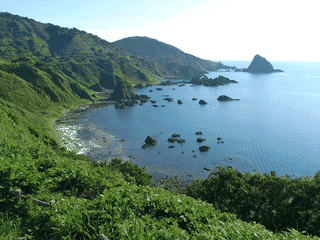

Awashima
East Asia · Japan
Did you know?
- The island's museum displays Jomon pottery alongside ancient wooden fishing boats.
- There is no public bus service, so island exploring centers on bikes or your own two feet.
- A cedar wappa bowl, hot water, miso, and a burnt stone turn dinner into a tableside boil.
See also
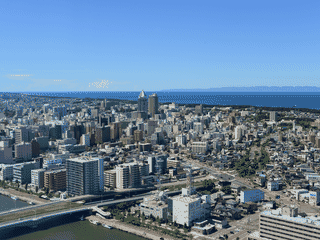

Niigata
Japan37.92°N 139.04°E
.jpg)
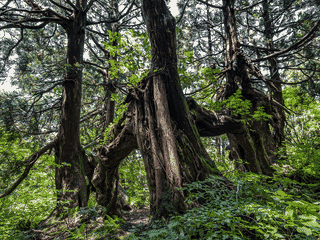
Sado Island
Japan38.02°N 138.37°E
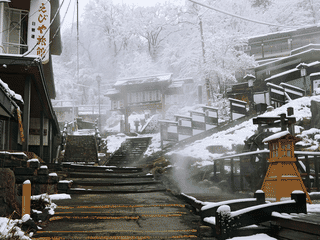

Yamagata
Japan38.25°N 140.33°E
Overview
Awashima is a remote island escape with quiet beaches, bird watching, horse-farm visits, and the distinctive Wappani dish. Limited tourist infrastructure and a strong local community make it a good fit for travelers seeking solitude and local life.
Languages: Japanese
Why Go?
Awashima is a remote island off the coast of Murakami in Niigata Prefecture with just 365 residents. It offers pristine beaches, bird watching, horse farm visits, and the unique local dish Wappani that can only be found on the island. The island provides a genuine escape from Japan's urban centres with no crowds, limited tourist infrastructure, and a strong sense of local community.
Adapted from Wikivoyage contributors · CC BY-SA 4.0
Understand
First settled in the Jomon Period, Awashima was long the last frontier for Japan's northern clans and inhabited by the Emishi, an ethnic group of non-Yamato and Ainu people. The Emishi were gradually pushed out by pirates and traders, making Awashima a hub for trade heading to Tohoku. The island was greatly impacted by the 1964 Niigata earthquake when many structures were destroyed by flooding. Today Awashima is an Important Birding Area and its economy centres on seasonal tourism and fishing, earning a reputation for exceptionally fresh seafood.
Adapted from Wikivoyage contributors · CC BY-SA 4.0
Getting In
Access to Awashima is exclusively by ferry or catamaran departing from Iwafune in Murakami. Awashimakisan operates the routes (tel. +81 254-55-2131, https://awashimakisen.co.jp/schedule.html). High-speed catamaran takes 60 minutes and costs ¥3860 for adults, ¥1940 for children. The slower ferry takes 85 minutes and costs ¥1910 for adults, ¥960 for children. The port is in the centre of Uchiura on the island's east coast.
Adapted from Wikivoyage contributors · CC BY-SA 4.0
Getting Around
The port at Uchiura serves as the island's main hub, with the rest of Awashima accessible from there. The Awashima Information Centre (粟島観光案内所) near the port offers bike rentals for exploring the island's two main settlements: Uchiura on the east coast and Kamaya on the west coast. There is no public bus service; cycling or walking are the main land-based options.
Adapted from Wikivoyage contributors · CC BY-SA 4.0
When to Go
Sea bream is freshest in May and June when it is spawning season. Most guesthouses offer dinner included in the rate. Summer brings more visitors to the beaches, while the island is very quiet off-season. The Awashimaura Village Museum opens 09:00-16:00 in July-August and 10:00-16:00 in September-June.
Adapted from Wikivoyage contributors · CC BY-SA 4.0
See
The Awashimaura Village Museum (粟島浦村資料館, 158 Uchiura) displays ancient wooden fishing boats, fishing gear, Jomon pottery, and stone tools for ¥200 adults, ¥100 children. Hotokezaki Observatory (ほとけざき天文台) offers free entry and is considered the island's best sunset spot, open at all times. Kanon-ji (観音寺) is the island's main temple home to an ancient Itabi stupa. Makihira (牧平) is a former horse pasture now used for bird watching.
Adapted from Wikivoyage contributors · CC BY-SA 4.0
Do
Awashima Farm (あわしま牧場) near Uchiura campsite offers horse experiences: ¥200 per minute with staff pulling the horse, ¥2000 for a farm tour, ¥100 per minute for independent riding lessons. Otohime no Yu (おと姫の湯, 1513-20 Hinomiyama) is a large onsen open 11:30-19:00, closed Tuesday and Thursday, charging ¥400 for adults and ¥200 for children.
Adapted from Wikivoyage contributors · CC BY-SA 4.0
Buy
Awashimabaitenkumiai (粟島売店組合) beside the village hall opens 7:30-15:00 daily, selling souvenirs, fishing gear, and locally harvested seaweed and sweets. Shop Kinbei (おみやげ きんべい, 1085 Kamaya) on the island's eastern side offers seaweed, dried octopus, and other souvenirs—this is the only store on that side of the island.
Adapted from Wikivoyage contributors · CC BY-SA 4.0
Food and Drink
Wappani is Awashima's signature dish—cooked fish, miso, and negi (Japanese onion) served in a cedar wappa bowl with hot water and a burnt stone that boils the contents at your table. Most guesthouses include dinner. Kamome Shokudo (かもめ食堂, 1099 Kamaya) serves soba dishes for ¥1000. Mikayoka (みやこや食堂) offers Wappani, sashimi, and ramen for ¥700. Zensaburo (善三郎) has a daily set meal for ¥850. Cafe Sosodo (カフェ そそど, 1513-10 Hinomiyama) is the island's most fashionable cafe serving cutlet, curry, and croquette, open 11:30-15:30 and 18:00-21:00, closed Tuesdays. Sake Awashima and potato sucho are the island's only alcoholic beverages, both described as having clean tastes.
Adapted from Wikivoyage contributors · CC BY-SA 4.0
Where to Stay
Accommodation options are limited on this small island. Uchiura Camping Ground (内浦キャンプ場) south of town is free, has toilets and showers, and is the more touristy option. Kamaya Camping Ground is also free but dirtier with fewer amenities, appealing to those seeking solitude. Minshuku Goto (後藤) and Kohagi (小萩) each charge ¥7700 per adult with meals, ¥6600 children with meals, ¥4500 without meals. Kanehira Ryokan (かねひら旅館) costs ¥9000 adults with meals. Minatoya (みなとや, 121 Uchiura) charges ¥8000 adults with meals and ¥5600 children with meals, run by a former chanko chef. Miyoshi (三吉, 136 Uchiura, 7 min walk south of port) offers ¥7700 with meals and includes yukata and communal baths. Omusubi House (じんきち, 117 Uchiura) costs ¥4500 weekdays and ¥5000 weekends.
Adapted from Wikivoyage contributors · CC BY-SA 4.0
Connectivity
Pocket WiFi works on the island and can be rented in Niigata city. Most accommodation options provide free WiFi for guests.
Adapted from Wikivoyage contributors · CC BY-SA 4.0
Go Next
The only way off Awashima is by boat back to Murakami. From Murakami station, the Uetsu Line goes north to Tsuruoka and Sakata in Yamagata Prefecture (about 1 hour), serving as jumping-off points for Dewa Sanzan temples. Sakata also has ferries to the even smaller Tobishima island. Heading south, Niigata City is one hour from Murakami with ferries to Sado Island. To travel east from Awashima, depart from Sakamachi station rather than Murakami station; Yonezawa is the largest city directly east, a two-hour journey on the Yonesaka Line.
Adapted from Wikivoyage contributors · CC BY-SA 4.0
Field guide adapted from Wikivoyage contributors · CC BY-SA 4.0. Text has been adapted and organized for this guide. About our sources.
Places to know
A few starting points from the guide. Check current hours and prices before you go.
- sleep
Goto
Minshuku on the Island's eastern side has a bath open from 15:00 - 20:00
Recorded price: ¥7700 per adult with meals, ¥6600 per children with meals, ¥4500 per person without meals
Adapted from Wikivoyage contributors
- sleep
Kamaya Camping Ground
Considered the dirtier of Awashima's two campsites it is also much less touristy. It is on undeveloped coast and is a perfect urban escape. Lacks basic amenities.
Recorded price: Free to set up
Adapted from Wikivoyage contributors
- sleep
Kanehira Ryokan
An inn where tradition and the sensibility of the present generation shine. Peaceful dishes, which have been refined outside the island are served.
Recorded price: Adults with meal ¥9,000, Children with meal ¥6,600, Person without meals ¥4,500
Adapted from Wikivoyage contributors
- sleep
Kohagi
Hotel with private rooms, good food made from locally harvested ingredients and sea inspired motif.
Recorded price: ¥7700 per adult with meals, ¥6600 per children with meals, ¥4500 per person without meals
Adapted from Wikivoyage contributors
- sleep
Minatoya
A minshuku ran by a former chanko chef and his wife who returned to their hometown, this inn serves the best (and only) chanko on the island has free wifi and has communal bath.
Recorded price: ¥8000 per adult with meals, ¥5600 per children with meals, ¥5000 per person without meals
Adapted from Wikivoyage contributors
- sleep
Miyoshi
Minshuku with food and communal baths in the centre of Awashima. Comes with yukata and has amenities like Wi-Fi and a drier.
Recorded price: ¥7700 per adult with meals, ¥6600 per children with meals, ¥4500 per person without meals
Adapted from Wikivoyage contributors
- sleep
Omusubi House
Opened by a woman trying to escape the hustle and bustle of urban life, Omusubi provides views of Awashima's coast and has a spa room.
Recorded price: ¥4500 person on weekdays, ¥5000 per person on weekends
Adapted from Wikivoyage contributors
- sleep
Uchiura Camping Ground
The more touristy of the two campsites as its closer to the main town of Awashimaura. On flat land unlike Kamaya camp ground. There are toilets and showers
Recorded price: Free
Adapted from Wikivoyage contributors
Before you go
Accommodation
Limited options: two free campsites and about six guesthouses/minshuku charging ¥4500-9000 per night with meals. Day trips from Murakami are common due to limited island accommodation.
Connectivity
Pocket WiFi works on the island and can be rented in Niigata. Most guesthouses offer free WiFi.
Food
Fresh seafood is the highlight—try Wappani (unique to the island), sashimi, and soba. Most guesthouses include dinner. Only two restaurants in Kamaya and one fashionable cafe.
Money
All prices in Japanese yen. No ATMs on the island—withdraw cash in Murakami before departing. Most guesthouses are cash-only.
Transport
Access only by ferry or catamaran from Iwafune in Murakami. Catamaran (60 min) costs ¥3860 adults, ferry (85 min) costs ¥1910 adults. No public buses on the island—bikes available at the information centre.