Overview
Windhoek is Namibia's capital, set at 1,600 m in the country's geographic centre. It is a key starting point for safaris and the main entry point for air travelers.
Transit Hub · Architecture · History · Culture · Food
Did you know?
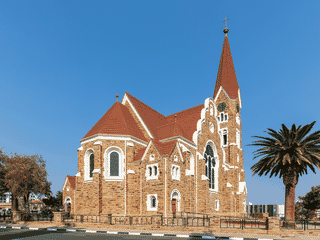
- Christuskirche has stained-glass windows donated by Kaiser Wilhelm II.
- At Joe's Beer House, tipping is expected even for bar snacks.
- The city sits at 1,600 m elevation in Namibia's geographic centre.
Where it is
Why Go?
Windhoek is Namibia's capital and largest city with a population of 430,000 in 2020, situated at 1,600 m elevation in the geographic centre of the country. It serves as the primary starting point for safaris across Namibia and the main entry point for air travelers. The city retains German colonial heritage in its architecture and street names while offering practical infrastructure for travelers.
Understand
The city was spelled Windhuk during German colonial rule and is sometimes still referred to as such in German. The name is pronounced wind-hook, as "oe" in Dutch and Afrikaans is pronounced like "u" in German. The climate chart shows summer temperatures averaging 27-30°C (Nov-Mar) and winter temperatures averaging 17-20°C (Jun-Aug), with most rainfall from November to April.
Get In
Hosea Kutako International Airport (IATA: WDH) is the main international gateway, located about 45 km east of the city center. Windhoek Eros Airport serves regional flights. The Windhoek railway station is on Bahnhof Street for domestic rail connections. Most international travelers arrive via Johannesburg or Cape Town with connecting flights to Windhoek.
Get Around
Radio taxis are recommended, especially at night. Windhoek City Cab (+264 61 100 100) and shuttle services like Shuttle Namibia operate for airport transfers and city transport. Maerua Mall on Jan Jonker Road is accessible by taxi. The city centre is compact and walkable during daytime but take precautions after dark.
Where to Stay
Backpacker hostels include Chameleon Backpackers & Guesthouse (Voight St) with dorm beds at N$350 pp and private rooms at N$700, including breakfast. ParadiseGarden Backpackers offers camping at N$150, dorms at N$200, and rooms from N$450 with free WiFi and pool. Rivendell Backpackers (40 Beethoven St) and Backpackers Unite (5 Grieg St, dorm N$240) are other budget options. Mid-range guesthouses include Okavango Guesthouse and Klein Windhoek Guest House.
Food and Drink
Joe's Beer House (160 Nelson Mandela Ave) is Windhoek's largest restaurant serving typical Namibian cuisine with large portions of meat; main courses around N$150, steaks N$200. Old Location Ohungi offers traditional dishes like matangara (tripe), smilie (goat head), mopane (caterpillars), and kapana (grilled beef) with main courses at N$130. For nightlife, Chez Ntemba (Dr Kenneth Kaunda Street) is popular with N$30 entrance and N$20 small beer, the only place open Sundays. The Boiler Room (corner of Tal Street and Sam Nujoma Drive) offers 0.5l beer at N$25 with live rock and jazz music.
Things to Do
Christuskirche is a historic Lutheran church at the intersection of Robert Mugabe Ave and Fidel Castro St, featuring stained-glass windows donated by Kaiser Wilhelm II. The Parliament of Namibia (Tintenpalast) houses the National Assembly with bronze statues of independence fighters on its grounds. Heroes' Acre war memorial, 13 km south along the B1, charges N$50 admission. For nature, Daan Viljoen Nature Reserve offers hiking trails and wildlife viewing 40 km from the city. Avis Dam Nature Reserve charges N$30 for hiking, biking, and birding from 08:00-20:00 daily.
When to Go
The best time to visit Windhoek is during the dry winter season from May to October when temperatures are mild (17-23°C average) and wildlife viewing is optimal for safaris. Summer (November-April) brings hotter temperatures (27-30°C) and occasional rainfall. Note that many shops and attractions close on Sundays or only open until 13:00, and alcohol sales end at 19:00 on weekdays and 13:00 on Saturday.
Budget
Budget travelers can expect to spend approximately N$350-500 per day including dorm accommodation, street food, and local transport. Dorm beds range N$200-350, main meals at local restaurants N$60-130, and beer N$20-35. Internet access costs N$12 per 30 minutes at internet cafés. Safari day trips vary significantly from N$1,500-3,000 depending on destination and operator.
Stay Safe
Windhoek is generally safe for tourists but standard precautions apply. Do not walk around displaying jewellery or electronics. Take a radio taxi at night rather than walking. Avoid visiting townships unaccompanied or after dark. Be aware of aggressive beggars in the city centre who target German visitors with "Kommen Sie aus Deutschland?" Ignore such approaches. Traffic is hazardous as drivers often ignore red lights and zebra crossings; pedestrians have limited right of way.
Connect
The area code for Windhoek is (061). When calling from outside Namibia, do not include a '0' between the country code and area code. Mobile SIM cards from MTC (shops called "Mobile Home") or Telecom ("TeleShop") cost less than N$20 including starter pack and airtime; bring your passport for registration. Internet cafés are available throughout the city, including Wernhill Center with computers charging N$12 for 30 minutes.
Stay Healthy
Due to the high elevation of 1,600 m, sunburn can occur quickly even on cloudy days—wear a hat and sunscreen. Windhoek is not within the malaria endemic area, though mosquitoes can be bothersome during rainy season (Nov-Apr) and repellents are available at supermarkets. HIV prevalence is approximately 15% nationwide; take appropriate precautions.
Etiquette
English is the official language, but Afrikaans is widely used as a lingua franca and German is common in tourism. Oshiwambo is spoken by 50% of the population. At Joe's Beer House, tipping is expected even for bar snacks, which is unusual for Namibia—staff may indicate if the tip is insufficient. Many places close on Sundays, and alcohol sales have restricted hours.
Go Next
Windhoek serves as the hub for exploring Namibia's safari destinations. The B1 highway runs south to Keetmanshoop and the Fish River Canyon. The B2 heads west to the coast at Walvis Bay and Swakopmund. The B1 north leads to Okahandja (famous craft market, about 1 hour) and on to Etosha National Park for wildlife viewing. Day trips to Daan Viljoen Nature Reserve and Avis Dam are possible within 40 km of the city.
Guide text adapted from Wikivoyage contributors under CC BY-SA 4.0.
Where to start
Sleep
Avani Windhoek Hotel & Casino
Four-star hotel downtown with a "casino". The Avani and Hilton are both on Independence Avenue, almost across the road from each other. The rooms at Avani aren't as plush as the Hilton, but it does have the shopping centre and cafe attached which adds some amenity. Mostly guests at the Avani, where as the Hilton draws on a wider demographic of guests, locals, and ex-pats.
Sleep
Backpackers Unite
Dorm beds, camping possible (though not very appealing). has a swimming pool. free breakfast and wifi. As of 2022 there is only one dorm for travellers and the other rooms have been converted into student dormtories.
Price when recorded: Dorm N$240 pp. Camping N$150 pp
Sleep
Chameleon Backpackers & Guesthouse
Has a mix of dorms, private rooms and tents. Bar, small pool and booking desk for Chameleon Safaris. Good safety with CCTV and keycard system. Close to downtown and mall. Breakfast included.
Price when recorded: Dorm bed N$350 pp, private room N$700
Sleep
Heinitzburg
Boutique hotel in an old castle above the city
Sleep
Hilton Hotel
Namibia's only five-star hotel. Luxury, certainly when compared to the alternatives, well equipped, excellent service, city centre location. The conference area is a hub for the city's business activities, and the pool bar buzzes with residents and visitors.
Sleep
Hotel Casa Blanca
Sleep
Jan Jonker Accommodation
Sleep
Jordani Bed and Breakfast
Before you go
Connectivity
Area code 061. SIM cards from MTC or Telecom under N$20. Internet cafés charge approximately N$12 per 30 minutes.
Etiquette
Tipping at Joe's Beer House expected even for bar service. Many shops closed Sundays or only until 13:00. Alcohol sales restricted after 19:00 weekdays.
Health
High elevation (1,600 m) increases sunburn risk. Not malaria area but mosquitoes possible Nov-Apr. Supermarkets stock repellent.
Language
English is official; Afrikaans is the common lingua franca. German widely understood in tourism. Bring phrasebook for indigenous languages like Oshiwambo.
Money
Local currency is Namibian Dollar (NAD), linked 1:1 to South African Rand. Credit cards accepted at larger hotels and restaurants but cash preferred for markets and smaller establishments.
Safety
Standard urban precautions apply. No displays of valuables, taxi at night, avoid townships after dark. Traffic hazardous—pedestrians have limited right of way.
Shopping
Maerua Mall (Jan Jonker Road) has major supermarkets. Craft markets at Post Street Mall and near Hilton. Okahandja market (1 hour north) has lower prices.
Transport
Radio taxis recommended for safe night travel. Car rental available from major companies at city and airport locations. City centre walkable during day.