Swakopmund
Africa · Namibia
See also
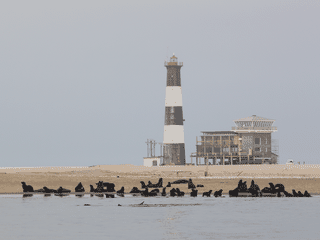

Walvis Bay
Namibia22.95°S 14.50°E · 6 m
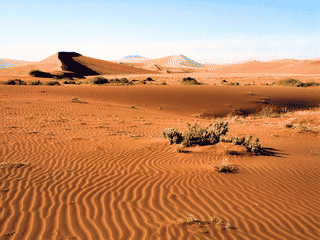

Namib-Naukluft National Park
Namibia24.55°S 15.33°E
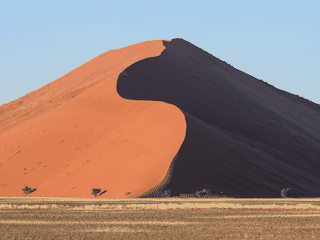

Sossusvlei
Namibia24.73°S 15.37°E
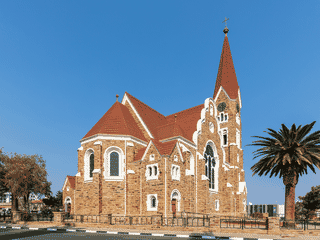

Windhoek
Namibia22.57°S 17.08°E · 1,650 m
Overview
Swakopmund is Namibia's largest coastal town and premier resort destination, sitting dramatically at the edge of the Namib Desert where massive orange dunes meet the cold Atlantic. The town is famous for its remarkably preserved German colonial architecture - half-timbered houses, Lutheran churches, and Wilhelminian-style buildings line the streets, creating an atmosphere that feels like a North Sea town transplanted to southern Africa.
Languages: Afrikaans, German, English, Herero, Khoekhoe, Kwangali, Lozi, Ndonga, Tswana
Why Go
Swakopmund is Namibia's largest coastal town and premier resort destination, sitting dramatically at the edge of the Namib Desert where massive orange dunes meet the cold Atlantic. The town is famous for its remarkably preserved German colonial architecture - half-timbered houses, Lutheran churches, and Wilhelminian-style buildings line the streets, creating an atmosphere that feels like a North Sea town transplanted to southern Africa. As Namibia's adventure capital, Swakopmund offers sandboarding down dunes, desert elephant tracking, skydiving, and海洋 activities, while the surrounding landscapes range from seal colonies at Cape Cross to the eerie Moon Landscape. The town serves as an ideal base for exploring the Skeleton Coast and provides a refreshing coastal contrast to Namibia's inland desert destinations.
Adapted from Wikivoyage contributors · CC BY-SA 4.0
Getting In
Swakopmund has no commercial airport; the nearest major airport is Hosea Kutako International Airport in Windhoek, 45 km from the capital. Most travelers arrive by road from Windhoek via the B2 highway (approximately 340 km, about 4 hours by car or bus). Intercape Mainliner and other bus services operate daily routes between Windhoek and Swakopmund. Self-drive is popular given the lack of public transport once in town, with car rental available at Windhoek airports. For those flying in, small charter flights may land at Swakopmund's small airstrip for wealthy visitors.
Adapted from Wikivoyage contributors · CC BY-SA 4.0
Getting Around
Swakopmund is compact enough to explore comfortably on foot, with all major attractions, restaurants, and facilities concentrated in the downtown area. There is no public transport system in town. Taxis are available but can be difficult to find, particularly on Saturday evenings after 19:00. Once secured, taxis charge flat rates comparable to Windhoek fares, with trips to nearby Walvis Bay costing no more than N$40. Many visitors rent cars to explore beyond the town center and access day-trip destinations like the Moon Landscape, Walvis Bay lagoon, and Cape Cross.
Adapted from Wikivoyage contributors · CC BY-SA 4.0
When To Go
Swakopmund can be visited year-round due to its mild desert climate, with average temperatures ranging from 10-23°C (50-73°F) throughout the year. The town receives only about 20 mm of rain annually, but thick fog is a frequent occurrence, particularly in winter (May-September), which can lower temperatures below 10°C. Summer (October-April) tends to be slightly warmer with more sunshine, though fog remains common. The peak season for seal watching at Cape Cross is October to December when approximately 100,000 Cape Fur Seals breed. The Jährlicher Swakopmund Karneval (annual carnival) draws large crowds and books accommodation well in advance.
Adapted from Wikivoyage contributors · CC BY-SA 4.0
Where To Stay
Swakopmund offers accommodation across all budgets, from beachfront hostels to historic hotels. Backpackers will find several well-established lodges including Desert Sky Backpackers Lodge (dorm from N$270, camping N$190) on Anton Lubowski Ave, and Salty Jackal Backpackers & Surf Camp opposite with dorm beds around N$200 including breakfast. The Swakopmund Youth Hostel in the historic Alte Kaserne offers dorm beds at N$120. Mid-range options include The Secret Garden Guesthouse on Bismarck St (N$500+ including breakfast) and the Swakopmund Municipal Bungalows ranging from N$250 for simple two-bedroom units to N$650-700 for luxury bungalows. Luxury seekers can choose the Hansa Hotel on Hendrik Witbooi Street (from N$1000) with its old-world elegance and formal service.
Adapted from Wikivoyage contributors · CC BY-SA 4.0
Food And Drink
Swakopmund's cuisine reflects its unique heritage, combining hearty German fare with fresh Atlantic seafood. An average sit-down restaurant meal costs around N$150-300, with 10% tipping customary. For German breakfasts, Café Anton at the Schweizerhaus Hotel offers all-you-can-eat buffets for around N$60 and reportedly serves Schwarzwälder Kirschtorte that rivals Germany's best. Café Tiffany on Libertina Amathila Avenue and Restaurant Europe at Hotel Europa Hof are locals' favorites for quality seafood. The Tug Restaurant at the jetty provides an authentic tugboat setting with excellent seafood and wide wine selection, though reservations are essential. For drinks, locals favor Jägermeister and the locally brewed Hansa Draught, while Namib Dunes Craft Brewery offers local craft beer. Sundowners at Tiger Reef beach bar on Südstrand Street are a beloved local tradition.
Adapted from Wikivoyage contributors · CC BY-SA 4.0
Things To Do
As Namibia's adventure capital, Swakopmund offers diverse activities for all interests. Dune 7 Sandboarding (N$350-480) provides quad bike transport up the dunes with included snacks. The National Marine Aquarium of Namibia on Strand St (N$30, Tu-Su 10:00-16:00) showcases rays, turtles, and sharks with daily feedings at 15:00. The Swakopmund Museum (N$30 adults, N$10 children, 10:00-17:00) is the country's largest private museum, displaying regional natural and cultural history from prehistoric times through colonialism. The Kristall Galerie (N$20, M-Sa 09:00-17:00) at the corner of Tobias Hainyeko and Theo-Ben Gurirab Ave houses the world's largest quartz crystal. For nature lovers, EHRA offers desert elephant conservation trips, while Okakambe Trails provides horse rides 8 km outside town. Historical sites include the 1905 Woermannhaus (now a public library), the Swakopmund Jetty extending 300m into the Atlantic (renovated 2005), and the 25.6m-high Lighthouse.
Adapted from Wikivoyage contributors · CC BY-SA 4.0
Safety
Swakopmund is generally a safe town, though visitors should observe standard precautions. Don't leave valuables visible in cars, and use guarded parking lots where possible (N$5 tip for short stays, N$10-20 for multiple hours). Guards typically leave when restaurants close, so move vehicles to accommodation overnight. Avoid walking alone at night or on deserted streets, and be cautious of aggressive panhandlers who may approach on the street. Sunburn poses a real risk even on cold, foggy days when UV exposure is easily underestimated. Ocean swimming requires caution due to strong northward currents (Benguela Current), icy water temperatures year-round, and forceful waves; locals swim opposite the Strand Hotel where the breakwater provides protection.
Adapted from Wikivoyage contributors · CC BY-SA 4.0
Connectivity
Mobile coverage is available in Swakopmund through Namibian carriers MTC and Telecom Namibia. WiFi is increasingly common in accommodations and restaurants, with some backpackers like Sea View Backpackers offering free WiFi. The Swakopmund I-cafe in the Woermann & Brock Mall (M-Sa 07:00-22:00, Su 10:00-22:00) remains the only dedicated internet cafe in town. Namibia uses Type D and Type M power plugs (British-style three-pin), operating on 220-240V AC. Visitors from countries with different plug types should bring appropriate adapters.
Adapted from Wikivoyage contributors · CC BY-SA 4.0
Budget Planning
Swakopmund is one of Namibia's more affordable coastal destinations for backpackers. Budget travelers can camp for N$190 or find dorm beds from N$120-270 per night. Self-catering at supermarkets like Shoprite on Sam Nujoma Ave keeps food costs down, while restaurant meals average N$150-300 per person. Activities are the main expense: sandboarding tours cost N$350-480, while desert tours and excursions vary by operator. A taxi to Walvis Bay costs around N$40, and day trips to Cape Cross require approximately N$500-700 for organized tours. Budget N$500-800 per day for a comfortable backpacker experience including accommodation, food, and one activity.
Adapted from Wikivoyage contributors · CC BY-SA 4.0
Day Trips
Swakopmund serves as an excellent base for regional exploration. Walvis Bay, Namibia's port town just south, offers boat tours, kayaking with seals and flamingos, and views of dunes meeting the ocean. The 120 km drive north to Cape Cross reveals the Cape Cross Seal Colony, where up to 100,000 Cape Fur Seals breed October to December (N$10 entry fee), centered around a 1486 stone cross erected by Portuguese explorer Diego Cáo. The Moon Landscape drive southeast takes visitors to see Welwitschia mirabilis plants (over 1,000 years old), abandoned mining equipment, and otherworldly desert landscapes, though river crossings require deflated tires and experienced drivers. Skeleton Coast National Park tours depart north for dramatic shipwrecks and desolate coastline scenery.
Adapted from Wikivoyage contributors · CC BY-SA 4.0
Go Next
From Swakopmund, the dramatic Skeleton Coast National Park stretches north, famous for shipwrecks and desolate beauty. Walvis Bay provides easier access to the lagoon, flamingo colonies, and water sports. Further south, Lüderitz offers another German colonial experience combined with ghost town Kolmanskop. Inland, Windhoek (340 km east) serves as Namibia's transport hub with international connections. TheEtosha National Park, one of Africa's premier wildlife destinations, lies further northeast and often combines with a Swakopmund visit in a Namibia itinerary.
Adapted from Wikivoyage contributors · CC BY-SA 4.0
Field guide adapted from Wikivoyage contributors · CC BY-SA 4.0. Text has been adapted and organized for this guide. About our sources.
Places to know
A few starting points from the guide. Check current hours and prices before you go.
- eat
BOJOs Cafe
Cafe with different menus every day, updated on their Facebook page.
Adapted from Wikivoyage contributors
- eat
Café Anton
Great for an all-you-can-eat breakfast. In the daytime they have delicious cakes; reportedly, the Schwarzwälder Kirschtorte is even better than what you can get in Germany.
Recorded price: Around N$60
Adapted from Wikivoyage contributors
- eat
Café Tiffany
Fresh fish, good wine, reasonable prices. Locals eat here.
Adapted from Wikivoyage contributors
- eat
Café Treffpunkt
Great German café, lovely breakfast.
Adapted from Wikivoyage contributors
- eat
De Kelder
A little bit hidden, does not look attractive from outside. But everything else is perfect.
Adapted from Wikivoyage contributors
- eat
Kücki's Pub
Warm and enjoyable atmosphere with great service. Limited menu, but interesting dishes (shark steak, etc) and very well prepared.
Adapted from Wikivoyage contributors
- eat
Namib Restaurant
German cuisine with great service. Open daily for breakfast, lunch and dinner.
Adapted from Wikivoyage contributors
- eat
Napolitana
An Italian restaurant with both Italian food and steaks and game. Large servings.
Adapted from Wikivoyage contributors
Before you go
Connectivity
Mobile coverage from MTC and Telecom Namibia. WiFi in many accommodations. Swakopmund I-cafe in Woermann & Brock Mall is the only dedicated internet cafe. Type D/M British-style plugs, 220-240V.
Culture
Strong German colonial heritage visible in architecture, cuisine, and place names. German and English both widely spoken. African crafts and silver jewelry available at the lighthouse craft market.
Food
German cuisine meets Atlantic seafood. Restaurant meals N$150-300. Try Jägermeister, locally brewed Hansa Draught, and Namib Dunes craft beer. Sundowners at beach bars are a local tradition.
Money
Namibia uses the Namibian Dollar (NAD), pegged 1:1 with the South African Rand. Most businesses accept both currencies. Credit cards work in hotels and larger establishments but carry surcharges. Tipping 10% is customary at restaurants. Guarded parking tips are N$5 short stay, N$10-20 extended.
Safety
Generally safe but guard valuables in cars and avoid night walks alone. Strong ocean currents and cold water make swimming dangerous except at protected beach near Strand Hotel. Fog can reduce visibility for driving.
Transport
No public transport exists in Swakopmund; the town is walkable. Taxis are scarce on Saturday evenings. Day trip to Walvis Bay shouldn't exceed N$40 by taxi. Car rental recommended for exploring beyond the town center.
Weather
Mild desert climate year-round (10-23°C). Fog common, especially winter May-September. Very little rain (20mm annually). Even on foggy days, UV exposure is high - sunscreen essential.