Overview
Viña del Mar offers waterfront walks and a flower clock set into planted beds. Nearby Valparaíso makes an easy day trip from this coastal base.
Beach · Festivals · Day Trips
Did you know?
- Alfajores sandwich manjar, fruit or chocolate between cookies.
- The Plaza del Reloj landmark turns flowers into a clock face.
- Quinta Vergara contains the arena used for the summer festival.
Where it is
Viña del Mar is 94 km northwest of Santiago.
Why Go?
Viña del Mar is Chile's most important beach destination, drawing crowds from Santiago and Argentina during summer months. The city is famous for hosting the Festival de Viña every February, a week-long music and comedy event that marks the end of Chilean summer and fills the city with local and international artists. Beyond the festival, visitors come for the scenic waterfront, the iconic flower clock Plaza del Reloj, and easy day-trip access to nearby Valparaíso.
Getting In
Viña del Mar lies just northwest of Santiago, accessible via Route 68 highway which takes about 90 minutes by bus from Santiago's terminal. Taxis from Santiago's airport cost around 30,000-40,000 pesos. Local buses connect Viña del Mar with Valparaíso (15-20 minutes).
Getting Around
The city is walkable, especially the downtown beachfront area. Local buses (micros) serve the broader city for 200-500 pesos per ride. Taxis are plentiful near the beach and downtown. Bicycle rentals are available along the coast during summer.
When to Go
Peak season runs December through February when Chilean and Argentine visitors flock to the beach. February specifically hosts the Festival de Viña in the last week, making accommodations expensive and crowded. Summer months offer warm weather (25-30°C) but busy beaches. Spring (September-November) and autumn (March-May) offer milder crowds and pleasant weather for sightseeing.
Where to Stay
Residenciales (local B&Bs) scattered throughout the city offer good value accommodation starting around 20,000-40,000 pesos for a double room. Budget hostels near the beach cost 15,000-30,000 pesos per night. During summer months (December-February) and festival week, advance reservations are essential as prices surge and availability becomes scarce.
Food and Drink
Viña del Mar's signature treat is the alfajor, a sandwich cookie filled with manjar (caramel), fruit, or chocolate—a specialty borrowed from Argentine and Uruguayan cuisine. Small pastry shops throughout downtown sell alfajores for 500-1,500 pesos each; boxes make popular souvenirs. Seafood restaurants line the coast, with typical dishes like Machas a la parmesana (clams) and Reineta (local fish) priced at 8,000-15,000 pesos per main.
Things to Do
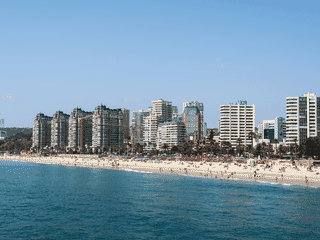
The beach is the main draw—Playa Viña del Mar stretches along the coast with views of the Pacific. La Quinta Vergara botanical garden hosts the Festival de Viña arena in late February. The Clock Tower (Plaza del Reloj) made of flowers is the city's most photographed landmark. Nearby attractions include Castillo Wulff (1917 German-built mansion), an open-air naval artillery museum at the beach's north end, and the interactive Museo Artequin with Western art reproductions. Football fans can catch matches at Estadio Sausalito for local club Everton de Viña del Mar.
Safety
Standard urban precautions apply: avoid walking alone in parks after dark, stick to well-lit populated streets. Street dogs are common and may carry disease—do not pet or feed them. Beware of currency exchange scams; use only official exchange booths even if lines are long. Carabineros (Chilean police) are trustworthy and helpful, though they speak only Spanish. Bribery or corruption hints are considered serious insults in Chile.
Day Trips
Valparaíso, Chile's historic port city, sits immediately adjacent to Viña del Mar (15-20 minutes by bus) and offers UNESCO-listed hillside architecture, vibrant street art, and the famous Ascensor elevators. Santiago is reachable in 90 minutes by bus and offers museums, markets, and Chilean history beyond the beach.
Go Next
Valparaíso makes the most natural next stop—just next door—with its colorful hillsides and bohemian atmosphere. Santiago is 90 minutes away by bus, offering the capital's museums, La Moneda, and the Central Market. South along the coast leads toward Pichilemu (surf capital) and beyond.
Guide text adapted from Wikivoyage contributors under CC BY-SA 4.0.
Where to start
Sleep
Posada Bellamare Renaca Inn
Eat
"Pueblo Viejo"
Eat
Alto Mar by La Gatita
An excellent seafood restaurant. It specialises in such typical dishes as Machas a la parmesana y Reineta (Clams with fried Reineta - a local fish).
Eat
Chez Gerald
Eat
Donde Las Papas Queman
Eat
Donde elmarko
Eat
El Guaton
Eat
Empanadas Donde Huayi
Before you go
Culture
The Festival de Viña in late February is the city's biggest annual event, attracting national attention and international performers.
Money
Chilean pesos (CLP) are the local currency. ATMs are plentiful near the beach and downtown. Avoid street currency exchange; use official booths.
Safety
Street dogs are common and can carry disease. Parks should be avoided after dark. Use official currency exchange only to avoid fraud.
Transport
Local buses (micros) cost 200-500 pesos. Taxis are available throughout the city. Buses to Valparaíso run frequently (15-20 min journey).
Weather
Summer (Dec-Feb) is hot (25-30°C) and crowded. February hosts the Festival de Viña. Shoulder seasons offer milder weather and fewer crowds.