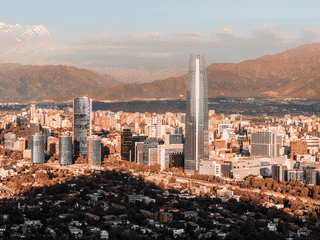
.jpg)
Santiago
South America · Chile
Did you know?
- La Moneda's name recalls its original role as a coin mint.
- The italiano hot dog combines tomato, avocado and mayonnaise.
- Providencia hosts a jazz festival in January.
See also
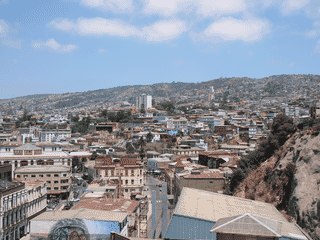

Valparaíso
Chile33.05°S 71.62°W · 21 m
Viña del Mar
Chile33.00°S 71.52°W · 2 m
Overview
Santiago sits in Chile's central valley between the Andes and the Coastal Range. The mountain-framed setting gives this growing metropolis a distinctive backdrop.
Languages: Spanish
Why Go
Santiago is Chile's capital and economic center, offering museums, theaters, restaurants, and cultural opportunities. The city serves as both the gateway to the country and a destination in its own right, with eclectic architecture, a vibrant culinary scene, and the mighty Andes providing skiing, trekking, and wine experiences. Its central location makes it an ideal base for visiting other areas.
Adapted from Wikivoyage contributors · CC BY-SA 4.0
Understand
Santiago is a fast-growing city in the Santiago Region Metropolitana, situated in the central valley of Chile between the Andes mountain range to the east and the Coastal Range to the west. The metropolitan area has about 7 million inhabitants. Founded in 1541 as Santiago de Nueva Extremadura by the Spaniard Pedro de Valdivia, it has been the heart of the country since colonial times and has evolved into the cosmopolitan city it is today.
Adapted from Wikivoyage contributors · CC BY-SA 4.0
When to Go
Santiago has a typical Mediterranean climate with chilly, rainy winters where temperatures can fall to around 0°C at night. Summers are fairly dry, though humidity may occur, and temperatures can surpass 35°C. Due to the relative lack of vegetation, temperatures fluctuate wildly between day and night year-round. The city is notorious for poor air quality due to the inversion effect in the basin, which can be unhealthy especially during winter months.
Adapted from Wikivoyage contributors · CC BY-SA 4.0
Getting In
Upon entry, all tourists are issued a tourist card valid for 90 days. Travelers must not lose the stamped tourist card as it is required to exit the country. If lost, it must be reissued by the PDI (Policia de Investigaciones) before attempting to leave Chile.
Adapted from Wikivoyage contributors · CC BY-SA 4.0
Getting Around
Santiago has an extensive metro system and the Transantiago bus network. The metro is the most reliable way to navigate the city, connecting key districts including downtown, Providencia, and Nuñoa. Taxis are widely available but can be harder to find in eastern areas late at night.
Adapted from Wikivoyage contributors · CC BY-SA 4.0
See
The Historical Center offers buildings of great historical significance. Palacio de la Moneda, built for minting coins, has been the presidential residence since the mid-19th century. Alameda is the main drag with Casa Central de la Universidad de Chile, San Francisco church, and Santa Lucia hill. Plaza de Armas is the most lively area downtown. Mercado Central offers plenty of restaurants, while Parque Forestal and Museo de Bellas Artes lie to the east along the Mapocho river.
Adapted from Wikivoyage contributors · CC BY-SA 4.0
Things to Do
Santiago is a cultural hotspot with an impressive jazz scene, including Club Jazz in the Nuñoa district and a January jazz festival in Providencia. Parks like Cerro Santa Lucia and Parque Metropolitano offer great city views. For mountaineering, contact local clubs for treks to some of the highest mountains outside Asia. Ski enthusiasts can hit the slopes at El Colorado. Wine lovers can visit Concha y Toro winery in Puente Alto or take day trips to wine regions.
Adapted from Wikivoyage contributors · CC BY-SA 4.0
Buy
Santiago has numerous shopping malls throughout the city featuring Falabella, París, and Ripley—the most famous department stores in Chile. Local art and handicrafts can be purchased at cultural centers around the city.
Adapted from Wikivoyage contributors · CC BY-SA 4.0
Food and Drink
Downtown and eastern areas offer both global and domestic fast food chains. Try a completo—the Chilean hot dog with tomato, mayonnaise, and sauerkraut, or the italiano with tomato, avocado, and mayonnaise. Small sandwich places called picadas serve various sandwiches and pies. Traditional cuisine centers on barbecued meat with tomatoes, potatoes, or corn. Local specialties include cazuela, porotos con riendas, pastel de choclo, and asado. Seafood is best found at the central market restaurants. Vegetarian options tend to be limited to pizza, pasta, and burgers.
Adapted from Wikivoyage contributors · CC BY-SA 4.0
Nightlife
Nightlife choices vary by location and price. Barrio Bellavista and Barrio Brasil are popular spots close to downtown, with Pio Nono having the highest density of bars, pubs, and clubs in Chile. Barrio Lastarria offers more sophisticated, relaxed establishments with interesting histories. The historic center has traditional venues retaining early 20th-century ambience, including La Piojera with its signature terremoto drink. Plaza San Enrique in Lo Barnechea is surrounded by nightclubs, with Sala Murano being the most popular. By law, everything closes at 05:00.
Adapted from Wikivoyage contributors · CC BY-SA 4.0
Where to Stay
All types of accommodation are available, from luxury hotels to backpacker hostels. Lodging becomes more luxurious and expensive the further east you travel. Classic mid-range hotels are downtown, while Barrio Brasil offers more affordable youth hostels. Lastarria features small boutique hotels. The eastern part of the city has international luxury chains and apartment hotels catering to business travelers. Ski resorts lie outside the city in the mountains.
Adapted from Wikivoyage contributors · CC BY-SA 4.0
Safety
Santiago is infamous for smog, which worsens during winter (May-September). Locals welcome winter rain as it cleans the air. Carry bottled water during summer and be prepared for intense heat on the metro. Pickpockets operate at bus terminals, and travelers should be cautious of people selling stolen goods.
Adapted from Wikivoyage contributors · CC BY-SA 4.0
Connect
The largest post office is Correo Central on the north side of Plaza de Armas. Chilean mail has a reputation for unreliable delivery and potential tampering. Chilexpress is the most trustworthy private mail company with agencies in almost all mid-sized cities, though prices are higher.
Adapted from Wikivoyage contributors · CC BY-SA 4.0
Field guide adapted from Wikivoyage contributors · CC BY-SA 4.0. Text has been adapted and organized for this guide. About our sources.
Places to know
A few starting points from the guide. Check current hours and prices before you go.
- sleep
Hostel Brazil
Budget-friendly hostel in the trendy Barrio Brasil neighborhood
Recorded price: From 15,000 CLP dorm
Adapted from Wikivoyage contributors
- sleep
Lastarria Boutique Hotel
Small boutique hotel in the cultural Lastarria district
Recorded price: From 80,000 CLP
Adapted from Wikivoyage contributors
- eat
La Piojera
Historic bar known for its terremoto drink and traditional atmosphere
Recorded price: Drinks 2,000-5,000 CLP
Adapted from Wikivoyage contributors
- eat
Mercado Central
Historic market with numerous seafood restaurants
Recorded price: Main dishes 8,000-15,000 CLP
Adapted from Wikivoyage contributors
- eat
Picadas Downtown
Traditional sandwich shops serving huge steaks and local fare
Recorded price: Sandwiches 3,000-6,000 CLP
Adapted from Wikivoyage contributors
- see
Cerro San Cristobal
Hill with funicular access offering panoramic views of Santiago and the Maipo Valley
Recorded price: Funicular 1,000 CLP
Adapted from Wikivoyage contributors
- see
Gran Torre Santiago
Tallest building in Latin America and second tallest in the Southern Hemisphere
Recorded price: Free exterior viewing
Adapted from Wikivoyage contributors
- see
Museo de Bellas Artes
Fine arts museum in the Parque Forestal area
Recorded price: Free entry
Adapted from Wikivoyage contributors
Before you go
Money
Chile uses the Chilean peso (CLP). ATMs are widely available throughout the city. Credit cards are accepted at most hotels, restaurants, and shops.
Safety
The city has some pickpocket activity at bus terminals. Smog is a health concern, particularly for those with respiratory issues. Carry water in summer.
Transport
The Santiago Metro and Transantiago buses provide extensive public transit. A Tourist Card (Tarjeta BIP.) can be used on both systems. Taxis are plentiful but can be expensive for longer distances.
Visa
Tourists receive a 90-day tourist card upon entry. Keep this document safe as it is required to exit the country.
Weather
Summers (December-February) are hot and dry with temperatures exceeding 35°C. Winters (June-August) are cold and rainy with temperatures around 0°C at night. Air quality is poor year-round, especially in winter.