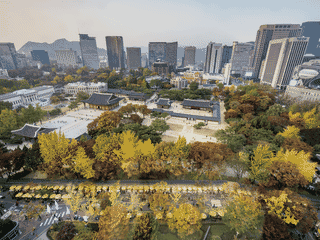

Seoul
East Asia · South Korea
Did you know?
- The subway is described as the world’s third largest, with comprehensive coverage.
- Department-store basement meals can cost ₩5,000 or less.
- Bukhansan, Gwanaksan, Samseongsan, and Inwangsan offer hikes up to 800m.
See also

Gwangmyeong
South Korea37.48°N 126.87°E
Anyang, Gyeonggi
South Korea37.39°N 126.93°E · 47 m
Pangyo
South Korea37.40°N 127.10°E
Overview
Seoul pairs ancient traditions with cutting-edge digital life, endless street food, and large nightlife districts. Its extensive subway and mountain access make it easy to alternate dense neighborhoods with hikes and stream walks.
Languages: Korean
Why Go?
Seoul is a fascinating blend of ancient traditions and cutting-edge digital technology, home to endless street food vendors and vast nightlife districts. The city contains over 2,000 years of history with 4 UNESCO World Heritage sites marking important monuments from 505 years as the Joseon Dynasty capital. With over 10 million people in the metro area, Seoul is the economic, political, and cultural hub of South Korea, increasingly popular with tourists drawn by Korean pop culture.
Adapted from Wikivoyage contributors · CC BY-SA 4.0
Getting In
Incheon International Airport is the main gateway, located west of Seoul. Gimpo Airport (김포국제공항) is closer but older, handling domestic flights and routes to Taipei-Songshan, Tokyo-Haneda, Osaka-Kansai, Beijing Capital, and Shanghai-Hongqiao. Seoul Station offers KTX high-speed rail connections to Busan, Daejeon, and other cities. Airport Express (AREX) train connects Incheon Airport to Seoul Station in about 45 minutes.
Adapted from Wikivoyage contributors · CC BY-SA 4.0
Getting Around
Seoul has the world's third largest subway system with comprehensive coverage. The Climate Card (Gihoo Donghaeng Card) offers unlimited rides on subways and buses within Seoul for a fixed monthly fee. Traffic jams are common, so heading underground is often faster. Street and subway signage is written in both Korean and English. The old confusing address system has been replaced by the Road Name Address System using street names.
Adapted from Wikivoyage contributors · CC BY-SA 4.0
When to Go
Seoul has both freezing winters and sweltering summers. Summer starts with monsoon season bringing heavy rains in June and July, with humidity very high (30°C day, 24°C night). Winters can be very cold, dropping below -10°C in January and February due to Siberian proximity, with about 28 days of snow annually. Spring (April-May) and fall (September-October) offer milder weather. Daylight ranges from 05:15-19:45 in summer to 07:45-17:15 in winter.
Adapted from Wikivoyage contributors · CC BY-SA 4.0
Where to Stay
Seoul has two main backpacker districts: Jongno (Anguk/Sinseol-dong) northeast of the city, within walking distance to Dongdaemun Market, reachable from Incheon Airport by limousine bus 6002 to Sinseol-dong stop (₩9,000, 90 min). Hongdae-Sinchon in Seodaemun-Mapo is in the university area near Yonsei, Ehwa, Hongik, and Sogang universities, with easy access via Arex from Incheon in 1 hour. Other popular areas include Itaewon, Myeongdong, and Gangnam.
Adapted from Wikivoyage contributors · CC BY-SA 4.0
Food & Drink
Korean social life revolves around food, with meals often including banchan (side dishes like kimchi). Budget meals can cost ₩5,000 or less in department store basements. Street stalls and 24-hour restaurants offer mandu, odeng, ddeokbokki, naengmyeon, and ramyeon for ₩2,000-9,000. Korean BBQ restaurants are everywhere and can be very cheap. Soju is the traditional spirit, available in original and fruit-flavored varieties. Hongdae and Sinchon are Seoul's most active nightlife districts; Itaewon is the international district with the highest concentration of gay bars.
Adapted from Wikivoyage contributors · CC BY-SA 4.0
Things to Do
Hike in mountains up to 800m accessible by public transport including Bukhansan, Gwanaksan, Samseongsan, and Inwangsan. Walk along Cheonggyecheon Stream. Watch baseball at Jamsil Baseball Stadium (LG Twins, Doosan Bears) or Gocheok Sky Dome (Kiwoom Heroes). Visit the five grand palaces and city gates in the Jongno district. Enjoy indoor sports like golf, bowling, and PC bangs gaming cafes until dawn.
Adapted from Wikivoyage contributors · CC BY-SA 4.0
Safety
Seoul is remarkably safe, comparable to Hong Kong or Tokyo. Pickpocketing is uncommon and violent crime very rare with CCTV cameras everywhere. Smoking is only allowed in designated areas—walking while smoking incurs fines. Avoid getting close to political demonstrations which can turn violent. Be wary of fake monks around Jogyesa temple who solicit donations—real monks never ask for money on the street. Watch out for culture-experience scams where friendly strangers invite you to studios and then demand payment.
Adapted from Wikivoyage contributors · CC BY-SA 4.0
Connectivity
PC bangs (PC 방) are ubiquitous internet cafes costing ₩800-2,000 per hour with fast computers. Free WiFi is available almost everywhere. Post offices are everywhere with most having at least one English-speaking staff member. The Seoul Global Center (3rd Floor, Seoul Press Center, 25 Taepyeongno 1-ga, Jung-gu) provides foreign language assistance including help purchasing mobile phones.
Adapted from Wikivoyage contributors · CC BY-SA 4.0
Budget
Budget travelers can eat well for ₩5,000-15,000 per meal using convenience stores, street food, and department store basements. Hostel dorms start around ₩20,000-35,000. Subway rides cost around ₩1,350-1,800 depending on distance. PC bang sessions ₩800-2,000. A daily budget of ₩50,000-80,000 covers basic needs; ₩100,000+ for comfortable travel.
Adapted from Wikivoyage contributors · CC BY-SA 4.0
Day Trips
The DMZ (Korean Demilitarized Zone) offers tours to Panmunjeom peace village—book with a tour company as some nationalities are restricted. Suwon (30km south) has Hwaseong Fortress, a UNESCO World Heritage site, reachable by subway line 1 in about one hour—good for a half-day trip. Yongin has Everland theme park and Korean Folk Village. Incheon has Korea's largest Chinatown and sites from the Korean War landing. Chuncheon and Gapyeong are popular weekend getaways.
Adapted from Wikivoyage contributors · CC BY-SA 4.0
Etiquette
Learn basic Korean and the hangul alphabet—it takes little time and is immensely helpful for navigation. When dining, expect multiple banchan (side dishes) even if you only order one main dish. Some Korean BBQ restaurants may not accommodate solo diners due to portion sizes—say "han myung" for a table for one. Public trash bins are rare; return street food trash to vendors or use convenience store bins.
Adapted from Wikivoyage contributors · CC BY-SA 4.0
Go Next
Take KTX or SRT high-speed trains to Busan for beaches and a change of pace from Seoul. Visit the DMZ for Cold War history (check 2024 status due to tensions). Head to Gwacheon for Seoul Grand Park, Seoul Zoo, and museums. Explore Yongin's Everland and Korean Folk Village. Go to Incheon for Chinatown and MacArthur landing sites. Take day trips to Suwon's Hwaseong Fortress or Chuncheon's drama filming locations.
Adapted from Wikivoyage contributors · CC BY-SA 4.0
Field guide adapted from Wikivoyage contributors · CC BY-SA 4.0. Text has been adapted and organized for this guide. About our sources.
Places to know
A few starting points from the guide. Check current hours and prices before you go.
- sleep
Hongdae-Sinchon Area
University district with youthful vibe, near Yonsei, Ehwa, Hongik, and Sogang universities
Recorded price: Hostel dorms from ₩20,000
Adapted from Wikivoyage contributors
- sleep
Itaewon
International district with diverse restaurants and nightlife, high concentration of foreign-friendly services
Adapted from Wikivoyage contributors
- sleep
Jongno (Anguk/Sinseol-dong) Area
Traditional backpacker hub northeast of city center, within walking distance to Dongdaemun Market
Recorded price: Hostel dorms from ₩20,000
Adapted from Wikivoyage contributors
- sleep
Myeongdong
Popular tourist area with many hotels and guesthouses, great for shopping and street food
Adapted from Wikivoyage contributors
- eat
24-Hour Korean Fast Food Restaurants
Wide variety including mandu, odeng, ddeokbokki, naengmyeon, udong, ramyeon
Recorded price: ₩2,000-9,000
Adapted from Wikivoyage contributors
- eat
Department Store Basements
Basement food courts offer excellent meals for ₩5,000 or less
Recorded price: ₩5,000 or less
Adapted from Wikivoyage contributors
- eat
Korean BBQ Restaurants
Pork and beef barbecue with side dishes, everywhere in Seoul, can be very cheap
Recorded price: ₩15,000-35,000 per person
Adapted from Wikivoyage contributors
- eat
Street Stalls
Korean fast food vendors throughout the city
Recorded price: ₩2,000-5,000
Adapted from Wikivoyage contributors
Before you go
Connectivity
Free WiFi is widely available. PC bangs offer fast internet for ₩800-2,000/hour. The Seoul Global Center helps with mobile phone purchases.
Culture
Korean meals include multiple banchan side dishes. Learn basic Korean phrases and the hangul alphabet—signage includes English translations.
Money
South Korea uses Korean Won (KRW). Credit cards are widely accepted, but carry cash for street food and smaller establishments. ATMs are everywhere, including convenience stores.
Safety
Seoul is very safe with low crime. Watch for fake monks soliciting donations near temples. Avoid political protests which can turn violent.
Transport
Subway is the fastest way around Seoul. Get a T-money or Climate Card for discounted rides. Traffic is often congested—use underground transit when possible.
Weather
Summers are hot and humid with monsoon rains (June-July). Winters are very cold (-10°C possible). Spring and fall offer mild, pleasant weather.