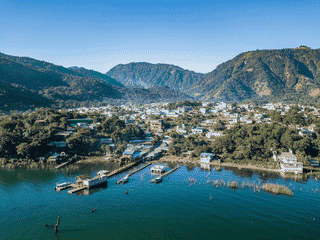

San Juan
Mexico, Central America and the Caribbean · Guatemala
Did you know?
- Silvestre's surrealist paintings often carry political criticism.
- Chocofrutas are frozen fruits dipped in liquid chocolate.
- Women's textile cooperatives color their weaving with natural dyes made from carrot and achote.
See also
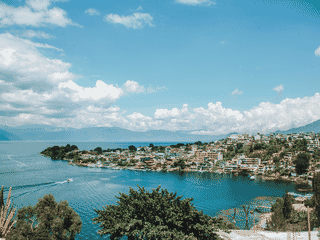

San Pedro la Laguna
Guatemala14.69°N 91.27°W · 1,610 m
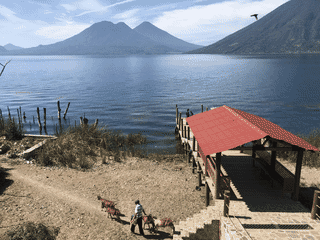

San Marcos La Laguna
Guatemala14.72°N 91.27°W · 1,460 m
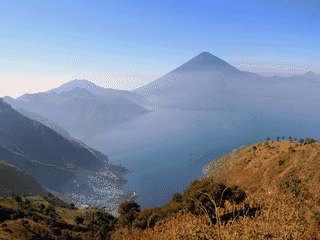

Lake Atitlán
Guatemala14.70°N 91.20°W · 1,562 m
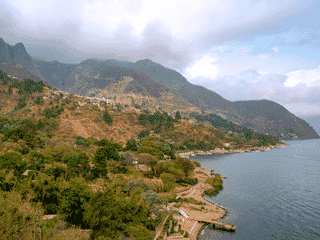

Santa Cruz la Laguna
Guatemala14.74°N 91.21°W · 1,832 m
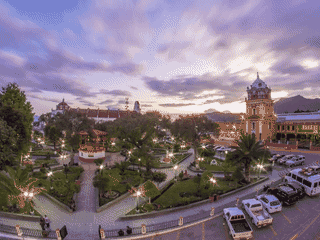

Solola
Guatemala14.77°N 91.18°W · 2,114 m
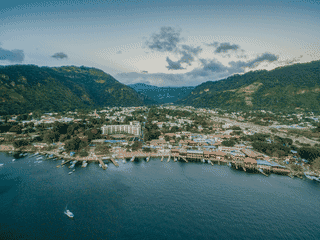

Panajachel
Guatemala14.74°N 91.16°W · 1,597 m
Overview
San Juan La Laguna is a quieter Lake Atitlán stop with women's textile cooperatives. Natural dyes and Silvestre's surrealist paintings give visitors distinct ways to explore local creativity.
Languages: Spanish
Why Go?
San Juan La Laguna is a quieter counterweight to busier San Pedro and San Marcos on Lake Atitlán. The town is known for women's textile cooperatives using natural dyes from carrot, achote, and other local ingredients, plus surrealist paintings by artist Silvestre critiquing politics. Small enough to cross on foot in 10 minutes, it offers a relaxed atmosphere with lake views, volcano peaks, and the distinctive La Nariz del Indio mountain profile visible from town.
Adapted from Wikivoyage contributors · CC BY-SA 4.0
Getting In
Lanchas (shared boats) from Panajachel heading to San Pedro la Laguna will stop at San Juan's dock if you ask the boatman. Alternatively, pickups and buses servicing towns around the lake can get you to San Juan. From San Pedro, a tuk-tuk costs no more than Q15, or walk the ~2 km along the lakeshore path.
Adapted from Wikivoyage contributors · CC BY-SA 4.0
Getting Around
The town is small enough to walk anywhere within 10 minutes, from the dock up to the central plaza and church. For trips to trailheads outside town (toward San Pablo or Santa Clara la Laguna), catch pickup trucks or tuk-tuks for Q10 per leg.
Adapted from Wikivoyage contributors · CC BY-SA 4.0
When to Go
Lake Atitlán can be visited year-round, though the dry season (November-April) offers the clearest skies and best views of the three volcanoes—Atitlán, Tolimán, and San Pedro. The wet season (May-October) brings afternoon showers but fewer tourists and lush green landscapes. Early morning departures on lanchas offer the calmest lake crossings.
Adapted from Wikivoyage contributors · CC BY-SA 4.0
Where to Stay
Budget options include Hospedaje Estrella Del Lago, right off the road leading to the dock with lake views at inexpensive rates. Hotel Pa Muelle sits above it with clean rooms and fantastic sunrise views over the lake on a manicured lawn. For more amenities, Eco Hotel Uxlabil (around US$50 for a double) has large grounds, volleyball court, hot tub, sauna, and its own dock. Hotel Chi-Ya is lakeside 1 km east with panoramic views in 5 rooms, 5 cabins, and 2 apartments.
Adapted from Wikivoyage contributors · CC BY-SA 4.0
Food and Drink
Cheap comedores scattered around the center serve set Guatemaltecan lunches for Q25-35. Comedor Elenita on Calle 5a (Daily 07:00-22:00) is popular with locals and offers veggie options; fish plates run around Q70. Don't miss the chocofrutas—frozen fruits dipped in liquid chocolate sold at small shops for Q2-5. Native Coffee Shop on 5ta Avenida serves good breakfast with international food and excellent coffee (closed Thursdays). For lake views, the restaurant down the first right from the dock offers scenic dining, while Hotel Maya's eco-themed restaurant has a fancier menu at slightly higher prices.
Adapted from Wikivoyage contributors · CC BY-SA 4.0
Things to Do
Hike La Nariz del Indio (Rostro Maya), a mountain resembling a Mayan's profile now a national park with well-maintained trails, informational displays, and roofed miradores. The Q50 entrance fee covers the 3-4 hour round trip along the main road toward San Pablo. Climb El Mirador for Q50 and a 10-minute ascent with lake views (no guide needed; a policeman guards the platform). Visit Casa Flor Ixcaco Weaving Cooperative or Asociacion de Mujeres en Colores Botanico to see cotton spun into thread and dyed naturally—leave a Q10 donation or purchase textiles. At Licor Marron, watch cocoa grown and chocolate produced, then shop for handmade products. The 15th-century Church of San Juan is worth visiting for its exterior and interior beauty, with the Rostro Maya mountains visible in the distance.
Adapted from Wikivoyage contributors · CC BY-SA 4.0
Buy
Textiles woven by local women's cooperatives use natural dyes from carrot, achote (a red seed), and other local ingredients—the profits directly support women and their families. Several art galleries showcase works by Silvestre, whose surreal paintings often express critical political views and appear scattered among multiple galleries and shops. The town has only 3 ATMs: one at the first intersection going up from the dock, one in the town center (both 5B), and one by BI at Super 24 north of town. All tend to run out of cash by afternoon, so withdraw early if you need efectivo.
Adapted from Wikivoyage contributors · CC BY-SA 4.0
Safety
San Juan is generally safe for travelers, but standard precautions apply—keep valuables secure and be aware of petty theft. The main practical concern is ATM cash shortages; all three machines tend to run out of money by afternoon, so withdraw cash early in the day. Avoid the fancy tourist-oriented chocolate stores where prices are inflated.
Adapted from Wikivoyage contributors · CC BY-SA 4.0
Connectivity
San Juan is covered by Claro and Tigo 4G LTE networks. SIM cards for both carriers are widely available in Guatemala. Power outlets use Type A/B (same as US)—two parallel flat pins with or without a grounding hole.
Adapted from Wikivoyage contributors · CC BY-SA 4.0
Budget
San Juan is very budget-friendly. Basic hospedajes start around Q100-200, comedores serve meals for Q25-35, and chocofrutas cost Q2-5. Activities are inexpensive: La Nariz del Indio and El Mirador both charge Q50 entrance. Tuk-tuks within town or to nearby destinations cost Q10-15. Daily budget of Q200-400 covers accommodation, food, and light activities.
Adapted from Wikivoyage contributors · CC BY-SA 4.0
Go Next
Lanchas arrive frequently at San Juan's dock for connections to other lake towns. You can also take a tuk-tuk to the Panajachel dock in San Pedro for more frequent departures back to Panajachel on the mainland. The winding road clockwise around the lake connects San Juan to San Pablo La Laguna (known for its two volcanoes and indigenous traditions) and further to Santiago Atitlán.
Adapted from Wikivoyage contributors · CC BY-SA 4.0
Field guide adapted from Wikivoyage contributors · CC BY-SA 4.0. Text has been adapted and organized for this guide. About our sources.
Places to know
A few starting points from the guide. Check current hours and prices before you go.
- sleep
Eco Hotel Uxlabil
Is much more expensive, around US$50 for a double, but it has large, well-maintained grounds with a volleyball court, hot tub, sauna, its own dock, etc. The staff is very friendly and helpful.
Adapted from Wikivoyage contributors
- sleep
Hospedaje Estrella Del Lago
Inexpensive lakeside hospedaje right off the road to the dock with pleasant lake views.
Adapted from Wikivoyage contributors
- sleep
Hotel Chi-Ya
Lakeside and 1 km east of San Juan. Panoramic views. 5 rooms 5 cabins 2 apartments.
Adapted from Wikivoyage contributors
- sleep
Hotel Pa Muelle
Clean rooms with fantastic sunrise views over the lake, on a well-manicured lawn with garden, run by a friendly local couple.
Adapted from Wikivoyage contributors
- eat
Comedor Elenita
Comedor Elenita is popular among locals and serves set Guatemaltecan lunch. Veggie option available. Fish plates are around Q70.
Recorded price: Q25-35
Adapted from Wikivoyage contributors
- eat
Native Coffee Shop
Good breakfast restaurant with international food and very good coffee. Often very full, but has some tables in the garden.
Adapted from Wikivoyage contributors
- eat
Tienda with no name
Get chocofrutas in this small shop. The fruits are frozen and are dipped into liquid chocolate.
Recorded price: Q2
Adapted from Wikivoyage contributors
- see
Church of San Juan
The church was built in the 15th century and is beautiful from the outside and inside. On the right-hand side you can see the Rostro Maya, mountains forming a lying face of an Indian in the distance.
Adapted from Wikivoyage contributors
Before you go
Connectivity
Claro and Tigo 4G LTE coverage. SIM cards available. Power uses Type A/B (US-style) outlets.
Culture
Women's textile cooperatives use natural dyes. Art galleries feature surrealist Silvestre. Respectful dress at the 15th-century church.
Food
Comedores Q25-35 for set lunches. Chocofrutas Q2-5 at small shops. Native Coffee Shop serves excellent coffee (closed Thursdays).
Money
Only 3 ATMs in town (two 5B, one BI at Super 24), all prone to running out of cash by afternoon. Withdraw early. Currency is Guatemalan quetzal (GTQ).
Safety
Generally safe for travelers. Main risk is ATM cash shortages—arrive early in the day. Standard petty theft precautions apply.
Transport
Walkable town center. Lanchas to Panajachel via San Pedro. Tuk-tuks Q10-15 to San Pedro. Pickup trucks Q10 per leg for overland routes.