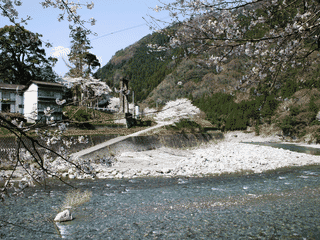

Mima
East Asia · Japan
Did you know?
- The mountain cable lift runs from mid-April through late November.
- Fireproof rooftop extensions mark the prosperity of Edo- and Meiji-era merchants along the old street.
- Conveyor-belt sushi is priced at ¥105 per plate, a useful budget clue.
See also
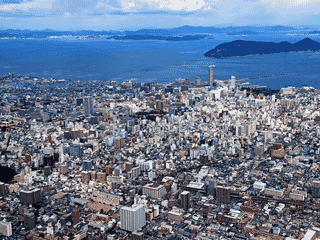

Takamatsu
Japan34.35°N 134.05°E
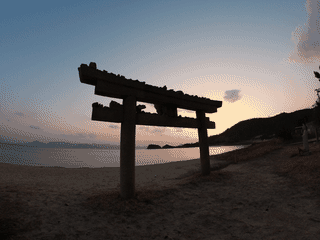

Naoshima
Japan34.47°N 134.00°E
Overview
Mima preserves atmospheric merchant streets at the Udatsu Townscape, where Edo-era buildings with fireproof rooftop extensions line a canal. It also offers indigo trading heritage, local sake breweries, seasonal fruit picking, and access to Mount Tsurugi.
Languages: Japanese
Why go?
Mima preserves one of Shikoku's most atmospheric merchant streets at the Udatsu Townscape, where Edo-era buildings with fireproof rooftop extensions still line the canal. The city also anchors the Fudō Myō-ō 36 Temple Route and provides access to western Japan's second-highest peak, Mt. Tsurugi. Unlike the Awa-odori crowds in Tokushima city, Mima offers a quieter counterpoint with indigo trading heritage, local sake breweries, and seasonal fruit picking.
Adapted from Wikivoyage contributors · CC BY-SA 4.0
Getting in
The nearest JR station is Anabuki on the Tokushima Line, roughly 1 hour from Tokushima city (¥760). Alternatively, Naruto is accessible via express bus. Overnight highway buses connect Mima directly to Tokyo (Dream Kochi Bus, ~9 hours from Wakimachi Bus Station), Kobe, Osaka, Kyoto, Matsuyama, and Kochi. Advance reservations are required for the Dream Kochi Bus, available up to one month ahead.
Adapted from Wikivoyage contributors · CC BY-SA 4.0
Getting around
The Udatsu Townscape and most Wakimachi attractions are walkable. Udatsu Taxi (うだつタクシー, https://udatsutaxi.com/), Mt. Tsurugi Taxi, and Koori Taxi serve wider areas. The Mima City Tourism Resource Center (脇町大字脇町92, daily 09:00-17:00) offers bicycle rental and has one English-speaking volunteer guide—advance phone reservation is recommended for English tours.
Adapted from Wikivoyage contributors · CC BY-SA 4.0
When to go
Cherry blossom season (early to mid-April) brings visitors to the weeping sakura at Kawai Mountain Pass and Yaoyorozu-no-kami-no-goten Shrine. Mt. Tsurugi opens May 1st and closes for winter snow—the cable lift operates mid-April through late November. The Udatsu Festival and Awa-odori performances occur in late August. Fall foliage peaks mid-October at Mt. Tsurugi. Summer brings multiple local festivals including the Koyadaira Green festival (August 15) and Shikoku Saburō-no-Sato summer event.
Adapted from Wikivoyage contributors · CC BY-SA 4.0
Where to stay
Wakimachi is the most convenient base for the Udatsu Townscape and temples, with options like Kappō Ryokan Taoka (¥15,750 including two meals, cash only, Udatsu street area) and Zeniya Ryokan (¥4,500 and up). Business hotels near Anabuki Station include Business Hotel Matsuka and Business Hotel Inada-en (both ¥5,040 and up). Mountain cabins near Mt. Tsurugi include Ichinomori mountain cabin (¥6,000 including two meals) and Mt. Tsurugi summit cabins (¥4,800), both open late April through November.
Adapted from Wikivoyage contributors · CC BY-SA 4.0
Food and drink
Local specialties include Mima-kara (spicy soy sauce with green chilies), yuzu juice, and sake from four local breweries (Tsukasagiku, Myōjō, Ōga, Shinomiya). Seasonal Dishes Moritomo (Wakimachi, W-M 11:00-14:00, 17:00-21:00) serves local cuisine. Conveyor-belt sushi at Matsuri-zushi (¥105 per plate, 11:30-22:00) offers budget dining. For Indian cuisine, Maharajah Spice (¥1,000 and up, 11:00-15:00, 17:30-22:00) features 15 types of naan. Izakaya options include Maruza Chikuan (Su-Th 11:00-00:00) near the theater.
Adapted from Wikivoyage contributors · CC BY-SA 4.0
Things to do
The Udatsu Townscape (free entry, free parking at Ai Rando Udatsu) is the top attraction—fireproof rooftop extensions on Edo/Meiji buildings mark historic merchant prosperity. The Yoshida Residence (adults ¥500, children ¥250, includes Wakimachi Theater entry) showcases indigo trading heritage with a gift shop and cafe in the former storage building. Wakimachi Theater, built 1934 and restored 1999, served as a location in the film 'The Man Who Catches Rainbows.' Temple visits along the Fudō Myō-ō 36 route include Saimyō-ji (Temple 3, Tenpyō era), Anrakuji (oldest Jodo sect temple on Shikoku, known for Noh performances), and Ganshō-ji (home to Shikoku's oldest dry landscape garden). Mt. Tsurugi (1955m, second highest in western Japan) offers panoramic views—cable lift one-way ¥1,000/¥500, round-trip ¥1,800/¥850. Seasonal activities include grass skiing on Nakoyama Plateau (late April-late November), paragliding at Mimuragaoka, and fruit picking (chestnuts September, apples August-September, blueberries June-August).
Adapted from Wikivoyage contributors · CC BY-SA 4.0
Safety
Mima is a quiet rural city with low crime. Mountain hiking on Mt. Tsurugi requires proper preparation—check weather conditions and carry adequate supplies. The cable lift closes during bad weather. Rural roads may have limited English signage.
Adapted from Wikivoyage contributors · CC BY-SA 4.0
Connectivity
Major Japanese carriers (NTT Docomo, au, SoftBank) provide coverage throughout Mima. Funky Time Wakimachi (Wakimachi, Ōaza Inoshiri) is an internet cafe. WiFi is available at cafes like Cafe Kadoya and Quench Cafe Premiere.
Adapted from Wikivoyage contributors · CC BY-SA 4.0
Budget
Budget travelers can manage on ¥4,000-5,000/day: dormitory or budget ryokan (¥3,500-5,000), convenience store meals or conveyor-belt sushi (¥500-1,000), local buses or bicycle rental (¥200-500). Mid-range stays at business hotels (¥5,040-6,000) with restaurant meals add ¥2,000-3,000 daily.
Adapted from Wikivoyage contributors · CC BY-SA 4.0
Day trips
Naruto (tidal whirlpools, confirm viewing times) is reachable for a half-day visit. Tokushima city (about 1 hour by train from Anabuki Station, ¥760) offers Awa-odori dancing and larger shopping. The Iya Valley (experiencing roots of Japan) lies just south. Oboke/Koboke provides white-water rafting. Matsuyama and Takamatsu are feasible for longer day trips with early starts.
Adapted from Wikivoyage contributors · CC BY-SA 4.0
Etiquette
Shrine and temple visits require modest dress—avoid shorts or tank tops. Remove shoes when entering tatami rooms in ryokan and historic houses. Photography restrictions may apply inside temples. Mountain hiking etiquette includes carrying out trash and staying on marked trails.
Adapted from Wikivoyage contributors · CC BY-SA 4.0
Go next
Check the Naruto whirlpools (confirm times). Head to Tokushima city (about 1 hour by train from Anabuki Station, ¥760) for shopping and Awa-odori. Experience the hidden Iya Valley south of Mima. For white-water rafting, go to Oboke/Koboke. Visit Matsuyama (Ehime prefecture) for Dōgo onsen spa. Explore Takamatsu (Kagawa prefecture, biggest city on Shikoku) beyond the northern mountains.
Adapted from Wikivoyage contributors · CC BY-SA 4.0
Field guide adapted from Wikivoyage contributors · CC BY-SA 4.0. Text has been adapted and organized for this guide. About our sources.
Places to know
A few starting points from the guide. Check current hours and prices before you go.
- buy
Airando Udatsu Rest Area
Formerly the indigo warehouse of the Yoshida family, this building has been turned into a cafe and shop. The cafe allows for lunches as well as coffee, while the shop sells all sorts of local products, such as Mima-kara and indigo-dyed clothes and accessories.
Adapted from Wikivoyage contributors
- do
Amembo Kayaking and Canoeing
Kayaking and canoeing on the Yoshinogawa River.
Adapted from Wikivoyage contributors
- do
Anabuki river homemade rafting tournament
People from all over participate in homemade rafts on a 5-km or 2.5-km course on the Anabuki river. Teams compete for fastest times and best-looking raft.
Adapted from Wikivoyage contributors
- buy
Anmitsukan
The Cymbidium is a western type of orchid. Interestingly, the majority of all Cymbidiums worldwide are breeds that were 'born' in Mima. Around 40 different kinds of Cymbidium products are sold here, from Cymbidium hair tonic to wine and tea.
Adapted from Wikivoyage contributors
- do
Awa-odori dance performance by the Anabuki Ginza-kai group
Adapted from Wikivoyage contributors
- do
Berry Berry Farm Wakimachi
Blueberry picking.
Adapted from Wikivoyage contributors
- do
Burning of New Year's gate decorations at Shirahito shrine
Adapted from Wikivoyage contributors
- do
Carrying of the o-mikoshi (miniature shrine) at the Mt. Tsurugi Hongū shrine
Adapted from Wikivoyage contributors
Before you go
Accommodation
Options range from budget ryokan (¥3,500 and up) to business hotels (¥5,040 and up) and mountain cabins (¥4,800-6,000 including meals). Kappō Ryokan Taoka is cash only and requires phone reservations.
Culture
Mima preserves indigo trading heritage. Four sake breweries produce hand-made local sake. The Udatsu Townscape, with Edo/Meiji merchant buildings, is a national Important Preservation District for Groups of Historic Buildings.
Language
Japanese is the primary language. The local tourist association has a multilingual guide site (https://en.mimakankou.or.jp/). The tourism center has one English volunteer guide—reserve ahead by phone.
Money
Japan uses yen (¥). Credit cards accepted at larger hotels and some restaurants, but cash is essential for ryokan, local shops, and rural areas. ATMs available at convenience stores.
Transport
Anabuki Station on the JR Tokushima Line is the main access point. Anabuki is ~1 hour from Tokushima (¥760). Multiple overnight bus services connect to Tokyo, Kobe, Osaka, Kyoto, Matsuyama, and Kochi.
Weather
Mountain areas receive snow in winter—Mt. Tsurugi closes from December through April. Sakura bloom late March to mid-April. Summer (July-August) brings festivals but also heat and humidity.