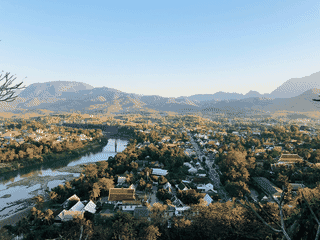

Luang Prabang
Southeast Asia · Laos
Did you know?
- Kuang Si Falls cascade over limestone terraces.
- The town stands at the meeting of the Mekong and Nam Khan rivers.
- Khai phaen is a crispy snack made from flash-fried Mekong algae.
See also
Pakbeng
Laos19.85°N 101.55°E
Nong Khiaw
Laos20.57°N 102.61°E
Muang Xay
Laos20.70°N 101.98°E
Muang Ngoi Neua
Laos20.71°N 102.67°E
Vang Vieng
Laos18.93°N 102.45°E
Phonsavan
Laos19.45°N 103.22°E · 1,100 m
Overview
Luang Prabang sits where the Mekong and Nam Khan rivers meet, with wooden houses and Buddhist temples. Explore the town before taking a trip to Kuang Si Falls or trying Lao dishes at the night market.
Languages: Lao
Why Go
Luang Prabang is a UNESCO World Heritage city set at the confluence of the Mekong and Nam Khan rivers, dominated by Mount Phousi crowned with temples. The town blends traditional Lao wooden houses with French colonial architecture—teak balconies, shuttered windows, and golden-roofed wats decorated with Buddhist mosaics. Mass tourism pressures have been largely held at bay thanks to UNESCO involvement, creating a charming atmosphere that remains more relaxed than Southeast Asian alternatives. The city serves as northern Laos's cultural heart, with excellent food, natural attractions, and an established backpacker infrastructure.
Adapted from Wikivoyage contributors · CC BY-SA 4.0
Get In
Luang Prabang International Airport (4 km north of town) is Laos's second largest and a visa-on-arrival entry point, with flights to Bangkok, Chiang Mai, Hanoi, Siem Reap, and Vientiane. The city also has a railway station connecting to the new train line. The Green Bus shuttle departs from Thatluang Park with services to Kuang Si Falls (45k kip one way) and the train station (30k kip). Visa extensions are available at the immigration office opposite the Rama Hotel for US$2/day plus a US$2 form fee—arrive morning with passport and photo.
Adapted from Wikivoyage contributors · CC BY-SA 4.0
Get Around
Luang Prabang's Old Town is compact—only about 1.5 km long and 500 m wide—making foot exploration comfortable, and Phousi Hill can only be climbed on foot (about 320 steps). Cycling is popular despite increasing traffic, with bicycle rental available from LP Holiday Travel Co on Kingkitsalat Rd for 60k per day. For longer distances, open-air tuk-tuks operate on negotiation basis, or arrange tour packages through hotels and travel agents using Toyota minivans (large buses and trucks are banned in the old town). The Loca ridehailing app is also available.
Adapted from Wikivoyage contributors · CC BY-SA 4.0
When to Go
The best time to visit is November to February when weather is dry and cool. From late February to April, slash-and-burn agriculture creates a smoky haze that can irritate eyes and lungs and obscure scenery. The annual Laos New Year (Pi Mai) in mid-April brings celebrations but also extreme heat. Curfews are strictly enforced in Luang Prabang due to its UNESCO status—bars wind down at 23:00 and close at 23:30 sharp.
Adapted from Wikivoyage contributors · CC BY-SA 4.0
Where to Stay
Luang Prabang has the best accommodation selection in Laos, from basic tent sites (20,000 kip/night) to luxury at US$1,500/night. Budget rooms start around 300,000 kip (US$13) as of late 2024, with dorms available from 30,000 kip at Xayana Guesthouse or 40,000 kip at Luang Prabang Backpackers (including breakfast and coffee). Free Wi-Fi is common in budget guesthouses. Most lanes and alleys have places to stay, with good options in the lanes south of the Post Office and along the Nam Khan River.
Adapted from Wikivoyage contributors · CC BY-SA 4.0
Food and Drink
Luang Prabang has no multinational fast food outlets. Restaurants line Sisavangvong Rd and the riversides, serving everything from backpacker fare to traditional Lao dishes and French cuisine. Local specialties include khai phaen (flash-fried algae sheets from the Mekong, sold at bars as crispy snacks), or lam (herbal pork stew with numbing peppery chili wood), and Luang Prabang Khao Soi (spicy clear mince noodle soup, different from the Chiang Mai version). Beerlao costs 35,000 kip (small) to 45,000 kip (large bottle). Street food and baguettes are widely available, with the Night Market offering cheaper evening eats.
Adapted from Wikivoyage contributors · CC BY-SA 4.0
Things to Do
Mount Phou Si (20,000 kip, children free) dominates the skyline with about 320 steps to the summit—sunrise and sunset are most rewarding, and climbing is virtually free after the ticket office closes at 18:30. The stunning Kuang Si Falls (60,000 kip foreigners, 29 km south) cascade through limestone terraces in milky blue to turquoise colors. The Pak Ou Caves (20,000 kip) north on the Mekong contain thousands of Buddha statues. The daily dawn alms ceremony (05:00-06:00 on Sisavangvong Rd) is a sacred tradition, though tourists should prepare food themselves to avoid giving unsuitable offerings. The Royal Palace National Museum (30,000 kip) shows the former royal residence with its car collection. Cooking classes at Tamarind (285,000 kip), Tamnak Lao, or The Bamboo Experience offer hands-on Lao cuisine education.
Adapted from Wikivoyage contributors · CC BY-SA 4.0
Stay Safe
Scooter accidents are common amongst tourists—do not rent a scooter if you are not experienced. The road to Kuang Si Falls is especially dangerous with deep potholes, loose sand, and speeding tourist vans. Even experienced motorcyclists may have issues with automatic transmission bikes on Luang Prabang's steep hills. If you fall seriously ill, the recommendation is to fly directly to Bangkok for medical treatment. The Hmong Night Market food stalls have questionable hygiene—eat at your own risk.
Adapted from Wikivoyage contributors · CC BY-SA 4.0
Connectivity
Free Wi-Fi is quite common in budget guesthouses. Joma Bakery Cafe offers free Wi-Fi and air-conditioning. The public library across from the National Museum has six computers for free internet access during opening hours. Water dispensers are available at many locations for bottle refills.
Adapted from Wikivoyage contributors · CC BY-SA 4.0
Budget
Budget travelers can manage on 400,000-600,000 kip (US$16-24) per day including dorm accommodation (40,000-100,000 kip), street food meals (20,000-35,000 kip), and shared transport. Major attractions cost 20,000-60,000 kip each. Mid-range travelers spending 1-2 million kip daily will have private rooms, restaurant meals, and organized tours. The Green Bus to Kuang Si Falls costs 45k kip one way; shared tuk-tuks around US$6.
Adapted from Wikivoyage contributors · CC BY-SA 4.0
Day Trips
The Kuang Si Falls (29 km south) is the most popular day trip—allow a full day including the Bear Rescue Centre and swimming in the tiered pools. The Pak Ou Caves can be reached by road (1 hour) or river boat (1.5 hours), with a stop at the whisky village. Tad Sae Waterfalls (15,000 kip) require a river boat and offer elephant rides. Across the Mekong in Chomphet, you can hike or bike through Hmong villages past temples (10,000 kip admission plus 5,000 kip ferry). The Mekong Riverview area offers sunset views and relaxed riverside dining.
Adapted from Wikivoyage contributors · CC BY-SA 4.0
Etiquette
When participating in the dawn alms ceremony, prepare food or fruit yourself—avoid giving unsuitable, stale, or unsafe food to monks. Think twice before photographing monks, as hundreds of tourists photograph them daily with flashbulbs. Cover shoulders, midriffs, and knees when visiting temples and the Royal Palace (cloth rental available for 5,000 kip). Bargaining is expected at the Night Market but remain good-natured—traders here are less pushy than elsewhere in Asia.
Adapted from Wikivoyage contributors · CC BY-SA 4.0
Go Next
Huay Xai is the necessary stopover for those departing by boat to Thailand. Vang Vieng on the backpacker circuit is reached via a very bad road—take the train. Phonsavan is the starting point for the Plain of Jars UNESCO sites. For a serene experience, head to Nong Khiaw (north) or Muang Ngoi Neua. Vientiane is the capital, and Hanoi is the main Vietnam gateway—Vietnamese-run hotels can exchange money to Dong at good rates.
Adapted from Wikivoyage contributors · CC BY-SA 4.0
Field guide adapted from Wikivoyage contributors · CC BY-SA 4.0. Text has been adapted and organized for this guide. About our sources.
Places to know
A few starting points from the guide. Check current hours and prices before you go.
- eat
Bamboo Garden Restaurant
Cheap Lao food. Popular spot for the expats and GVI volunteers.
Recorded price: 40-60,000 kip
Adapted from Wikivoyage contributors
- eat
Big Tree Cafe
Consistently good Western and Korean food. Under the big tree on the Mekong River. Good service and free Wi-Fi.
Adapted from Wikivoyage contributors
- eat
Blue Lagoon Restaurant
Offers Luang Prabang-Lao dishes and Swiss classics as well as a variety of snacks and fresh salads.
Adapted from Wikivoyage contributors
- eat
Hmong Night Market
One food stall says vegetarian and the other "végétalien" (vegan). Approximately 5,000 kip for a plate. Popular with budget travellers, but not an option for those looking for tasty food. Cash only. Eat at your own risk as hygiene is questionable.
Adapted from Wikivoyage contributors
- eat
Joma Bakery Cafe
Free Wi-Fi, air-con on both floors and free full-menu delivery service from 07:00-19:30. Great music and friendly staff.
Adapted from Wikivoyage contributors
- eat
Ketmany Restaurant
Cheap Lao food. Great selection all for reasonable price, good cheap smoothies.
Recorded price: 20-30,000 kip
Adapted from Wikivoyage contributors
- eat
Khao Soi Street Stall
Luang Prabang Khao Soi street food. Opens around 17:00. Southwest end of night market.
Recorded price: 35,000 kip
Adapted from Wikivoyage contributors
- eat
L'Elephant
A lovely restaurant with a mix of Lao and French foods. The food is extremely good, but has its price. Ingredients are of the highest quality, ranging from French Camembert to Laotian lemongrass and river weeds. The menu is both pricey and some items do not justify the price tag. Great ambience.
Adapted from Wikivoyage contributors
Before you go
Accommodation
Best accommodation selection in Laos. Budget rooms from 300,000 kip (US$13). Dorms from 30,000-100,000 kip. Free Wi-Fi common in budget guesthouses. Walk outside the main tourist area for better deals.
Connectivity
Free Wi-Fi common in guesthouses and cafes. Joma Bakery Cafe and Big Tree Cafe offer free Wi-Fi. Public library has free computers.
Culture
Dawn alms ceremony (05:00-06:00) is sacred—prepare your own offerings. Cover shoulders/knees at temples. No photos/videos/bags/shoes at Royal Palace Museum. Bars close at 23:30 due to curfews.
Food
No fast food chains. Beerlao 35,000-45,000 kip. Local specialties: khai phaen (flash-fried algae), or lam (herbal stew), Luang Prabang Khao Soi. Street food and baguettes available. Night Market closes around 22:00.
Money
Lao Kip (LAK) is the local currency. ATMs on Sisavangvong Rd near the Night Market dispense up to 1,000,000-2,000,000 kip with 20,000-40,000 kip fees. Thai baht and USD are widely accepted but rates vary. Avoid money changers quoting cash advance rates. Airport exchange rates are significantly worse than town banks.
Safety
Scooter accidents common—extreme caution on roads to Kuang Si Falls. For serious medical issues, fly to Bangkok. Hmong Night Market food hygiene questionable.
Transport
Walkable old town (1.5km x 500m). Green Bus to Kuang Si Falls from Thatluang Park (45k kip one way). Loca ridehailing app available. Tuk-tuks negotiated per person unless chartered. Large buses and trucks banned in old town.
Weather
Best November to February (dry, cool). Avoid late February to April—smoky haze from slash-and-burn agriculture irritates eyes and lungs. Extremely hot during Lao New Year (mid-April).