Ica
South America · Peru
Did you know?
- The regional museum displays trepanned skulls and desert-preserved textiles.
- Huacachina pairs an oasis lagoon with sandboarding dunes.
- Vineyards around the city produce wine and pisco brandy.
See also
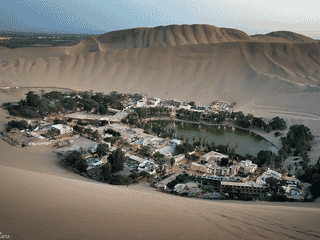

Huacachina
Peru14.09°S 75.76°W · 403 m
.jpeg)
Nazca
Peru14.83°S 74.94°W · 520 m

Ayacucho
Peru13.16°S 74.22°W · 2,761 m

Huancayo
Peru12.07°S 75.22°W · 3,271 m
Overview
Ica combines vineyard visits and pisco traditions with easy access to the dunes around Huacachina. The nearby oasis offers sandboarding in a stark desert landscape.
Languages: Aymara, Quechua, Spanish
Why Go to Ica
Ica is a regional capital in Peru's coastal desert region, about an hour's drive inland from the coast. The city serves as the center of Peruvian wine and Pisco brandy production, with surrounding vineyards and wineries open to visitors. The nearby Huacachina Lagoon—a literal oasis surrounded by massive sand dunes—offers sandboarding and a unique desert adventure experience that draws many travelers. Ica provides a quieter, more manageable base than larger Peruvian cities for exploring the southern coast region.
Adapted from Wikivoyage contributors · CC BY-SA 4.0
Getting In
Buses from Lima to Ica take approximately 4-5 hours with frequent departures. The route to Nazca takes 2-3 hours and costs S/13 (May 2023). Since 2022, the Palpa bridge has been under construction, frequently causing delays exceeding 1 hour on the Nazca road connection. Travelers should account for potential disruptions when planning onward journeys to Nazca.
Adapted from Wikivoyage contributors · CC BY-SA 4.0
See and Do
The Huacachina Lagoon is the region's star attraction—the only oasis in South America, surrounded by towering sand dunes where visitors can practice sandboarding. El Museo Regional de Ica displays archaeology including clay pottery, mummies, trepanned human skulls (drilled while patients were alive), and indigenous textiles preserved by the dry desert air; admission is S/10. For nightlife, The Who is the most popular discoteca, especially packed on Friday and Saturday nights.
Adapted from Wikivoyage contributors · CC BY-SA 4.0
Food and Drink
Ica is the heart of Peruvian Pisco production—don't miss trying a Pisco Sour, the national cocktail, at any local bar. Cachina is a sweeter, wine-like precursor to Pisco worth sampling. For dining, El Otro Peñoncito near the Plaza de Armas offers Peruvian and Italian cuisine at reasonable (though slightly high) prices. Valentino's Cafe-Bar serves fixed-price lunches with free Wi-Fi for customers. Eat among locals at the Mercado Modelo for authentic and affordable meals.
Adapted from Wikivoyage contributors · CC BY-SA 4.0
Where to Stay
Budget travelers can find solid deals at Hotel Machu Picchu on Avenida Tacna, two blocks from the Plaza de Armas, offering rooms with hot water, cable TV, and comfortable beds for S/30 per night. The Mc Hotel Ica on Cutervo Street is a three-star option with a restaurant, swimming pool, work area, and 24-hour reception starting from S/240. At the luxury end, Las Dunas Hotel is a complete resort 10 minutes from downtown with rooms ranging from US$80-200 per night.
Adapted from Wikivoyage contributors · CC BY-SA 4.0
Stay Safe
Ica's streets can be dangerous at night. The recommendation is to take taxis rather than walk after dark, or simply stay at your hotel in the evening. Exercise caution in areas near the Plaza de Armas when exploring at night.
Adapted from Wikivoyage contributors · CC BY-SA 4.0
Day Trips
Huacachina is a must-visit desert oasis just a few kilometers from Ica, offering sandboarding on massive dunes and a completely unique landscape compared to Peru's highland and coastal areas. The Nazca Lines are reachable as a longer day trip or overnight journey, approximately 2-3 hours away by bus.
Adapted from Wikivoyage contributors · CC BY-SA 4.0
Go Next
Huacachina is the closest destination—an oasis and resort area in the desert just kilometers from Ica, perfect for half-day or full-day excursions. Nazca, famous for the Nazca Lines geoglyphs, is 2-3 hours away by bus (S/13) though the Palpa bridge construction may cause delays. Ica is part of the Southern Coast (Peru) region with connections northward to Lima.
Adapted from Wikivoyage contributors · CC BY-SA 4.0
Field guide adapted from Wikivoyage contributors · CC BY-SA 4.0. Text has been adapted and organized for this guide. About our sources.
Places to know
A few starting points from the guide. Check current hours and prices before you go.
- sleep
Hotel Machu Picchu
Budget hotel two blocks from Plaza de Armas with hot water, cable TV, and comfortable beds.
Recorded price: S/30 per night
Adapted from Wikivoyage contributors
- sleep
Hotel Ollanta
Urbanizacion Divino Maestro, G:22. Small family run hotel in a residential neighborhood. Close to the city centre and Huacachina oasis.
Adapted from Wikivoyage contributors
- sleep
Hotel Villa de Valverde
Adapted from Wikivoyage contributors
- sleep
Huarango Hotel Ica
The first hotel in Ica built in colonial style architecture.
Adapted from Wikivoyage contributors
- sleep
Las Dunas Hotel
Complete resort and most expensive hotel in the area, located 10 minutes from downtown.
Recorded price: US$80-200 per night
Adapted from Wikivoyage contributors
- sleep
Mc Hotel Ica
A three-star hotel with a restaurant, swimming pool, work area, and 24-hr reception.
Recorded price: From S/240
Adapted from Wikivoyage contributors
- eat
El Otro Peñoncito
Peruvian and Italian cuisine in a small upscale restaurant near Plaza de Armas with friendly owner and reasonable prices.
Adapted from Wikivoyage contributors
- eat
Mercado Modelo
Local market where you can eat alongside Peruvian people for authentic and affordable meals.
Adapted from Wikivoyage contributors
Before you go
Culture
Ica is the center of Peruvian wine and Pisco production. Sample Pisco Sour, Pisco itself, and Cachina (a sweeter precursor) at local bars.
Money
Local currency is the Peruvian sol (S/). Budget accommodation starts around S/30/night, museum entry at S/10, and bus fares to Nazca are S/13.
Safety
Streets can be dangerous at night in Ica. Use taxis after dark rather than walking, especially near the Plaza de Armas area.
Transport
Buses from Lima take 4-5 hours with frequent departures. To Nazca, expect 2-3 hours (S/13). The Palpa bridge construction since 2022 may add 1+ hour delays on the Nazca route.
Weather
Ica has a dry desert climate. The irrigation supports significant agriculture despite the arid conditions.