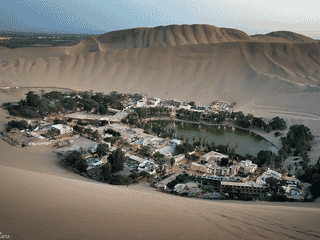

Huacachina
South America · Peru
Did you know?
- Souvenir stalls sell fruit jams alongside local pisco and wine.
- A blue-green lagoon sits enclosed by towering sand dunes.
- Sandboards use wax, locally called cera, to glide over the dunes.
See also
.jpeg)
Nazca
Peru14.83°S 74.94°W · 520 m


Ayacucho
Peru13.16°S 74.22°W · 2,761 m
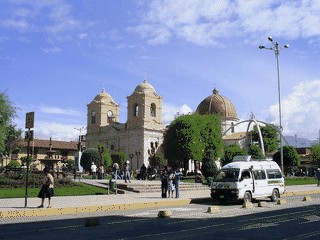

Huancayo
Peru12.07°S 75.22°W · 3,271 m
Ica
Peru14.07°S 75.73°W · 406 m
Overview
A small desert village wraps around a lagoon beneath high sand dunes. Sandboarding and dune buggy rides shape much of the visitor experience.
Languages: Aymara, Quechua, Spanish
Why go?
Huacachina is a microscopic desert oasis village built entirely around tourism, centered on a blue-green lagoon (laguna) ringed by towering sand dunes. It's essentially a one-street resort town where the main attractions are sandboarding and terrifying dune buggy rides that barrel up and down 45-degree sandy slopes at breakneck speeds. The novelty of a lush palm-fringed oasis surrounded by huge golden sand dunes in the middle of a dry desert is genuinely surreal, and the village appears on Peru's 50 soles bill (1991 issue). Most visitors are foreign backpackers drawn by the adventure sports and the notorious party-hostel scene.
Adapted from Wikivoyage contributors · CC BY-SA 4.0
Getting in
Huacachina has no bus route of its own; everyone arrives via the nearby city of Ica, a few kilometers away. Cruz del Sur and Soyuz operate frequent direct buses from Lima to Ica, and public buses run from Lima or Cusco to Ica. From Ica, registered taxis with rooftop signs cost S/10 per person one way during the day and S/12-14 at night. Always use licensed taxis in Ica, checking that the driver has official documents on the dashboard. Peru Hop also offers direct daily buses between Huacachina and Lima, Nasca, Arequipa, or Paracas.
Adapted from Wikivoyage contributors · CC BY-SA 4.0
Getting around
The village is tiny enough to cross on foot in a few minutes. Taxis and moto-taxis serve trips within Ica: most taxis charge S/2.50-3 between locations in the city, while moto-taxis cost just S/1.50, making them an extremely cheap way to cover distances too far to walk. No municipal buses serve Huacachina itself.
Adapted from Wikivoyage contributors · CC BY-SA 4.0
When to go
The desert climate is hot year-round, with peak tourist season drawing crowds. The late-afternoon dune buggy tour (starting around 16:00-16:30) is considered the best time, as sunlight illuminates the dunes without causing sunburn, and drivers often stop at lookout points for sunset viewing. During late February and early March, the grape harvest season at Ica's wineries offers a unique experience where visitors can crush grapes by foot in the fermentation vats.
Adapted from Wikivoyage contributors · CC BY-SA 4.0
Where to stay
Accommodation centers on backpacker hostels with pools and party scenes. Casa de Arena is the most popular backpacker resort, with an 18-person dorm at S/20 per person, small 4-person dorms at S/25, and shared 2-3 person rooms at S/25 per person; private rooms with bathrooms run S/30-35 per person, though the disco plays until 03:00 and walls are thin. Carola Lodge (Casa de Arena II) is larger but quieter, with a wading pool instead of a full pool. Desert Nights is a clean, affordable Hostelling International affiliate with good WiFi, though male staff have been reported as aggressive toward female travelers. Budget options include Hostal Salvatierra (private rooms from S/20 per person, but old and grungy) and Hotel El Huacachinero, which is slightly more upscale with a restaurant considered the best in town. Upscale options are Las Dunas Hotel (seven minutes away with huge pools and llamas) and Hotel Mossone (colonial hacienda, US$80-150 per night).
Adapted from Wikivoyage contributors · CC BY-SA 4.0
Food and drink
Restaurants in Huacachina are notably overpriced compared to typical Peruvian prices. Casa de Avinoam (in Carolas del Sur Hostal) serves delicious thin-crust pizzas ranging from about US$6 for a personal pizza to US$15 for a large family-sized pizza. Bamboo Cafe, between Carola del Sur and Hosteria Suiza, offers Thai curries, falafel popular with Israeli and Arab travelers, and unexpected comforts like bacon butties, marmite, and full English breakfasts for homesick travelers. The restaurant at Desert Nights is also popular. Most larger hotels have their own bars; Da Silva House (beside Casa de Arena) is one of the few non-hotel bars, serving cocktails for US$3-5.
Adapted from Wikivoyage contributors · CC BY-SA 4.0
Things to do
The main attractions are sandboarding and dune buggy rides. A tourist fee of S/3.60 per day (November 2023) applies for visiting the lagoon or walking to the dune tops. Sandboard rental costs a few soles on the street, and wax (cera) is essential for velocity. Non-athletic tourists often end up riding face-down like a sled for a rapid, sometimes dangerous descent. Dune buggy rides with sandboarding (6 steep slopes) cost around S/50, though low-season prices may be negotiable, with street vendors offering combined tours for around S/25; tours are typically two hours long. All-terrain vehicles (cuatrimotores) rent for US$40 per hour at Desert Nights. Walking to the top of the dunes takes up to an hour and rewards visitors with spectacular views of the lagoon, village, and rolling sand dunes on the horizon; bring plenty of water and eye protection for the windswept sand. Paddle boats and row boats are available at the lagoon, and swimming is possible. Ica offers tours of bodegas and wineries producing pisco and sweet red wine, ranging from small family-run artesanal operations (best: Catador) to huge industrial producers (Tacama, Vista Alegre) that export internationally.
Adapted from Wikivoyage contributors · CC BY-SA 4.0
Buy
Souvenir kiosks near the Huacachina promenade sell t-shirts, jewelry, and tourist knickknacks, plus tasty jams made from local fruits (mango, fig, guanabana) and Ica liqueurs like pisco and wine. Small convenience stores exist, but virtually everything is more expensive than in Ica. The only ATM in town is at Wild Rover hostel (Interbank), charging a S/19 fee for foreign cards with a maximum withdrawal of S/400, and it frequently runs out of cash. Ica has multiple ATMs and money-changers who exchange dollars for soles for a small commission.
Adapted from Wikivoyage contributors · CC BY-SA 4.0
Safety
The lagoon has a history of yearly drownings, likely due to swimmers' muscles cramping when warm surface water mixes with cooler water below. Swimming is not recommended unless you are a strong swimmer. The desert environment demands constant hydration; carry water when climbing dunes. Use only registered licensed taxis in Ica (with rooftop signs and driver documents visible). Sunburn is a real risk on dune tours. The party-hostel scene can lead to overconsumption of alcohol.
Adapted from Wikivoyage contributors · CC BY-SA 4.0
Connectivity
WiFi is available at select hostels, with Desert Nights reportedly having very good WiFi, while Casa de Arena has no internet. For mobile data, Peru's main carriers (Claro, Movistar, Entel) offer prepaid SIM cards with 3G/4G coverage in the area. Power plugs use the European two-pin (Type C/F) standard, so travelers from North America or the UK will need adapters.
Adapted from Wikivoyage contributors · CC BY-SA 4.0
Budget
Huacachina is more expensive than typical Peru due to its tourist-dependent economy. Budget sleepers can find dorm beds from S/20 per person at Casa de Arena or private rooms from S/20 per person at Hostal Salvatierra. Food is overpriced; budget travelers should eat in Ica instead. Activities include sandboard rental (a few soles), dune buggy + sandboarding tours (S/25-50), and tourist lagoon fee (S/3.60/day). Getting there from Ica costs S/10-14 by taxi. Daily budget for a budget traveler: S/80-150 excluding accommodation.
Adapted from Wikivoyage contributors · CC BY-SA 4.0
Go next
Taxis leave Huacachina at all hours. For Lima, ask drivers to go to the Soyuz bus station (S/32 for VIP bus) or Cruz del Sur (more expensive but nicer). For Arequipa, Cruz del Sur and Cial (budget option) serve the route. Peru Hop offers direct daily buses to Lima, Nasca, Arequipa, and Paracas. The bustling city of Ica itself is just a few kilometers away and offers wineries, museums, and more affordable restaurants and shopping.
Adapted from Wikivoyage contributors · CC BY-SA 4.0
Field guide adapted from Wikivoyage contributors · CC BY-SA 4.0. Text has been adapted and organized for this guide. About our sources.
Places to know
A few starting points from the guide. Check current hours and prices before you go.
- sleep
Casa de Arena
The most popular backpacker party hostel with a swimming pool, restaurant, bar, and small dance club, offering great dune buggy and sandboarding tours.
Recorded price: Dorms from S/20 per person
Adapted from Wikivoyage contributors
- sleep
Desert Nights
Clean, affordable Hostelling International affiliate with a restaurant and very good WiFi, near the Huacachina entrance.
Adapted from Wikivoyage contributors
- sleep
Hospedaje Rocha
A grungy old backpacker hostel with basic worn-out rooms but a decent bar, swimming pool and helpful staff.
Recorded price: S/50 for double with private bathroom
Adapted from Wikivoyage contributors
- sleep
Hostal Salvatierra
Aging but cheap backpacker hostel with a pool, offering dune buggy and bodega tours; good for budget travelers who don't mind worn facilities.
Recorded price: Private rooms from S/20 per person
Adapted from Wikivoyage contributors
- sleep
Hotel El Huacachinero
Slightly more upscale than Casa de Arena with nicer facilities and a swimming pool, plus a restaurant considered the best in Huacachina.
Adapted from Wikivoyage contributors
- eat
Bamboo Cafe
Popular traveler cafe serving Thai curry, falafel, and Western comfort food like bacon butties and full English breakfasts.
Adapted from Wikivoyage contributors
- eat
Casa de Avinoam
Restaurant in Carolas del Sur Hostal serving delicious thin-crust pizzas at backpacker-friendly prices.
Recorded price: Personal pizza from US$6, family size US$15
Adapted from Wikivoyage contributors
- eat
Desert Nights Restaurant
Popular hostel restaurant with tasty food, a good option for staying guests.
Adapted from Wikivoyage contributors
Before you go
Accommodation
Budget hostels with pools and party scenes dominate: Casa de Arena (dorms from S/20), Desert Nights (HI affiliate, good WiFi), Hostal Salvatierra (private rooms from S/20). Upscale options include Las Dunas Hotel and Hotel Mossone.
Activities
Sandboarding and dune buggy rides are the main attractions. Tourist fee for lagoon/dunes is S/3.60/day (Nov 2023). Dune buggy + sandboarding tours cost S/25-50. Walking to dune tops is free but takes up to an hour.
Connectivity
WiFi available at select hostels (Desert Nights has good WiFi; Casa de Arena has none). Peru's carriers (Claro, Movistar, Entel) offer prepaid SIMs with 3G/4G. Power plugs use European two-pin Type C/F.
Food
Restaurants are overpriced compared to typical Peru. Casa de Avinoam serves thin-crust pizzas (US$6-15). Bamboo Cafe offers Thai curry, falafel, and Western comfort food. Most budget travelers eat meals in Ica instead.
Money
Peruvian soles (S/) is the local currency. The only ATM in Huacachina is at Wild Rover hostel with a S/19 foreign-card fee and S/400 max withdrawal. Ica has more ATMs and money changers. Everything in Huacachina is overpriced compared to Ica.
Safety
The lagoon has a history of drownings due to warm/cool water mixing. Swim only if you are a strong swimmer. The desert is extremely dry; bring water. Use only registered taxis in Ica. Sunburn risk on dune tours.
Transport
No buses serve Huacachina directly. Taxis from Ica cost S/10 (day) or S/12-14 (night). Within Ica, regular taxis charge S/2.50-3 and moto-taxis S/1.50. The village itself is walkable in minutes.
Weather
Hot desert climate year-round. Late afternoon (starting 16:00-16:30) is the best time for dune buggy tours to avoid sunburn while catching sunset views.