
Hoi An
Southeast Asia · Vietnam
Did you know?
- Cao lau combines thick rice noodles, pork and greens.
- Cycling tours reach rice paddies, fishing villages and bamboo bridges.
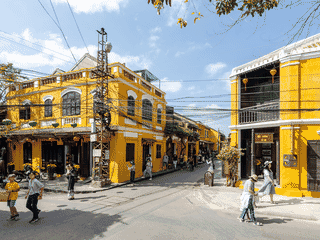
- The Old Town preserves Chinese-styled shophouses and winding lanes.
See also
Da Nang
Vietnam16.07°N 108.13°E · 19 m
Chàm Islands
Vietnam15.95°N 108.68°E · 434 m
Lăng Cô
Vietnam16.25°N 108.07°E · 98 m
Bach Ma National Park
Vietnam16.20°N 107.87°E
Quảng Ngãi
Vietnam15.12°N 108.80°E · 13 m
Hue
Vietnam16.47°N 107.58°E · 85 m
Overview
Hoi An is a former trading port with shophouses, lantern-lit lanes and historic assembly halls. Walk through the Old Town, sample cao lau and explore the surrounding countryside by bicycle.
Languages: Vietnamese
Why go?
Hoi An is a beautifully preserved ancient trading port listed as a UNESCO World Heritage Site since 1999. Its Old Town features winding lanes, Chinese-styled shophouses, and atmospheric lantern-lit streets that are particularly magical at sunset. The city is famous for its tailor-made clothing, distinctive cuisine (cao lau, banh xeo, white rose dumplings), and cooking schools. While mass tourism has transformed much of the original community into shops and galleries, the architectural shell remains intact and offers a slower, more charming alternative to Vietnam's larger cities.
Adapted from Wikivoyage contributors · CC BY-SA 4.0
Getting in
Hoi An has no airport or train station; visitors arrive via Da Nang (30 km north) or other cities. Open-tour buses run daily from Da Nang (2 hours, 50,000 dong) and Hue (3.5-4 hours, 90,000-100,000 dong). Many travel agencies and private buses serve routes from Hue, Hanoi, Saigon, Dalat, and Nha Trang. Guesthouses can arrange tickets for a surcharge. If arriving by bus not on an open ticket, you may be dropped at a guesthouse about 10 minutes walk from the bus station, where motorbike taxis or tuk-tuks charge 20,000-30,000 dong (Nov 2023). Buses from the central Highlands going to Da Nang will stop along the highway if requested, with a 15-minute motorbike ride to town.
Adapted from Wikivoyage contributors · CC BY-SA 4.0
Getting around
The Old Town is compact and best explored on foot or by bicycle. Many accommodations provide free bicycles. For longer distances, motorbike taxis and cycle rickshaws (x cyclo) are readily available. The Thu Bon River runs through the center with ferry boats approaching the city centre wharf. Cycling is highly recommended for exploring nearby rural sights including rice paddies, fishing villages, and Cua Dai Beach (5 km away). OpenStreetMap apps like OsmAnd, Mapy.cz, Organic Maps, or Maps.me help navigate to tourist attractions.
Adapted from Wikivoyage contributors · CC BY-SA 4.0
When to go
The dry season from February to August offers the best weather, though it can be hot and humid. The wet season (September-December) brings occasional flooding to low-lying areas. Hoi An is especially crowded on Vietnamese holidays and weekends when domestic tourists flock to the Old Town. The annual Hoi An Lantern Festival (held on the 14th day of each lunar month) transforms the town with thousands of lanterns and performances. For fewer crowds, visit on weekday mornings.
Adapted from Wikivoyage contributors · CC BY-SA 4.0
Where to stay
Hotels in Hoi An are fiercely competitive, offering plenty of choice and generally high standards. Budget options start at 90,000 dong for dorms. Most budget and mid-range hotels cluster around Hai Ba Trung Street and Ba Trieu, just north of the Old Town and within walking distance. Cua Dai Street to the east is further but popular. Beware of hotels in the northwestern outskirts near construction zones lacking the charm of the Old Town. High-end resorts line the unbroken beach stretching from Da Nang to Hoi An, with Cua Dai Beach 5 km away. Popular options include Betel Garden Homestay (beautiful landscaped garden, free bicycles, complimentary dinners), Hoi An Pho Library Hotel (rooftop pool, excellent breakfast included), and Quynh Long Villa (family-run, swimming pool, 5 minutes to center).
Adapted from Wikivoyage contributors · CC BY-SA 4.0
Food and drink
Hoi An has distinctive local dishes not found elsewhere in Vietnam. Cao lau (thick rice noodles with pork and greens) costs around 40,000 dong. Banh xeo (crispy savory pancakes) range from 6,000 dong per wrap at Thiên Bảo Quán to 50,000 dong at Bale Well. White rose dumplings (banh bao banh vac) at White Rose shop cost 40,000 dong. Banh mi from Madam Khanh (the Banh Mi Queen) costs 25,000-30,000 dong. Morning Market and Central Market (19 Tran Phu) offer local food courts with Hoi An specialities. Banana fritters near the morning market cost 6,000 dong each. For drinks, beer costs around 30,000 dong and cocktails 20,000-50,000 dong at riverside bars.
Adapted from Wikivoyage contributors · CC BY-SA 4.0
Things to do
The Japanese Covered Bridge (Chua Cau), built in the early 1600s and renovated in 1986, is Hoi An's symbol. Museums worth visiting include the Museum of Hoi An History and Culture (7 Nguyen Hue St), Museum of Folk Culture (33 Nguyen Thai Hoc St), Museum of Sa Huynh Culture (149 Bach Dang St), and Museum of Trade Ceramics (80 Tran Phu St). Explore historic houses: Old House of Phung Hung, Old House of Tan Ky (shows Japanese and Chinese architectural influences), and Cam Pho Communal House. Chinese Assembly Halls include the Fujian (Phuc Kien), Teochew (Trieu Chau), Cantonese (Quang Trieu), and Hainanese (Hai Nam) meeting halls. Evening lantern boat rides on the Thu Bon River cost from $6 per person. The Bamboo Circus (Lune Center) offers nightly performances at 18:00 (700,000-1.6 million dong). The Hoi An Memories Show runs daily at 16:00 with main show at 20:00 (600,000-1.2 million dong for adults). Cooking classes are available at Red Bridge Restaurant (about 3 km out on Thu Bon River) and numerous establishments. Cycling tours explore rural areas with rice paddies, fishing villages, and bamboo bridges.
Adapted from Wikivoyage contributors · CC BY-SA 4.0
Buy
Hoi An is famous for custom tailoring. Men's and ladies' tailoring at Song Trang (166 Nguyen Truong To) starts from US$100 for 2-piece suits. Vanda Tailors (631 Hai Ba Trung) is highly rated. Mr. Xe (71 Nguyen Thai Hoc) charges about US$120 for 2-piece suits with high precision fitting. Avoid Yaly Couture (from US$150) which reportedly earns 30% commission from hotels. Silk items from Len Silk (74 Tran Phu), run by a 6th generation family preserving traditional hand-production techniques. Markets include Central Market (19 Tran Phu, tourist prices), Morning Market (north of center, local prices), Night Market (around drinking hotspot, overpriced), and Textile Market.
Adapted from Wikivoyage contributors · CC BY-SA 4.0
Connectivity
Most hotels, restaurants, and cafes provide free Wi-Fi. A citywide Wi-Fi network is also available; to connect, open your browser and click the banner at the top. For mobile data, Vietnamese carriers like Viettel, Vinaphone, and Mobifone offer SIM cards widely available for purchase.
Adapted from Wikivoyage contributors · CC BY-SA 4.0
Safety
Hoi An is generally a safe destination for tourists. The Old Town is well-policed and the main risks are petty theft and scams common in tourist areas. Be cautious of inflated prices at markets and tailor shops that earn commission from hotel recommendations. During the wet season (September-December), low-lying areas may flood. Motorbike accidents are a concern when cycling on busy roads; wear a helmet and be cautious.
Adapted from Wikivoyage contributors · CC BY-SA 4.0
Day trips
My Son, a UNESCO World Heritage Site of abandoned Cham temple ruins in the Central Highlands, is the most popular day trip from Hoi An. Cham Islands offer scuba diving and snorkeling, about 20 km offshore. Thanh Ha pottery village (3 km from Old Town) preserves 500-year-old hand-making pottery traditions. Tra Que vegetable village is reachable by bicycle for culinary experiences. Cua Dai Beach is 5 km north of town. Ba Na Hills mountain resort and the Golden Bridge (near Da Nang) make a full-day excursion.
Adapted from Wikivoyage contributors · CC BY-SA 4.0
Go next
Da Nang is only 30 km north, with an international airport and beach resorts. Hue (3.5-4 hours by bus) offers imperial Vietnamese culture and is a better destination for Vietnamese cultural heritage. Nha Trang (9-10 hours south along the coast) is popular for beaches and diving. The central highlands (Dalat, Buon Ma Thuot) offer cooler climates and ethnic minority cultures. Hanoi and Ho Chi Minh City are reachable by open-tour buses or flights.
Adapted from Wikivoyage contributors · CC BY-SA 4.0
Field guide adapted from Wikivoyage contributors · CC BY-SA 4.0. Text has been adapted and organized for this guide. About our sources.
Places to know
A few starting points from the guide. Check current hours and prices before you go.
- eat
Ba Dam Vegetarian Restaurant
Great vegan Vietnamese food selection, there are so many options to choose from. The vegetarian Pho is amazing. Family restaurant hidden in an alley. Very friendly staff.
Adapted from Wikivoyage contributors
- eat
Bale Well Restaurant
Set menu: bánh xèo, pork savoury pancakes; barbecued satay pork loin, wrapped in a lettuce leaf, with side salad. Steep price for a few rice pancakes.
Recorded price: Set menu 110,000 dong, Bánh Xèo 50,000 dong
Adapted from Wikivoyage contributors
- eat
Banana fritters stall
Delicious banana fritters in dough. They squish the banana, then dip it into liquid dough and finally fry it. Freshly made, and not lying around the whole day like you often see in the center — many locals stop by with the motorbike, so they are constantly making new ones.
Recorded price: 6,000 dong/pc
Adapted from Wikivoyage contributors
- eat
Bazar Cafe & Restaurant
New in town, serves the best Vietnamese and Mediterranean barbeque in the garden. Comfortable lounge, cocktails and shisha inside the traditional wooden house.
Adapted from Wikivoyage contributors
- eat
Cao lầu Không Gian Xanh
They serve Cao lầu, Hoành Thánh Mỳ (Wonton), Bánh Bao Bánh Vạc (White Rose) and Cơm Gà. However, the portion size can be disappointing and they are very pushy about ordering drinks.
Recorded price: 40,000 dong
Adapted from Wikivoyage contributors
- eat
Central Market
Has a food court with several stands serving Hoi An specialities and typical Vietnamese food like pho, and spring rolls. It has a few stands catering to tourists with English-speaking staff and menus, and stands catering mostly to Vietnamese which serve rice and side dishes.
Adapted from Wikivoyage contributors
- eat
Dingo Deli
This delicatessen offers an extensive selection of gourmet foods through the restaurant and European grocery store. Attractive ambience, and the aroma of freshly brewed coffee. A wooden constructed adventure play ground for children to play on overlooks paddocks with buffalo and the Thu Bon River.
Adapted from Wikivoyage contributors
- eat
Madam Khanh - The Banh Mi Queen
How they prepared the meat is different to elsewhere. The chili sauce and pate are so unique. Delicious and fresh. The vegetarian option is fire.
Recorded price: 25–30,000 dong
Adapted from Wikivoyage contributors
Before you go
Culture
Hoi An has strong Chinese and Japanese architectural influences alongside Cham heritage. Dress modestly when visiting temples and assembly halls. The Lantern Festival occurs on the 14th day of each lunar month.
Food
Must-try local dishes: cao lau, banh xeo, white rose dumplings (banh bao banh vac), and banh mi. Central Market and Morning Market offer local food courts. Budget meals from 20,000 dong.
Money
Vietnamese dong (VND) is the local currency. ATMs are widely available (VP Bank, TP Bank in town). Moon Milk Supermarket sells 0.9L beer for 18,000 dong. Most places accept cash; credit cards work in upscale hotels and restaurants but not in markets or small eateries.
Safety
Hoi An is generally safe, but beware of inflated prices in tourist markets and commission-driven tailor recommendations. Wear a helmet when cycling. Flooding can occur in low areas during the wet season (September-December).
Transport
Bicycle is the best way to explore Hoi An and nearby areas. Motorbike taxis and cycle rickshaws are available for shorter trips. Open-tour buses connect Hoi An to Hue, Da Nang, Nha Trang, Hanoi, and Saigon.
Weather
Best visited February-August (dry season). Hot and humid conditions year-round. Wet season brings occasional flooding September-December. Peak tourist crowds on Vietnamese holidays and weekends.